

That brown stain spreading across your ceiling or the steady drip during Cleveland’s heavy rainstorms signals one thing: you have a roof leak. While this discovery can feel overwhelming, most roof leaks stem from just seven predictable problem areas that experienced Northeast Ohio roofers see repeatedly.
Understanding where these leaks typically occur helps you identify the source quickly and decide whether you can handle a temporary fix or need professional help. The key is catching these issues early before water damage spreads to your walls, insulation, and structural components—especially important in Cleveland’s climate where freeze-thaw cycles can worsen existing problems.
Quick fact: Pipe boot failures account for 28% of all roof leaks, making them the most common culprit homeowners face.
Here are the seven most frequent roof leak sources and what you can do about each one:
- Pipe boot failures around vent pipes
- Improperly driven or backed-out nails
- Damaged flashing around walls and chimneys
- Clogged gutters and valley problems
- Chimney-related leaks
- Skylight installation or seal failures
- Ice dam formation in cold climates
Signs you may have a roof leak
Before diving into specific leak types, you need to know what to look for both inside your home and on the roof itself.
Inside your home, watch for brown or yellow ceiling stains, bubbling or peeling paint, soft spots in drywall, musty odors in certain rooms, and warped trim around windows or doors. These symptoms often appear far from the actual leak source since water travels along rafters and under materials before dripping down.
On your roof and exterior, look for missing or curled shingles, rusted or lifted flashing around chimneys and walls, clogged gutters, granules collecting in gutters, damaged chimney mortar, and wet insulation visible in your attic. If you’re comfortable safely accessing your attic, check for water stains on the underside of roof decking, especially after heavy rains.
Remember that water can travel several feet from where it enters to where you notice it inside, so the stain location provides clues but may not pinpoint the exact problem area.
The 7 most common roof leak sources
Pipe boot failures
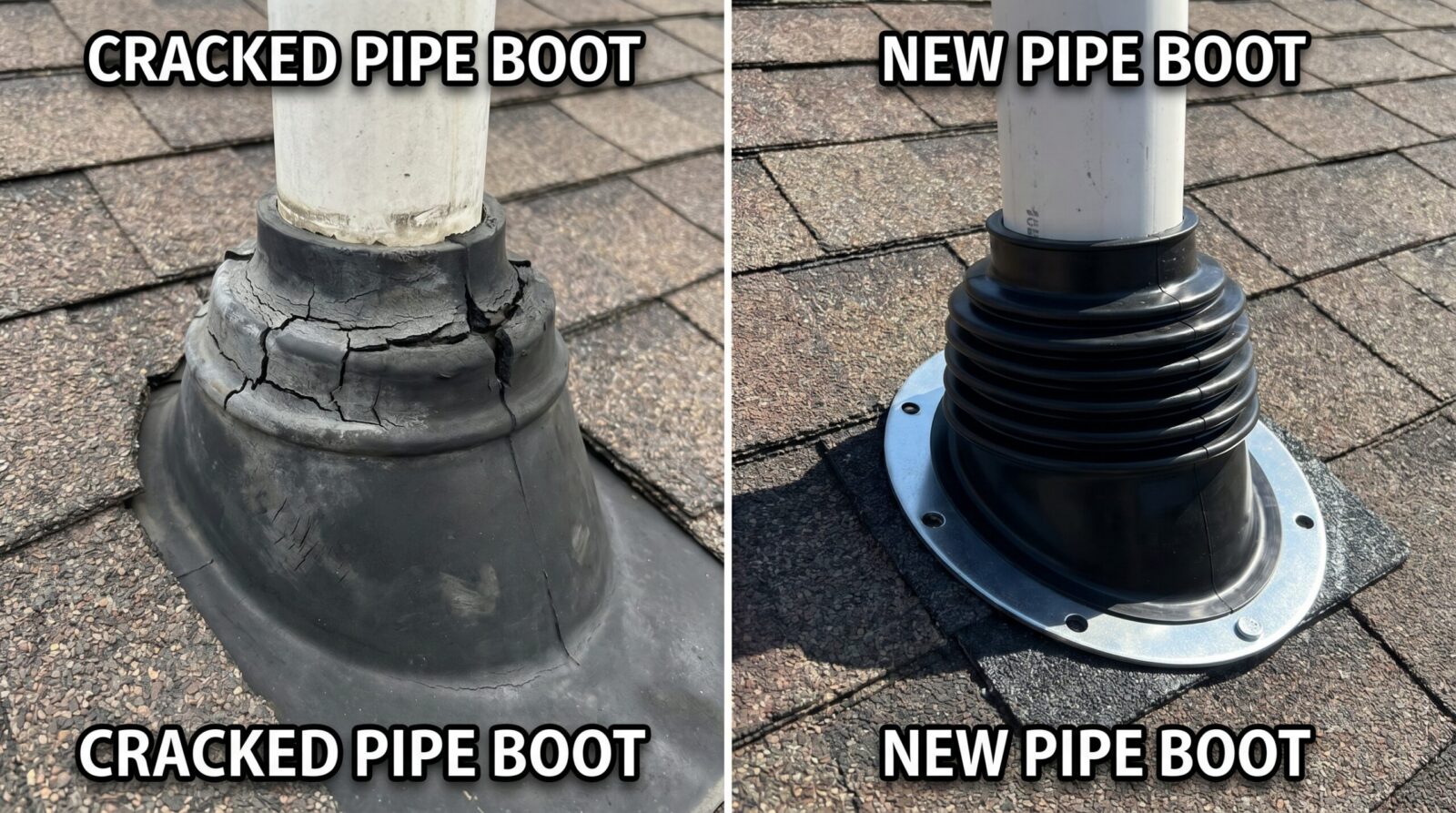
Pipe boots are the rubber and metal seals around plumbing vent pipes that stick up through your roof, typically near bathrooms, kitchens, and laundry areas. The rubber gasket portion has a lifespan of roughly 10 to 15 years before UV exposure and Northeast Ohio’s weather cycles cause cracking.
You’ll usually notice this leak as water stains on ceilings directly below bathrooms or in closets where vent pipes are located. In your attic, you might see water marks around the pipe penetration or damaged insulation nearby.
How to fix it: For easily accessible, low-slope roofs, you can install a rubber repair collar over a cracked boot as a temporary solution lasting about 10 years. However, complete boot replacement requires removing surrounding shingles and should be handled by professionals, especially on steep or high roofs.
Prevention tip: Inspect visible vent boots during routine gutter cleaning and consider upgrading to higher-quality metal boots in harsh Cleveland-area climates.
Improperly driven nails
When roofing nails aren’t driven properly during installation, they eventually work their way up through shingles due to thermal expansion and contraction. This creates multiple potential leak points that can appear anywhere in your home, often in seemingly random locations.
Unlike other leak types tied to specific roof features, nail problems cause isolated drips that might show up in the middle of rooms or on sloped ceilings. You won’t see the actual nails without lifting shingles, making this a tricky leak to diagnose.
How to fix it: Confirming backed-out nails requires lifting shingles to inspect underneath, which is risky for inexperienced homeowners. Professional roofers will reseat or relocate problem nails and seal old holes with appropriate materials while ensuring proper shingle integration.
Important note: Good installation practices using proper nail types and lengths dramatically reduce this problem, which is why choosing experienced contractors matters.
Flashing problems around walls and chimneys
Flashing consists of metal components that direct water away from critical joints where your roof meets walls, chimneys, skylights, and other structures. When flashing rusts, pulls away, or gets installed incorrectly, it allows significant water intrusion.
Common flashing failures include step flashing along walls, counter-flashing on brick chimneys, and apron flashing around dormers and skylights. You’ll typically notice leaks along interior walls, at room corners, or near chimneys, especially during wind-driven rain that’s common in Northeast Ohio.
How to fix it: Flashing replacement is complex work requiring removal of surrounding shingles, replacement of any rotted decking, installation of new waterproof underlayment, proper flashing integration, and careful shingle replacement. This is definitely professional-level work due to the precision required and potential for creating bigger problems if done incorrectly.
Prevention: Inspect flashing after major storms and avoid nailing or caulking over flashing in ways that might trap water behind it.
Clogged gutters and valley issues
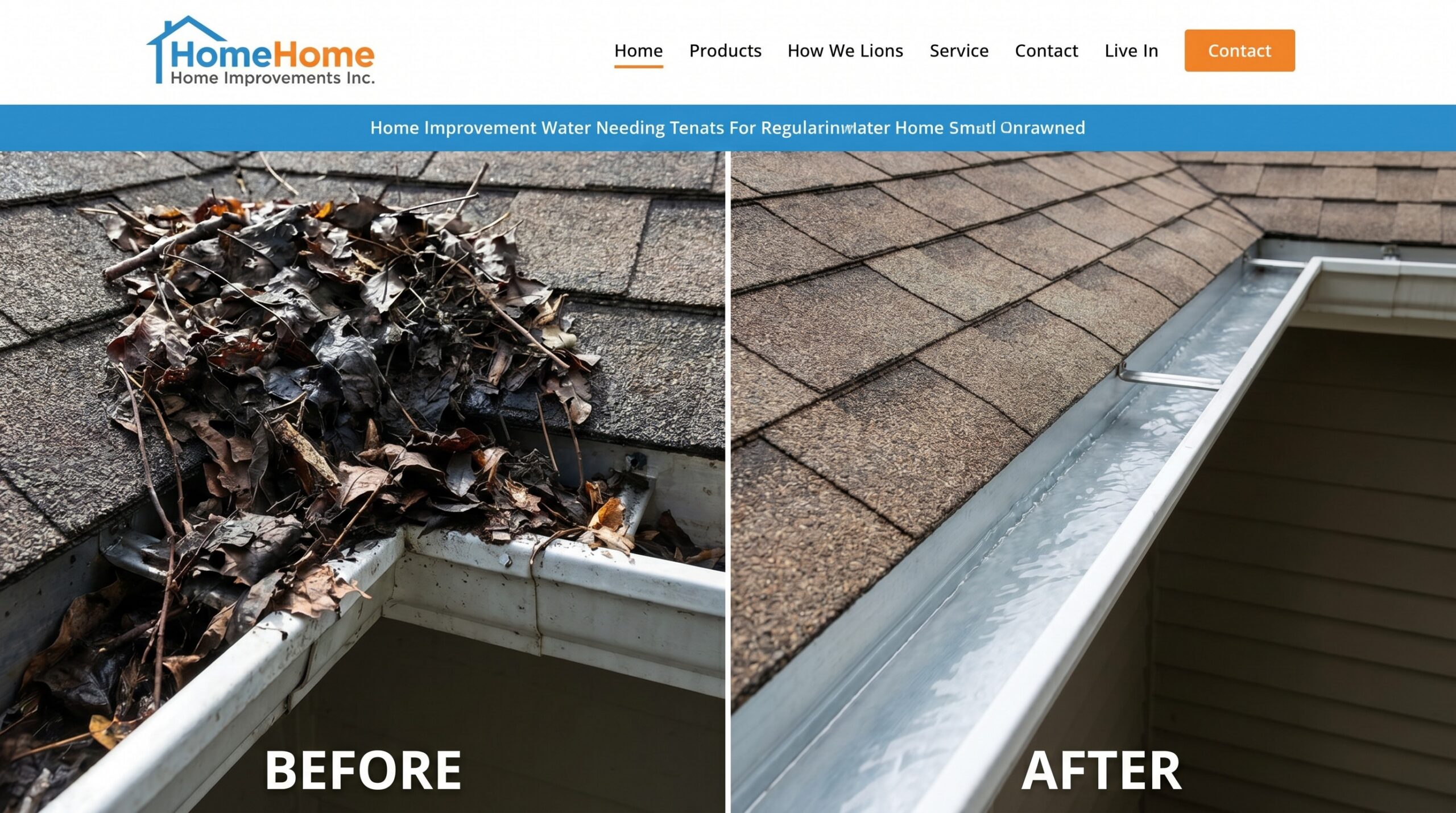
Roof valleys where two slopes meet channel large volumes of water toward gutters. When gutters fill with debris or stop mid-valley, water backs up and finds alternative paths into your home, particularly if there’s no proper flashing behind the gutter.
You might notice leaks on exterior walls below valleys, water spilling over gutters during heavy rain, or peeling paint on fascia boards near valley endpoints. This problem becomes worse in areas with many trees dropping leaves and debris—common in Rocky River and Cleveland’s tree-lined neighborhoods.
How to fix it: Basic maintenance involves cleaning gutters and removing debris from valleys twice yearly. However, if water consistently overflows even after cleaning, or if you notice rotted fascia boards, professional assessment is needed to install proper flashing or address structural issues.
Prevention: Regular gutter cleaning, installing leaf guards where appropriate, and trimming overhanging tree branches significantly reduce this problem.
Chimney leaks
Chimneys present multiple leak pathways including flashing failures where the chimney meets the roof, cracked mortar joints in brick chimneys, damaged or missing chimney caps, and siding problems on framed chimney chases.
Symptoms include water stains around fireplace areas, dampness on ceilings near chimneys, water in the firebox after storms, or musty odors around chimney walls. The complexity of chimney construction means leaks can develop in several different components.
How to fix it: Flashing repairs require professional roofers, while masonry issues need qualified masons for tuckpointing and sealing. Chimney cap problems should be handled by licensed chimney professionals, and siding issues require carpentry expertise. The key is identifying which component is actually failing.
Prevention: Annual chimney inspections and prompt resealing of masonry when needed help prevent water intrusion before it becomes a major problem.
Skylight leaks
Skylights can leak from glass-to-frame seal failures, improper flashing installation, or condensation that gets mistaken for actual leaks. Quality skylights properly installed rarely leak, but poor installation or aging seals create problems.
Look for water stains at skylight corners, dripping during wind-driven rain, or fogging between glass panes indicating seal failure. The leak location helps determine whether it’s a flashing issue affecting surrounding drywall or a skylight component problem causing direct dripping.
How to fix it: Minor flashing issues might be temporarily addressed with appropriate sealants, but major problems require professional assessment. Incorrectly installed skylights often need complete reinstallation to prevent recurring leaks, while failed factory seals require skylight replacement.
Prevention: Choose quality skylights with proper flashing kits and ensure experienced installers handle the work to avoid future problems.
Ice dam formation
In Northeast Ohio’s cold winters, ice dams form when snow melts on warm roof surfaces, runs to cold eaves, and refreezes, creating a dam that backs water under shingles. This typically occurs during or after snowstorms and can cause significant water intrusion until complete thawing occurs.
How to prevent it: Long-term solutions include improving attic insulation and ventilation to maintain more uniform roof temperatures, installing ice and water shield along eaves and in valleys, and considering metal roofing in severe ice dam areas. Short-term help involves safely removing snow with roof rakes from ground level where possible.
Unfortunately, once ice dams form and cause active leaking, there’s little you can do immediately without risking more damage to shingles or creating safety hazards.
When to call professionals versus DIY approaches
Some roof leak tasks are reasonably safe for handy homeowners, while others require professional expertise and equipment. Understanding this distinction helps you avoid creating bigger problems or safety risks.
Safer DIY tasks include visual inspections from ground level, photographing damage for insurance or contractor consultations, cleaning gutters on single-story homes with proper ladder safety, placing temporary protection inside your home, and possibly installing simple vent boot collars on easily accessible, low-slope roofs.
Professional-only tasks include walking on steep or high roofs, major flashing replacement, complex valley work, structural decking replacement, and any work around wet electrical components in attics. Professional roofers also inspect entire systems for hidden damage and typically provide warranty-backed repairs.
The investment in professional diagnosis and repair often prevents costlier problems down the road while ensuring your safety and the integrity of your roof system. For Cleveland-area homeowners dealing with storm damage, professional roofers can also assist with insurance claims to help cover necessary repairs.
Understanding these seven common leak sources helps you respond quickly when problems develop and make informed decisions about repairs. Regular maintenance like gutter cleaning and annual roof inspections catch many issues before they become expensive water damage situations, keeping your home dry and your repair costs manageable. Regular maintenance like gutter cleaning and annual roof inspections catch many issues before they become expensive water damage situations, keeping your home dry and your repair costs manageable.