

Choosing between Hardie Board and vinyl siding for your Rocky River home affects both your immediate budget and long-term property value. With Hardie Board lasting 30-50 years compared to vinyl’s 20-30 year lifespan, the decision impacts decades of homeownership. Rocky River’s diverse architectural styles and Northeast Ohio’s challenging climate create specific requirements that influence which material delivers better value for your investment.
Quick Answer: Hardie Board offers superior durability and fire resistance but costs 15-25% more upfront. Vinyl provides lower initial costs and minimal maintenance but may need replacement sooner in extreme weather conditions.
This comparison examines both materials across durability, cost, maintenance, and climate performance to help you make an informed decision for your Rocky River property.
Understanding Your Siding Options
Hardie Board, technically called fiber cement siding, combines portland cement, sand, and cellulose fibers to create dense, durable panels. This material mimics wood’s appearance while delivering superior weather resistance and fire protection. James Hardie pioneered this technology in the 1980s, and it has become increasingly popular in areas with extreme weather conditions.
Vinyl siding uses PVC plastic to create lightweight, hollow panels that resist moisture and require minimal maintenance. Modern premium vinyl includes insulated backing and UV-resistant formulations that address earlier generations’ limitations. The material gained popularity in the 1960s as an affordable alternative to wood and aluminum siding.
Both materials offer significant advantages over traditional wood siding, eliminating concerns about rot, insect damage, and frequent painting. However, their performance characteristics differ substantially in Rocky River’s climate conditions.
Performance and Durability Comparison
Weather resistance becomes crucial in Northeast Ohio, where homes face humidity, freeze-thaw cycles, and severe storms. Hardie Board excels in extreme conditions, maintaining structural integrity through hail storms and high winds that can crack or puncture vinyl panels.
The fiber cement construction provides Class A fire rating, making it non-combustible even when exposed to direct flames. This fire resistance often qualifies homeowners for insurance discounts, offsetting some of the higher initial costs. Vinyl siding, while treated with fire retardants, can melt and warp when exposed to heat from grills, reflected sunlight, or nearby fires.
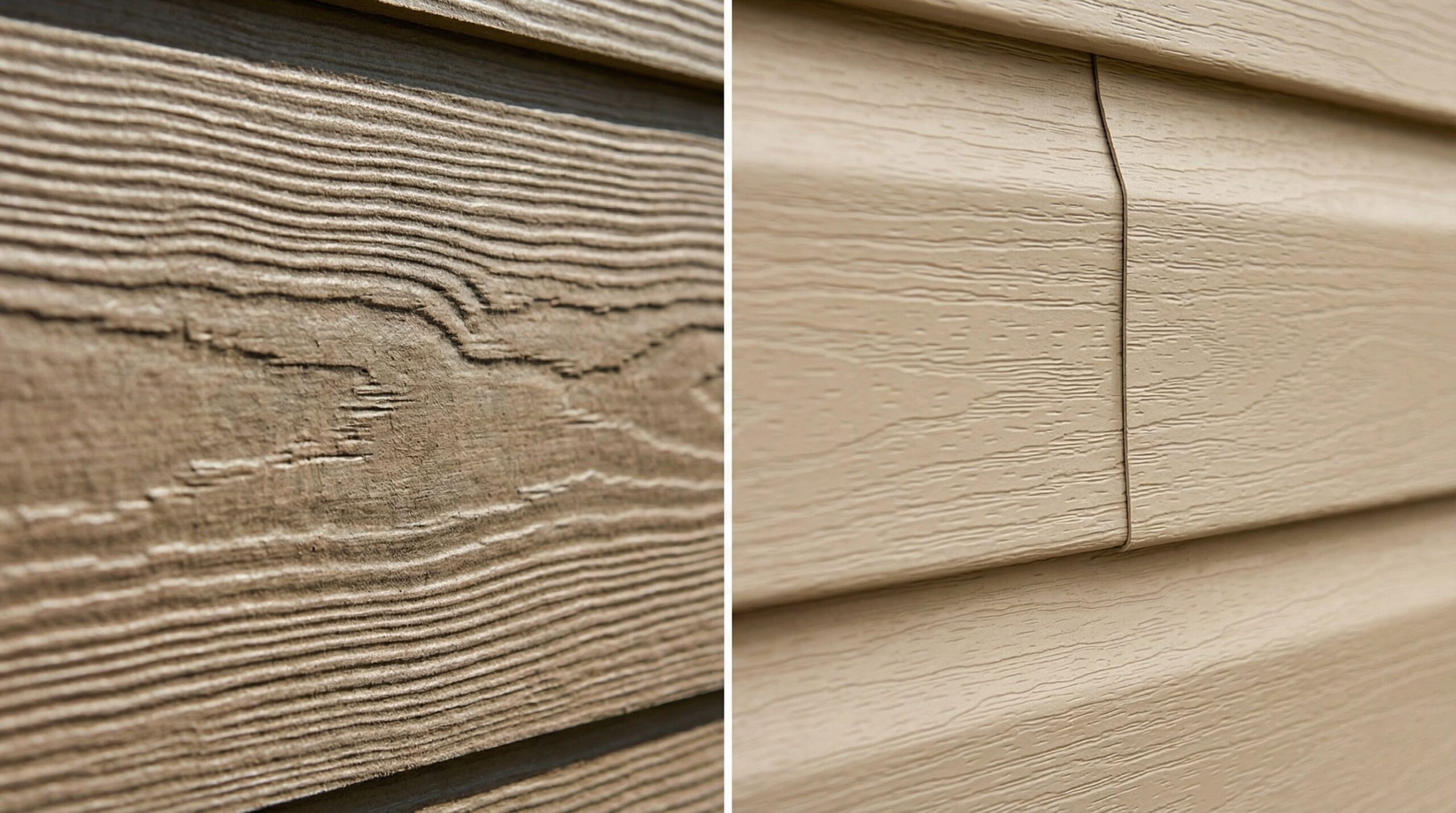
Impact resistance varies significantly between materials. Hardie Board’s quarter-inch thickness withstands impacts from hail, wind-blown debris, and accidental contact that would puncture thinner vinyl panels. However, extremely forceful impacts can cause fiber cement to crack, requiring professional repair.
Climate Consideration: Vinyl can become brittle in extreme cold, making it more susceptible to cracking during Northeast Ohio winters when temperatures drop below 20°F.
Both materials handle moisture well, but through different mechanisms. Hardie Board’s engineered composition resists water absorption while allowing vapor transmission. Quality vinyl siding provides excellent moisture barriers but relies on proper installation and expansion gaps to prevent water infiltration.
Cost Analysis and Return on Investment
Initial installation costs favor vinyl siding, typically running $7-12 per square foot compared to Hardie Board’s $10-15 per square foot range. The price difference stems from material costs and installation complexity, as fiber cement requires specialized cutting tools and experienced contractors.
| Factor | Hardie Board | Vinyl Siding |
|---|---|---|
| Initial Cost | $10-15/sq ft | $7-12/sq ft |
| Lifespan | 30-50 years | 20-30 years |
| Maintenance | Repaint every 10-15 years | Cleaning only |
| ROI at Resale | 70-75% | 60-65% |
Long-term value calculations must include maintenance expenses and replacement timelines. Hardie Board typically requires repainting every 10-15 years, costing $3,000-6,000 for average homes. Understanding when to repair versus replace your siding helps you budget for long-term maintenance. Vinyl siding needs only periodic cleaning but may require complete replacement sooner, especially in harsh weather conditions.
Property value impact differs between materials in Rocky River’s competitive real estate market. Hardie Board installations typically return 70-75% of investment at resale, while vinyl siding returns 60-65%. The difference reflects buyer perceptions of quality and durability in established neighborhoods where exterior upgrades significantly influence home values.
Installation and Maintenance Requirements
Installation complexity affects both project costs and long-term performance. Hardie Board requires diamond-tipped cutting blades, dust collection systems, and precise fastening techniques that general contractors often lack. Proper installation includes specific gapping requirements, flashing details, and moisture management protocols that impact warranty coverage. Avoiding common siding installation mistakes ensures your investment performs as expected.
Peak and Valley Roofing maintains certified expertise in fiber cement installation, ensuring your project meets manufacturer specifications. This certification provides enhanced warranty protection and quality assurance that surpasses standard industry practices.
Vinyl siding installation proves more straightforward, using standard tools and techniques familiar to most contractors. The lightweight material installs quickly without specialized equipment, reducing labor costs and project timelines. However, proper expansion gaps and fastening patterns remain critical for long-term performance.
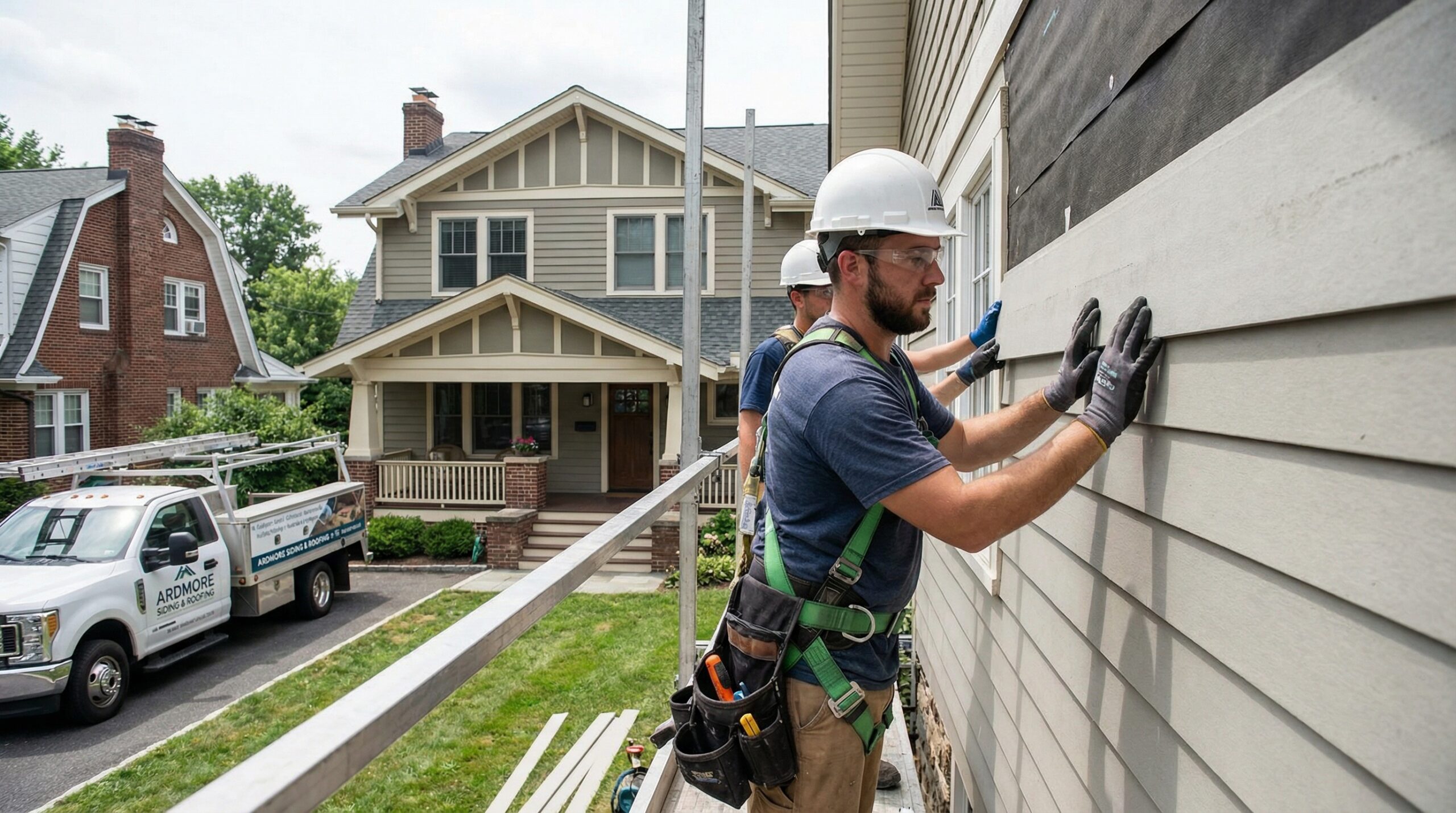
Maintenance requirements differ substantially between materials. Vinyl siding needs only annual cleaning with household detergent and garden hose pressure. Damaged panels can be individually replaced without affecting surrounding areas, making repairs relatively simple and affordable. Learn more about maintaining your siding in Northeast Ohio to extend its lifespan.
Hardie Board maintenance involves periodic cleaning plus repainting to maintain appearance and warranty coverage. While this adds expense, it also provides opportunities to update your home’s color scheme and refresh its appearance. Quality paint applications on fiber cement typically last longer than on other substrates due to the material’s dimensional stability.
Maintenance Tip: Both materials benefit from annual inspections to identify potential issues before they become costly problems, especially around windows, doors, and roof intersections.
Making the Right Choice for Your Rocky River Home
Your decision between Hardie Board and vinyl siding should consider your specific circumstances, including budget constraints, long-term ownership plans, and architectural requirements. Hardie Board suits homeowners prioritizing maximum durability and fire protection, especially in areas prone to severe weather or wildfire risk.
Vinyl siding appeals to homeowners seeking lower upfront costs and minimal maintenance requirements. For detailed cost comparisons, explore our complete siding replacement cost guide for Rocky River. This option works well for rental properties or situations where budget constraints limit initial investment capacity.
Consider your home’s architectural style when making this decision. Historic Rocky River neighborhoods often benefit from Hardie Board’s authentic wood-like appearance and deep shadow lines. Modern homes may work equally well with either material, depending on design preferences and color requirements. Selecting the right James Hardie siding colors can transform your home’s exterior appeal.
The choice between Hardie Board and vinyl siding ultimately depends on balancing upfront costs against long-term value and performance expectations. Both materials offer substantial improvements over traditional wood siding, but their different characteristics make each suitable for specific situations and homeowner priorities. Consulting with experienced local contractors helps ensure your choice aligns with your property’s unique requirements and your long-term goals.