

When you hear “lifetime roof warranty,” it sounds like your roof will be protected forever. But here’s the reality: a lifetime roof warranty doesn’t mean your roof is covered for your entire life or even the life of your home. Instead, it typically refers to the expected lifespan of the roofing materials or your ownership period.
A lifetime roof warranty usually covers manufacturing defects for as long as you own your home, but full coverage is often limited to the first 10-15 years before becoming prorated.
Understanding what these warranties actually cover can save you thousands in unexpected repair costs, especially in Northeast Ohio where severe weather can put your roof to the test. According to solidrockcorp.com, many homeowners discover too late that their “lifetime” coverage has significant limitations and exclusions.
This guide will walk you through what lifetime roof warranties really mean, how long they actually last, what’s covered versus excluded, and how to evaluate warranty options when choosing a roofing contractor in the Cleveland area.
What is a lifetime roof warranty
A lifetime roof warranty is a manufacturer’s promise to cover certain roofing materials for defects as long as you own your property. However, the term “lifetime” can be misleading because it doesn’t guarantee coverage forever.
There are two main types of lifetime roof warranties you’ll encounter. Material warranties come from shingle manufacturers and cover defects in the roofing products themselves. These typically last for the “lifetime” of your ownership but often have a non-prorated period of 10-15 years followed by declining coverage.
Workmanship warranties come from your roofing contractor and cover installation errors. According to billraganroofing.com, some contractors offer lifetime workmanship warranties that protect against leaks caused by installation mistakes until the roofing materials fail. As a family-owned roofing company serving Rocky River and the greater Cleveland area, we understand how important quality installation is to warranty protection.
The key difference between lifetime and limited lifetime warranties lies in the coverage scope. Limited lifetime warranties have more restrictions on what’s covered, often excluding labor costs, disposal fees, and certain types of damage.
How long does a lifetime roof warranty actually last
Despite the “lifetime” label, these warranties have specific time limits that vary by manufacturer and warranty type. Most lifetime shingle warranties provide full coverage for 10-15 years, then shift to prorated coverage for the remaining warranty period.
During the non-prorated period, manufacturers typically cover 100% of material costs if defects are found. After this period ends, coverage decreases each year. As noted by homerroofing.net, a 50-year shingle at year 30 might only return 20-30% of material costs.
Enhanced warranties can extend the non-prorated period significantly. These upgraded warranties often require a full roofing system from one manufacturer and installation by a certified contractor. The non-prorated coverage can last 20-50 years depending on the manufacturer and contractor certification level.
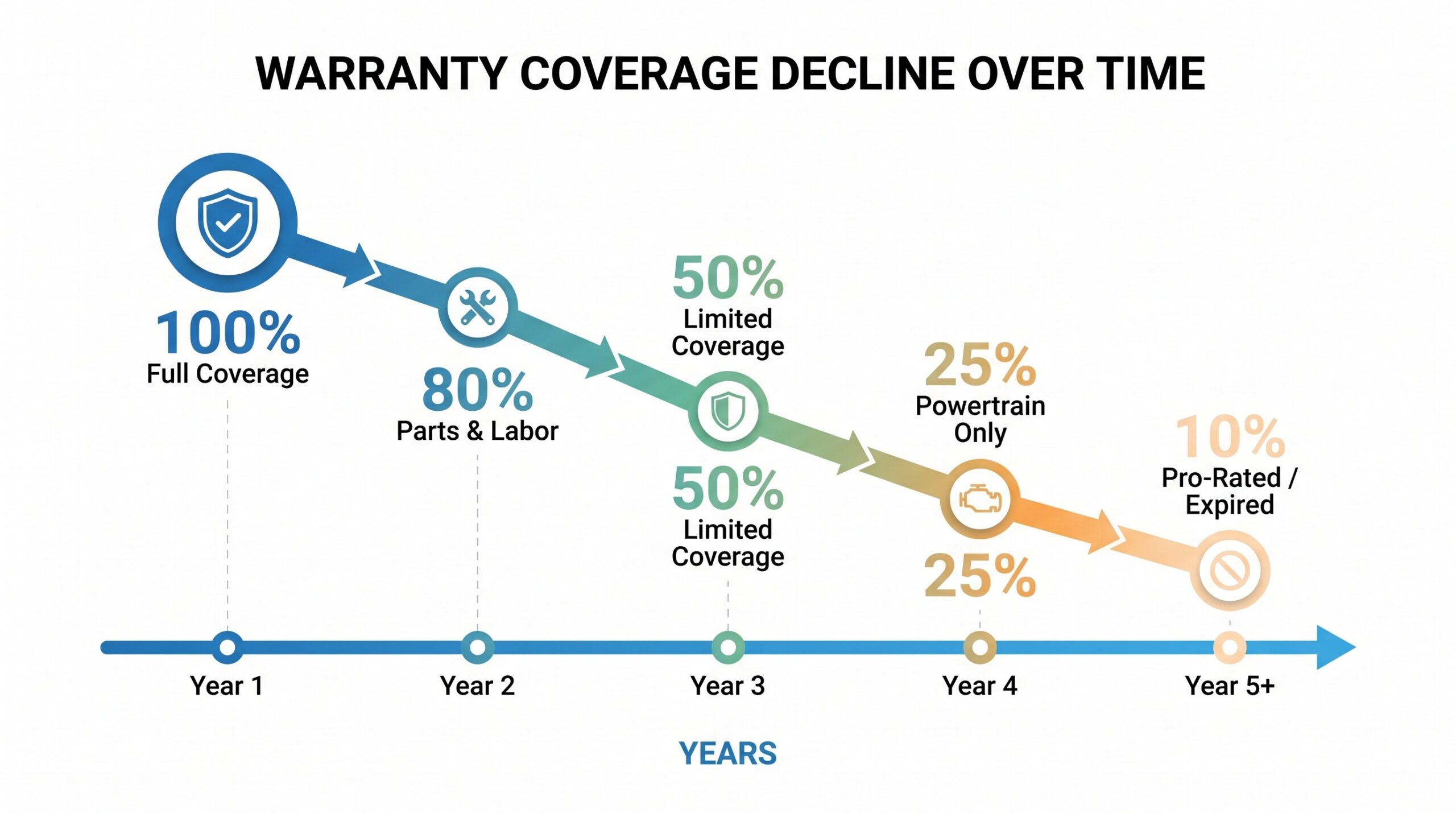
Enhanced lifetime warranties typically require using a complete roofing system from one manufacturer and hiring a certified contractor, but they can provide non-prorated coverage for up to 50 years.
For workmanship warranties, “lifetime” usually means until the roofing materials are expected to fail, which is typically 20-30 years for most asphalt shingles. This provides long-term protection against installation errors throughout the roof’s functional life – particularly important in Northeast Ohio where weather extremes can expose poor installation practices.
What lifetime roof warranties cover and exclude
Understanding coverage versus exclusions is crucial for managing your expectations. Lifetime material warranties typically cover manufacturing defects in shingles and roofing components, but they have significant limitations.
Most material warranties exclude normal wear and tear, storm damage, improper installation, and poor ventilation. According to solidrockcorp.com, many warranties require regular maintenance and documented inspections to remain valid. This is especially important for Cleveland-area homeowners dealing with ice dams, heavy snow loads, and severe thunderstorms.
| Coverage Type | Usually Covered | Usually Not Covered |
|---|---|---|
| Material Warranty | Manufacturing defects, premature aging | Storm damage, installation errors, normal wear |
| Workmanship Warranty | Installation errors, resulting leaks | Product defects, weather damage, lack of maintenance |
| Enhanced Warranty | Materials, labor, disposal | Misuse, unauthorized repairs, acts of nature |
Labor coverage varies significantly between warranty types. Standard lifetime warranties often cover materials only, while enhanced warranties may include labor, tear-off, and disposal costs during the non-prorated period. After that period, labor coverage typically ends even if material coverage continues.
Workmanship warranties focus on installation errors and resulting problems like leaks. These don’t cover product defects or damage from external factors like severe weather or lack of maintenance. Given Northeast Ohio’s challenging weather conditions, having both strong material and workmanship warranties provides the best protection.
How to evaluate a lifetime roof warranty before signing
When reviewing warranty options, focus on specific details rather than just the “lifetime” label. Ask your contractor about the non-prorated period length, what happens after it ends, and whether labor is included throughout the warranty term.
Key questions to ask include: How long does full coverage last? What maintenance is required to keep the warranty valid? Can the warranty transfer to new homeowners? What documentation is needed for claims?
A clearly defined 20-year non-prorated warranty with labor coverage often provides more predictable protection than a vague lifetime warranty with extensive exclusions.
Review all warranty documents carefully before signing. Look for specific exclusions, maintenance requirements, and claim procedures. Some warranties require registration within a certain timeframe or use of specific contractors to remain valid.
Consider the contractor’s reputation and longevity when evaluating workmanship warranties, including whether they are properly licensed, bonded, and insured. A lifetime workmanship warranty is only valuable if the contractor remains in business and honors their commitments. Check their track record, certifications, and financial stability.

Enhanced warranties often provide better value despite higher upfront costs, especially for long-term homeowners looking to make roofing upgrades. These typically offer longer non-prorated periods, broader coverage, and may include labor and disposal costs that standard warranties exclude.
At Peak and Valley Roofing, we believe in transparent warranty explanations that help Rocky River and Cleveland-area homeowners make informed decisions. Our experience with insurance restoration work has shown us how important clear warranty terms are when dealing with storm damage claims. Understanding these warranty details upfront prevents surprises later and ensures you get the protection you’re paying for. Remember that the best warranty is one that clearly defines coverage, has reasonable maintenance requirements, and comes from reputable manufacturers and contractors who stand behind their work.