

Getting caught in the rain during a roof replacement can feel like your worst nightmare as a Cleveland-area homeowner. Professional roofers should never install roofing materials during active rainfall, but they have specific protocols to protect your home when unexpected weather strikes. The key is understanding what should happen and knowing the warning signs of improper handling.
Quick Answer: Reputable contractors will immediately stop installation work, secure exposed areas with heavy-duty tarps, and wait for completely dry conditions before resuming. Any contractor who continues installing shingles or underlayment in the rain is putting your home and their workers at serious risk.
When rain interrupts your roof replacement, you’re not helpless. Understanding the proper response helps you evaluate whether your contractor is handling the situation professionally and protects your investment from costly water damage.
Can roofers work in the rain?
The short answer is no for full roof installations, but the reality has important nuances you need to understand.
Full roof replacements must stop during any active rainfall. Installing shingles, underlayment, or other roofing materials on wet surfaces compromises both safety and performance. Wet decking prevents proper adhesion, and moisture trapped beneath materials leads to rot, mold, and premature failure.
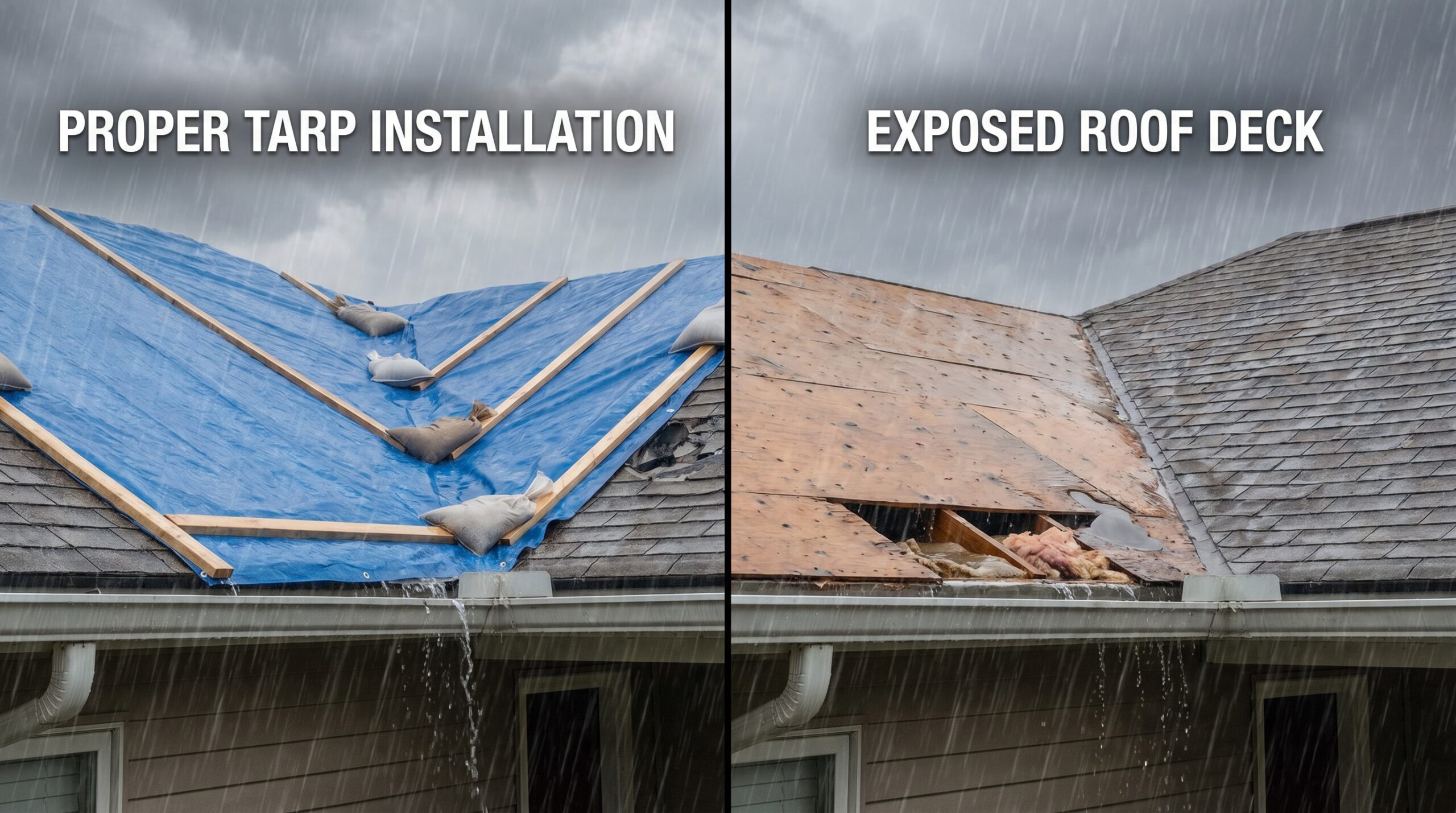
However, emergency protective work is different. Professional crews can and should secure exposed areas with tarps when rain starts unexpectedly. This isn’t “roofing in the rain” but rather damage prevention that requires careful safety protocols.
Light drizzle creates a gray area where some experienced contractors might continue very limited work, but most reputable companies have policies to stop all installation when any moisture is present. The risk simply isn’t worth the potential problems.
According to billraganroofing.com, many contractors won’t even start a project if there’s a 40% chance of rain forecasted for that day.
What professional roofers do when rain starts
When unexpected rain begins during your roof replacement, a professional crew should follow these immediate steps:
Stop all installation work instantly. Tools get secured, loose materials are gathered, and the crew shifts into protection mode rather than trying to rush through the installation.
Deploy heavy-duty tarps over exposed decking. These aren’t lightweight plastic sheets but professional-grade waterproof materials that can withstand wind and secure properly. The crew focuses first on the most vulnerable areas like valleys and penetrations.
Protect stored materials on the roof. Shingle bundles, underlayment rolls, and other supplies get covered or moved to prevent water damage that could compromise their performance.
Check inside your home for any signs of water intrusion. Professional contractors will do a quick interior inspection to identify any immediate leaks that need attention.
Important: According to nestexteriors.com, reputable contractors work in sections, completing each area from tear-off through finished installation before moving to the next, which minimizes exposure time.
The crew then waits. Rushing back onto a wet roof creates safety hazards and installation problems that cost more than the delay.
Why rain during installation creates serious problems
Water intrusion during roof replacement can damage your Northeast Ohio home in ways that aren’t immediately obvious but become expensive quickly, potentially even causing ceiling damage after your roof replacement.
Your roof decking becomes vulnerable the moment old shingles are removed during the roof replacement process. Without proper protection, rain soaks into the exposed plywood or OSB, potentially reaching insulation, ceilings, walls, and flooring below. Heavy rain can cause thousands of dollars in interior damage within hours.
Wet decking compromises the entire roof system. Installing new materials over moisture-saturated wood traps water that leads to rot, mold growth, and structural weakness. The decking may look fine once it dries, but trapped moisture continues causing damage beneath your new roof.
Material performance suffers significantly. Shingles installed on wet surfaces may not seal properly, reducing wind resistance and shortening roof life. Many manufacturers specify dry installation conditions in their warranties, meaning wet installation could void your coverage from day one—a critical consideration when determining if insurance will pay for a new roof.
According to rembrandtroofing.com, professional contractors check that no moisture has penetrated to the decking and ensure all wet surfaces are completely dry before continuing installation.
How to prepare for rain during your roof replacement
Smart preparation protects your Cleveland-area home and reduces stress when Northeast Ohio weather becomes unpredictable.
Discuss rain policies before signing any contract, along with the average cost to replace a roof. Ask your contractor specific questions about their weather monitoring procedures, what happens if rain interrupts the project, and whether there are additional costs for weather delays. Get these policies in writing.
Schedule strategically when possible. While you can’t control the weather, avoiding historically wet seasons reduces your risk. Peak and Valley Roofing works with Rocky River and Cleveland homeowners to identify optimal timing based on local weather patterns and Northeast Ohio’s seasonal conditions.
Ensure your contractor has proper equipment on-site. Professional crews arrive with adequate tarps, fasteners, and covering materials already loaded. They shouldn’t need to scramble for protection when rain starts.
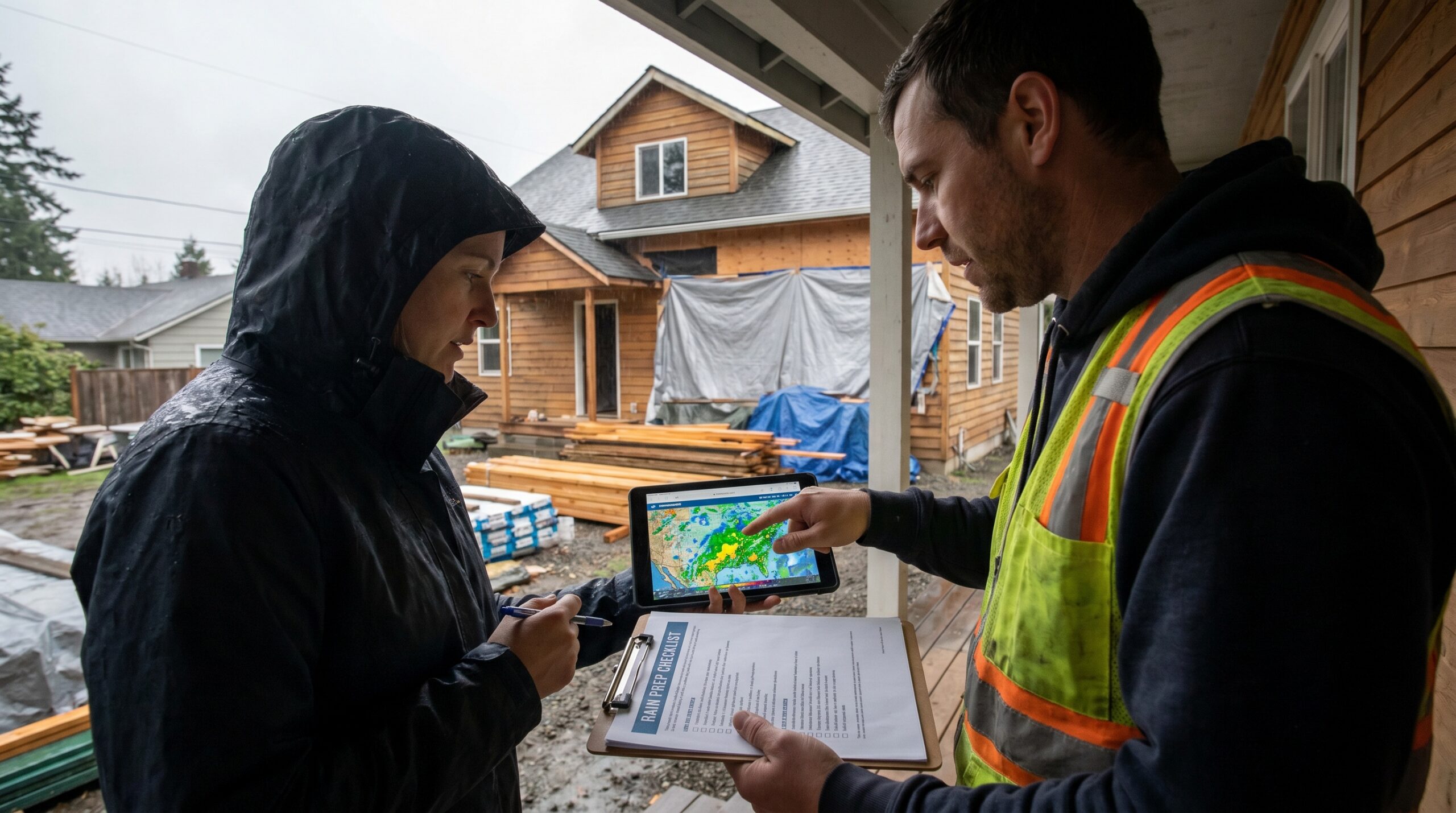
Plan for interior protection. Move valuables away from areas directly below the work zone and consider covering furniture with plastic sheeting as an extra precaution.
Pro Tip: rapidroofs.com recommends asking contractors about their specific drying time requirements after rain events, as rushing back to work on damp surfaces creates long-term problems.
| Weather Condition | Full Replacement | Emergency Tarping | Minor Repairs |
|---|---|---|---|
| Dry conditions | ✅ Proceed | ✅ Proceed | ✅ Proceed |
| Light drizzle | ❌ Stop work | ⚠️ If safe | ⚠️ Evaluate risk |
| Heavy rain/storms | ❌ Stop work | ❌ Too dangerous | ❌ Stop work |
Communication is crucial throughout the process. Your contractor should keep you informed about weather delays, explain what protective measures they’ve taken, and provide realistic updated timelines. Professional companies like Peak and Valley Roofing maintain clear communication channels so you’re never left wondering about your project’s status, especially during Cleveland’s unpredictable weather patterns.
Understanding what should happen when rain interrupts your roof replacement helps you work confidently with your contractor and protect your home investment. The key is choosing a professional company that prioritizes safety and proper procedures over speed, ensuring your new roof performs well for decades to come.