

Winter in Rocky River brings unique challenges that can devastate unprepared homes. With 35-45 annual freeze-thaw cycles and 50-60 inches of heavy lake-effect snowfall, your gutters face extreme stress from ice dams, snow loads, and temperature fluctuations. The right winter gutter system protects your foundation, prevents costly water damage, and saves thousands in potential repairs.
Key Fact: Rocky River homes near Lake Erie experience intensified ice dam formation due to the humid microclimate and brutal lake-effect bands, making proper gutter selection critical for winter protection.
At Peak and Valley Roofing, we’ve helped countless Rocky River homeowners upgrade their gutter systems for winter performance. Our expertise shows that proactive preparation with the right materials and installation techniques prevents the water damage that costs homeowners $8,000-15,000 in repairs.
Understanding Rocky River’s winter gutter challenges
Rocky River’s location near Lake Erie creates a humid microclimate that intensifies winter gutter problems. Ice dams form when attic heat escapes, causing snow to melt and refreeze at eave edges. This blocks drainage and forces water under shingles, potentially damaging your home’s interior.
The area’s freeze-thaw cycles put tremendous stress on gutter connections. Water expands when frozen, creating pressure that can separate joints and damage mounting hardware. Lake-effect storms add another challenge, depositing heavy, wet snow that can weigh up to 20 pounds per cubic foot.
Freezing rain creates the most difficult conditions. Ice forms directly on gutters, adding significant weight while blocking normal drainage. Your gutter system needs enhanced load capacity, reinforced mounts, and strategic bracket spacing to handle these demanding conditions. Understanding when to replace vs repair your gutters becomes essential when winter damage accumulates over multiple seasons.
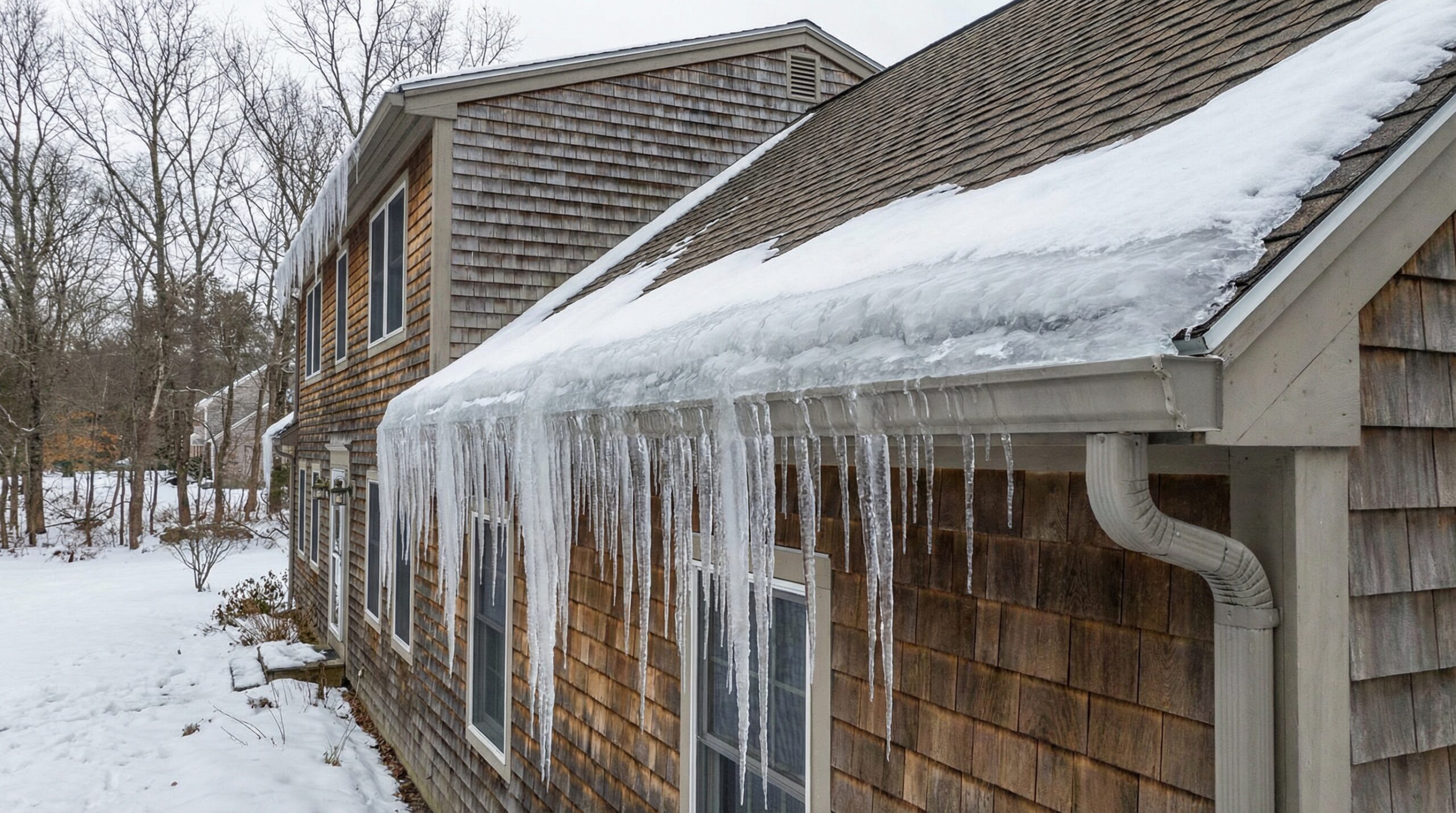
Choosing the right gutter materials for winter
Material selection dramatically impacts how your gutters perform during Northeast Ohio’s harsh winters. Each option offers different advantages when facing freezing temperatures, heavy snow loads, and constant temperature fluctuations.
Aluminum gutters provide the best balance of performance and cost for most Rocky River homes. Their moderate expansion coefficient handles temperature changes well, while their light weight reduces stress on mounting hardware. We recommend minimum 0.027″ thickness, with 0.032″ gauge for areas with heavy snow accumulation.
Copper gutters offer exceptional longevity and superior load capacity for ice accumulation. Their natural antimicrobial properties prevent ice-promoting organic growth. While more expensive initially, copper systems can last 50+ years with minimal maintenance. For a detailed comparison, see our guide on copper vs aluminum gutters lifespan and value for Ohio homes.
Steel gutters provide superior strength for snow loading but require careful consideration in Northeast Ohio’s humid climate. Stainless steel performs better long-term than galvanized options, though both add significant weight to your roof structure.
Avoid vinyl gutters in Rocky River’s climate. They become brittle in extreme cold and lack the load-bearing capacity needed for ice accumulation during Northeast Ohio winters.
Proper sizing and installation for snow loads
Standard gutter sizing often fails during Rocky River’s concentrated melt-off events. A 2,000 square foot home with 6/12 pitch actually sheds water from 2,200 square feet of surface. While standard 5-inch K-style gutters handle 5,500 square feet under normal conditions, they struggle with rapid winter melting.
Upgrading to 6-inch systems provides 38% more water flow capacity, handling 7,600 square feet of roof area. For larger homes or those with complex rooflines, 7-inch or custom box gutters may be necessary. Our comprehensive 5-inch vs 6-inch gutters sizing guide for Northeast Ohio homes can help you determine the optimal size for your property.
Downspout placement becomes critical in winter. Instead of standard 20-foot spacing, winter-ready systems need downspouts every 15 feet. Roof valleys, dormers, and transitions create concentrated flow areas requiring additional capacity. Proper downspout placement strategies ensure efficient water management even during heavy snow melt.
Bracket spacing must accommodate snow loads. We install brackets every 16-20 inches instead of the standard 24-30 inches. This prevents progressive failure when ice accumulates. Hidden hanger systems distribute weight more evenly than traditional spike-and-ferrule methods, maintaining proper gutter shape under heavy loads.
| Gutter Size | Roof Area Capacity | Recommended Downspout Spacing | Bracket Spacing for Snow |
|---|---|---|---|
| 5-inch K-style | 5,500 sq ft | 15 feet | 16 inches |
| 6-inch K-style | 7,600 sq ft | 15 feet | 18 inches |
| 7-inch K-style | 9,800 sq ft | 12 feet | 20 inches |
Advanced winter protection solutions
Modern gutter protection goes beyond basic installation. Heated gutter systems prevent ice formation proactively using self-regulating cables that adjust output based on temperature. These systems extend into downspouts and protect roof edges against ice dams.
Smart technology integration optimizes performance while reducing energy costs. Temperature-sensitive controllers monitor conditions and activate heating only when needed. IoT systems can alert you to flow issues before damage occurs, while smartphone integration enables remote management.
Gutter guards require careful selection for winter functionality. Micro-mesh systems prevent debris accumulation while allowing water flow even when partially frozen. Avoid surface tension systems that fail when freezing changes water properties. Learn more about whether gutter guards are worth the investment for your specific situation.

For Rocky River homes with severe winter challenges, we recommend professional-grade micro-mesh guards combined with strategic heating in problem areas. North-facing sections, valleys, and areas with poor sun exposure benefit most from heated solutions.
The investment in advanced winter protection typically pays for itself through damage prevention. While heated systems cost $1,500-3,000 for typical Rocky River homes, they eliminate the risk of ice dam damage that can cost $10,000+ to repair. To better understand the financial commitment, review our gutter installation cost guide for 2026.
Protecting your Rocky River home from winter weather starts with the right gutter system. Proper materials, sizing, and installation techniques prevent the costly damage that affects unprepared homes every winter. At Peak and Valley Roofing, we design winter gutter solutions specifically for Northeast Ohio’s challenging climate, ensuring your home stays protected throughout the coldest months.