

Choosing the right roof and siding color combination can boost your Rocky River home’s curb appeal and property value by up to 10%. The key lies in understanding color theory, your home’s architectural style, and how Northeast Ohio’s unique environment affects color perception throughout the seasons.
Quick Tip: Neutral color combinations like charcoal roofing with white siding remain the most popular choice among Rocky River homeowners, offering timeless appeal that works across all architectural styles.
Whether you’re planning a complete exterior renovation or simply updating your roof or siding, the right color coordination creates lasting visual impact while maintaining neighborhood harmony. Let’s explore proven combinations that work beautifully in Rocky River’s diverse architectural landscape.
Understanding color theory for exterior design
Color theory provides the foundation for creating harmonious exterior designs that enhance your home’s natural beauty. The color wheel shows us three main approaches that work particularly well for Rocky River homes.
Complementary colors create striking contrast by pairing opposites on the color wheel. Think deep charcoal roofing with cream siding on Colonial homes. This approach makes architectural features pop while maintaining sophisticated appeal.
Analogous colors use neighboring hues for a more subtle, cohesive look. Ranch homes benefit from warm earth tones like weathered brown roofing paired with taupe or tan siding. These combinations feel natural and blend beautifully with Rocky River’s wooded landscapes.
Monochromatic schemes use different shades of the same color family. Contemporary homes often showcase this approach with varying grays from light siding to darker roofing, creating depth without overwhelming contrast.
Popular combinations by architectural style
Different architectural styles call for specific color strategies that highlight their unique features. Here’s what works best for Rocky River’s most common home styles.
| Style | Roof Color | Siding Color | Best Neighborhoods |
|---|---|---|---|
| Colonial | Charcoal Gray | White or Cream | Beachcliff |
| Ranch | Desert Tan | Taupe or Sage | Westlake |
| Contemporary | Moire Black | Light Gray | Newer developments |
| Cape Cod | Hickory Brown | Harbor Blue | Established areas |
Colonial homes in neighborhoods like Beachcliff shine with high-contrast combinations. The classic pairing of dark roofing with light siding emphasizes clean lines and symmetrical features that define this timeless style.
Ranch homes spread across single levels benefit from warmer, earth-toned palettes. These combinations complement the horizontal emphasis while creating visual interest through subtle color variation rather than stark contrast.

Contemporary homes allow for bolder choices, including dramatic monochromatic schemes. The clean lines and geometric features of modern architecture can handle stronger color statements while maintaining sophisticated appeal.
Environmental factors affecting color choices
Rocky River’s location in Northeast Ohio creates unique considerations for exterior color selection. The filtered light through mature tree canopies softens bold colors, making them appear more muted than expected.
Seasonal changes dramatically affect how colors appear throughout the year. Summer’s lush greenery provides a rich backdrop that complements earth tones and neutrals. Fall’s amber and orange foliage can clash with certain color combinations, making neutral palettes safer choices.
Weather Impact: Northeast Ohio’s humid summers and freezing, lake-effect winters cause darker colors to fade faster, especially on south-facing surfaces that receive direct sunlight throughout the day.
Winter’s stark landscape reveals true color relationships without the softening effect of foliage. Colors that look perfect in summer might feel too bold or clash during bare winter months. This is why many Rocky River homeowners choose neutral combinations that work year-round.
The community’s mix of mature trees and open spaces means your home’s exposure varies significantly. Homes tucked into wooded areas can handle slightly bolder colors, while those on open lots benefit from more conservative choices that don’t overwhelm the landscape.
Material textures and color interaction
The relationship between texture and color significantly impacts your home’s final appearance. Smooth surfaces reflect light differently than textured ones, affecting how colors present themselves in various lighting conditions.
Architectural shingles create shadows that make colors appear 20% darker than flat samples suggest. This means your charcoal roof might look nearly black in certain lighting, while smooth metal roofing reflects more light and appears brighter.
Siding textures play an equally important role. Wood-grain vinyl creates subtle shadows that add warmth to neutral colors, while smooth surfaces provide clean, crisp color presentation. Fiber cement siding with texture enhances earth tones but can make bold colors appear overwhelming.
When combining different textures, account for these perception differences. A smooth, light-colored siding paired with textured, dark roofing creates pleasing contrast while maintaining visual balance.
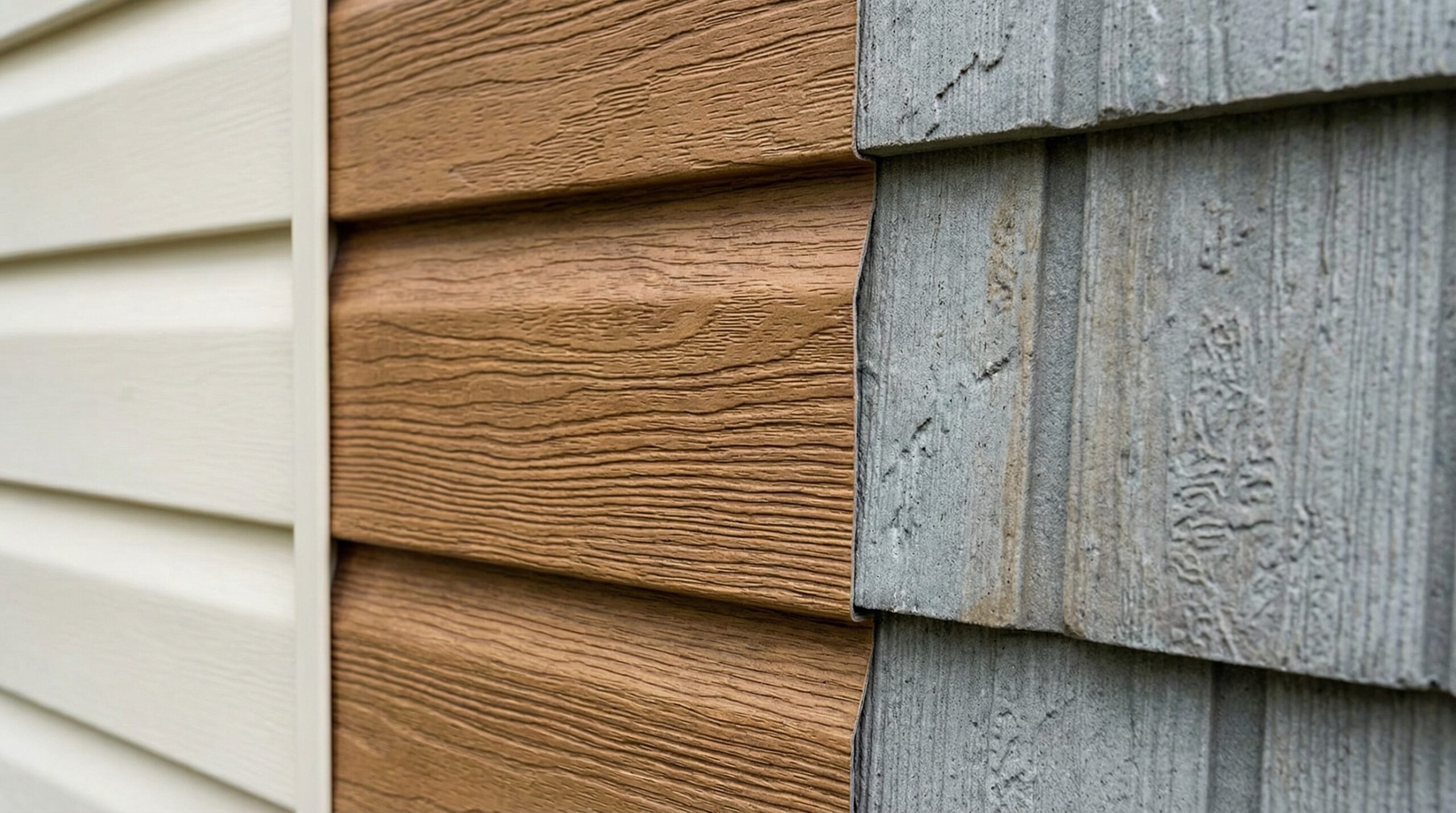
Always view large samples at your property during different times of day. Morning light reveals cool undertones, while afternoon sun brings out warm hues. Evening light can dramatically change color perception, especially for homes with western exposure.
Practical selection and accent coordination
Start your color selection process by observing successful combinations in your neighborhood. Rocky River’s established areas like Beachcliff Estates showcase proven palettes that maintain property values while expressing individual style.
The 60-30-10 rule provides excellent guidance for balanced exterior design. Use your main siding color for 60% of the visual impact, roofing for 30%, and accent elements like trim, doors, and shutters for the remaining 10%.
Pro Strategy: Choose your accent colors last, after finalizing roof and siding selections. This approach ensures your front door, trim, and shutters enhance rather than compete with your main color scheme.
Entry doors offer the perfect opportunity for personality expression. Deep red, navy blue, or forest green create welcoming focal points that draw visitors to your entrance. These bold choices work beautifully against neutral backdrops and can significantly boost your home’s curb appeal.
Trim colors should either contrast with siding for definition or blend subtly for cohesive appeal. White trim on dark siding creates classic elegance, while cream trim on tan siding offers sophisticated subtlety.
Consider your home’s permanent features like brick foundations or stone accents when making selections. These elements can’t be changed easily, so your color choices must complement existing materials for long-term satisfaction. If you’re uncertain about whether to repair or replace your siding, consulting with a professional can help you make the best decision for your home’s overall aesthetic.
The thoughtful coordination of roof, siding, and accent colors creates exterior designs that enhance your Rocky River home’s architectural character while reflecting your personal style. Whether you prefer timeless neutrals or bolder contemporary combinations, understanding proper siding maintenance will ensure your chosen color strategy boosts curb appeal and creates lasting value for years to come.