Winter roof leaks in Northeast Ohio rarely stay small. What starts as a slow drip during a snowstorm can turn into soaked insulation, damaged ceilings, and mold growth within days.
Peak & Valley Roofing responds to emergency roof-leak repair requests across Northeast Ohio when winter weather exposes roof weaknesses. Acting early limits interior damage and keeps repair options manageable.
Why Emergency Roof Leaks Get Worse in Winter
Winter conditions create problems that don’t exist the rest of the year. Water behaves differently when temperatures hover around freezing.
Common winter-related causes include:
- Ice dams that force melting snow backward under shingles
- Frozen or separated flashing around chimneys, valleys, and wall lines ● Snowmelt that refreezes overnight, widening small gaps
- Hidden leaks behind insulation, delaying visible signs of damage
- Structural stress from snow load, especially on older roof framing
Once water enters, repeated freeze-thaw cycles enlarge the opening. Delaying emergency roof repair often turns a minor repair into a major restoration.
Signs You Need Emergency Roof Leak Repair Immediately
Certain conditions indicate that a roof leak requires immediate attention. Active water intrusion, such as dripping or water traveling along interior walls, signals a failure that can escalate rapidly.
Additional warning signs include ceiling discoloration, bubbling paint, sagging drywall, or visible changes in the roofline after heavy snowfall. Ice accumulation along eaves or in gutters often indicates water backup beneath roofing materials, while missing or displaced shingles after winter wind events can expose vulnerable areas.
Moisture inside the attic, including wet insulation or standing water, is a clear indicator that the roof system has been compromised. During snow, sleet, or freezing rain, these issues tend to worsen quickly and should be addressed without delay.
What To Do Right Now If Your Roof Is Leaking
Taking a few immediate, safe steps can help limit interior damage while professional repairs are arranged.
Inside the home, place containers beneath active leaks to control water spread and move furniture or valuables away from affected areas. If drywall has begun to bulge from trapped moisture, carefully releasing the water may help reduce the risk of collapse, provided it can be done safely.
There are also critical actions to avoid. Do not climb onto a roof that is icy or snow-covered, and do not attempt temporary patching or tar repairs in freezing conditions. Moisture in the attic should never be ignored, even if visible ceiling damage has not yet appeared.
Winter roof surfaces are unpredictable. Falls and additional roof damage are common when homeowners attempt temporary exterior fixes without proper equipment or conditions.
Our Emergency Roof Repair Process
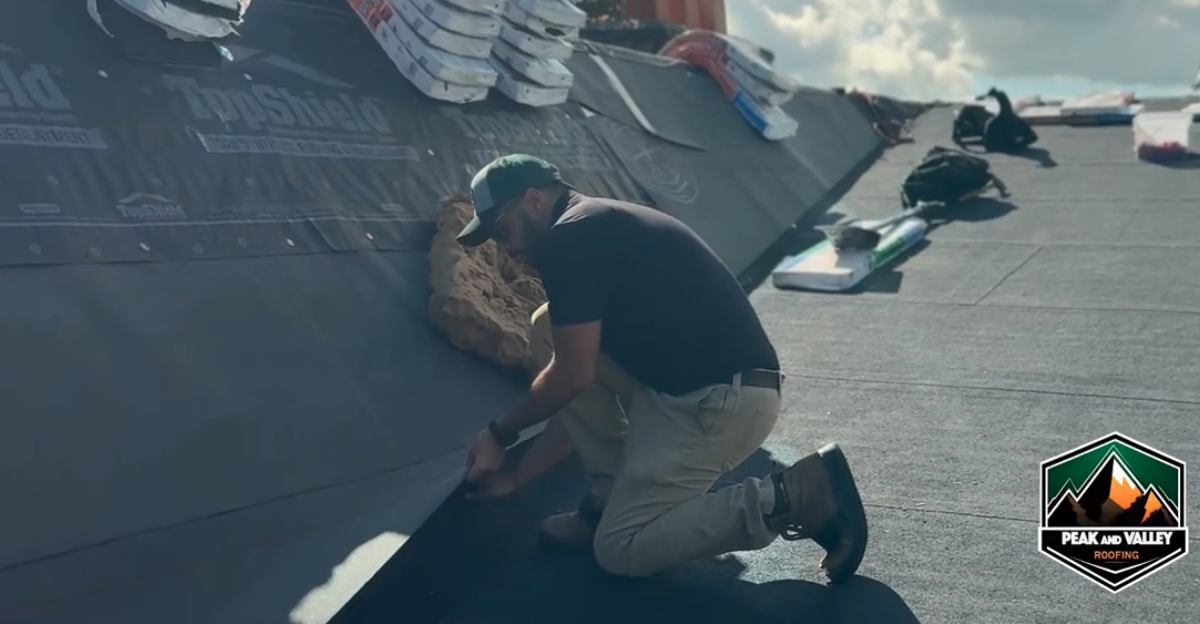
Emergency roof repairs during winter require a measured, safety-first approach. Peak & Valley Roofing prioritizes protecting the home while accounting for weather conditions, access limitations, and structural risk.
Each response begins with a rapid evaluation to identify immediate hazards and active water intrusion. When possible, steps are taken to contain the leak and limit interior damage. Temporary protection may be implemented if conditions allow, followed by a more thorough inspection once weather and access improve.
From there, a clear repair plan is developed based on the roof’s overall condition. The focus remains on stopping water intrusion first, then addressing the underlying cause to prevent recurring issues.
Emergency Roof Repair for Northeast Ohio Homes
Homes across Northeast Ohio face roofing challenges shaped by both climate and construction style. Lake-effect snow, sustained winter winds, and an aging housing stock increase the likelihood of sudden roof leaks—particularly during freeze-thaw cycles.
Our emergency roof leak repairs are most often required in communities with older roof systems, flat or low-slope sections, lake-influenced snow accumulation, and complex roof designs with valleys and transitions. Areas closer to the lake frequently experience ice dam formation, while inland neighborhoods are more prone to snow drifting and excessive roof-edge loading.
Local experience is critical in these situations. Familiarity with municipal inspection standards, access limitations during winter conditions, and the structural nuances of Northeast Ohio homes allows for faster, safer, and more effective emergency repairs.
Ice Dams and Winter Roof Leaks in Northeast Ohio
Ice dams are among the most common causes of winter roof leaks in Northeast Ohio. They develop when heat escaping from the attic melts rooftop snow, which then refreezes along colder eaves. As ice builds, melting water is forced beneath shingles and into the roof assembly.

There are several factors homeowners should understand. Ice dams can form on newer roof systems just as easily as older ones. The interior leak is often located far from the actual entry point, making visual diagnosis difficult. In many cases, simply removing ice without addressing ventilation or insulation deficiencies can cause further damage.
Accurate diagnosis is essential. Addressing visible symptoms without correcting the underlying cause often leads to recurring leaks and escalating repair costs throughout the winter.
Why Homeowners Choose Peak & Valley Roofing
Homeowners rely on Peak & Valley Roofing because emergency roof repairs require more than a temporary fix. Local experience with Northeast Ohio’s winter conditions informs every assessment, ensuring repairs account for snow load, ice buildup, and freeze-thaw cycles.
Each situation is evaluated carefully, with clear explanations and no pressure to pursue unnecessary work. Repairs are completed in the proper sequence to address the root cause of the leak, reducing the likelihood of repeat failures.
Just as important, our team understands the urgency and stress of unexpected roof damage. Communication remains direct and consistent throughout the process, even when conditions are challenging or weather limits access.
Don’t Wait Until the Damage Spreads
A winter roof leak rarely improves on its own. Each freeze-thaw cycle increases the chance of structural damage, insulation failure, and mold growth.
If you’re dealing with an emergency roof leak or suspect winter-related roof damage, contact Peak & Valley Roofing as soon as possible. Early emergency roof repair protects your home and limits long-term costs.
Still not sure what to do? These may answer your questions: