Most asphalt shingle roofs last between 20 and 30 years, but that number is just a starting point. While the material you choose sets the upper limit, factors unique to Northeast Ohio will determine if your roof reaches that limit or fails prematurely. These include our harsh freeze-thaw cycles, attic ventilation, and the quality of the original installation. If your roof is approaching 20 years or you’re seeing warning signs like curling shingles or granule loss, it’s time for a professional assessment before a small issue becomes a significant problem.
How Long Different Roofing Materials Actually Lasts
The single biggest variable in a roof’s lifespan is what it’s made of. For homes in communities like Strongsville, Brunswick, and Rocky River, the evolution from older to modern materials tells a clear story. The older, thinner 3-tab asphalt shingles still found on many homes built in the 1980s and 90s have a realistic lifespan of 15 to 25 years here; they are the least durable against sustained winter conditions. The current standard, architectural shingles, are thicker and layered, handling Ohio winters more reliably for a 25 to 40-year lifespan. For homeowners seeking a meaningful upgrade, premium impact-resistant shingles can last 30 to 50 years, often paying for themselves over time in areas with recurring hail.
Beyond asphalt, other materials offer distinct advantages in our climate. Metal roofing, with a 40 to 70-year lifespan, sheds snow efficiently and resists the freeze-thaw stress that degrades other materials. While the upfront cost is higher, its longevity and low maintenance often offset it. In contrast, wood shake roofs (20-30 years) are aesthetically unique but demanding, as Ohio’s humidity and temperature swings accelerate deterioration without consistent maintenance. At the highest end, genuine slate can last over 75 years and outlive nearly everything else, but its weight may require a structural assessment for older homes. Finally, flat or low-slope roofs, common on additions, typically last 15 to 30 years and depend entirely on proper drainage to prevent ponding water and seam failure.
Factors That Shorten a Roof’s Lifespan
The material establishes a roof’s potential, but several key factors determine its actual service life. The quality of the original installation is paramount, improperly nailed shingles, poor underlayment, or flawed flashing can cut a roof’s life in half, regardless of material. This is why manufacturer certifications, like Owens Corning Platinum Preferred, are more than marketing. They signify a commitment to proven installation standards.
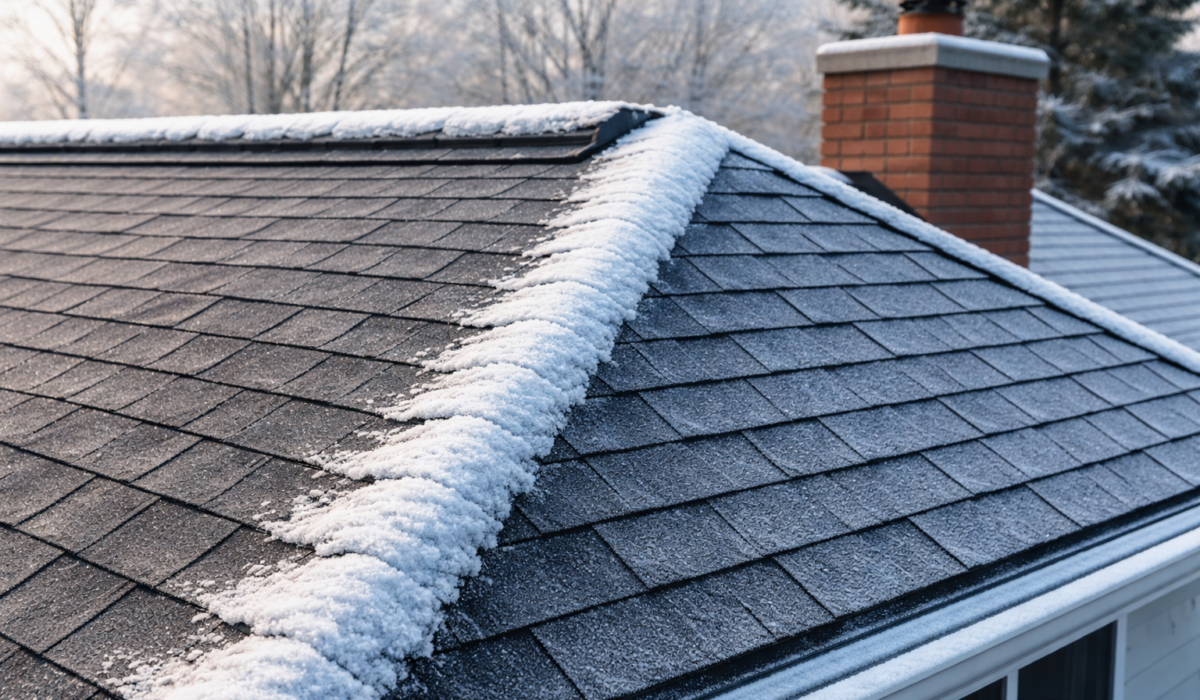
In Northeast Ohio, inadequate attic ventilation is a consistent cause of premature roof failure. In winter, it leads to ice dams that force water back under your shingles and into your home.
Inadequate ventilation is a year-round problem. In the summer, trapped heat bakes shingles from below, breaking down the asphalt. In winter, escaping interior heat melts snow on the roof, which then refreezes at the colder eaves, forming ice dams. A balanced ventilation system is critical. The underlayment is the waterproof barrier beneath the shingles and your last line of defense, especially against ice dams. If the underlying roof deck has absorbed moisture over the years, new shingles won’t perform as expected, a condition often discovered only during a tear-off.
Warning Signs Your Roof Is Nearing the End
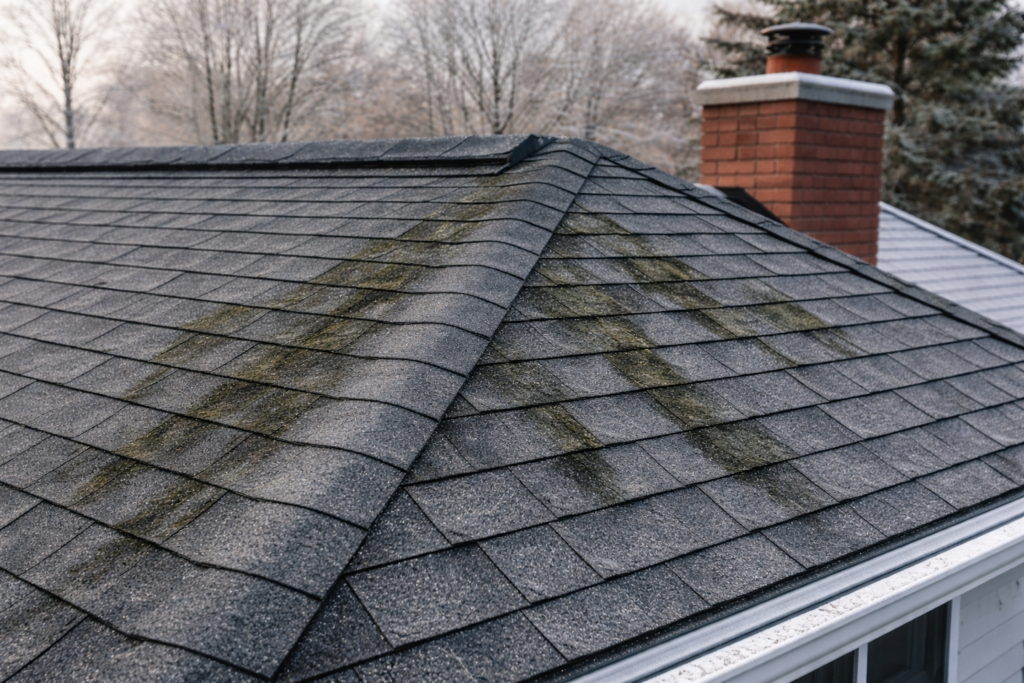
Roofs rarely fail without warning. The signals are often visible from the ground. Look for shingles that are curling at the edges or buckling in the middle, a clear sign of age and heat damage. Check your gutters for an accumulation of shingle granules, which indicates the protective layer is wearing away and leaving the asphalt exposed to UV light. A few missing shingles after a storm, moss or lichen growth retaining moisture, or a sagging roofline are all signs that warrant immediate attention.
The most urgent signal is an interior water stain on a ceiling or wall. This means water has already breached the building envelope.
If your asphalt roof is over 20 years old and hasn’t had a professional assessment, age alone is a sufficient reason for an inspection. Many critical issues are not visible from the ground.
Even without obvious signs, an older roof is at higher risk. Many issues, like flashing separation or soft spots in the decking, can only be identified by a trained professional during an on-roof inspection.
Navigating Insurance, Repairs, and Replacement Costs
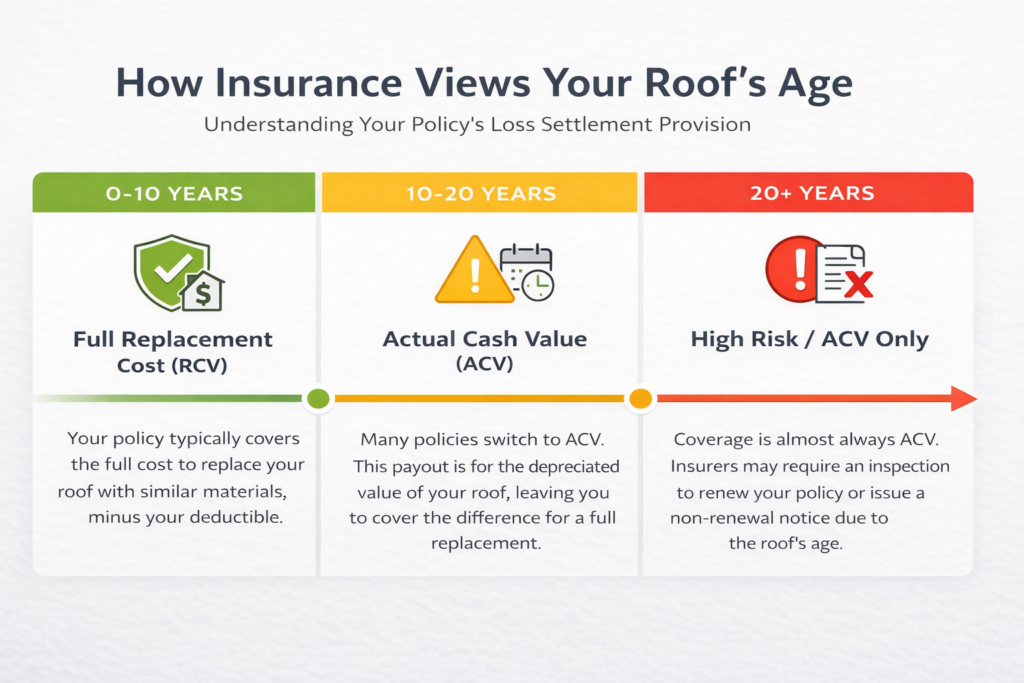
The age of your roof directly impacts how your insurance company will handle a claim. Generally, roofs under 10 years old are covered at full replacement cost. Between 10 and 20 years, many policies shift to “actual cash value,” which applies depreciation and leaves you with a significant gap between the insurance payout and the replacement cost.
Once a roof passes 20 years, many insurance carriers will only cover its “actual cash value,” not the full replacement cost. It’s critical to understand your policy before you have a problem.
Once a roof passes the 20-year mark, some insurers may require an inspection to renew your policy or even issue a non-renewal notice. It’s critical to understand your policy’s loss settlement provision before you need to file a claim.
When it comes to replacement, labor is the most expensive part, typically representing 40-60% of the total cost. Two factors often surprise homeowners in the final estimate: decking repairs and roof complexity. If the plywood sheathing under your old roof is rotted, it must be replaced at an additional cost. A complex roof with a steep pitch, multiple valleys, and dormers requires more labor and safety precautions, increasing the price. For a typical home in our area, a full replacement with architectural shingles currently runs between $8,000 and $18,000, but this can vary widely.
Repair or Replace?
The decision to repair or replace comes down to age and the extent of the problem. If your roof is under 10 years old and damage is isolated to one area, a repair is almost always the right call. However, if the roof is over 15 years old and has widespread issues like granule loss, failures in multiple areas, or has required recurring repairs, replacement is the more sound long-term investment. Continuing to patch a failing system is an expensive way to delay the inevitable. A trustworthy contractor will walk you through the evidence and explain their assessment, not default to replacement without showing you why.
Get an Honest Assessment for Your Northeast Ohio Home
If your roof is aging or showing signs of wear, don’t wait for a small leak to become a major problem. At Peak & Valley Roofing, we provide honest assessments rooted in years of experience with homes just like yours. We’ll explain what we see, what it means for your home, and give you a clear path forward. Contact us today for a straightforward inspection and a quote you can trust.
Frequently Asked Questions
How long do roofs last in Northeast Ohio specifically?
Our climate shortens lifespans. Expect 15-20 years for 3-tab shingles and 25-30+ for well-maintained architectural shingles. Metal roofing performs exceptionally well here.
What factors impact roof lifespan the most?
Installation quality is #1. Beyond that, attic ventilation, underlayment, and consistent maintenance determine if a roof reaches its maximum lifespan in our climate.
Should I replace a 20-year-old roof?
Not automatically. A 20-year-old architectural shingle roof may have years of life left. Base the decision on a professional condition assessment, not just age.
How old can a roof be before insurance considers it too old?
Most insurers become restrictive after 20 years, often shifting to “actual cash value” (which pays less) or requiring an inspection for renewal.
What is the most expensive part of replacing a roof?
Labor is the largest cost (40-60%). Unexpected decking replacement and roof complexity (steep pitch, dormers) are the next biggest variables.
How much does a roof replacement cost in Northeast Ohio?
Most replacements run $8,000 to $18,000. This varies widely based on home size, material choice, and roof complexity.
Can I put new shingles over my existing ones?
While code may allow it, we don’t recommend it. A tear-off lets us inspect the roof deck for rot and ensures a proper, warrantied installation. The short-term savings aren’t worth the long-term risk.
How do I know if my roof has ice dam damage?Look for water stains on ceilings near exterior walls, peeling paint, or damp drywall. Outside, check for discolored fascia boards or lifted shingles at the roof’s edge. Read our winter roofing tips for more information.