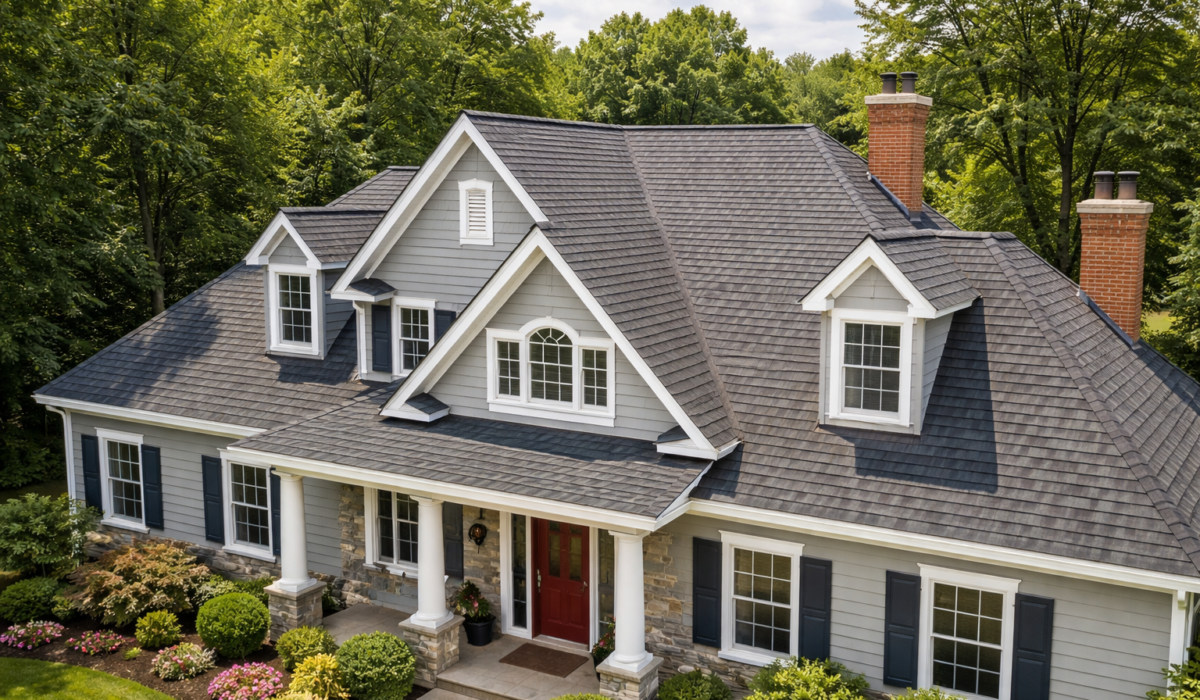
The most effective way to extend your roof’s lifespan is consistent, proactive maintenance. This means professional inspections twice a year, gutters cleared before winter, and an attic ventilation system that actually works. Most homeowners in Northeast Ohio do not replace their roofs because of old age. They replace them early because small, addressable problems were left alone through one too many winters. A well-maintained asphalt shingle roof can last 25 years or more in this region. One that is neglected often does not make it to 20.
Factors That Determine a Roof’s Lifespan
While roofing material is a major factor, it is the combination of quality installation, proper attic ventilation, and consistent maintenance that dictates a roof’s true lifespan. For asphalt shingles, which are the most common material on homes in Westlake, Strongsville, and Rocky River, a realistic range is 20 to 25 years. Standard 3-tab shingles land closer to 15-20 years, while architectural shingles can reach 22-25 years. Premium shingles can push past 30, but only if the entire roofing system is functioning correctly.
Northeast Ohio is uniquely hard on roofs. The relentless freeze-thaw cycles and heavy lake-effect snow accelerate deterioration, shortening a roof’s realistic lifespan by several years compared to more moderate climates. That gap is the difference between a roof that performs as expected and one that fails during the worst possible stretch of winter. While other materials like metal or slate can last 50 to 100 years, the practical conversation for most local homeowners starts with asphalt shingles.
Why Roofs Fail Prematurely in Northeast Ohio
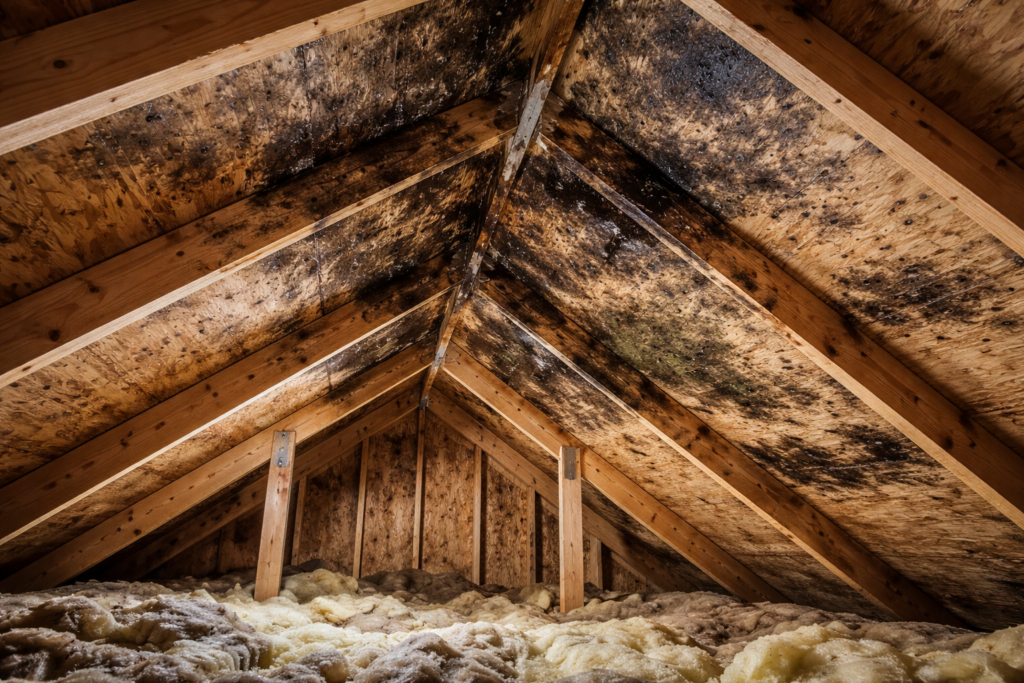
Knowing what works against your roof is the first step toward protecting it. In this region, premature roof failure is rarely caused by a single catastrophic event. It is the result of small, compounding issues.
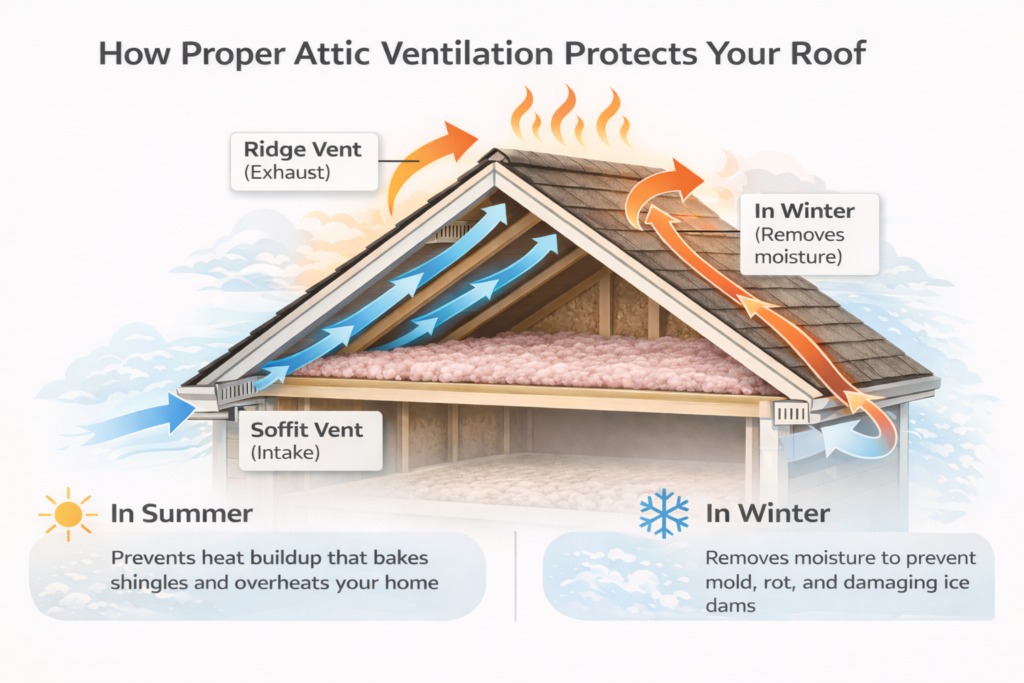
Poor attic ventilation is a primary culprit. When an attic overheats in the summer, it essentially bakes the shingles from below while the sun beats down from above. This causes them to become brittle. In the winter, trapped moisture from the house condenses on the underside of the cold roof deck, leading to mold, rot, and warped, spongy decking. By the time you notice a sag, the damage is already significant.
In Northeast Ohio, poor attic ventilation causes more premature roof failures than most homeowners realize. It is a quiet problem that silently destroys your roof from the inside out.
Clogged gutters are another quiet threat. When water cannot drain, it backs up, seeping under shingles and into the fascia and roof deck. The first sign is often a stain on an interior ceiling. This means water has been working its way through the structure for some time. Similarly, overhanging tree branches scrape away protective shingle granules during wind and can break off during storms, causing direct damage. Keeping limbs trimmed back at least 10 feet is a simple, effective preventative measure.
Finally, deferred repairs are where manageable problems become costly ones. A single missing shingle or a cracked flashing seal around a chimney is a minor fix in September. Left unaddressed through an Ohio winter, it becomes an entry point for water. The water will freeze and expand, turning a small vulnerability into a major structural issue.
The Proactive Maintenance That Makes a Difference
Extending your roof’s life is about diligence, not difficulty. It starts with having your roof professionally inspected twice a year. An inspection in the spring assesses winter damage and another in the fall prepares it for the coming cold. A roofer can spot issues with flashing, ventilation, and decking that are impossible to see from the ground. This gives you a chance to act on small repairs immediately. In Northeast Ohio, the cost difference between fixing a minor leak in October and replacing water-damaged structural components in March is substantial.
A professional inspection is not a sales pitch. It is a preventative measure that consistently saves homeowners money by identifying small issues before they become expensive structural problems.
Keeping your roof clear is just as critical. Gutters should be cleaned every fall after the leaves drop and again in the spring to ensure water is directed away from the foundation. Any organic debris like leaves and branches that collects in roof valleys should be removed, as it traps moisture and accelerates shingle decay. Moss and algae, which also hold moisture against the surface, should be addressed before they can weaken the shingles.
Most importantly, ensure your attic is properly ventilated and insulated. A functional system pulls cool, dry air through soffit vents and exhausts hot, moist air through ridge vents. This prevents heat buildup in summer and helps stop ice dams in winter. Ice dams form when heat escaping from the attic melts snow on the roof, which then refreezes at the colder eaves. This process forces water back up under the shingles, causing some of the most common and damaging leaks in our region.
Early Warning Signs Your Roof Needs Attention
Your home will signal problems long before a failure occurs. Recognizing these signs is key to avoiding escalating repair costs. Look for a heavy accumulation of shingle granules in your gutters or at downspout outlets. This indicates your shingles are losing their protective layer and becoming brittle. Another clear sign of trouble is shingles that are curling at the edges or buckling in the middle. These compromised shingles are no longer providing a watertight barrier. You should also watch for ice dams forming along your eaves in the winter, as this points directly to an attic ventilation or insulation problem that damages shingles and can cause interior leaks. Finally, any interior signs like water stains on a ceiling, a musty odor on the upper floor, or rooms that are noticeably hot all warrant immediate professional assessment.
Let Peak & Valley Take a Look
Roof maintenance in Northeast Ohio is not generic. The freeze-thaw cycles, lake-effect snow, and summer humidity require a roofer who understands how these conditions affect your home. Peak & Valley Roofing serves homeowners across Rocky River, Westlake, Strongsville, and Brunswick with this specific expertise.
If your roof is over 10 years old, if you have noticed any of the warning signs in this guide, or if you simply want an honest assessment of its condition, a professional inspection is the right next step. Contact us today for a straightforward look at what’s happening on your roof. We provide honest assessments without pressure or guesswork.nt.
Frequently Asked Questions
What is the most effective way to extend my roof’s lifespan?
Schedule a professional inspection, especially if your roof is over 10 years old. Catching ventilation issues, failing flashing, or early shingle wear before an Ohio winter is the most cost-effective way to prevent major damage.
Is a 20-year-old roof too old to be repaired?
Not necessarily. The decision depends on the roof’s overall condition, not just its age. A well-maintained 20-year-old architectural shingle roof may have years of life left. A professional inspection will provide the real answer.
Can a roof really last 50 years?
Yes, but not with standard asphalt shingles. Metal, slate, or copper roofing systems can last 50 years or more with proper maintenance. They often result in a lower total cost over time compared to multiple asphalt roof replacements.
What are the signs of a bad roof vent?
Common signs include upper floors that are uncomfortably hot in summer, musty odors in the attic, rust on metal components like nails, and ice dams forming along the eaves in winter.
What is the most expensive part of a roof replacement?
Labor is typically the largest cost. However, the most significant surprise cost is often decking replacement. If the plywood beneath the old shingles is rotted, it must be replaced. Good maintenance helps minimize this expense.