When a storm or a fallen tree damages your roof, your first thought is usually to call your insurance company. As roofers who work on claim-related repairs across Northeast Ohio, we see why that seems logical. But we also see what happens when the claim starts with an incomplete or incorrect insurance scope. The homeowner ends up dealing with avoidable delays, unsafe repair plans, and repair costs that don’t reflect the home’s actual condition.
At Peak & Valley Roofing, we want homeowners to understand this key point: your insurance adjuster is not a roofer and is not responsible for creating a city-approved repair plan. That responsibility falls on the contractor who will open your roof, expose the structure, and put it back together safely. That is why you should contact us before you call your insurance provider.
Below is a real-world example from a recent tree-damage project and recurring issues we see.
When an Insurance Scope Is Written Wrong from the Start
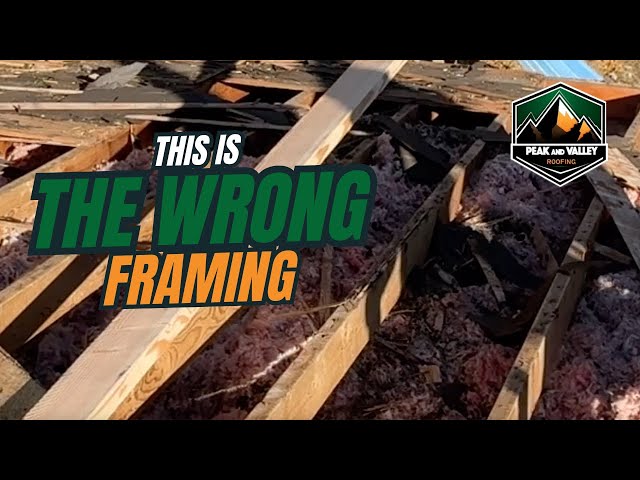
We were called to a home in Northeast Ohio after a tree fell, causing significant structural damage. Before we ever stepped inside the attic, the insurance company had already produced its estimate. That estimate told the contractor to remove and replace framing that does not exist anywhere in the home. The adjuster listed wood members that were never part of the house’s structure in the first place.
When we inspected the attic, it was clear what had happened. Either the adjuster never went up there, or the scope was built off a generic template. This happens often. Adjusters work from preset line items and standard assemblies, and those templates don’t always match the real structure in front of them.
In this case, the adjuster even called for removing and replacing the hip rafter, the main corner framing member. Anyone who works in structural repairs knows you don’t remove a hip rafter unless the engineering requires it. Pulling a hip rafter affects every rafter tied into it. That domino effect creates a long list of unnecessary repairs and adds costs and time the homeowner shouldn’t have to bear.
Worse, the scope listed the wrong type of lumber for structural repair. Using the wrong lumber will never pass a city inspection and puts the homeowner at risk long after the storm is forgotten.
Guidance from a Northeast Ohio roofing crew that deals with claims every day
- We do not guess.
- We do not use templates.
- We do not cut corners.
Our job is to diagnose the real problem and document the actual conditions; nothing assumed, nothing estimated, just to fill a line item.
At this home, we documented the existing framing, recorded accurate measurements, and photographed all contact points and structural members. We then created a repair scope that included the correct lumber, the appropriate structural approach, and the proper sequence of work. From there, we submitted a supplement detailing the correct repairs, materials, and a formal repair plan for city review.
That is the only way to ensure the repair passes inspection and restores the home’s structural integrity. It also protects the homeowner in the future. When they sell the house, properly executed framing repairs prevent inspection red flags and avoid issues with appraisers or buyers.
The Risk of Starting With the Insurance Company First
When homeowners rely on the insurance adjuster’s inspection alone, they often get:
- Generic scopes not tied to the actual construction of the home
- Incomplete attic or roof-deck inspections
- Wrong materials listed for structural repairs
- Work orders that won’t pass city inspection
- Repair plans that create extra demolition or unnecessary structural changes
Insurance companies aren’t doing this out of malice. They simply operate from standardized estimating tools. But your home is not a template, and storm damage is never the same from one house to the next.
If the insurance paperwork you receive is confusing, generic, or doesn’t look right, please call us before moving forward. We’ll tell you what is correct, what is missing, and what needs to be rewritten so your claim reflects real-world conditions.
Why Calling Peak & Valley First Protects You
By starting with a Peak & Valley Roofing inspection:
- You get accurate documentation from someone who actually goes into the attic
- You receive a real repair scope built by a contractor who will be accountable for the work
- You avoid unsafe or non-compliant structural plans
- Your claim is built on facts, not templates
- You keep control of the process instead of trying to correct problems after the adjuster has already filed the estimate
This is the cleanest, safest path to a repair that protects your home now and for years to come.
Northeast Ohio Homeowners: Contact Us Before You File a Claim
If you’ve had a tree impact, storm damage, or any roofing issue that may involve insurance, reach out to Peak & Valley Roofing before calling your carrier. We’ll inspect the structure, document the real conditions, and help you start the claim on solid footing. It’s the best way to avoid mistakes, keep the process moving, and ensure your home is repaired correctly, not just estimated.
Peak & Valley Roofing is here to protect your home and your peace of mind.