

Think of roof underlayment as your home’s hidden bodyguard. While you can see the shingles from the street, it’s the protective layer underneath that truly keeps your family dry when storms hit. This water-resistant barrier sits between your roof deck and shingles, acting as a crucial backup defense against moisture infiltration.
Roof underlayment is a protective membrane installed directly over the roof deck before shingles go on. The three main types are synthetic, felt (asphalt-saturated), and rubberized asphalt underlayment.
Quick fact: Building codes in most US regions require underlayment on all new shingle roofs, and many manufacturers void warranties without proper underlayment installation.
Understanding the three main underlayment types
When choosing underlayment for your roof, you’ll encounter three primary options, each with distinct characteristics that affect performance and cost.
Synthetic underlayment represents the modern evolution of roofing protection. Made from engineered polymers and reinforced with fiberglass, this lightweight material offers exceptional tear resistance and UV protection. As noted by homerooferguide.com, many roofers favor synthetic options for improved walkability and longer exposure times before shingle installation.
Felt underlayment, also called tar paper, has protected homes for over a century. This traditional option consists of organic or fiberglass mats saturated with asphalt, available in 15-pound and 30-pound weights. While heavier and less durable than synthetic alternatives, felt remains widely used due to its proven track record and affordability.
Felt comes in two standard weights: 15-pound and 30-pound, referring to the weight of felt covering 100 square feet. Fifteen-pound felt is lighter and more affordable but tears easily and absorbs moisture if exposed during installation. Thirty-pound felt offers better durability and can withstand longer exposure to weather during construction, making it the more practical choice for Northeast Ohio’s unpredictable installation windows. Once installed, felt should be covered by shingles within 24-48 hours, since prolonged exposure to moisture compromises the material.
Rubberized asphalt underlayment provides the highest level of waterproofing through its self-adhering sticky backing. This premium option creates an almost impenetrable moisture barrier, making it ideal for areas prone to ice dams or severe weather conditions. For enhanced protection in vulnerable areas, many contractors combine this with ice and water shield installations.
Rubberized asphalt underlayment, also called ice and water shield, bonds directly to the roof deck without nails, which eliminates the penetration points that create leak risk in nailed materials. When a roofing nail does go through it later during shingle installation, the material seals around the nail shaft, maintaining a watertight barrier at each fastener.
Building codes in cold climates typically require this material at eaves, extending at least 24 inches past the interior wall line, specifically to prevent ice dam damage. Most roofing professionals recommend a hybrid approach: rubberized asphalt in vulnerable areas like eaves, valleys, and around chimneys or skylights, with felt or synthetic underlayment covering the remaining roof deck. This balances maximum protection where it matters most against overall project cost.
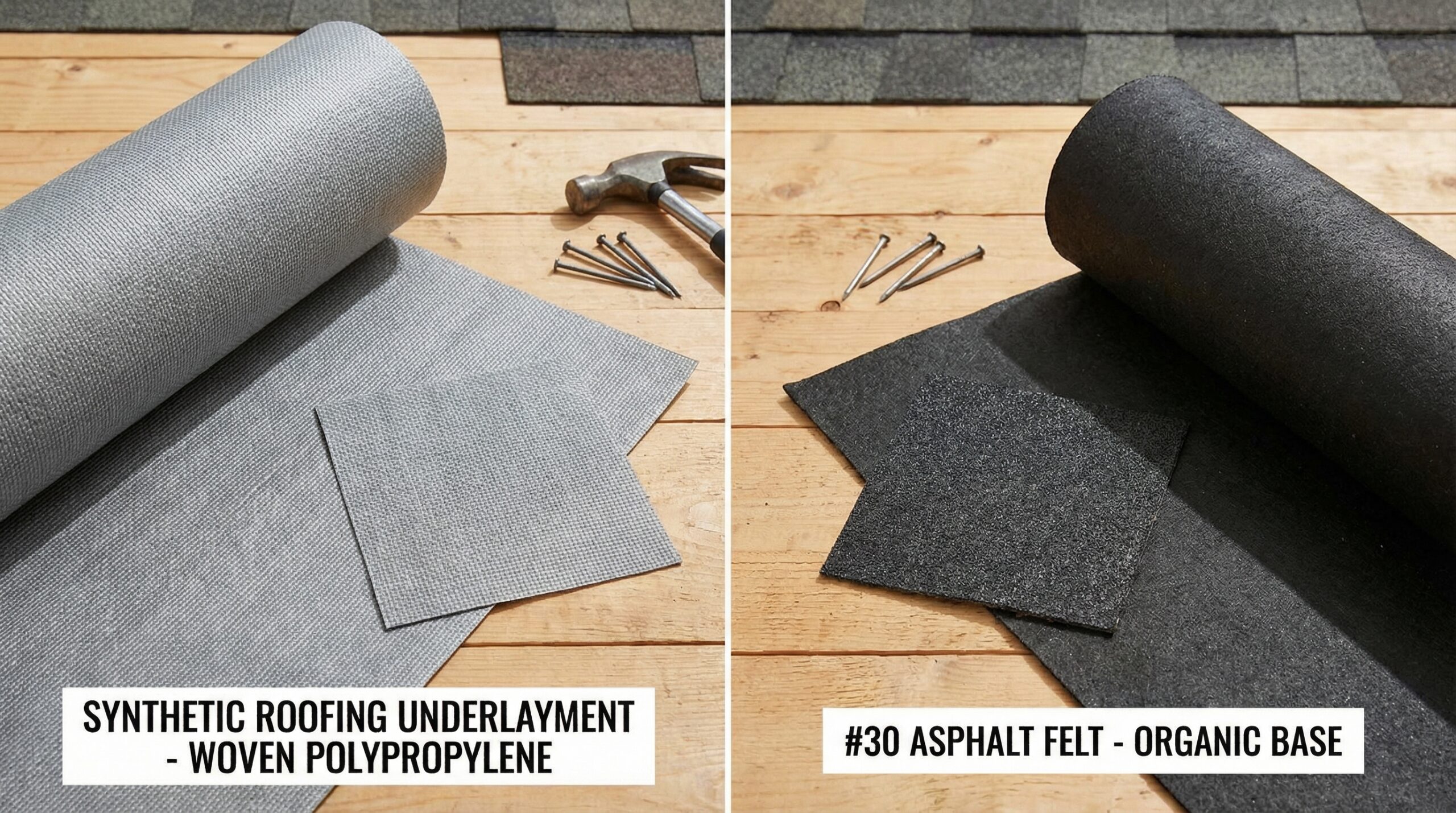
Synthetic vs felt underlayment comparison
The choice between synthetic and felt underlayment often comes down to balancing performance against budget considerations, with each offering distinct advantages for different situations.
| Feature | Felt | Synthetic | Rubberized Asphalt (Ice & Water Shield) |
|---|---|---|---|
| Weight | Heavy | Lightweight | Moderate |
| Lifespan | 10-15 years | 20-30 years | 30-50 years |
| Water protection | Water-resistant | Water-resistant | Fully waterproof |
| Installation | Nailed/stapled | Nailed/stapled | Self-adhering, no nails |
| Cost vs. felt | Baseline | 50-100% more | Highest upfront cost |
Synthetic underlayment excels in durability and weather resistance. According to gobighorn.com, synthetic materials withstand UV exposure, heat, and moisture far better than felt alternatives. The lightweight nature reduces physical strain on installers and puts less stress on your roof structure.
However, synthetic underlayment comes with a higher price tag and can be slippery during installation, requiring extra safety precautions on steep roofs.
Felt underlayment offers significant cost savings and easy availability at most building supply stores. Its vapor permeability allows moisture to escape while blocking liquid water, helping control condensation in your roof system. The main drawbacks include vulnerability to moisture damage, limited lifespan, and challenging installation in cold weather when the material becomes brittle.
Consider this: While felt costs less initially, synthetic underlayment’s longer lifespan often makes it more economical over time, especially in harsh climates.
Factors to consider when choosing underlayment
Your local climate plays the biggest role in determining the right underlayment for your home. In regions with intense UV exposure or extreme temperature fluctuations, synthetic materials provide better long-term protection against degradation.
Climate considerations should guide your decision. Hot, sunny areas benefit from synthetic underlayment’s superior UV resistance, while cold climates with ice dam potential might justify the investment in rubberized asphalt options. Areas with moderate weather conditions can often use felt underlayment successfully.
Roof characteristics also matter significantly. Steep-slope roofs require materials that installers can walk on safely, making textured synthetic options preferable. Low-slope applications need enhanced waterproofing capabilities that rubberized asphalt provides best. Understanding all the parts of your roof helps you make informed decisions about which underlayment works best for your specific roof design.
Your budget timeline affects the choice too. While synthetic costs more upfront, its extended lifespan often provides better value over decades. Felt makes sense for tight budgets or temporary protection needs. When planning your project, it’s important to understand what should be on a detailed roofing estimate to ensure underlayment costs are properly accounted for.
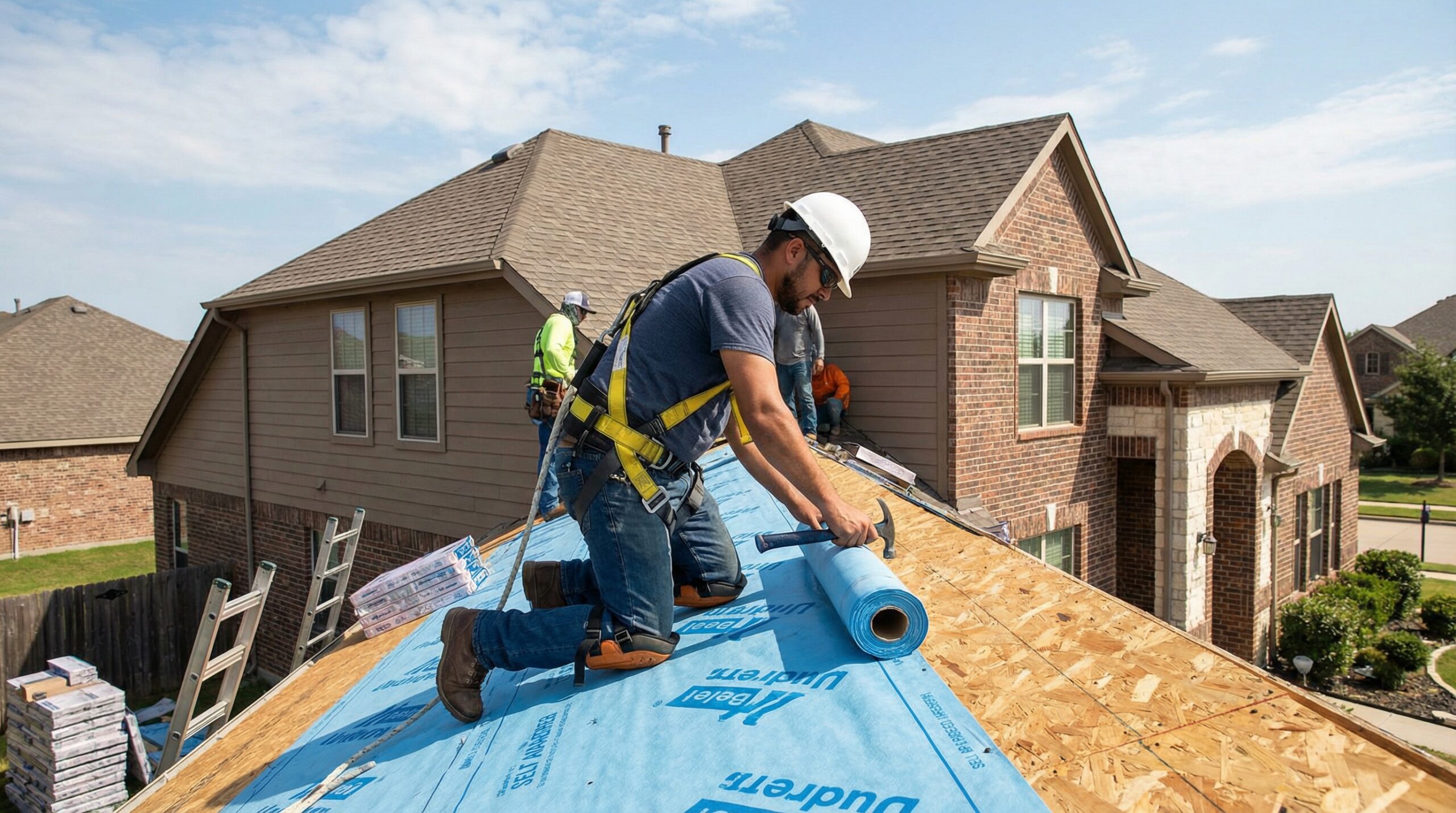
When to Use Each Type on a Real Roof
Most Northeast Ohio roofs perform best with a combination rather than a single underlayment type across the whole deck.
Extended rubberized asphalt coverage makes sense if your home has a history of ice dam formation, includes low-slope sections, has previously experienced leaks, or faces significant wind-driven rain exposure. Complex rooflines with multiple valleys also benefit from the added protection.
Felt can handle basic protection on steep-slope roofs in moderate conditions, on tighter budgets, or for straightforward roof designs without much snow and ice exposure.
Felt alone isn’t a safe choice in a few specific situations: anywhere local code requires an ice barrier, on roof sections with less than a 4:12 slope, at eaves, valleys, and penetrations, or on homes that see frequent freeze-thaw cycling, which describes most of Northeast Ohio.
Making the right choice for your project
Most roofing experts recommend synthetic underlayment for new construction and major roof replacements due to its superior performance characteristics. The material’s resistance to tearing, UV damage, and moisture infiltration justifies the higher initial investment for most homeowners.
Choose felt underlayment when budget constraints are paramount, or for smaller repair projects where premium materials aren’t cost-effective. Felt also works well in moderate climates where extreme weather conditions won’t test the material’s limits.
Pro tip: Consult with local roofing contractors about building code requirements and manufacturer warranty specifications before making your final decision.
Consider rubberized asphalt underlayment for problem areas like valleys, around chimneys, or in regions prone to ice dams. While the most expensive option, its superior waterproofing capabilities provide peace of mind in vulnerable roof sections. Proper roof flashing combined with quality underlayment creates a comprehensive waterproofing system.
Remember that proper installation matters more than material choice in many cases. Even premium synthetic underlayment won’t perform well if installed incorrectly, while properly installed felt can provide decades of reliable protection. When selecting your roofing materials, consider how underlayment works with other components like starter shingles and drip edge.
The investment in quality underlayment protects your entire roofing system and home interior from water damage. Whether you choose synthetic, felt, or rubberized asphalt, ensure the material meets local building codes and manufacturer requirements for your specific roofing materials. This hidden layer of protection works tirelessly to keep your family dry and your home structurally sound for years to come.