
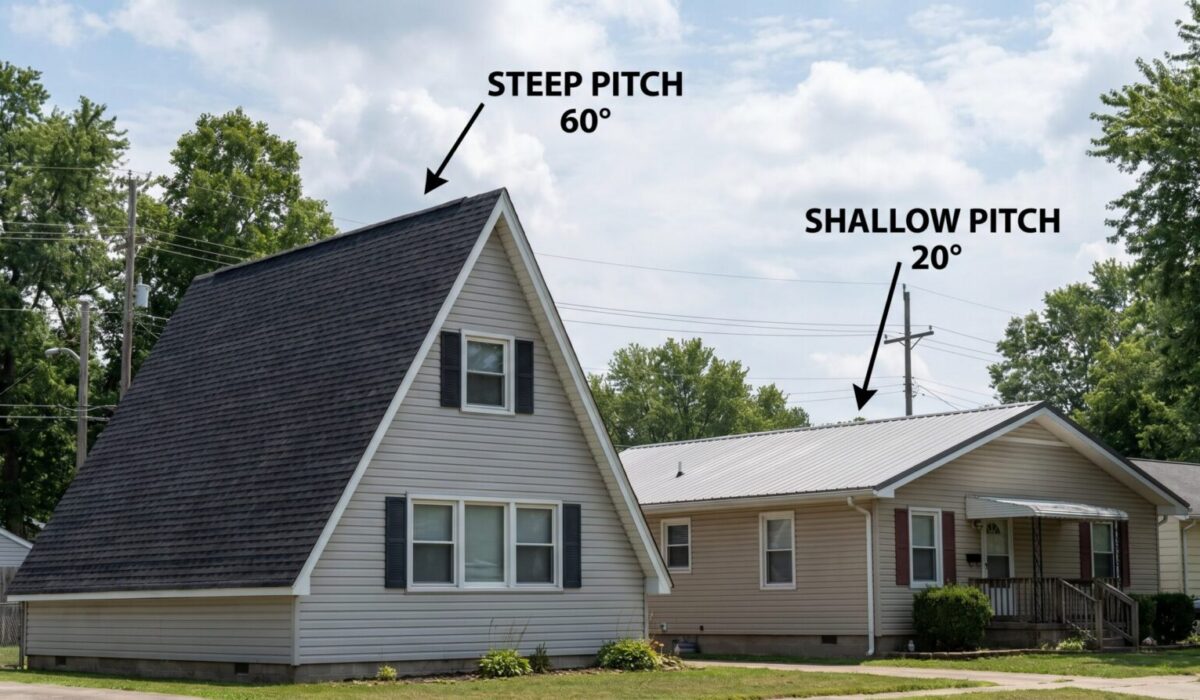
Steep roofs generally last longer than shallow roofs because they shed water, snow, and debris more effectively. Research shows that a 30-year shingle on a steep 10:12 roof commonly reaches 28-32 years, while the same shingle on a shallow 3:12 roof typically lasts 22-26 years. However, the best choice for your Northeast Ohio property depends on your climate, budget, and specific needs.
Quick Fact: Roof pitch is measured as rise over run – a 6:12 pitch means the roof rises 6 inches for every 12 inches of horizontal distance, making it the most common pitch on residential homes in the Cleveland area.
Understanding roof pitch affects everything from water drainage to material selection and maintenance costs. Whether you’re planning a new roof or replacement in Rocky River, Cleveland, or anywhere in Northeast Ohio, choosing the right pitch can save you thousands in long-term repairs and extend your roof’s lifespan significantly.
Understanding roof pitch measurements
Roof pitch represents the steepness of your roof’s slope, expressed as a ratio of vertical rise to horizontal run. This measurement directly impacts how well your roof performs over time in Northeast Ohio’s variable weather conditions.
Steep pitch roofs have slopes greater than 6:12, meaning they rise more than 6 inches for every 12 inches of horizontal distance. These dramatic angles are common on traditional homes throughout the Cleveland area and are essential in our climate where quick water and snow shedding is crucial for roof longevity.
Shallow pitch roofs measure less than 4:12, rising fewer than 4 inches per 12 inches horizontally. You’ll find these gentler slopes on modern homes, commercial buildings, and some properties in Northeast Ohio, though they require careful consideration given our weather patterns.
The pitch you choose affects material compatibility, installation costs, and long-term durability. Steeper pitches work with virtually all standard roofing materials, while shallow pitches require specialized waterproof membranes and careful drainage planning – especially important during Northeast Ohio’s heavy spring rains and winter freeze-thaw cycles.
Why steep roofs typically last longer
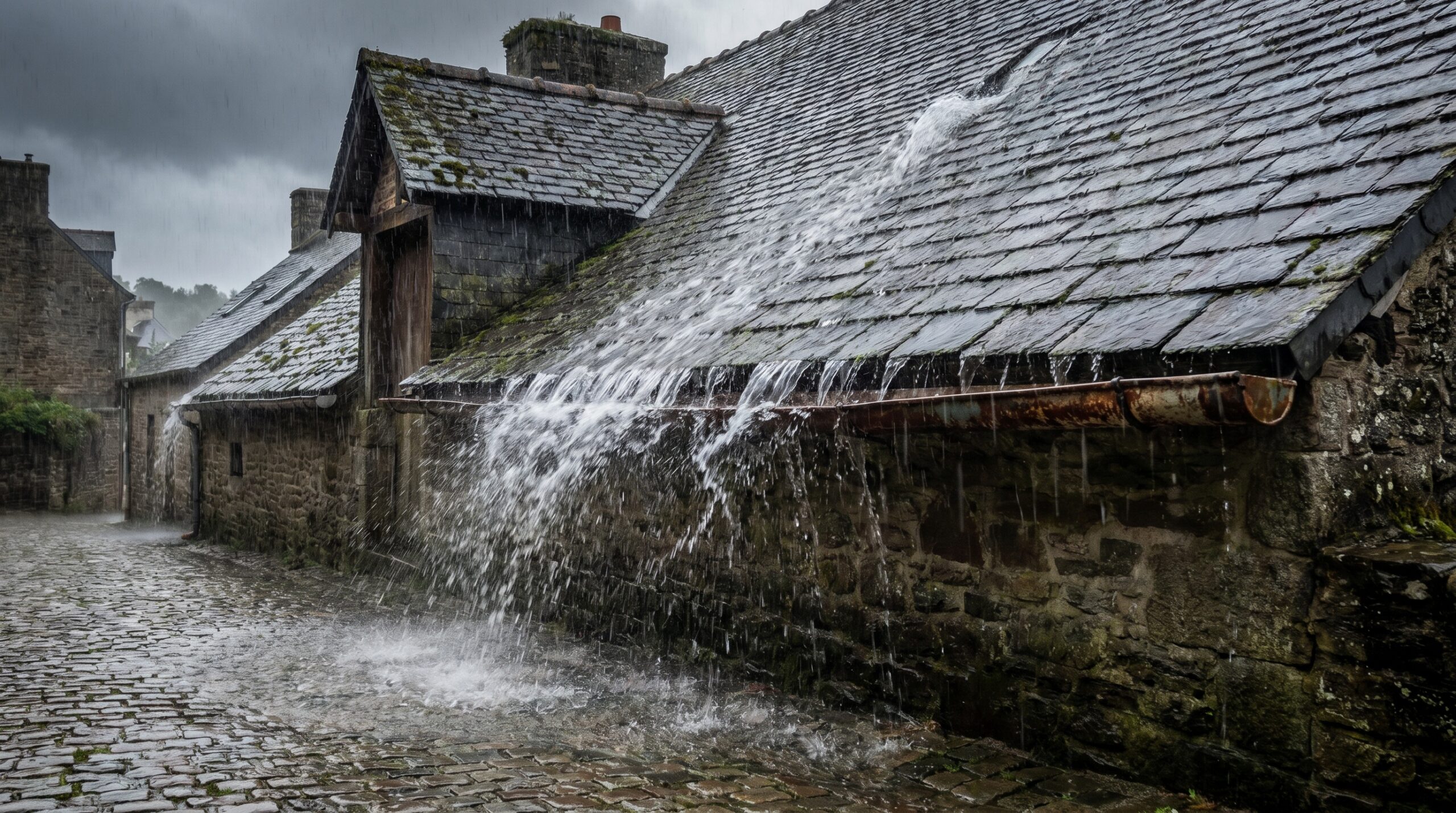
Steep roofs outlast shallow ones primarily because of superior water management. Water flows quickly down steep slopes, preventing the pooling that leads to leaks, mold, and material deterioration. This fast drainage means your underlayment and decking face less moisture exposure over time – crucial in Northeast Ohio where we experience everything from heavy summer storms to prolonged winter precipitation.
Snow and ice management gives steep roofs another longevity advantage in our climate. In Northeast Ohio’s cold winters, steep slopes allow snow to slide off naturally, preventing ice dams and reducing structural stress from accumulated weight. Shallow roofs trap snow and ice, creating conditions for water damage when melting occurs – a common problem we see throughout the Cleveland area.
Debris shedding happens more effectively on steep roofs. Leaves, branches, and other materials roll off rather than accumulating and creating moisture-trapping conditions. This natural cleaning reduces the organic matter that can lead to moss growth and material breakdown – particularly important given Northeast Ohio’s abundant tree coverage.
Key Insight: Steeper roofs dry faster after rain and keep debris from accumulating, which helps extend material life by reducing conditions that cause deterioration – especially valuable in our humid summers and wet springs.
Ventilation benefits also contribute to steep roof longevity. The increased attic space allows better air circulation, preventing heat buildup and moisture accumulation that can damage roofing materials from below.
When shallow roofs make sense
Shallow roofs offer specific advantages that make them the right choice in certain situations, despite their typically shorter lifespan in Northeast Ohio’s challenging climate. Installation costs run significantly lower because these roofs require less material and simpler labor techniques.
Maintenance accessibility gives shallow roofs a practical edge. You can safely inspect and perform minor repairs yourself, while steep roofs require professional equipment and safety measures. This easier access can help you catch problems early, potentially extending the roof’s life through prompt attention – though in Northeast Ohio’s climate, professional inspections are still recommended after major storms.
Climate compatibility matters tremendously for shallow roof success. While Northeast Ohio’s variable weather patterns generally favor steeper pitches, some commercial applications and specific residential situations can work with shallow slopes when proper drainage and waterproofing measures are implemented.
Space efficiency provides another benefit. Shallow roofs allow for higher interior ceilings and more usable attic space, making them attractive for maximizing living areas in smaller homes or commercial buildings throughout the Cleveland metro area.
Climate considerations for roof pitch choice
Northeast Ohio’s weather patterns should drive your roof pitch decision more than aesthetics or initial cost. Our climate features heavy snowfall, frequent rainfall, and dramatic temperature swings that strongly favor steep pitches for optimal roof performance and longevity.
Our snowy winters benefit from pitches of 6:12 or steeper to encourage snow sliding and prevent ice dam formation. The weight of accumulated snow can cause structural damage, while ice dams create backup conditions that force water under roofing materials – a common insurance claim we help homeowners navigate throughout Northeast Ohio.
Spring and summer storms bring heavy rainfall that can overwhelm shallow pitch systems if gutters become clogged or drainage paths are inadequate. Even moderate rainfall can create challenges for very shallow slopes, making steeper pitches the safer choice for long-term performance in our region.
| Climate Type | Recommended Pitch | Primary Reason |
|---|---|---|
| Heavy Snow (Northeast Ohio) | 6:12 or steeper | Snow shedding, ice dam prevention |
| High Rainfall | 4:12 or steeper | Water drainage, leak prevention |
| Hot & Dry | 2:12 to 6:12 | Cost efficiency, space maximization |
| Moderate | 4:12 to 8:12 | Balanced performance and cost |
Northeast Ohio’s variable conditions require careful consideration of drainage capacity and material selection. Our freeze-thaw cycles can be particularly hard on roofing systems, making proper pitch selection crucial for avoiding costly repairs and premature replacement.

Making the right choice for your Northeast Ohio property
Choose a steep pitch for your Cleveland area home if you want maximum longevity and weather resistance. The superior drainage and weather resistance justify the higher installation costs through extended roof life and reduced maintenance needs. Steep roofs also work well with the traditional architectural styles common throughout Rocky River, Cleveland, and surrounding communities.
Shallow pitch selection makes sense primarily for specific commercial applications in Northeast Ohio where other factors outweigh longevity concerns. These roofs cost less to install initially but require more frequent maintenance and careful attention to drainage systems in our climate.
Decision Tip: Consider your long-term plans – if you’re staying in your Northeast Ohio home for decades, the extended lifespan of a steep roof often offsets the higher initial cost through reduced replacement frequency and fewer storm damage repairs.
Budget considerations should include both upfront and long-term costs. While steep roofs cost 15-40% more to install, they typically require fewer repairs and last longer in our climate, potentially making them more economical over time.
Professional consultation helps ensure you choose appropriately for your specific situation. Local roofing contractors who understand Northeast Ohio’s weather patterns and building requirements can recommend the optimal pitch for your climate and property needs. As insurance restoration specialists, we often see the long-term consequences of pitch decisions when helping homeowners with storm damage claims.
The evidence clearly shows that steep roofs generally provide longer service life through superior water management and weather resistance – especially important in Northeast Ohio’s challenging climate. However, shallow roofs remain viable for specific applications where their benefits outweigh longevity concerns. Your decision should balance initial costs, our regional climate requirements, maintenance preferences, and long-term housing plans to find the optimal solution for your Northeast Ohio property.