

You’re reviewing a roof replacement quote and notice “additional costs for penetrations.” What exactly does that mean? A roof penetration is simply anything that passes through your roof surface, from plumbing vents and chimneys to skylights and HVAC equipment. These openings are essential for your home’s systems to function properly, but they’re also the most common source of roof leaks—especially important to understand in Northeast Ohio where weather conditions can be particularly challenging.
Key insight: Roof penetrations are present on every home and serve critical functions, but each one increases leak risk and affects replacement costs due to specialized sealing requirements.
Understanding what these penetrations are, how they’re protected from water, and why they impact your roofing costs helps you make informed decisions about repairs and replacements. This guide covers the most common types you’ll find in Cleveland-area homes, proven leak prevention methods, and how penetrations factor into your roofing investment.
What is a roof penetration?
A roof penetration refers to any opening or object that passes through your roof assembly. Think of your roof as a protective barrier, and penetrations are necessary breaks in that barrier to accommodate essential home systems.
Every penetration serves a specific purpose. Plumbing vents release sewer gases and maintain proper drainage pressure. HVAC equipment regulates your home’s temperature—crucial during Northeast Ohio’s cold winters and humid summers. Chimneys allow smoke to escape safely. Without these openings, your home’s internal systems couldn’t function properly.
The challenge lies in maintaining your roof’s weather protection while creating these necessary openings. Each penetration interrupts the continuous waterproof barrier, creating potential entry points for water. That’s why proper sealing and flashing around every penetration is crucial for preventing leaks and protecting your home’s interior—particularly important given the freeze-thaw cycles common in the Cleveland area.
Common types of roof penetrations
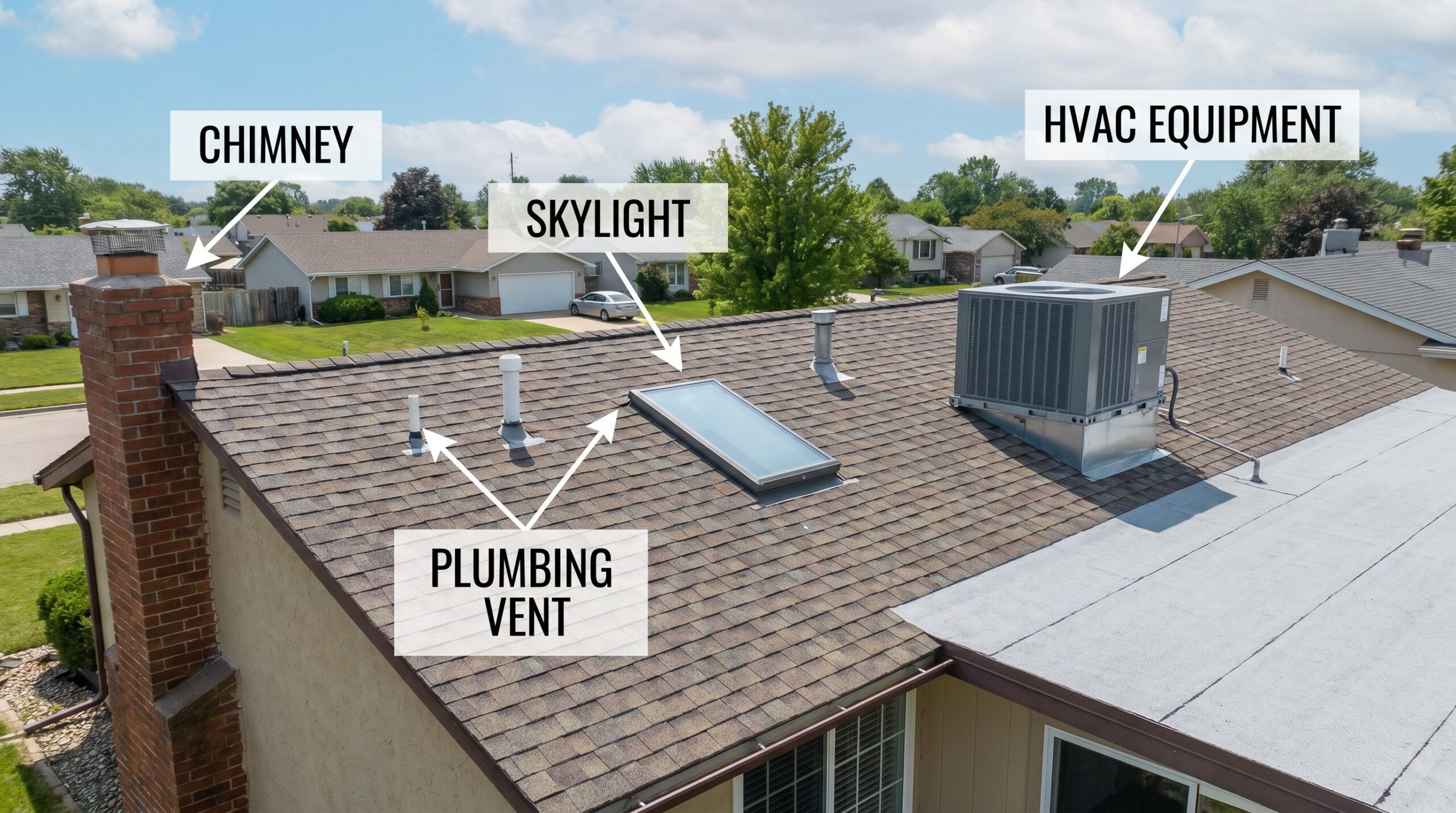
Understanding the various types helps you identify what’s on your roof and communicate effectively with roofing contractors. Here are the most common penetrations found on residential roofs in Northeast Ohio.
Plumbing vent pipes are the most numerous penetrations on most homes. These pipes extend from your plumbing system through the roof to release gases and maintain proper water flow. You’ll typically see several black or white pipes of varying diameters scattered across your roof surface.
Chimneys are among the largest and most noticeable penetrations. Traditional masonry chimneys require extensive flashing systems due to their size and materials. Gas fireplace vents are smaller alternatives that serve the same smoke evacuation purpose but require different sealing approaches. In Rocky River and surrounding Cleveland communities, many older homes feature substantial brick chimneys that need special attention during roof work.
Skylights bring natural light into your home while creating substantial roof openings. These penetrations require manufacturer-specific flashing kits and careful installation to prevent water infiltration around their perimeter. Given Northeast Ohio’s variable weather patterns, proper skylight sealing is especially critical.
HVAC equipment includes furnace vents, air conditioning units, and ductwork that passes through the roof. These penetrations often involve larger openings and may require structural reinforcement depending on equipment weight and size. With the region’s temperature extremes, proper HVAC ventilation through the roof is essential for home comfort.
Important note: Solar panels are increasingly common penetrations that require coordination between solar installers and roofing professionals to ensure proper waterproofing and maintain roof warranties.
How roof leaks are prevented around penetrations
Preventing water infiltration around penetrations requires multiple layers of protection. Professional roofers use specific materials and techniques designed for each type of opening, with special consideration for Northeast Ohio’s challenging weather conditions including ice dams, heavy snow loads, and freeze-thaw cycles.
Pipe boots seal around circular penetrations like plumbing vents. These rubber or metal collars slide over pipes and integrate with your roofing material to create a watertight seal. Quality boots include a flexible base that conforms to roof contours and a collar that grips the pipe securely. In our climate, boots must withstand temperature extremes without cracking.
Roof flashing protects areas where penetrations meet roofing materials. Step flashing works along sloped surfaces like chimney sides, while counter flashing embeds into masonry joints. Apron flashing covers the downhill side of penetrations to direct water away from the opening. Proper flashing installation is critical for handling the ice and snow conditions common in the Cleveland area.
Crickets and saddles are required behind penetrations wider than 30 inches according to building codes. These peaked structures split water flow around large obstacles like chimneys, preventing water accumulation that could lead to leaks. This is particularly important in Northeast Ohio where snow buildup can create additional water management challenges.
Ice and water shield provides an additional waterproof membrane around all penetrations. This self-adhering material creates a backup barrier if primary sealing methods fail, offering extra protection in vulnerable areas—essential protection against ice dam formation that’s common in our region.
How penetrations impact roof replacement costs

Roof penetrations significantly affect both material and labor costs during replacement projects. Understanding these cost factors helps you budget appropriately and evaluate contractor estimates, especially when working with local Northeast Ohio roofing professionals who understand regional requirements.
Material costs increase with each penetration due to specialized components. Pipe boots, flashing materials, sealants, and ice and water shield all add to your material expenses. Larger penetrations like skylights or chimneys require more extensive flashing systems, increasing costs substantially. In Northeast Ohio, quality materials that can withstand freeze-thaw cycles are essential, which may affect pricing.
Labor costs rise because penetrations require detailed work around each opening. Experienced roofers must carefully remove old materials, install new waterproofing components, and ensure proper integration with surrounding roofing materials. This precision work takes significantly more time than installing materials over uninterrupted roof surfaces. When dealing with insurance claims for storm damage—a specialty area for many local contractors—proper penetration work is crucial for claim approval.
| Penetration Type | Typical Cost Impact | Materials Required |
|---|---|---|
| Small pipe vents | Low | Boot, sealant, ice shield |
| Large HVAC units | Medium-High | Custom flashing, reinforcement |
| Chimneys | High | Step/counter flashing, cricket |
| Skylights | High | Complete flashing kit, labor |
The number and complexity of penetrations on your roof directly correlate with your replacement cost. A simple roof with only plumbing vents will cost less than one with multiple skylights, chimneys, and HVAC equipment. Contractors always factor penetration count and types when providing estimates. When working with insurance restoration specialists, proper documentation of penetration work is essential for claim processing.
Roof penetrations are essential components that serve critical functions while creating potential vulnerability points. Proper understanding of their types, protection methods, and cost implications empowers you to make informed roofing decisions. When planning repairs or replacements in the Cleveland area, work with experienced local contractors who understand the specialized techniques required to keep these necessary openings leak-free through Northeast Ohio’s challenging weather conditions for years to come.