
A roof valley is the internal angle where two sloping roof sections meet, forming a V-shaped channel that directs water and snow toward gutters and away from your home. In Northeast Ohio’s harsh climate, properly installed and maintained roof valleys are critical for preventing water damage, ice dam formation, and costly interior damage that commonly affects homes with older roofing systems.
Important Note: Roof valleys handle more water flow than any other part of your roof system.
Roof valleys rarely get attention until something goes wrong. Most Northeast Ohio homeowners discover their importance only when water stains appear on ceilings or emergency leaks develop during winter storms. Understanding how these critical components work helps you protect your home from the water damage that commonly affects our region’s housing stock.
Understanding Roof Valleys
A roof valley forms where two sloping roof planes intersect at an interior angle. These channels concentrate the largest volume of water and snow runoff from multiple roof sections into a single drainage path. During Northeast Ohio’s heavy snowfalls and spring thaws, valleys handle significantly more water flow than flat roof areas, making their proper function essential for protecting your home.
Valleys serve as your roof’s primary drainage highways, directing water efficiently to gutters and downspouts when functioning properly. When they fail, water backs up and finds ways into your home through the most vulnerable points in your roofing system. The concentration of water flow makes valleys particularly susceptible to ice dam formation during our region’s freeze-thaw cycles, as heat escaping from inadequately insulated attics melts snow above living spaces, sending water down toward valleys where it refreezes at colder roof edges.
Types of Roof Valleys
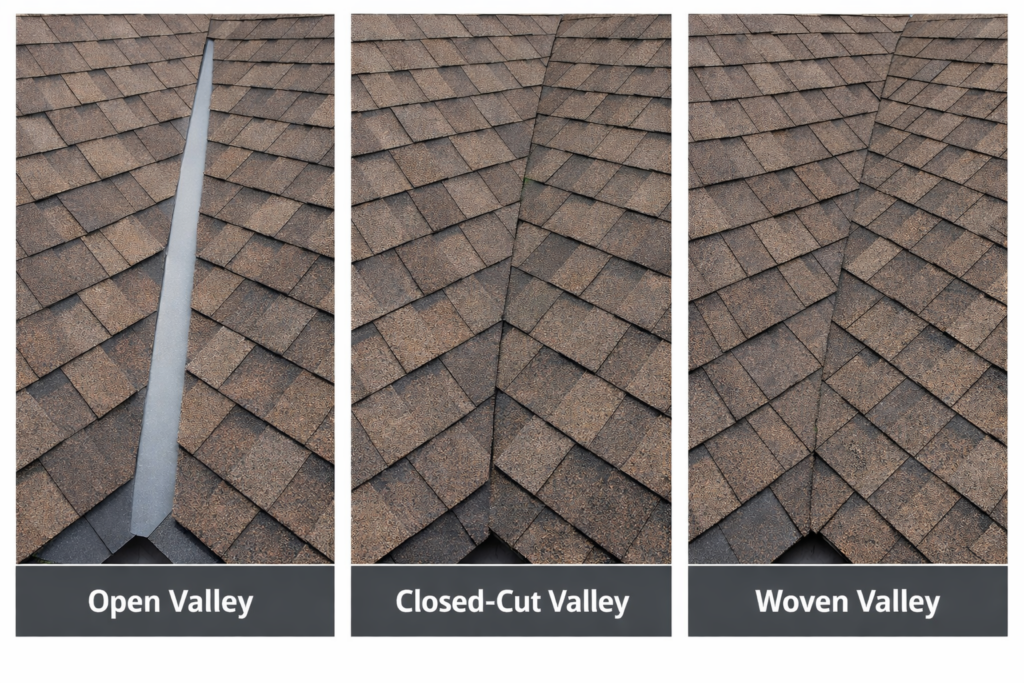
Roof valley design depends on your roofing material, local climate demands, and installation approach. Northeast Ohio homes typically feature one of three valley types, each with distinct advantages for our challenging weather conditions.
Open Valleys
Open valleys feature visible metal flashing running down the valley center, with shingles cut precisely along each side. The exposed metal creates a smooth, unobstructed water channel using galvanized steel, aluminum, or copper flashing to provide the waterproof barrier. These valleys excel at handling heavy water flow and resist debris accumulation that can create blockages during storms, making them particularly effective for Northeast Ohio conditions where the smooth metal surface sheds snow and ice more effectively than textured shingle surfaces.
Closed Valleys
Closed valleys, also called closed-cut valleys, use shingles to cover the valley area completely, creating a uniform appearance across the roof surface with ice and water shield underlayment providing waterproof protection beneath the shingles. The shingles themselves handle water flow, either through woven installation where shingles from each roof plane interlock, or closed-cut installation where shingles are precisely cut at the valley centerline.
While these valleys offer clean visual lines that many homeowners prefer and typically cost less initially since they use existing roofing materials, they require precise installation to prevent leaks and may not handle heavy water flow as efficiently as open designs.
Woven Valleys
Woven valleys represent a specific closed valley technique where shingles from each roof plane are woven together through the valley area, creating a continuous shingle pattern with no visible seam. While aesthetically seamless, woven valleys require skilled installation and careful attention to water flow patterns to perform effectively in Northeast Ohio’s demanding climate conditions.
Why Valleys Matter for Northeast Ohio Homes
Northeast Ohio’s climate creates specific challenges that make valley performance critical for protecting your home. Lake-effect snow, rapid temperature swings, and sustained winter conditions stress roofing systems beyond what many other regions experience, with valleys bearing the brunt of these harsh conditions.
Critical Fact: Ice dams form most frequently in roof valleys during Northeast Ohio winters.
During heavy snowfalls, valleys collect snow from multiple roof planes, creating concentrated snow loads that produce more melting water than flat roof areas. When that water encounters freezing temperatures at roof edges, ice dams form more readily in valleys than elsewhere on your roof. The age of Northeast Ohio’s housing stock compounds these challenges, as many homes in Rocky River, Westlake, Strongsville, and Brunswick were built before current energy efficiency standards, with older insulation systems that allow heat loss contributing to uneven snow melting and higher ice dam risk.
Spring storms common to our region can overwhelm inadequate valley systems. Heavy rains combined with rapid snowmelt create peak water flows that test valley capacity. Poorly designed or maintained valleys allow water backup that leads to interior damage.
Maintenance of Roof Valleys
Regular valley maintenance prevents most serious problems and extends roofing system life significantly. The investment in preventive care costs far less than emergency repairs or interior damage restoration, making consistent attention to valley conditions essential for protecting your home.
Safety Warning: Never attempt to remove snow or ice from valleys yourself, it creates serious injury risk and often causes more damage.
Seasonal inspection should occur twice yearly and after major storms, with spring inspections identifying winter damage while summer checks prepare systems for upcoming severe weather. Debris removal keeps water flowing freely and prevents dam formation by clearing leaves, twigs, and other organic matter from valley areas regularly, especially during fall months. Professional assessment identifies problems before they cause roof leaks, as experienced roofers recognize early deterioration signs that homeowners typically miss, making annual professional inspection worthwhile to catch issues while repair costs remain minimal.
Maintenance Tip: Documentation helps track valley condition over time and supports insurance claims when storm damage occurs.
Protect Your Home with Expert Valley Solutions
Peak & Valley Roofing understands how Northeast Ohio’s harsh winters and challenging weather conditions affect your roof valleys. Our experienced team provides comprehensive valley inspection, repair, and replacement services designed specifically for our region’s climate demands. Don’t wait until valley problems cause interior damage, contact Peak & Valley Roofing today for a thorough assessment and honest recommendations that protect your home and your budget.
Frequently Asked Questions
What causes roof valleys to leak?
Valley leaks typically result from ice dam formation, damaged flashing, or inadequate underlayment that allows water penetration during Northeast Ohio’s freeze-thaw cycles.
How long do roof valleys last?
Properly installed open valleys with quality metal flashing often last 20-30 years, while closed valleys may require attention sooner if ice dams cause repeated shingle damage.
Should I choose open or closed valleys for my Northeast Ohio home?
Open valleys typically perform better in Northeast Ohio’s climate due to superior water flow and ice resistance, though your roofing material and budget also influence the best choice.
How much does valley repair cost?
Valley repair costs range from several hundred dollars for minor flashing repairs to $1,000-$3,000 or more for complete valley replacement, with emergency repairs costing more.
Can I prevent ice dams in roof valleys?
Ice dam prevention focuses on maintaining consistent roof temperatures through proper attic insulation and ventilation to reduce heat loss that melts snow.
When should I call a professional about valley problems?
Contact professional help immediately for active leaks, visible ice dams, or obvious flashing damage to prevent minor problems from becoming expensive repairs.