
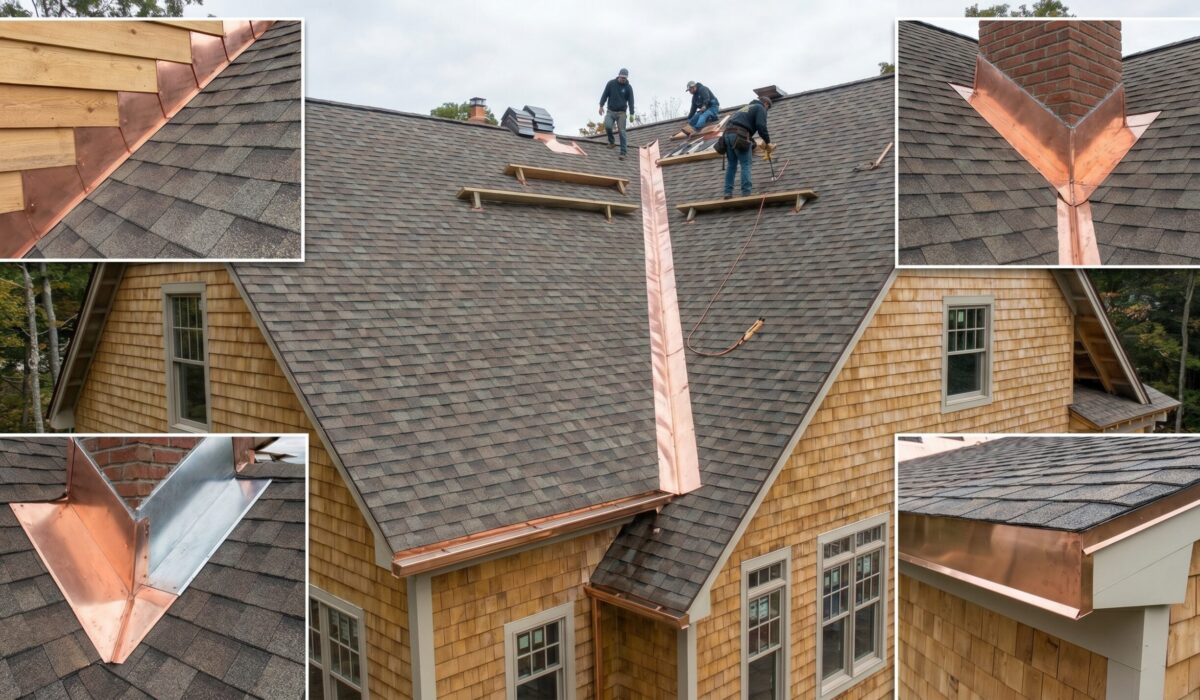
Roof flashing is a thin metal material installed at roof intersections to direct water away from vulnerable areas like chimneys, walls, and valleys. Without proper flashing, water can seep under your shingles and cause serious structural damage, mold growth, and costly repairs.
Quick Answer: The seven main types of roof flashing are step flashing (sidewalls and chimneys), counter flashing (chimney caps), apron flashing (wall bases), valley flashing (roof valleys), drip edge flashing (roof edges), pipe boot flashing (vent penetrations), and kick-out flashing (where roofs meet walls).
Key Insight: Failed flashing is the leading cause of preventable roof leaks in homes, making proper installation and maintenance crucial for protecting your investment.
Understanding these flashing types helps you evaluate roofing estimates and ensures contractors include all necessary components. Let’s explore each type and what you need to know about materials, installation, and maintenance.
The 7 main types of roof flashing
Each type of flashing serves a specific purpose and goes in particular locations on your roof. Knowing where each belongs helps you spot potential problems and communicate effectively with roofing professionals.
Step flashing protects the intersection where your roof meets vertical walls, dormers, or chimney sides. It consists of L-shaped metal pieces installed in a step-by-step pattern, with each piece tucked under a shingle and against the wall. This creates a water-tight seal that directs moisture down and away from the wall.
Counter flashing works alongside step flashing on chimneys and masonry walls. The metal piece is embedded into mortar joints and overlaps the step flashing below, creating a two-part protection system that allows for building movement while maintaining a watertight seal.

Apron flashing (also called headwall flashing) protects the base of walls or penetrations where they meet the roof slope. Shaped like an L, this flashing can extend up to 14 feet in length and is commonly used around dormers to prevent water from reaching windows.
Specialized flashing for specific roof areas
Beyond the basic wall and chimney flashings, your roof needs specialized protection in other critical areas where water naturally collects or flows.
Valley flashing creates a metal channel down roof valleys where two roof slopes meet. This area experiences heavy water flow during storms, so the flashing must be properly sized and installed to handle the volume without backing up under shingles. In Northeast Ohio, where we experience heavy spring rains and winter snow melt, properly installed valley flashing is particularly crucial for preventing water damage.
Drip edge flashing runs along roof edges (eaves and rakes) to direct water away from fascia boards and into gutters. This L-shaped metal prevents water from wrapping around roof edges and damaging underlying wood structures.
Maintenance Tip: Inspect your drip edge flashing annually, as it’s often the first area to show wear from constant water exposure and UV rays.
Pipe boot flashing seals around plumbing vents and other round penetrations. These typically combine rubber gaskets with metal bases and need replacement every 10-15 years as the rubber deteriorates from weather exposure.
Kick-out flashing provides the critical transition where step flashing ends and meets a gutter system. This short, angled piece ensures water flows into the gutter rather than behind it, preventing damage to siding and foundation areas.
Flashing materials and their characteristics
Most roof flashing uses metal materials, each offering different benefits for durability, appearance, and cost. Your choice depends on your budget, climate, and aesthetic preferences.
Steel flashing represents the most common and budget-friendly option. Galvanized steel resists rust and provides reliable protection for most residential applications in the Cleveland area. It offers a clean appearance that works well with various roofing materials and architectural styles.
Aluminum flashing costs slightly more than steel but offers superior corrosion resistance, making it an excellent choice for Northeast Ohio homes that experience frequent weather changes and moisture exposure. It’s lightweight and easy to work with during installation, making it popular among roofing contractors.
Copper flashing provides the longest lifespan and develops an attractive patina over time. While it requires the highest upfront investment, copper can last 50+ years and adds visual appeal to premium homes. It’s particularly common around chimneys and decorative roof features on older Cleveland-area homes.
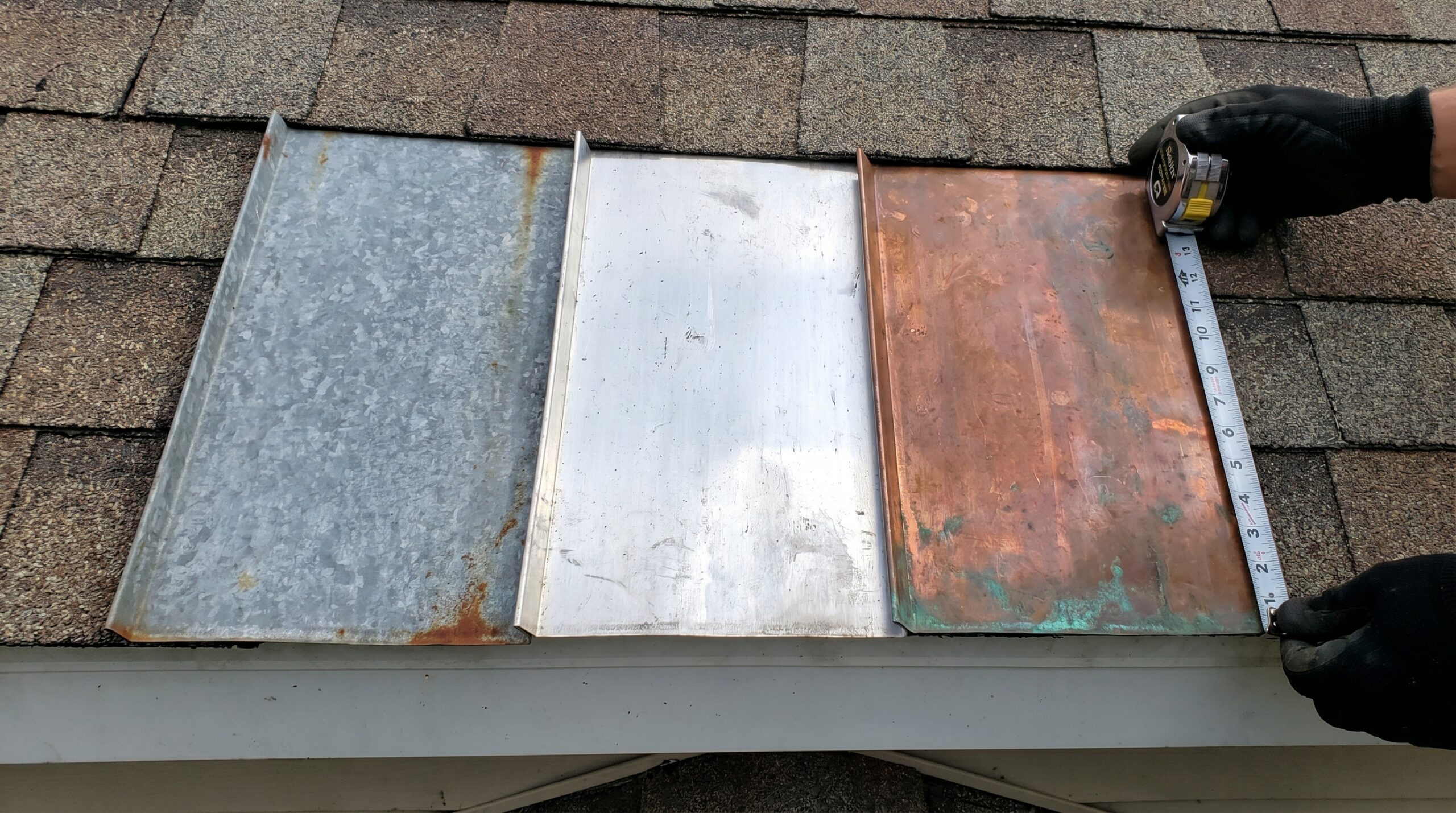
| Material | Lifespan | Cost | Best For |
|---|---|---|---|
| Steel | 20-30 years | Low | Most homes |
| Aluminum | 25-35 years | Medium | Coastal areas |
| Copper | 50+ years | High | Premium applications |
When flashing needs replacement or repair
Understanding when to replace flashing helps you avoid costly water damage and plan for roof maintenance expenses. Most flashing outlasts the original roof it protects, but several factors influence replacement timing.
During roof replacements, experienced contractors should inspect existing flashing for rust, damage, or improper installation. While reusable flashing can save money, replacement is often recommended when upgrading shingle types or if the existing flashing shows any signs of compromise. This thorough approach is especially important for insurance restoration work, where proper documentation and complete repairs ensure your claim is handled correctly.
Signs your flashing needs attention include visible rust or corrosion, loose or missing pieces, cracked sealant around penetrations, and water stains on interior walls near roof intersections. Addressing these issues promptly prevents minor problems from becoming major repairs.
Annual roof inspections should include flashing examination, as this component experiences constant weather exposure from Northeast Ohio’s varied climate conditions. Professional roofers can spot early warning signs and perform preventive maintenance that extends flashing life and protects your home’s structure.
Proper flashing installation and maintenance protect your home from water damage while ensuring your roofing investment performs as expected. When evaluating roofing estimates, verify that all necessary flashing types are included and ask whether existing flashing will be reused or replaced. This knowledge helps you work with reputable contractors who prioritize complete roof protection rather than cutting corners to offer lower prices.