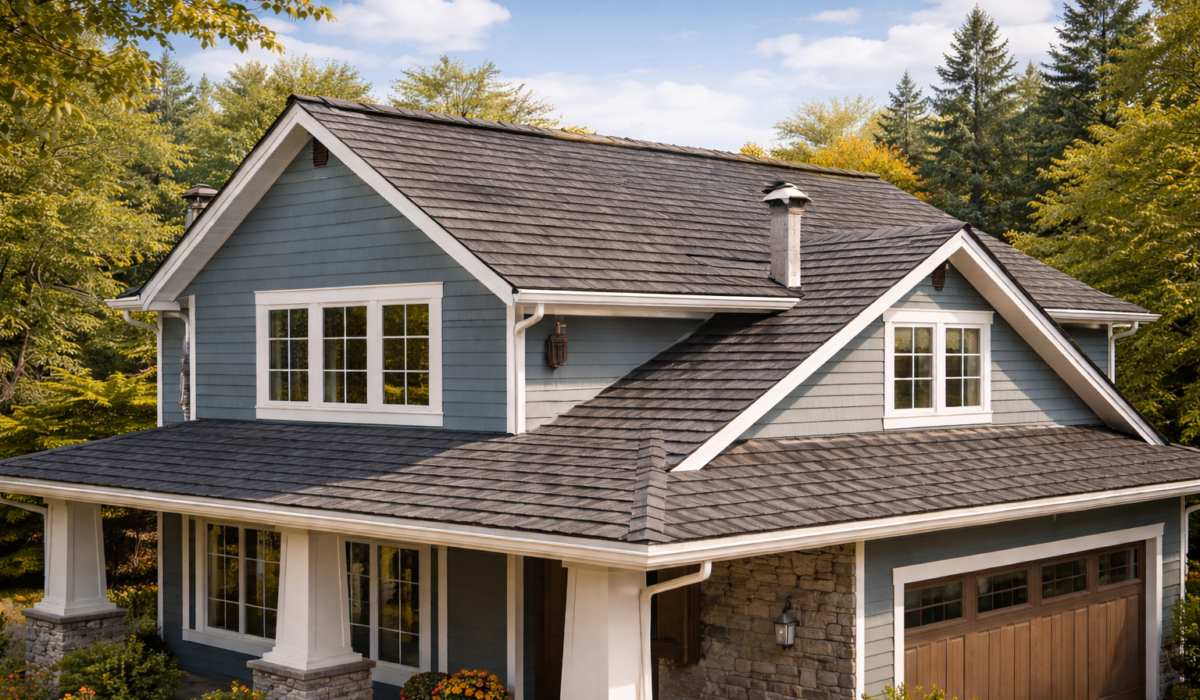
A roof’s lifespan isn’t just determined by the shingles you see, but by the air moving, or failing to move, in the attic below. A balanced ventilation system is critical for preventing the trapped heat and moisture that silently destroy your roof from the inside out. In Northeast Ohio, where humid summers and harsh winters put constant stress on homes, proper ventilation can be the difference between a roof that lasts decades and one that fails prematurely.
What Does Roof Ventilation Actually Do?
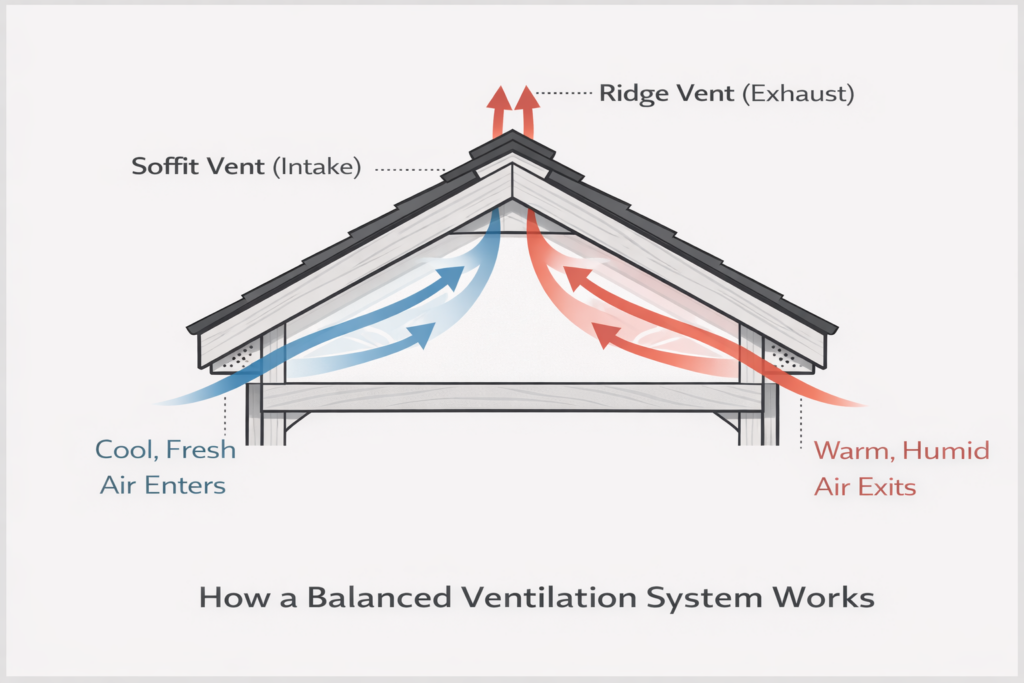
A functional roof ventilation system works on a simple principle. It moves air along a low-to-high path. Cool, fresh air enters through intake vents along the soffits (the underside of your roof’s overhang), and warm, humid air is released through exhaust vents near the roof’s peak. This continuous airflow prevents the attic from becoming a heat trap in the summer or a moisture chamber in the winter.
The attic is not separate from the roof above it. It’s the engine room. Every component, including the wooden decking, underlayment, shingles, and fasteners, is directly affected by the conditions in the space below. An attic that holds excessive heat or humidity puts sustained stress on those materials, compounding over time until the damage becomes significant and costly.
How Poor Ventilation Shortens a Roof’s Lifespan
The damage from inadequate ventilation accumulates gradually and often goes unnoticed until repairs are extensive. In Northeast Ohio, two primary issues accelerate this deterioration, heat and moisture.
In the summer, an under-ventilated attic can reach temperatures over 150°F. This intense, sustained heat essentially bakes the shingles from underneath, causing them to dry out, crack, and lose their protective granules years ahead of schedule. The adhesives that hold shingle layers together break down, and the wooden roof deck can warp.
A roof designed to last 25 years may fail in as little as 12 to 15 years when the environment beneath it is never controlled.
Year-round, moisture poses an even greater structural threat. Warm air from your living space rises and carries humidity into the attic. Without a clear exit path, this moisture condenses on cold surfaces like the underside of the roof deck, rafters, and metal fasteners. Over time, this leads to wood rot, corrosion, and mold growth. The decking softens, loses its ability to hold nails, and can begin to sag, creating a visible wavy appearance on the roof’s surface.
This cycle is also the primary cause of ice dams, one of the most destructive recurring issues for Northeast Ohio homes. When heat trapped in the attic melts snow on the roof, the water runs down to the colder eaves and refreezes, forming a barrier of ice. This dam traps water behind it, forcing it back up under the shingles and into the roof structure, leading to interior leaks and significant structural damage.
Finally, inadequate ventilation puts your warranty at risk. Shingle manufacturers require proper attic ventilation as a condition of their product warranties. If a claim is filed for premature failure and the ventilation is found to be insufficient, the claim can be denied, leaving you to cover the full cost of a replacement.
Signs of a Ventilation Problem
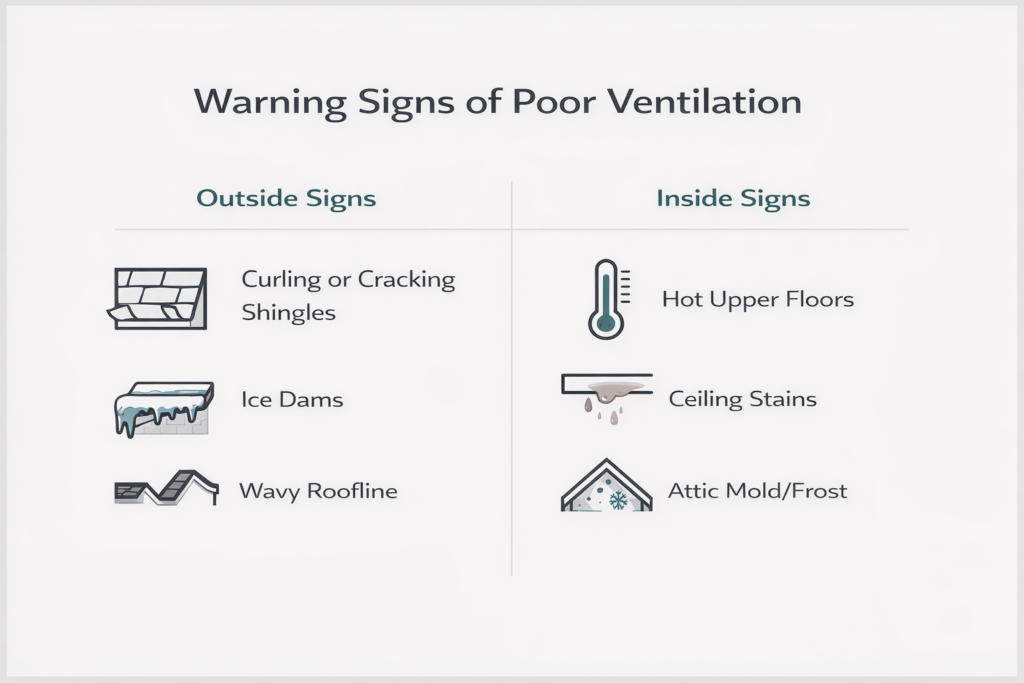
Some indicators are visible from the ground, while others require a look inside the attic.
From the outside, look for shingles that are curling, blistering, or cracking, especially on the sun-drenched south and west faces of your roof. Premature granule loss in your gutters is another sign of heat stress. A wavy, uneven roofline is a more advanced symptom of moisture damage to the decking beneath. In winter, recurring icicles and ice dams along the eaves are a clear confirmation that attic heat is not being properly managed.
Inside your home, the signs can be just as clear. Upper-floor rooms that feel unusually hot in the summer suggest attic heat is radiating into your living space. Water stains on ceilings with no obvious exterior leak, a musty odor on the upper floors, or frost on the underside of the roof deck in winter are all direct evidence of a ventilation failure.
Can You Have Too Much Ventilation?
While less common, over-ventilation, or more accurately imbalanced ventilation, creates its own problems. The issue is rarely too much airflow, but rather a system where exhaust capacity far exceeds intake. When this happens, the powerful exhaust vents can begin pulling conditioned air from inside your home, driving up heating and cooling costs.
A more frequent mistake is mixing exhaust vent types, such as ridge vents and gable vents. This “short-circuits” the system. Instead of pulling cool air from the low soffit vents, the ridge vent simply pulls air from the nearby gable vents. This leaves the lower portion of the roof deck unventilated and vulnerable to moisture damage. A balanced system, designed with compatible vents, is the key to effective performance.
When Should Roof Vents Be Replaced?
There is no fixed schedule for replacing vents, but there are clear signs that replacement is due. Any vent with visible rust, cracks, or damage from storms should be replaced. If the flashing around a vent is cracked or deteriorating, water infiltration is either already happening or imminent.
When replacing your roof, it is almost always the right decision to replace the vents as well. Vents on a 15- or 20-year-old roof are nearing the end of their service life. Including them in the roof replacement project adds minimal cost compared to a separate repair down the road and ensures your new roof system functions correctly from day one.
A new roof installed with old, failing vents is an investment already compromised.
A professional roofer should always assess your entire ventilation system, including both the exhaust vents on the roof and the intake vents in the soffits, as part of a roof replacement estimate. If a contractor doesn’t bring up ventilation during their inspection, you should. A roof that can’t breathe correctly will not last, no matter how good the shingles are.
Protect Your Investment with an Expert Assessment
Your roof’s ventilation system is too important to leave to chance. If you’ve noticed any of the signs of poor ventilation or want an expert assessment of your Northeast Ohio home, contact Peak & Valley Roofing. We provide honest evaluations and lasting solutions to protect your home and your investment.
Frequently Asked Questions
What is the average lifespan of a roof in Northeast Ohio?
Architectural shingles typically last 18-22 years in Northeast Ohio compared to 25-30 years in milder climates. Three-tab shingles average 12-15 years locally versus 20 years in regions without freeze-thaw cycles. The difference stems from ice dam stress, temperature cycling, and lake-effect weather exposure that accelerates normal wear patterns.
How do I know if my roof is aging prematurely?
Check for curling shingles, excessive granule loss in gutters, dark streaks on roof surfaces, or interior water stains before your roof reaches 12 years old. Compare your roof’s condition to similar-aged roofs in your neighborhood. If your shingles show significantly more deterioration than nearby homes with similar exposure, you likely have accelerated aging from ventilation problems, installation defects, or deferred maintenance.
Should I repair or replace an aging roof?
Repair makes sense when damage is isolated to less than 20% of the roof surface and the remaining roof has at least 8-10 years of expected life remaining. Replace when you have widespread shingle deterioration, multiple leak locations, or repairs would cost more than 30% of replacement cost. Also consider replacement timing with planned home sales or major renovations.
How often should I have my roof inspected?
Schedule professional inspections every 3-5 years for roofs under 10 years old, every 2-3 years for roofs 10-15 years old, and annually for roofs over 15 years. Also inspect after severe weather events like sustained winds over 60 mph, hail, or heavy snow loads. Spring and fall self-inspections from the ground can identify obvious damage between professional assessments.
What causes shingles to age faster in some spots than others?
Differential aging indicates concentrated stress. Valleys age faster from water volume concentration. South and west-facing slopes age faster from UV exposure. Areas above poorly vented attics age faster from heat stress. North-facing sections may age faster from moisture retention and organic growth. Sections around penetrations age faster when flashing fails. Identifying the pattern reveals the underlying cause.