

When you’re planning a roof replacement in Rocky River, Cleveland, or anywhere in Northeast Ohio, understanding Ohio residential roofing codes isn’t optional. These regulations, established through the Ohio Residential Code and Ohio Administrative Code, protect your home from water damage while ensuring your investment meets safety standards. Ignoring these requirements leads to failed inspections, voided warranties, and costly repairs down the road.
Ohio’s roofing codes are based on national standards but include specific amendments for our climate. Northeast Ohio’s harsh winters, with heavy snow loads and ice dam conditions, make certain requirements like ice barriers and proper slope calculations especially critical for homes in Rocky River, Cleveland, Medina, and surrounding communities.
Quick Answer: Ohio requires specific slope minimums, ice barriers at eaves, solid roof decking, proper drip edge installation, and manufacturer-compliant materials for all residential roof replacements.
This guide breaks down the most important Ohio roofing code requirements that affect your roof replacement project, translating technical regulations into practical information you can use when working with contractors.
Understanding Ohio’s roofing code framework
Ohio residential roofing codes come from two main sources. The Ohio Residential Code governs single-family and two-family homes, while the Ohio Administrative Code covers commercial and multi-family buildings. These codes incorporate the International Residential Code with Ohio-specific amendments that address our regional climate challenges.
Local building departments in Northeast Ohio cities may add their own requirements on top of state codes. For example, some municipalities prohibit flat roofs or set stricter minimum pitch requirements than state code. Before starting your project, check with your local building department about any additional regulations that might apply to your specific location.
Most residential roof replacements require permits and inspections. The process typically involves submitting plans, getting approval, and scheduling inspections at key stages like deck preparation and final completion. Understanding this framework helps you work more effectively with contractors and avoid compliance issues.
Roof structure and slope requirements
Minimum roof slope standards
Asphalt shingles can only be installed on roofs with slopes of 2:12 or greater according to ohioroofauthority.com. This means for every 12 horizontal inches, the roof must rise at least 2 inches. Roofs with slopes between 2:12 and 4:12 require double underlayment application to prevent water infiltration.
If your existing roof has a slope less than 2:12, you cannot use standard asphalt shingles. Instead, you’ll need low-slope roofing systems like modified bitumen or metal roofing designed for flatter applications.
Roof decking requirements
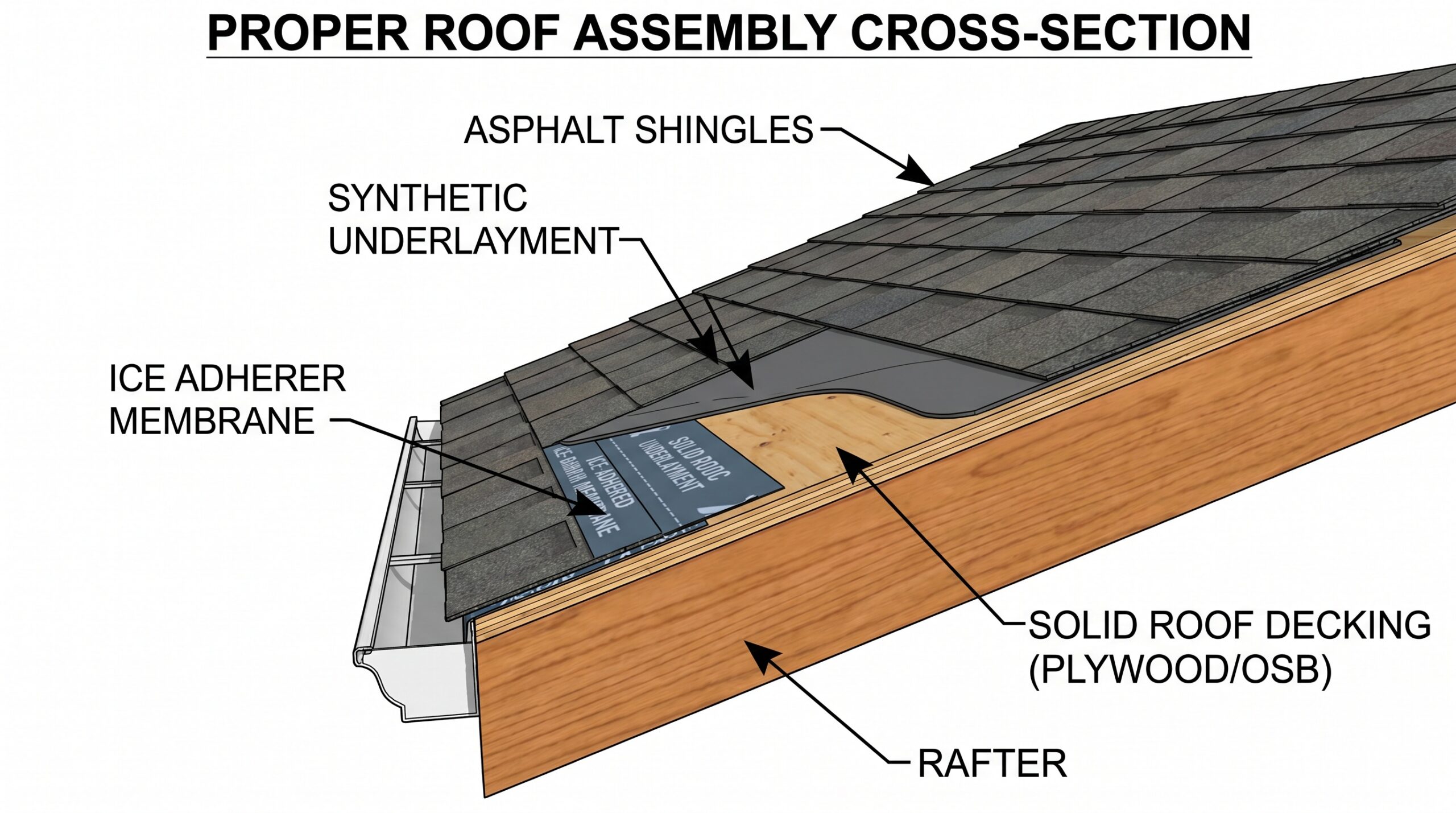
All shingles must be installed over solid sheathing according to Ohio code requirements found in up.codes. Rotten, weak, or damaged decking must be replaced before new roofing materials can be applied. This isn’t an area where contractors should cut corners, as compromised decking puts your entire roof system at risk.
During your roof replacement, expect your contractor to inspect the existing decking thoroughly. Any sections showing signs of water damage, sagging, or structural weakness need replacement to meet code requirements.
Waterproofing and ice protection requirements
Ice barrier installation
Northeast Ohio’s climate makes ice barrier protection mandatory under Ohio code. According to up.codes, ice barriers must extend from the roof edge to at least 24 inches inside the exterior wall line. This measurement follows the roof slope, not horizontal distance.
The ice barrier consists of self-adhering polymer-modified bitumen sheets that create a watertight seal. This prevents water backup during freeze-thaw cycles that commonly occur during Northeast Ohio winters. Without proper ice barrier installation, you risk water damage to your home’s interior and structural components.
Valley protection requirements
Roof valleys, where two slopes meet, require special attention under Ohio roofing codes. Open valleys need metal or roll roofing materials, while closed valleys require ice and water shield or approved underlayment before shingle installation.
Important: Valleys handle large volumes of water runoff and are prone to leaks if not properly protected according to code requirements.
Valley failures often result from contractors skipping proper underlayment or using inadequate materials, which are signs of a bad roofing job. Insist that your contractor follow Ohio code requirements for valley protection to prevent future water infiltration issues.
Component installation and reuse standards
Drip edge specifications
Ohio code requires drip edge installation at both eaves and gables with specific dimensional requirements. The drip edge must extend one-quarter inch below the roof decking and two inches up onto the roof surface. All joints require at least two inches of overlap for proper water protection.
Proper drip edge installation protects your fascia boards and roof decking from water damage. The underlayment placement varies by location – it goes over the drip edge at eaves but under the drip edge at gables to ensure proper water shedding.
Crickets and saddles for wide penetrations
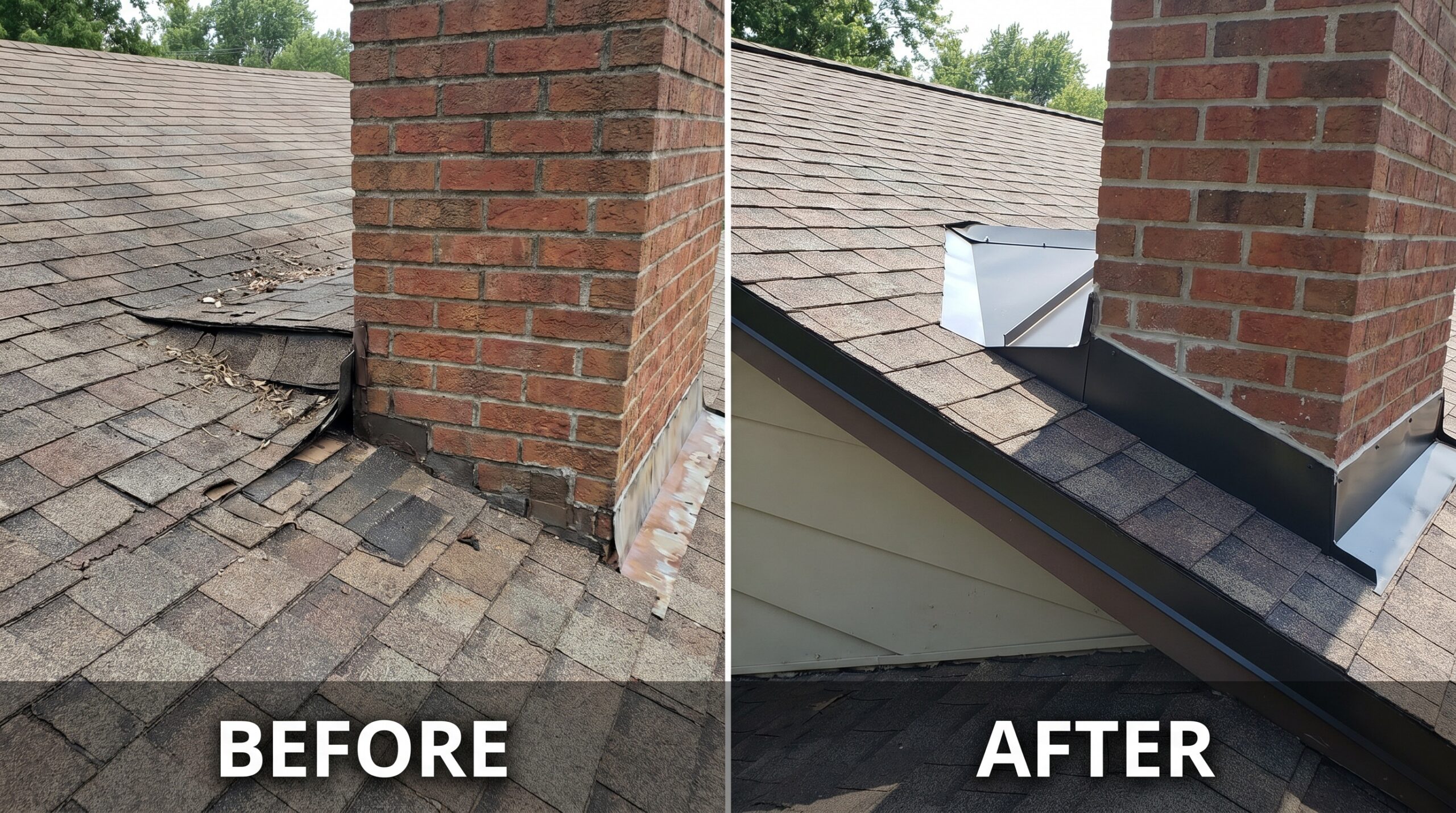
When chimneys or other roof penetrations exceed 30 inches in width, Ohio code mandates cricket or saddle installation on the uphill side. These diversionary structures prevent water from pooling behind large penetrations and must be covered with sheet metal or matching roof materials.
Many homeowners don’t realize this requirement exists until inspection time. If your roof has a wide chimney, budget for cricket installation as part of your code-compliant roof replacement.
Material reuse limitations
Not everything from your old roof can be reused. Ohio code allows reusing components like vents and flashing only if they show no signs of damage or corrosion, though multiple layers of shingles have specific restrictions. Deteriorated items must be replaced to maintain system integrity and pass inspection.
This requirement often surprises homeowners who expect to save money by reusing existing components. However, mixing old, potentially compromised materials with new roofing creates weak points that can lead to premature failures and warranty issues.
Manufacturer compliance and installation standards
Following manufacturer specifications
Ohio code requires all roofing materials to be installed according to both code requirements and manufacturer instructions. This dual requirement means your contractor cannot deviate from the shingle manufacturer’s installation guidelines, even if they prefer different methods.
Failure to follow manufacturer specifications voids your material warranty and can result in failed inspections. When evaluating contractors, ask specifically about their familiarity with your chosen shingle manufacturer’s installation requirements and verify whether the roofer is licensed, bonded, and insured.
Fastening and wind resistance
Proper fastening and correct shingle exposure become critical in Northeast Ohio’s wind conditions. Most areas fall under Wind Exposure Category B with design wind speeds of 115 mph according to ohioroofauthority.com. Standard installations require minimum four nails per shingle, increasing to six nails in high-wind zones.
Your contractor should understand local wind load requirements and adjust fastening patterns accordingly. Under-fastened shingles can fail during storms, leading to extensive damage and insurance claim complications.
| Code Area | Key Requirement | Northeast Ohio Impact |
|---|---|---|
| Slope | Minimum 2:12 for asphalt shingles | Prevents water infiltration during snow melt |
| Ice Barrier | 24 inches inside wall line | Critical for ice dam protection |
| Decking | Solid sheathing required | Ensures structural integrity |
| Drip Edge | Specific dimensional requirements | Protects fascia from water damage |
Understanding these Ohio residential roofing codes helps you make informed decisions about your roof replacement project. Code compliance protects your investment, ensures warranty coverage, and provides peace of mind knowing your roof meets safety standards designed for Northeast Ohio’s challenging climate conditions.
At Peak and Valley Roofing, we follow every Ohio code requirement on every project. Our family-owned company understands the specific challenges facing homeowners in Rocky River, Cleveland, and throughout Northeast Ohio. With our specialization in insurance restoration and commitment to honest, no-pressure guidance, we ensure your roof replacement meets all current Ohio residential roofing codes while providing the quality craftsmanship you deserve. Contact us today for a free inspection to ensure your roof replacement meets all current Ohio residential roofing codes.