

A roof ridge is the highest horizontal line where two roof slopes meet at the peak of your home. It’s essentially the “spine” of your roof system, running from one end to the other at the topmost point. This critical component does more than just complete your roof’s structure – it plays a vital role in ventilation, weather protection, and your home’s overall energy efficiency.
Understanding your roof ridge becomes especially important when you’re planning a roof replacement or dealing with issues like leaks, poor ventilation, or ice dams. In Northeast Ohio’s climate, where we experience everything from heavy snow loads to severe summer storms, the ridge affects both the cost of roofing projects and the long-term performance of your entire roof system.
Quick Fact: Most simple ranch-style homes common in Rocky River and Cleveland have one continuous ridge running the full length of the roof, while complex architectural designs can have multiple ridges that significantly impact installation costs.
In this guide, you’ll learn exactly what makes up your roof ridge, how different components work together, and what you need to know to make informed decisions about your roofing project in Northeast Ohio.
Understanding roof ridge basics
The roof ridge serves as the foundation for several critical roofing components. When you look at your home from the street, you’ll see the ridge as that continuous horizontal line at the very top where your roof’s two sloped sections come together.
Think of it like the peak of a mountain – it’s the highest point where two slopes meet. But unlike a mountain peak, your roof ridge needs to be properly sealed and often ventilated to protect your home from weather and maintain proper airflow.
The appearance of your ridge depends on your roof’s architectural style. Simple gable roofs have one straight ridge running across the entire length. More complex roofs with dormers, additions, or multiple levels will have several ridges at different heights and angles.
Multiple ridges and cost impact
If your roof has multiple ridges due to architectural complexity, this directly affects your roofing project’s cost. Each additional ridge requires more materials, labor time, and specialized installation work. Contractors need to cut, seal, and cap each ridge separately, which can add several hundred to thousands of dollars depending on the total ridge length.
This is why getting accurate measurements of all ridge lines is crucial when obtaining roofing estimates. A roof with 200 feet of total ridge length will cost significantly more than one with just 50 feet.
Ridge components and materials
Your roof ridge isn’t just the structural peak – it includes several protective components that work together to keep your home dry and properly ventilated.
Ridge capping explained
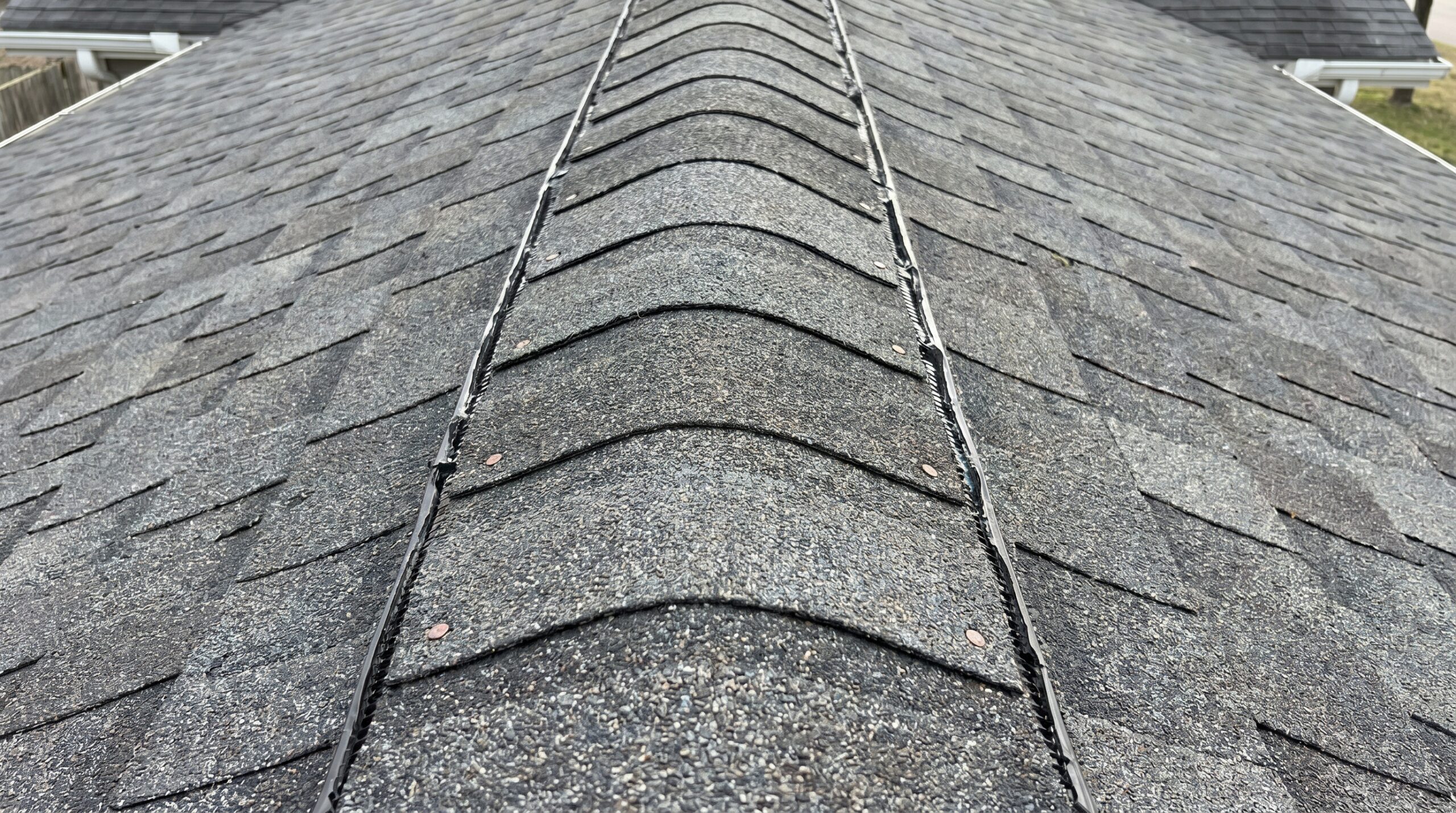
Ridge capping is the protective material installed directly over the ridge to seal this vulnerable area. It’s essentially a specially designed shingle or metal piece that’s thicker and pre-bent to fit perfectly over the ridge angle. This capping prevents water, wind, and debris from entering your home at the roof’s most exposed point.
The ridge cap must match your main roofing material. For asphalt shingle roofs, you’ll use architectural ridge cap shingles that are specifically manufactured for this purpose. Metal roofs use pre-formed metal ridge caps, while tile roofs have specially shaped ridge tiles.
Material differences by roof type
Each roofing material requires its own ridge capping approach. Asphalt shingle ridge caps are typically thicker than regular shingles and come pre-bent for easy installation. Metal roofing uses formed metal caps that match the roof’s profile and color. Tile roofs often use mortar-set ridge tiles or special interlocking ridge pieces.
The key is using manufacturer-approved ridge materials. Some contractors try to cut costs by using regular 3-tab shingles as ridge caps on architectural shingle roofs, but this creates a weak point that’s prone to wind damage and leaks – particularly problematic during Northeast Ohio’s severe weather events.
Warning: Using mismatched or substandard ridge materials can void your manufacturer’s warranty and lead to premature failure of your roof’s most critical sealing point.
Ridge ventilation systems
Modern homes in Northeast Ohio typically include ridge vents as part of their attic ventilation system. A ridge vent is a continuous opening cut along the ridge that allows hot, humid air to escape from your attic space.
How ridge vents work
Ridge vents work on the principle that hot air rises. As warm air in your attic heats up, it naturally moves upward and exits through the ridge vent. This creates a continuous airflow when paired with soffit vents at the roof’s lower edges, which allow cool air to enter the attic space.
This ventilation system helps prevent several common problems in our Cleveland area climate. In summer, it removes excess heat that would otherwise make your air conditioning work harder. In winter, proper ventilation helps prevent ice dams – a particular concern for Northeast Ohio homeowners – by keeping your roof surface at a more consistent temperature.
Types of ridge vents
There are two main types of ridge vents. Vents with baffles have internal channels that direct airflow and help prevent rain, snow, and debris from entering your attic. These are considered more effective but cost slightly more. Vents without baffles rely on natural convection and wind patterns but offer less protection against weather infiltration.
The choice between baffle and non-baffle vents often depends on your local climate and the rest of your ventilation system. Your roofing contractor can help determine which type works best for your specific situation in Northeast Ohio’s variable weather conditions.
Ridge versus hip – knowing the difference
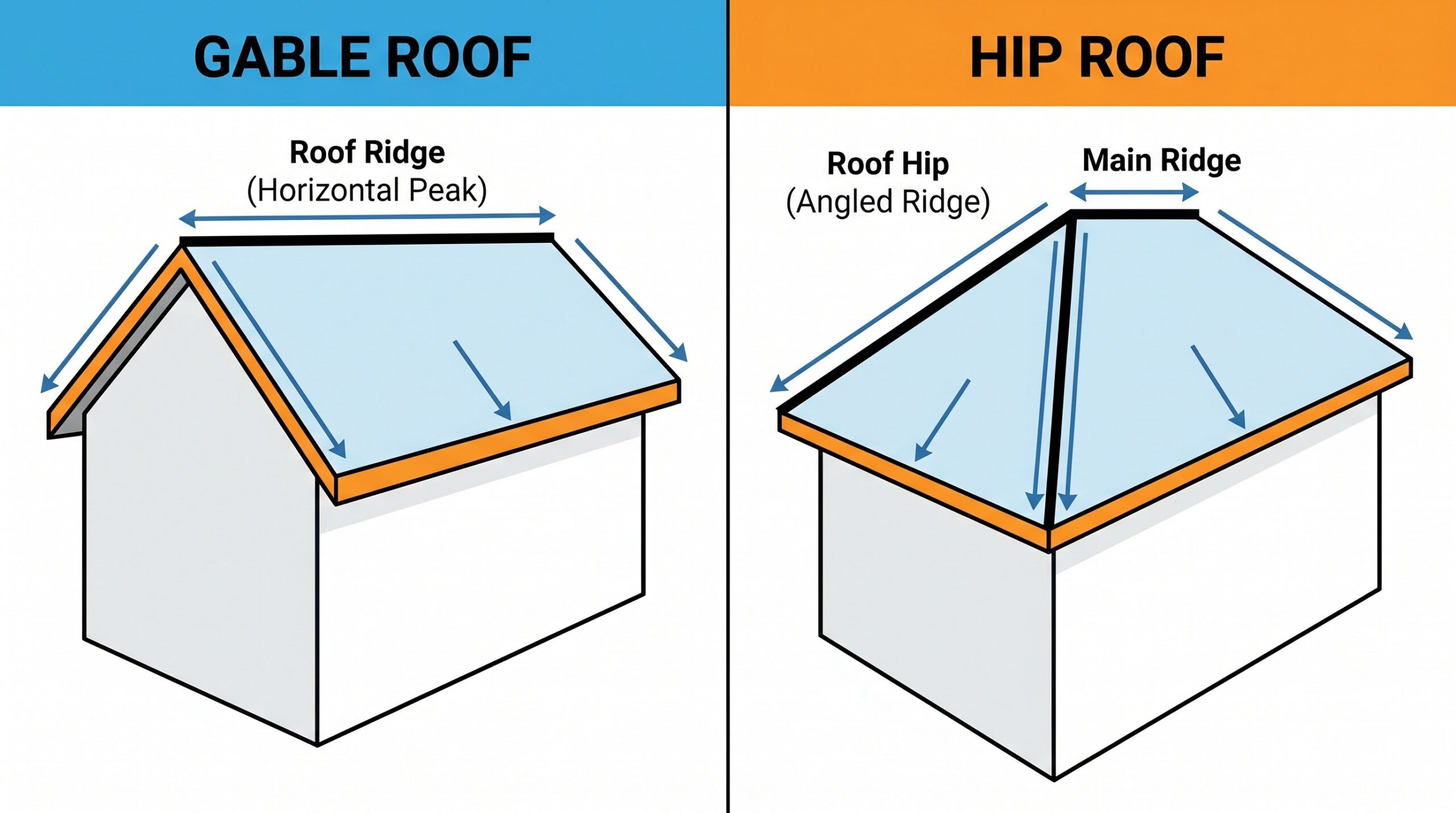
Many homeowners confuse ridges with hips, but they serve different functions and appear in different locations on your roof.
A hip is where two roof slopes meet to form an external angle that runs downward from the ridge toward the roof’s edge. Think of it as the “corner” of your roof. Hips also receive protective capping, but they’re not at the peak of your roof like ridges are.
Visual identification tips
The easiest way to tell them apart is direction and location. Ridges run horizontally at the very top of your roof – they’re the highest points. Hips run diagonally downward from higher points toward the roof’s edges. If you’re looking at the highest horizontal line on your roof, that’s the ridge. If you’re looking at angled lines that slope downward, those are hips.
Both ridges and hips need proper capping and sealing, but ridges are typically more critical because they’re at the absolute peak where water would naturally want to penetrate.
Cost and maintenance considerations
Understanding your roof’s ridge system helps you make better decisions about maintenance and replacement. Ridge problems often show up as missing or damaged ridge caps, sagging ridge lines, or interior leaks near the roof’s peak.
When getting roofing estimates from contractors in the Rocky River and Cleveland area, ask specifically about their ridge cap materials, installation methods, and warranty coverage. Quality ridge work is essential for long-term roof performance, especially given Northeast Ohio’s challenging weather conditions, so it’s worth investing in proper materials and installation.
Pro Tip: During roof inspections, pay special attention to your ridge line. Dark streaks, missing caps, or visible sagging can indicate problems that need immediate attention to prevent water damage – particularly important before Northeast Ohio’s harsh winter weather sets in.
Your roof ridge might seem like a small detail, but it’s actually one of the most important parts of your roofing system. Proper ridge design, materials, and installation protect your home from water damage while maintaining the ventilation your attic needs to perform efficiently. When planning any roofing work, make sure your contractor gives your ridge the attention it deserves – your home’s long-term protection depends on it.