

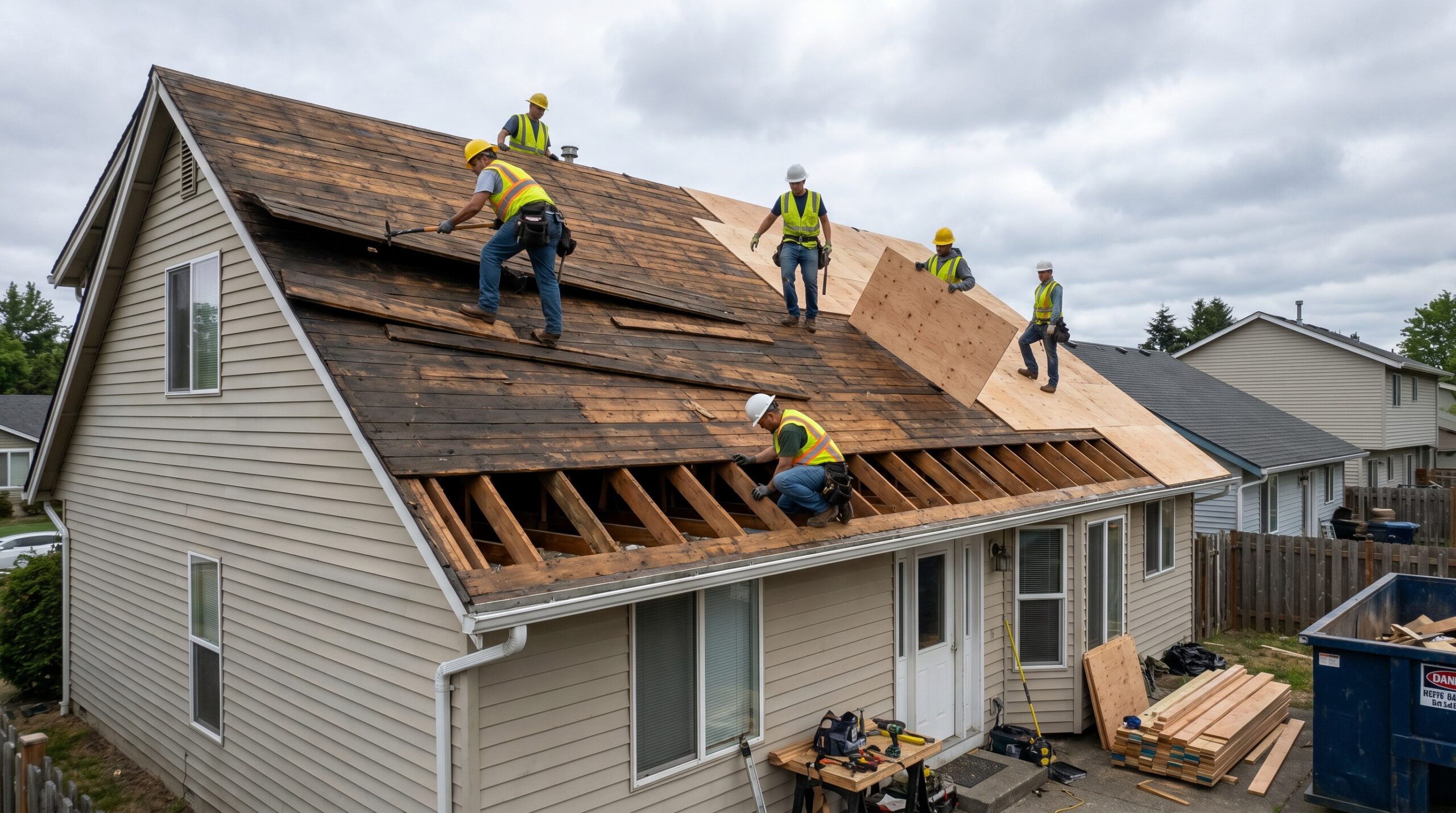
Roof sheathing, also called roof decking, is the layer of wood panels or boards that covers your roof’s frame and provides the foundation for your shingles, underlayment, and other roofing materials. Think of it as the wooden “skin” that spans across your rafters or trusses, creating a solid surface for everything else to attach to.
Understanding roof sheathing matters because it’s often the most expensive surprise in a roof replacement project. While you can’t see it from the ground, damaged sheathing can add thousands to your roofing costs and must be replaced before new materials can be installed. In Northeast Ohio, where harsh winters and storm damage are common concerns, proper sheathing becomes even more critical for protecting your home.
Quick Answer: Roof sheathing is the wooden foundation of your roof system, typically made from plywood, OSB, or wooden planks that create a solid base for shingles and protect your home’s structure.
What does roof sheathing do for your home?
Your roof sheathing serves multiple critical functions that keep your Cleveland-area home safe and dry. It acts as the structural backbone that distributes weight from snow, wind, and foot traffic evenly across your roof’s frame, preventing sagging or collapse—particularly important during Northeast Ohio’s heavy snow seasons.
The sheathing also creates a solid nailing surface for your roofing materials. Without it, your shingles, flashing, and gutters would have nowhere secure to attach. Additionally, it works with your walls to resist horizontal forces like strong winds, acting as a structural diaphragm that keeps your entire roof system stable during Ohio’s severe weather events.
From a weather protection standpoint, sheathing provides the base layer that your underlayment adheres to, creating the first barrier against water infiltration. When properly installed, it helps prevent leaks and provides a smooth, even surface that allows water to flow correctly toward your gutters.
Types of roof sheathing materials

Modern homes in the Cleveland area typically use one of three sheathing types, each with distinct advantages and ideal applications for our regional climate.
Plank sheathing consists of individual wooden boards, usually 1×6 or 1×8 inches, laid across the roof frame. This was the standard before plywood became widely available and you’ll still find it on many older Cleveland-area homes built in the early to mid-20th century. While durable, plank sheathing can develop gaps over time that may require attention during roof replacement.
OSB (oriented strand board) is today’s most popular choice for new construction in Northeast Ohio. Made from wood strands compressed with waterproof resin, OSB costs less than plywood and provides excellent structural strength. However, it’s more susceptible to moisture damage and edge swelling, which can create visible bumps under your shingles if it gets wet during installation or from leaks.
Plywood sheathing offers superior moisture resistance compared to OSB, making it an excellent choice for Northeast Ohio’s humid summers and wet spring seasons. Made from thin wood layers glued together at alternating angles, CDX-grade plywood handles humidity and occasional water exposure better. While more expensive, many local contractors prefer plywood for its long-term durability in our climate.
Cost Consideration: OSB typically costs 30-40% less than plywood, but plywood’s moisture resistance often makes it worth the extra investment in Northeast Ohio’s variable climate conditions.
When roof sheathing needs replacement
Several warning signs indicate your sheathing may need attention during your next roof project. Inside your attic, look for soft or spongy areas when you press on the wood, visible rot or dark staining, and any boards that appear to be sagging between rafters. These issues are particularly common in older Cleveland-area homes that have experienced multiple severe weather events over the years.
From outside, a wavy or uneven roofline often signals sheathing problems underneath. Chronic leaks, especially those that seem to move around or reappear after repairs, frequently trace back to compromised sheathing that can no longer provide a solid base for your roofing materials.
During a roof replacement, your contractor won’t know the full extent of sheathing damage until after the old materials are removed. Most projects require replacing at least a few boards, but extensive rot may necessitate a complete re-deck. Building codes require that any sheathing with structural damage be replaced before new roofing can be installed.
For homes with plank sheathing—common in many Rocky River and Cleveland neighborhoods—gaps wider than 1/8 inch between boards must be addressed per manufacturer requirements, often by adding a layer of OSB or plywood over the existing planks.
How sheathing affects your roof replacement cost
In the Cleveland area, roof sheathing replacement typically adds $3 to $8 per square foot to your project, depending on material choice and local labor rates. For an average 2,000 square foot roof, this translates to $6,000 to $16,000 in additional costs if extensive replacement is needed.
Several factors drive these costs up or down in Northeast Ohio. Material selection plays a major role, with OSB being the most economical option and plywood commanding premium pricing. The amount of damaged sheathing discovered during tear-off has the biggest impact, as replacing scattered boards costs far less than a complete re-deck.
Roof complexity also affects pricing. Simple gable roofs with standard rafter spacing cost less to re-sheath than complex designs with multiple angles, dormers, or unusual framing—common in many historic Cleveland-area neighborhoods. Local lumber prices and labor rates create variations in total costs throughout the region.
Smart contractors include a sheathing allowance in their estimates, typically covering 10-20% replacement. This protects you from surprise charges while ensuring necessary work gets done properly. Always ask how your contractor handles additional sheathing needs beyond their initial allowance, especially if you’re dealing with storm damage and insurance claims.
Budget Tip: Request a written policy on how additional sheathing replacement will be priced and charged if more damage is discovered than initially estimated.
Understanding roof sheathing helps you make informed decisions about your roof replacement and avoid unexpected costs. While it’s hidden beneath your shingles, this crucial component determines whether your new roof performs properly and lasts its expected lifespan in Northeast Ohio’s challenging climate. When working with roofing contractors, don’t hesitate to ask specific questions about sheathing inspection, replacement policies, and material recommendations for your climate and home design.
At Peak and Valley Roofing, we help Cleveland-area homeowners navigate roof sheathing decisions and provide transparent pricing for replacement work. As a family-owned company serving Rocky River, Cleveland, and Northeast Ohio, we believe educated homeowners make better roofing decisions. We’re always happy to explain what we find during your roof inspection and help you understand your options, especially when dealing with insurance restoration after storm damage.