

Your attic ventilation system directly impacts your energy bills, roof lifespan, and home comfort. Without proper ventilation, you could face ice dams during Cleveland’s harsh winters, sky-high cooling costs in summer, and premature roof failure that costs thousands to repair.
The two main types of attic ventilation systems are active ventilation (uses powered fans or moving parts) and passive ventilation (relies on natural airflow). Most homes in Northeast Ohio need a combination of intake vents at the soffits and exhaust vents at the ridge or roof surface, with the 1:150 rule requiring one square foot of ventilation per 150 square feet of attic space.
Quick Fact: Proper attic ventilation can reduce attic temperatures by 20-50°F in summer and prevent costly ice dam damage in Northeast Ohio’s winter climate.
Understanding your options helps you make the right choice for your roof type, Cleveland’s variable climate, and budget. Let’s break down each system so you can protect your investment and keep your home comfortable year-round.
What does an attic ventilation system do?
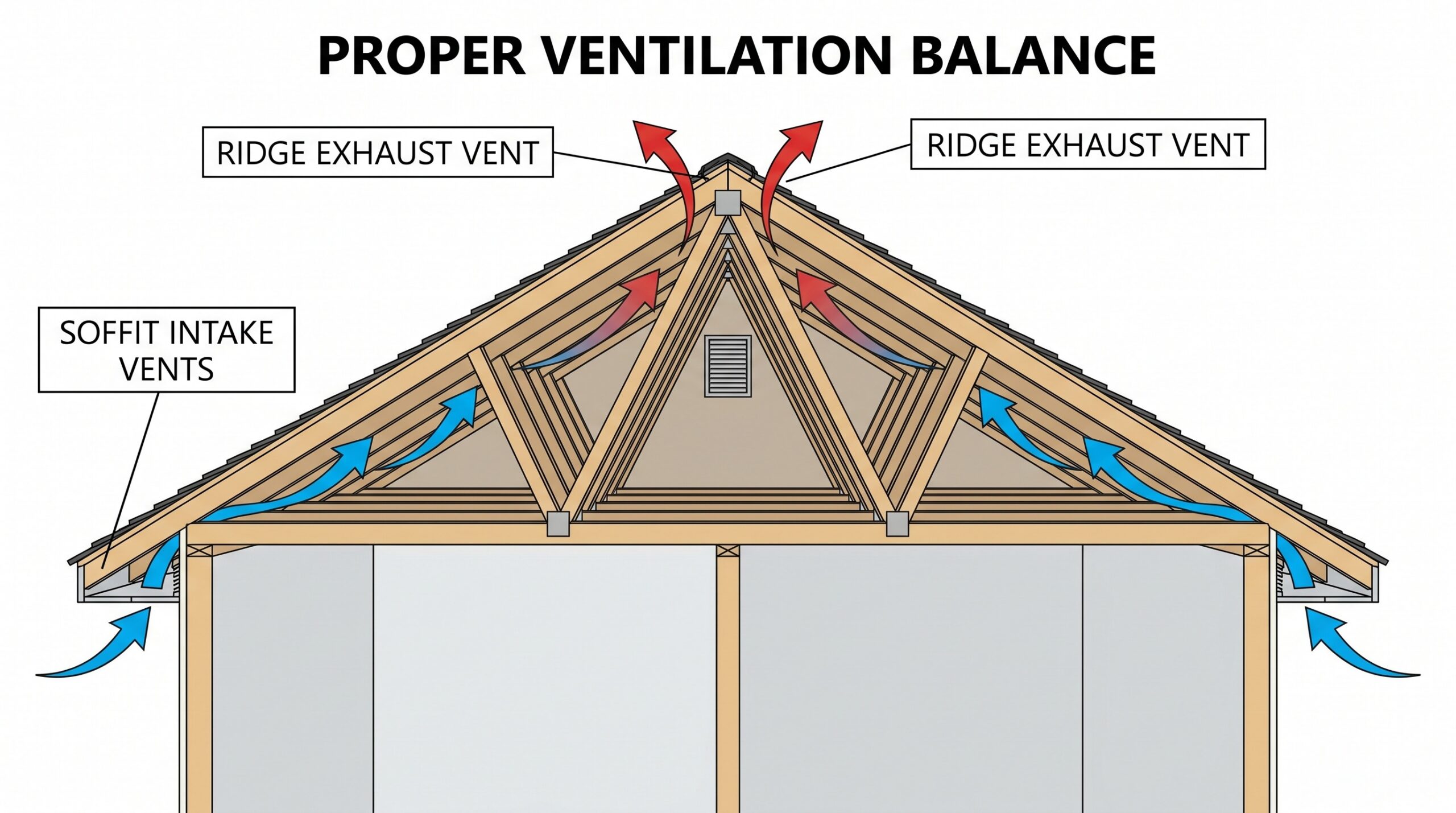
Your attic ventilation system creates a continuous airflow cycle that removes trapped heat and moisture from your attic space. Fresh air enters through intake vents (typically at the soffits or eaves), moves through the attic, and exits through exhaust vents at higher points on your roof.
This airflow serves several critical functions. In Northeast Ohio’s humid summers, it prevents your attic from becoming a heat trap that forces your air conditioner to work overtime. During Cleveland’s cold winters, it keeps your attic cold to prevent ice dams and removes moisture that could lead to mold or wood rot.
The system works on the principle that hot air rises. As heated air exits through exhaust vents, it creates negative pressure that draws cooler outside air through the intake vents. This natural convection process continues as long as there’s a temperature difference and adequate ventilation openings.
Without proper ventilation, your attic becomes a stagnant air pocket that traps heat and humidity, leading to higher energy costs, shortened shingle life, and potential structural damage from moisture buildup—particularly concerning in Northeast Ohio’s climate with its temperature extremes and lake-effect weather patterns.
Main types of attic ventilation systems
Attic ventilation systems fall into two categories based on how they move air: active systems use mechanical power or moving parts, while passive systems rely entirely on natural forces like wind and convection.
Active ventilation systems
Active ventilation systems mechanically move air using fans, turbines, or other powered components. These systems don’t depend solely on weather conditions and can move significantly more air than passive systems—particularly beneficial during Northeast Ohio’s humid summer months.
Turbine roof vents use wind power to spin internal blades that create suction. Even on calm days, natural convection keeps them moving, though they work best with steady breezes. They’re visible from the street but highly effective at removing hot air, and they perform well in Cleveland’s variable wind conditions.
Power roof vents are electric fans installed near the roof ridge. They provide consistent airflow regardless of wind conditions but require electrical connections and eventual motor replacement. The main concern is ensuring adequate intake ventilation to prevent drawing conditioned air from your living space.
Solar-powered attic fans offer the benefits of power vents without increasing your electric bill. However, they only operate when the solar panel receives direct sunlight and may shut down while recharging, potentially leaving your attic unventilated during peak heat hours—a consideration for Northeast Ohio’s sometimes cloudy summer days.

Passive ventilation systems
Passive systems use natural airflow without any moving parts or power consumption. They’re quieter, require less maintenance, and work continuously without energy costs—ideal for Northeast Ohio homeowners seeking reliable, low-maintenance solutions.
Ridge vents run along the peak of your roof and provide excellent exhaust ventilation when paired with adequate soffit intake. Models with internal baffles prevent weather infiltration while maintaining airflow—crucial for protecting against Cleveland’s winter storms and lake-effect snow. They’re nearly invisible from ground level and work well on most gable roof designs common in Northeast Ohio.
Static box vents (also called turtle vents) are individual exhaust vents that look like small boxes on your roof. They work through natural convection as hot air rises and escapes. You typically need multiple units to achieve proper ventilation, making them more visible than ridge vents.
Gable end vents are installed on the exterior walls where roof slopes meet. They can function as intake or exhaust depending on wind direction, providing horizontal airflow through your attic space.
Important Note: Passive systems require proper balance between intake and exhaust vents to function effectively, with intake area slightly exceeding exhaust area for optimal performance—especially important in Northeast Ohio’s climate where ice dam prevention is crucial.
How to choose the right attic ventilation for your roof and climate
Your roof design largely determines which ventilation options will work best. Gable roofs with clear ridge lines are ideal for ridge vent systems paired with continuous soffit vents. Hip roofs or complex rooflines may need multiple box vents or powered fans to achieve adequate coverage.
Northeast Ohio’s climate plays a crucial role in system selection. Our region experiences hot, humid summers that benefit from active ventilation systems capable of moving large volumes of air, while our cold winters with lake-effect snow make ice dam prevention a top priority through proper passive ridge and soffit combinations.
Consider your existing intake ventilation before choosing exhaust options. Powered exhaust fans without adequate intake can create negative pressure that pulls conditioned air from your living space, increasing energy costs. Most Cleveland-area homes need continuous soffit vents or equivalent intake area to support any exhaust system.
| Roof Type | Best Exhaust Option | Required Intake | Northeast Ohio Considerations |
|---|---|---|---|
| Simple Gable | Ridge vent with baffle | Continuous soffit vents | Excellent for ice dam prevention |
| Complex/Hip | Multiple box vents or power fan | Soffit + over-fascia vents | Active systems help in humid summers |
| Limited Eaves | Power or solar fan | Over-fascia or drip edge vents | Essential for moisture control |
Energy efficiency and maintenance requirements also factor into your decision. Passive systems have no operating costs and minimal maintenance needs, while powered systems consume electricity and require eventual motor replacement but move more air when needed during Northeast Ohio’s peak summer heat.
Basic sizing and balance rules for attic ventilation
The standard sizing rule requires one square foot of net free ventilation area (NFVA) per 150 square feet of attic floor space. This 1:150 ratio can be reduced to 1:300 if your attic has a proper vapor barrier and meets specific code requirements.
Balance between intake and exhaust is critical for proper function. Industry guidance recommends roughly 50-60% of your ventilation area as intake (soffits) and 40-50% as exhaust (ridge or roof vents). This slight intake bias prevents negative pressure that could draw conditioned air from your home.
For example, a 1,500 square foot attic needs 10 square feet of total NFVA using the 1:150 rule. This breaks down to about 6 square feet of intake ventilation and 4 square feet of exhaust ventilation. Always check manufacturer specifications for actual NFVA ratings, as the physical size of vents differs from their effective ventilation area.
Pro Tip: Never block soffit vents with insulation, and avoid mixing different types of exhaust systems on the same roof, as they can interfere with each other’s performance—particularly important for preventing ice dams in Northeast Ohio winters.
Proper attic ventilation protects your roof investment, reduces energy costs, and maintains a comfortable living environment in Northeast Ohio’s challenging climate. Whether you choose active or passive systems, the key is ensuring adequate intake ventilation and proper sizing for your specific roof and Cleveland-area weather conditions. When in doubt, consult with a local roofing professional who understands Northeast Ohio’s unique climate challenges and can assess your home’s specific needs to recommend the most effective ventilation strategy.