

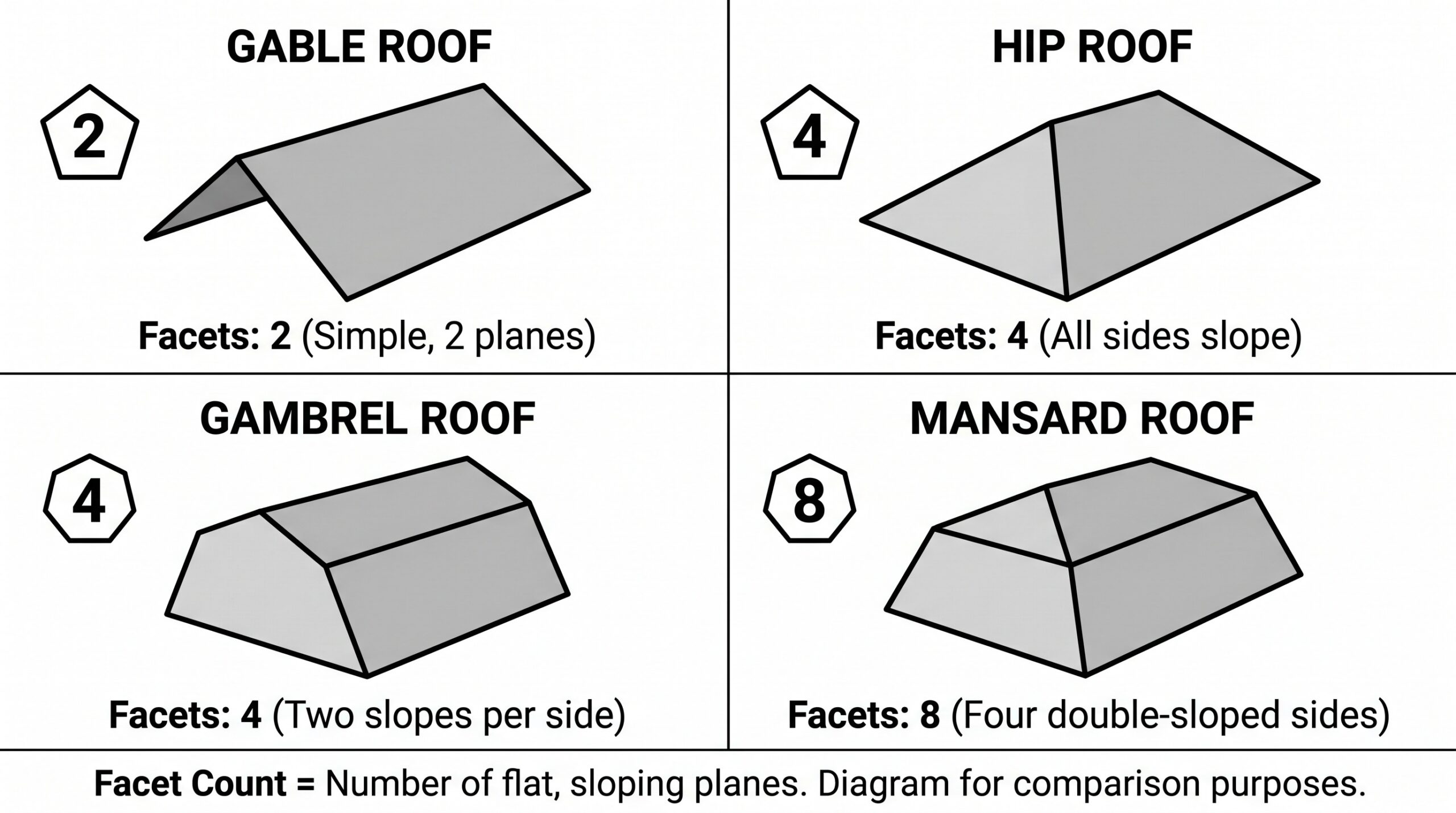
A roof facet is simply one of the individual flat surfaces that make up your roof structure. Think of your roof like a cut diamond – each flat surface is a facet, and together they create the complete shape. When you look at a basic gable roof, you’re seeing two facets that meet at the peak. More complex roofs can have anywhere from four to over twenty different facets.
Understanding roof facets matters because they directly impact how water drains from your home, where problems are likely to develop, and how much your roofing project might cost. The more facets your roof has, the more intersections and potential trouble spots you’ll need to maintain – especially important in Northeast Ohio where heavy snow loads and ice dams can stress these connection points.
Key Insight: Every time your roof changes direction, pitch, or angle, a new facet begins – and each intersection creates a potential weak point that needs proper sealing and maintenance.
How roof facets work on different roof types
The number and arrangement of facets varies dramatically based on your roof’s design. A simple gable roof has just two rectangular facets that slope upward and meet at a central ridge. This creates clean lines and straightforward water drainage – particularly beneficial during Cleveland’s heavy spring rains.
Hip roofs are more complex, featuring four triangular facets that slope down on all sides of your home. This design creates better wind resistance against Northeast Ohio’s severe storms but adds more intersections where facets meet. Each intersection requires specialized flashing and careful installation to prevent leaks.
Mansard roofs take complexity further with eight or more facets. Each side of the building has two distinct slopes – a steep lower section and a gentler upper portion. While this creates beautiful architectural character and extra living space, it also means significantly more joints and valleys to maintain through Ohio’s freeze-thaw cycles.
Modern custom homes in the Rocky River and Cleveland area often feature the most complex facet arrangements. A single roof might combine gables, hips, dormers, and other elements, creating thirty or more individual facets. Each adds visual interest but also increases both installation complexity and long-term maintenance needs.
Why roof facets affect drainage and leak risk
Water drainage depends entirely on how your roof facets direct flow. Each facet acts like a funnel, channeling rainwater and snowmelt toward gutters and downspouts. When facets meet, they create valleys where water concentrates and moves faster – critical for handling Northeast Ohio’s heavy precipitation events.
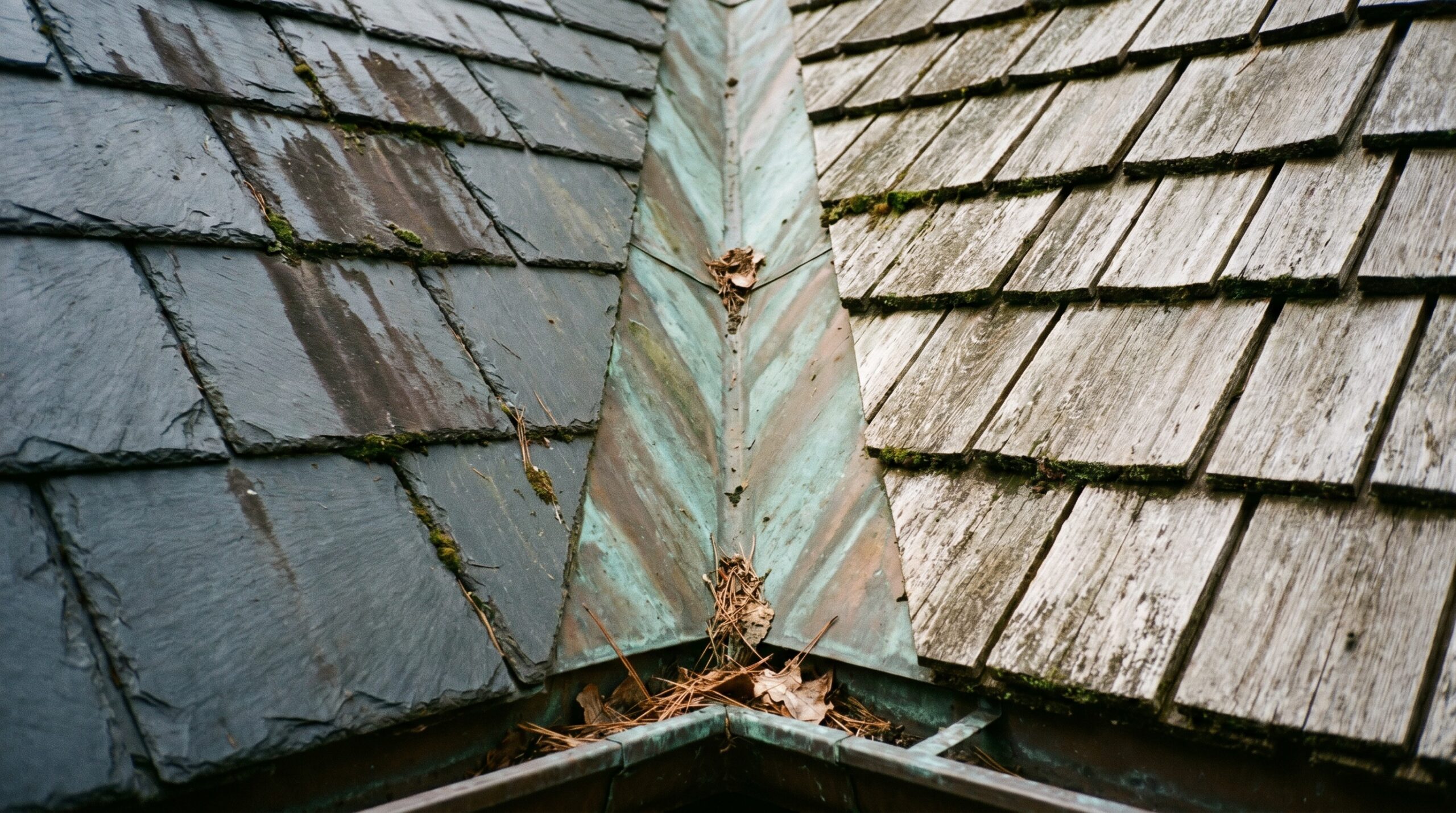
These valley areas where two facets intersect handle the heaviest water flow on your entire roof. They require metal flashing or specialized underlayment to prevent leaks. The more facets your roof has, the more of these high-risk valleys you’ll need to monitor and maintain – especially after Cleveland’s harsh winters.
Steeper facets shed water quickly, reducing the chance of pooling or ice dam formation. Gentler slopes move water more slowly, which can be problematic during heavy spring rains or when snow begins melting. The angle of each facet determines how effectively it handles Northeast Ohio’s variable weather conditions.
Important Note: Roofs with many facets typically require 15-20% more materials due to waste from cutting shingles at valleys and ridges, directly impacting your project cost.
Material choices and installation complexity
Different roofing materials perform better on certain types of facets. Asphalt shingles work well on most facet configurations and handle the cutting required at intersections. Metal roofing excels on complex multi-facet designs because it can be custom-formed to fit irregular shapes and better handles snow shedding in our climate.
Steep facets facing prevailing winds from Lake Erie experience more weather stress and may need premium materials or additional fastening. South-facing facets receive more sun exposure, affecting material selection for energy efficiency and longevity in Northeast Ohio’s climate.
Installation labor increases significantly with facet count. A roof with twenty facets and 3,000 square feet takes substantially longer to complete than a simple two-facet roof of the same size. Every intersection requires detailed work – valleys need special flashing, ridges need cap shingles, and each joint must be properly sealed to withstand Cleveland’s weather extremes.
Maintenance and inspection considerations
Regular maintenance becomes more critical as facet count increases. Each intersection point represents a potential failure location that needs periodic inspection. You can perform basic visual checks from the ground using binoculars, looking for missing or damaged shingles, especially on the steepest facets that bear the brunt of Northeast Ohio storms.
Professional inspections become essential for complex multi-facet roofs. At Peak and Valley Roofing, we safely access all areas and identify problems before they cause interior damage. We check valley flashing, ridge caps, and the condition of shingles where facets meet – paying special attention to areas that experience ice dam formation during Cleveland winters.
Storm damage often concentrates at facet intersections where wind and debris create the most stress. After severe weather events common in Northeast Ohio, pay special attention to valleys and ridges where different roof planes come together.
Understanding your roof’s facet layout helps you communicate more effectively with contractors and insurance adjusters. When you know how many facets your roof has and where the complex intersections are located, you can better evaluate repair estimates and maintenance recommendations – particularly important when dealing with insurance claims after storm damage.
If you’re considering solar panels, south-facing facets with minimal obstructions offer the best energy production potential in Northeast Ohio. Large, unbroken facets provide more installation options than roofs broken up by many smaller surfaces.
Knowing your roof’s facet count and complexity helps you plan for future maintenance costs and understand why some roofing projects cost more than others. The individual surfaces that make up your roof each play a role in protecting your Cleveland-area home, and each deserves proper attention during installation and maintenance.