

Picture this: after a heavy snowstorm in Northeast Ohio, you notice water stains on your ceiling near the eaves. The culprit? Inadequate roof protection where ice dams formed and forced water under your shingles. This scenario highlights why choosing the right underlayment matters for your roof’s long-term performance.
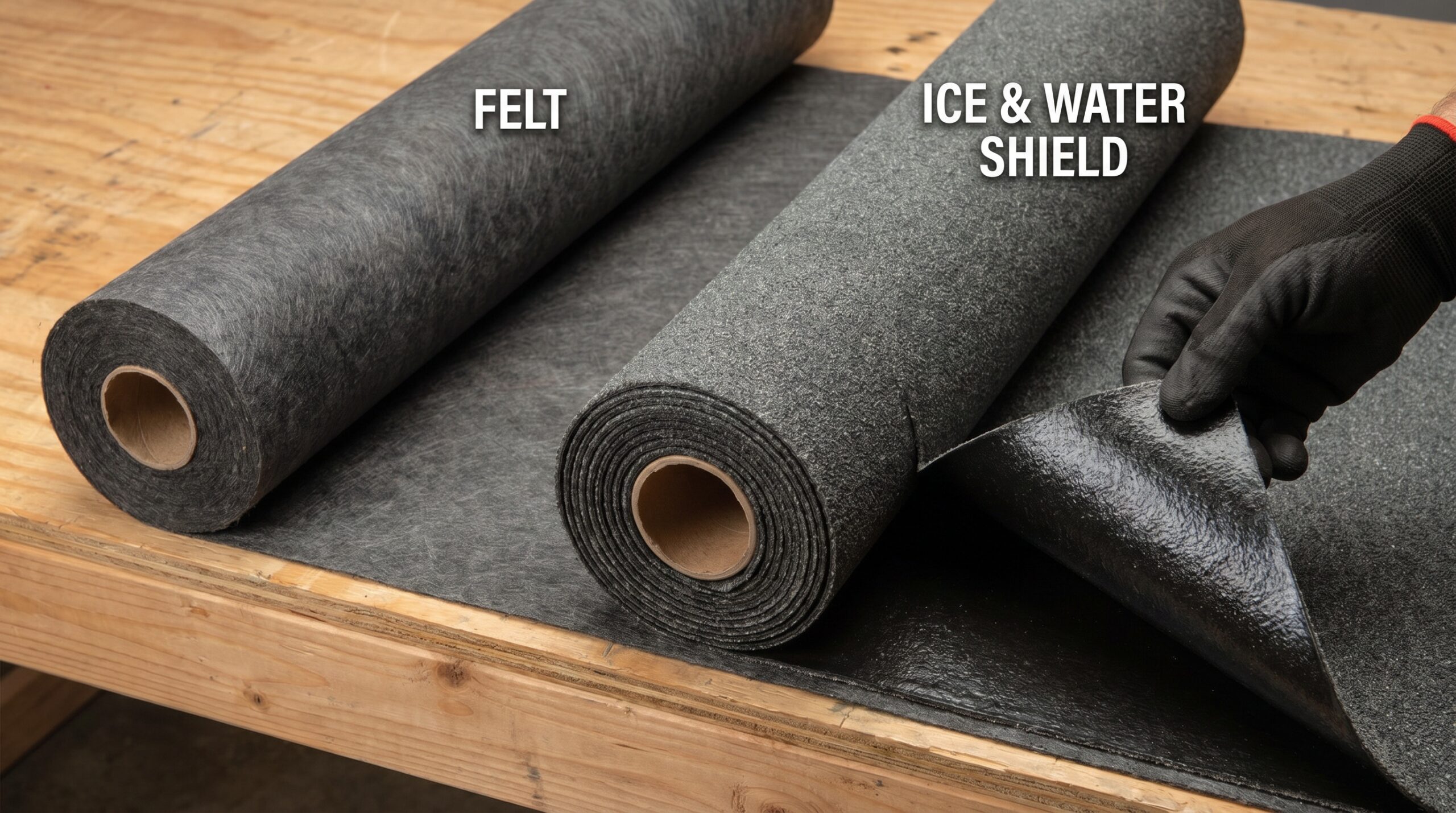
Roofing felt is a traditional water-resistant underlayment made from asphalt-saturated paper or fiberglass that covers your entire roof deck. Ice and water shield is a self-adhering, rubberized membrane that creates a waterproof barrier in vulnerable areas like eaves and valleys. While felt provides basic moisture protection, ice and water shield offers superior leak prevention where your roof needs it most.
Key Insight: Most modern roofs use both materials together – ice and water shield in high-risk areas and felt across the remaining deck for optimal protection.
At Peak and Valley Roofing, we design roof systems that combine both materials strategically to protect homes throughout Northeast Ohio’s challenging climate. Understanding when and where to use each material can save you thousands in potential water damage repairs. As a family-owned roofing company based in Rocky River, we’ve seen firsthand how proper underlayment selection makes the difference between a roof that lasts decades and one that fails prematurely in Cleveland’s harsh winters.
What is roofing felt and how does it work?
Roofing felt, commonly called tar paper, serves as your roof’s secondary defense against moisture. This traditional underlayment consists of a fiberglass mat or paper base saturated with asphalt, creating a water-resistant barrier between your roof deck and shingles.
The material comes in rolls that contractors nail or staple across your entire roof deck. Felt allows your roof to “breathe” by letting moisture vapor escape from your attic while shedding water that might penetrate through damaged or missing shingles.
However, felt has limitations. It’s water-resistant, not waterproof, meaning prolonged exposure to standing water can eventually cause leaks. The nail holes created during installation also create potential entry points for moisture, especially in areas where water tends to collect. In Northeast Ohio’s freeze-thaw cycles, these vulnerabilities become even more critical as ice formation can exploit any weakness in your roof’s defense system.

What makes ice and water shield different?
Ice and water shield represents a significant upgrade in roof protection technology. This self-adhering membrane bonds directly to your roof deck without nails, eliminating penetration points that could allow water entry.
The rubberized asphalt composition creates a fully waterproof barrier that actually seals around any fasteners that penetrate it. When a roofing nail goes through the membrane, the material wraps around the nail shaft, maintaining the watertight seal.
Contractors typically install ice and water shield in specific vulnerable areas rather than across the entire roof. These include eaves where ice dams form, valleys where water concentrates, and around penetrations like chimneys and skylights. In harsh climates like Northeast Ohio, many homeowners choose extended coverage for maximum protection against the region’s severe winter weather and frequent storms.
Important Note: Building codes in cold climates often require ice and water shield at eaves, extending at least 24 inches inside the interior wall line to prevent ice dam damage.
Key differences between ice and water shield and felt
Understanding the practical differences helps you make an informed decision for your roof. Here’s how these materials compare across critical factors:
| Feature | Roofing Felt | Ice and Water Shield |
|---|---|---|
| Water Protection | Water-resistant | Fully waterproof |
| Installation | Nailed/stapled rolls | Self-adhering membrane |
| Nail Sealing | No sealing ability | Seals around penetrations |
| Coverage Area | Entire roof deck | Vulnerable areas only |
| Lifespan | 15-20 years | 25-50 years |
Water resistance represents the biggest difference. Felt sheds water like an umbrella but can’t stop water that gets underneath. Ice and water shield creates an impenetrable barrier that prevents any water infiltration, even under extreme conditions like ice dams or wind-driven rain.
Installation methods also vary significantly. Felt requires mechanical fastening that creates thousands of potential leak points. Ice and water shield’s peel-and-stick application eliminates these vulnerabilities while creating a stronger bond with your roof deck.
Cost considerations matter for most homeowners. Felt costs significantly less per square foot, but ice and water shield’s superior durability and protection often justify the higher upfront investment, especially in climates prone to ice dams and severe weather. For Cleveland area homeowners dealing with insurance claims after storm damage, the enhanced protection can mean the difference between a covered repair and an expensive out-of-pocket replacement.
When should you use each material?
Your climate, roof design, and budget determine the best underlayment strategy for your home. Most roofing professionals recommend a hybrid approach that maximizes protection while managing costs effectively.
Choose extended ice and water shield coverage if you experience:
– Regular ice dam formation
– Low-slope roof sections
– History of leak problems
– Severe wind-driven rain exposure
– Complex roof designs with multiple valleys
Felt may suffice for basic protection when you have:
– Steep roof slopes in mild climates
– Limited budget constraints
– Simple roof designs
– Minimal snow and ice exposure
Never rely on felt alone in these situations:
– Areas where building codes require ice barriers
– Roof sections with slopes less than 4:12
– Eaves, valleys, and penetration areas
– Regions with frequent freeze-thaw cycles
Pro Tip: The most effective approach combines both materials – ice and water shield where protection is critical and felt across remaining areas for comprehensive coverage.
Northeast Ohio’s climate demands strategic protection against ice dams, wind-driven rain, and freeze-thaw cycles. Peak and Valley Roofing designs underlayment systems that meet local building codes while providing long-term peace of mind. We help homeowners balance protection needs with budget considerations, ensuring your roof performs reliably for decades. Our expertise in insurance restoration also means we understand exactly what insurance adjusters look for when evaluating storm damage claims – proper underlayment installation can be the difference between approval and denial.
The choice between ice and water shield and felt isn’t typically either-or. The best roofing systems use both materials strategically, with waterproof protection where you need it most and cost-effective coverage everywhere else. This approach delivers maximum protection while keeping your project within budget, giving you confidence that your roof can handle whatever Northeast Ohio weather brings.