

If you’re considering a metal roof for your Cleveland-area home, you’ve probably heard the old stereotype about noisy “tin roofs” drumming loudly during rainstorms. This concern stops many Northeast Ohio homeowners from choosing metal roofing, but is it actually true?
The short answer is that properly installed metal roofs are only slightly louder than asphalt shingles. Research shows metal roofs produce about 52 decibels of sound during rain compared to 46 decibels for asphalt shingles. That’s just a 6-decibel difference, which most people can’t even detect since humans typically can’t distinguish sound differences under 8 decibels.
Key Insight: The “loud metal roof” myth comes from uninsulated barn and warehouse roofs, not modern residential installations with proper decking and insulation.
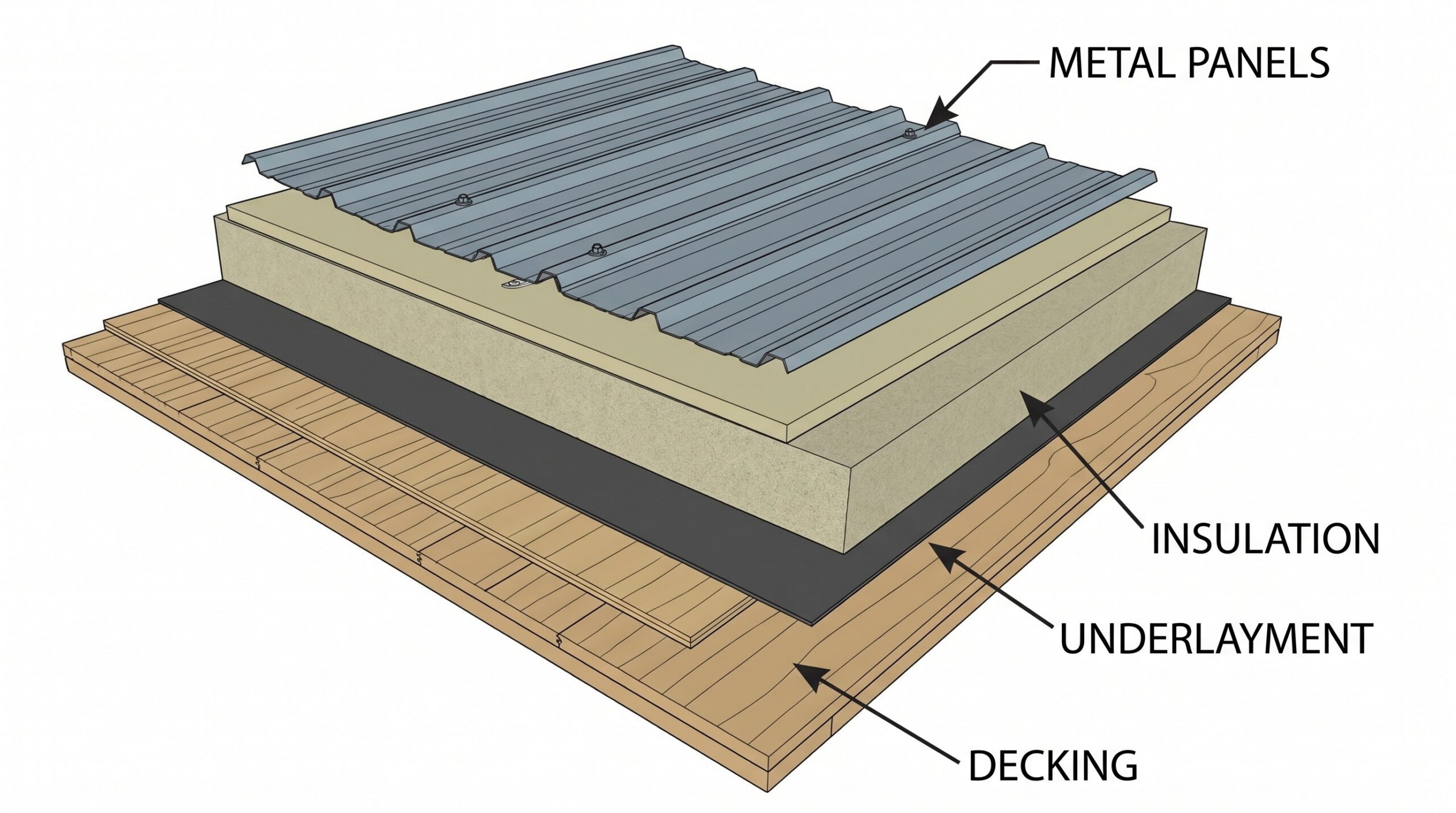
The noise you might associate with metal roofs actually comes from bare metal sheets installed over open framing without insulation or underlayment. Modern residential metal roofing systems include multiple sound-dampening layers that dramatically reduce noise transmission into your living spaces.
What makes a metal roof loud or quiet
Several factors determine how much noise you’ll hear from rain on your metal roof. Understanding these can help you make informed decisions during installation or identify solutions for existing noisy roofs.
Roof assembly components play the biggest role in noise control. A complete residential roof system includes solid decking, quality underlayment, and attic insulation. Each layer absorbs sound waves and prevents the reverberation that creates that drumming effect you might expect.
Metal type and thickness also matter significantly. Thicker steel panels vibrate less than thin aluminum sheets. Dense metals like copper and zinc naturally dampen sound better than lightweight aluminum. The gauge of your metal panels directly impacts how much they’ll resonate during rainfall.
Panel style and installation quality affect noise levels too. Standing seam systems with concealed fasteners typically run quieter than exposed-fastener panels because they have fewer penetrations and tighter connections. Properly spaced and secured fasteners prevent rattling and loose panel movement that can amplify sound.
How loud is a metal roof compared to other materials
Let’s put metal roof noise into perspective with actual measurements. According to acoustic research from the University of Luleå in Sweden, here’s how different roofing materials compare during rainfall:
| Roof Type | Rain Noise Level | Indoor Sound |
|---|---|---|
| Asphalt shingles over complete assembly | 46 dBA | Barely noticeable |
| Metal roof over complete assembly | 52 dBA | Soft background sound |
| Bare metal over open framing | 61 dBA | Noticeably loud |
To put these numbers in context, normal conversation registers around 60 decibels, while a vacuum cleaner produces about 70 decibels. The difference between a properly installed metal roof and asphalt shingles is similar to the difference between a quiet library and a soft whisper.
Why some metal roofs sound much louder comes down to installation context. Agricultural buildings, warehouses, and older structures often use bare metal panels attached directly to open framing without insulation. These installations can reach 70+ decibels during heavy rain because there’s nothing to absorb the sound or prevent reverberation.
Reality Check: Most homeowners who install metal roofing report that actual noise levels are much lower than they expected, with 92% saying the sound is less noticeable than anticipated.
How to reduce rain noise on metal roofs
Whether you’re planning a new metal roof installation or dealing with an existing noisy one, several proven strategies can minimize rain noise effectively.
For new installations, work with your contractor to specify solid roof decking rather than spaced sheathing. Quality synthetic underlayment adds another sound-absorbing layer between the metal and your living space. Ensure adequate attic insulation, which serves double duty by reducing both noise transmission and energy costs—especially important during Northeast Ohio’s variable weather patterns.
Choose quieter metal systems when possible. Standing seam roofs with thicker gauge steel typically run quieter than corrugated panels with exposed fasteners. Stone-coated metal roofing products include granulated surfaces that naturally absorb more sound than smooth metal finishes.
For existing noisy roofs, start with the most cost-effective solutions. Adding or upgrading attic insulation often provides the biggest improvement for the lowest cost. Check that all fasteners are properly tightened and panels are securely attached, as loose components create rattling and amplified noise—particularly important after Cleveland’s frequent storms and high winds.
If noise remains problematic after basic improvements, consider specialized sound-dampening materials like mass-loaded vinyl barriers or acoustic insulation boards installed between the roof deck and metal panels during major renovations.

What to expect living under a metal roof
Understanding what rain on a metal roof actually sounds like helps set realistic expectations. During light rain, you’ll hear a gentle tapping that many homeowners find soothing, similar to leaves rustling. Moderate rainfall creates a soft, steady background sound that’s noticeable but not disruptive to conversation or sleep.
Heavy downpours will be more audible, but in a well-insulated home, the sound resembles a muted hum rather than loud drumming. The key difference from the barn roof stereotype is that residential installations prevent the echo and reverberation that make metal roofs seem dramatically louder.
Consider your noise sensitivity when making roofing decisions. If you’re extremely sensitive to any additional sound, traditional materials might suit you better. However, most Northeast Ohio homeowners find that the slight increase in rain noise is a minor trade-off for metal roofing’s substantial benefits.
Metal roofs typically last 40-70 years, resist fire and severe weather (crucial for Cleveland’s storms and hail), improve energy efficiency, and require minimal maintenance. For most families, these long-term advantages far outweigh concerns about slightly more noticeable rain sounds.
Bottom Line: With proper installation including solid decking, quality underlayment, and adequate insulation, metal roofs produce only marginally more rain noise than traditional shingles, and the difference is rarely bothersome in daily life.
At Peak and Valley Roofing, we’ve helped countless Rocky River and Cleveland-area homeowners make informed decisions about metal roofing. The noise factor, while worth considering, shouldn’t be the deciding factor if you’re attracted to metal’s durability and performance benefits. Our experienced team uses proper installation techniques to ensure your metal roof provides decades of reliable protection without creating a noise problem in your home.