

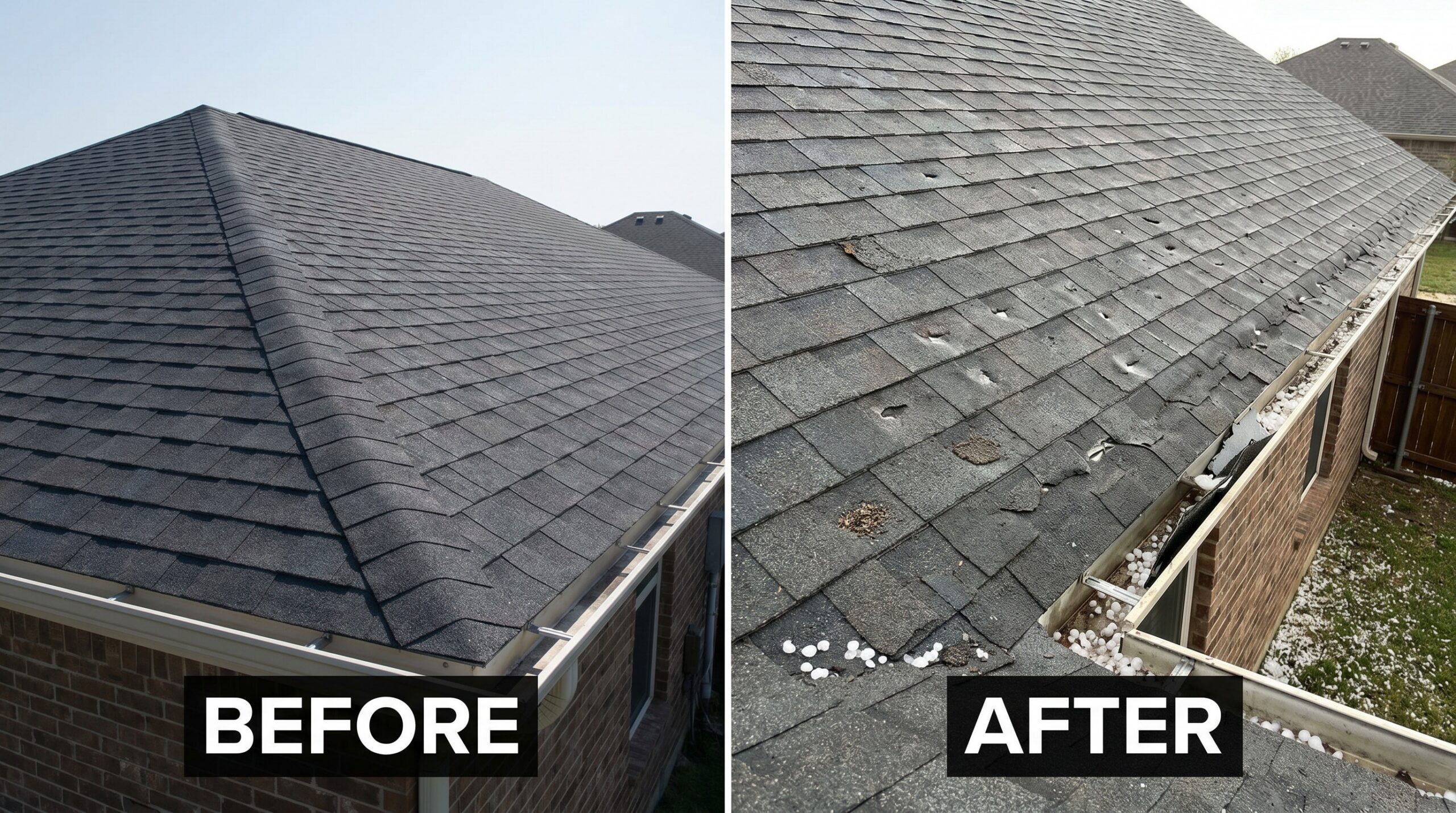
When severe weather strikes Northeast Ohio, your roof takes the brunt of the damage. That’s where impact-resistant shingles come in, specifically Class 3 and Class 4 ratings that can make the difference between a minor repair and a full roof replacement.
Class 3 shingles can withstand golf ball-sized hail (1.75 inches), while Class 4 shingles handle baseball-sized impacts (2 inches). Class 4 shingles typically cost 10-20% more than Class 3 but offer superior protection and better insurance discounts, making them ideal for severe hail regions like the Cleveland area.
Quick Fact: Insurance companies often provide 10-25% premium discounts for Class 4 shingles, which can help offset the higher upfront cost over time.
Understanding these differences helps you make an informed decision about protecting your home and potentially saving money on insurance premiums. Let’s explore what sets these shingle classes apart and which option makes the most sense for your situation.
Understanding shingle impact ratings and testing
Impact-resistant shingles are classified using the UL 2218 standard, developed by Underwriters Laboratories. This testing method drops steel balls of varying sizes from 20 feet onto shingle samples, simulating hail impacts. The shingles must show no cracking or splitting after being struck twice in the same spot to earn their rating.
The classification system ranges from Class 1 to Class 4, with each level representing progressively larger impact resistance. Class 1 handles 1.25-inch impacts, Class 2 withstands 1.5-inch balls, Class 3 resists 1.75-inch impacts, and Class 4 survives 2-inch steel ball drops.
This standardized testing ensures consistent performance ratings across manufacturers, giving you confidence in comparing different shingle options. However, real-world conditions like temperature, shingle age, and impact angle can affect actual performance beyond laboratory results.

What makes Class 3 shingles effective
Class 3 shingles offer solid protection against moderate hail storms and represent a significant upgrade from standard architectural shingles. These shingles can handle impacts equivalent to golf ball-sized hail without cracking, making them suitable for areas with occasional severe weather like what we experience in Rocky River and the greater Cleveland area.
Most Class 3 shingles achieve their impact resistance through reinforced fiberglass mats and improved asphalt formulations. Some manufacturers add polymer modifiers to increase flexibility, allowing the shingles to absorb impacts rather than crack under pressure.
The cost difference between Class 3 and standard shingles is typically modest, making them an attractive middle-ground option. Class 3 shingles provide reliable protection in moderate hailstorm locations and could result in savings on homeowners insurance, though the discounts are generally smaller than those offered for Class 4 installations.
Why Class 4 shingles offer superior protection
Class 4 shingles represent the highest level of impact resistance available in residential roofing. These shingles are engineered to withstand impacts from 2-inch steel balls without showing damage, equivalent to baseball-sized hail that can cause significant damage to standard roofing materials.
The superior performance comes from advanced manufacturing techniques and materials. Many Class 4 shingles use styrene-butadiene-styrene (SBS) polymer-modified asphalt, which creates more flexibility and allows hail to bounce off rather than absorbing the impact. Others achieve their rating through thicker construction, multi-layer designs, or reinforced backing materials.
Insurance Advantage: Many insurance providers offer 10-25% premium discounts for Class 4 shingles, and some areas now require Class 4 ratings for new construction due to increasing severe weather frequency.
Beyond impact resistance, the enhanced construction methods that earn Class 4 ratings often result in longer-lasting shingles with better overall durability. This means fewer repairs and potentially extended roof life compared to lower-rated options – particularly important for Northeast Ohio homeowners dealing with our variable weather patterns.
Cost comparison and long-term value
The price difference between Class 3 and Class 4 shingles varies by manufacturer and region, but Class 4 shingles typically cost about 10-20% more than Class 3 options. For a typical 2,000 square foot roof in the Cleveland area, this might translate to an additional $1,000-$2,500 in material costs.
However, the long-term value equation includes several factors beyond initial cost. Insurance discounts for Class 4 shingles can range from 10-25% of your premium, potentially saving hundreds of dollars annually. Many carriers offer higher insurance discounts for Class 4 than Class 3 installations, making the payback period relatively short in high-risk areas.
| Feature | Class 3 Shingles | Class 4 Shingles |
|---|---|---|
| Impact Resistance | 1.75″ hail (golf ball) | 2″ hail (baseball) |
| Cost vs Standard | 5-15% more | 15-30% more |
| Insurance Discount | 5-15% typical | 10-25% typical |
| Best For | Moderate hail areas | Severe weather zones |
The enhanced durability of Class 4 shingles often results in longer warranties and fewer maintenance issues, further improving their value proposition for homeowners planning to stay in their homes long-term.
Choosing the right shingle class for your home
Your decision between Class 3 and Class 4 shingles should consider three main factors: your local climate risk, budget constraints, and how long you plan to stay in your home.
Class 4 shingles are recommended for high-risk hail zones, while Class 3 is suitable for moderate to relatively low-risk areas. In Northeast Ohio, where we experience everything from severe thunderstorms to occasional hail events, many homeowners find Class 4 shingles provide peace of mind through reduced repair needs and better insurance rates. Our local weather patterns, including lake-effect storms and severe summer weather, make impact resistance a smart investment.
For homeowners in our region with occasional severe weather, Class 3 shingles provide excellent protection at a more accessible price point. The key is balancing upfront costs with long-term benefits based on your specific situation and location within the Cleveland metro area.
Budget considerations extend beyond the initial installation cost. If you plan to stay in your home for many years, the combination of insurance savings, reduced maintenance, and potential increased resale value can make Class 4 shingles a smart investment even with their higher upfront cost.
The roofing industry continues to see increased demand for impact-resistant shingles as severe weather becomes more frequent across the United States, with various types of roof shingles available for homeowners. Whether you choose Class 3 or Class 4, both options provide significant protection upgrades over standard shingles and can help safeguard your home investment while potentially reducing your insurance costs, making them among the most durable roofing materials available. The right choice depends on balancing your local weather risks, budget, and long-term homeownership plans.