

Planning a siding upgrade for your home? You’re probably wondering about vinyl siding costs and whether it fits your budget. Vinyl siding remains one of the most popular exterior options for good reason – it offers excellent value, low maintenance, and attractive curb appeal.
Most homeowners spend between $6,000 and $16,000 for complete vinyl siding installation, with costs typically ranging from $4 to $12 per square foot installed. The final price depends on your home’s size, the quality of vinyl you choose, and local labor rates in your area.
Homeowners in areas like Avon Lake often compare cost quotes for vinyl siding options before finalizing.
Quick Answer: Vinyl siding costs $3-$7 per square foot for materials and $2.50-$5 per square foot for installation, making it one of the most budget-friendly siding options available.
Understanding these costs upfront helps you make informed decisions about your home’s exterior upgrade. At Peak and Valley Roofing, we’ve helped countless homeowners navigate siding choices, and we’ll break down everything you need to know about vinyl siding pricing in 2026.
Material costs for vinyl siding in 2026
Vinyl siding material costs have remained relatively stable this year, with most homeowners paying between $3 and $7 per square foot. The price variation comes down to the specific type and quality of vinyl you select.
Basic horizontal lap siding sits at the lower end of this range, typically costing $3-$4 per square foot. These standard panels provide solid protection and come in various colors, making them perfect for budget-conscious homeowners who still want quality results. If you are choosing a siding color, check it against your roof at the same time — roof and siding color combinations are far easier to judge side by side than one at a time.
Premium options like insulated vinyl siding or textured finishes that mimic wood grain cost more, usually falling between $5-$7 per square foot. Insulated vinyl adds an extra layer of energy efficiency to your home, which can help reduce heating and cooling costs over time.
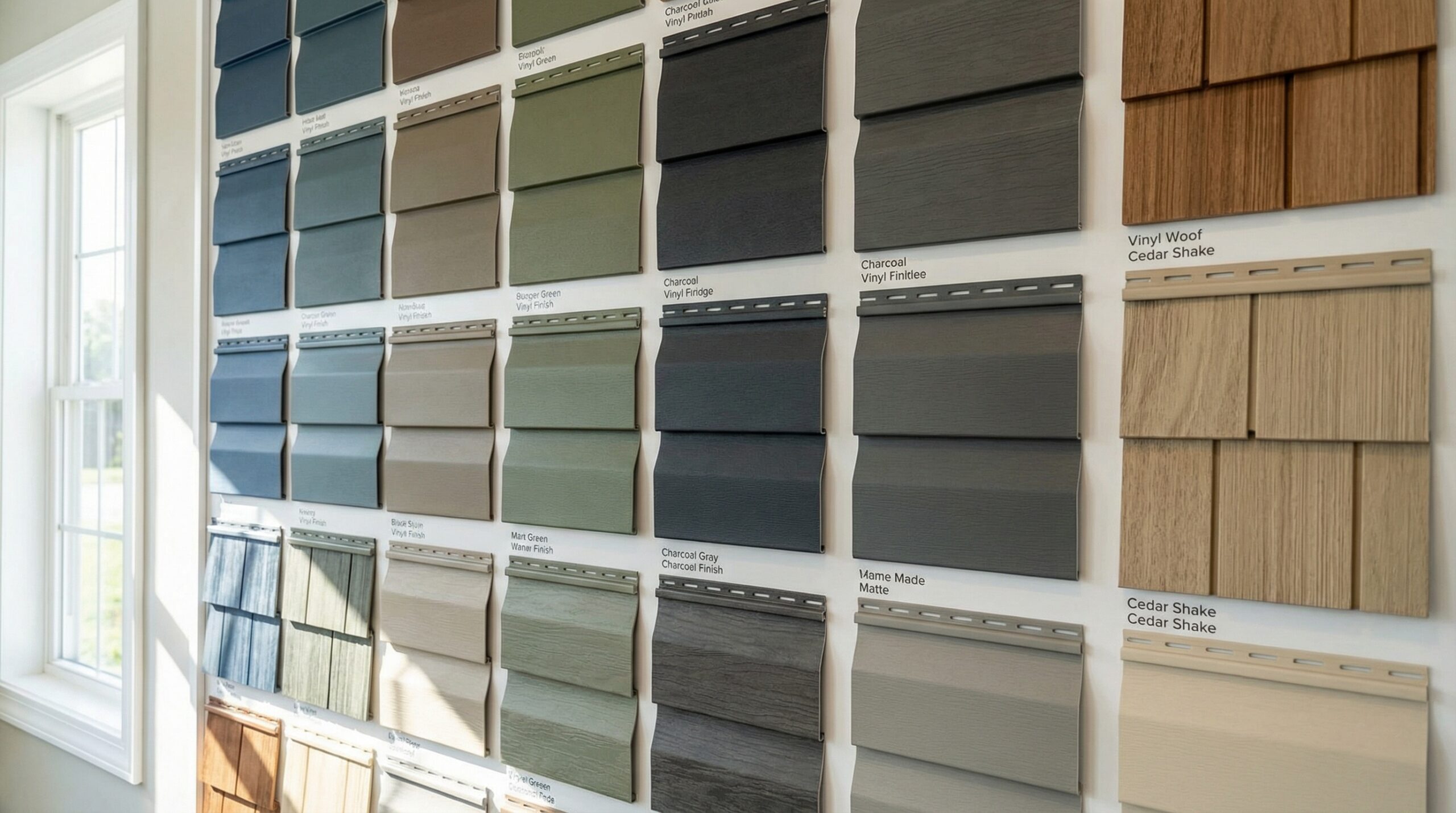
Board and batten styles or vertical siding panels also command higher prices due to their distinctive appearance and installation complexity. These architectural details create visual interest but require more precise installation work.
Installation costs and labor factors
Labor costs for vinyl siding installation typically range from $2.50 to $5 per square foot, bringing your total project cost to $10,000-$24,000 for an average-sized home. Several factors influence where your project falls within this range.
The complexity of your home’s architecture plays a major role in labor costs. Single-story ranch homes with simple layouts cost less to side than multi-story homes with dormers, bay windows, or intricate trim work. Each architectural feature requires additional time and skill to navigate properly.
Removing existing siding adds $1,000-$3,000 to your project cost, depending on the material and condition. Older homes may also need underlying repairs to sheathing or insulation, which increases both time and expense.
Cost-Saving Tip: Scheduling your installation during off-peak seasons (fall or winter) can sometimes result in more competitive pricing from contractors.
Your geographic location affects labor rates significantly. Areas with higher costs of living typically see higher installation prices, while rural regions may offer more affordable options. For a detailed breakdown of regional pricing, check out our siding replacement cost guide for Chester County.
Hidden Costs That Can Catch You Off Guard
Removing your old siding adds $1,000-$3,000 to your project, and that’s often just the beginning. Many homeowners, especially in older Rocky River and Cleveland-area homes, discover additional issues once the old siding comes off.
Common surprises include moisture damage remediation ($500-$5,000), mold removal ($500-$2,500), and insect damage repairs ($1,000-$3,000). If your home was built before 1978, lead paint abatement can add another $1,000-$5,000 to your budget.
Permit and inspection fees run $150-$500 depending on your municipality. Adding insulation beneath your new siding is a smart move in Northeast Ohio’s climate and costs another $1-$3 per square foot.
Ask your contractor to include a contingency line for hidden repairs in your written estimate. It’s the easiest way to avoid a mid-project budget surprise.
Installation Quality Matters as Much as Material Choice
Even premium vinyl siding fails early when it’s installed incorrectly. Installation errors cause most siding problems, not material defects.
Four mistakes account for most of the damage we see:
Overdriven nails. Nails driven too tight restrict vinyl’s ability to expand and contract with temperature swings, causing buckling or cracking. This alone causes nearly 40% of premature siding failures.
Wrong nail placement. Nails driven outside the pre-punched slots create stress points that weaken panels over time instead of letting them float as designed.
Missing or poorly sealed weather barrier. Gaps in the barrier behind the siding, especially around window and door seams, let moisture reach the wall cavity and cause hidden rot.
Reversed flashing sequence. Flashing has to go under the weather barrier at the bottom and over it at the top. Installers who reverse this trap water instead of directing it away from the house.
Ask your contractor how they handle nailing zones and flashing sequencing around openings before you sign. A contractor who can answer confidently is usually one who does it right.
Financing Your Vinyl Siding Project
Rocky River and Cleveland-area homeowners have several financing options. Home equity loans and lines of credit currently run 4%-7% for qualified borrowers, often with tax benefits when used for home improvements.
Manufacturer financing programs frequently offer promotional 0% interest periods for homeowners who can pay off the balance quickly. FHA Title I improvement loans provide up to $25,000 without requiring home equity.
Ohio also offers energy-efficiency loan programs that can apply to insulated vinyl installations. Local Cuyahoga County credit unions frequently have competitive renovation loan packages.
If your project is storm-related, your homeowners insurance may cover some or all of the cost. Our team can help you navigate that claims process.
How vinyl compares to other siding materials
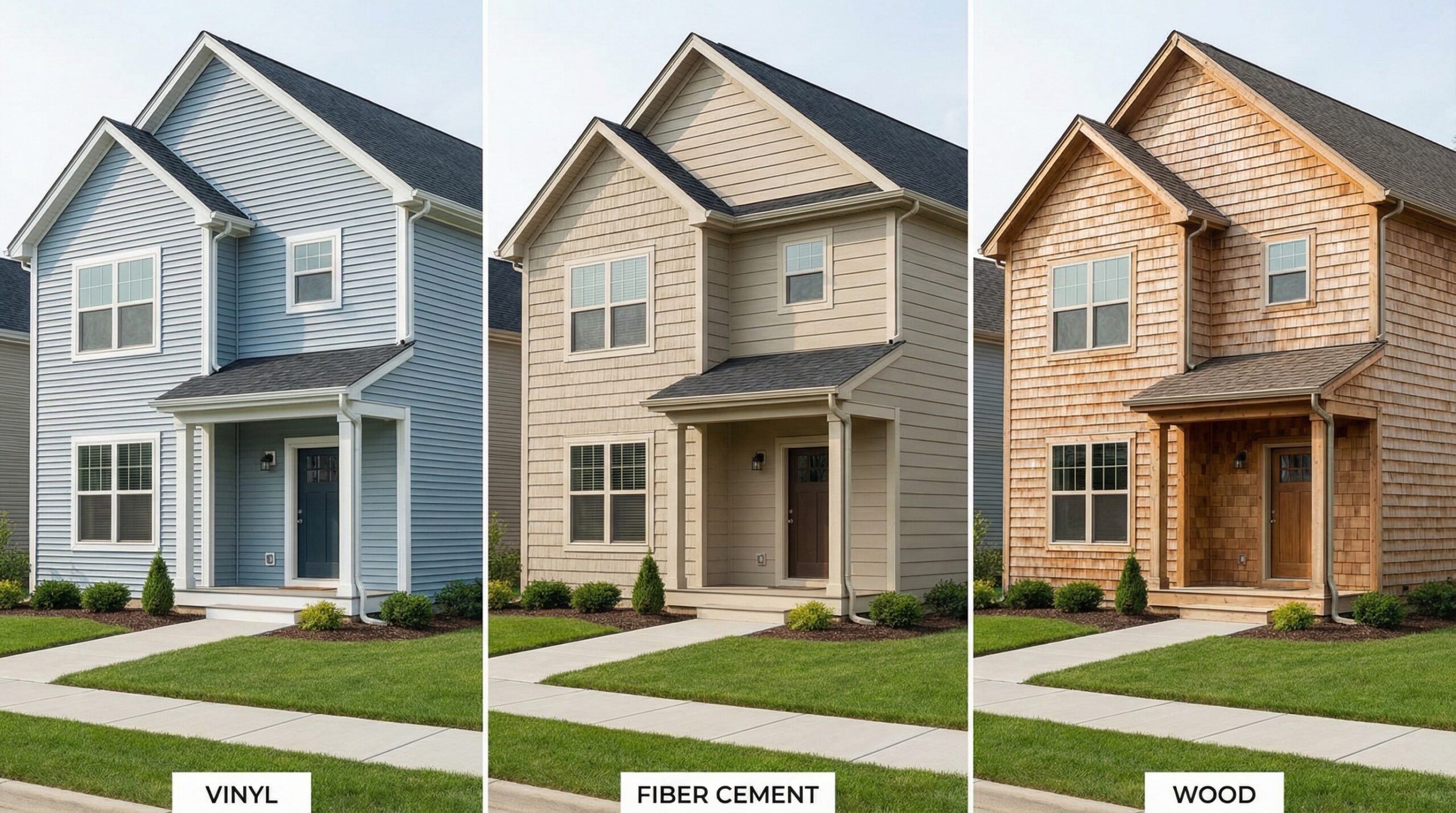
Vinyl siding stands out as the most budget-friendly option when compared to other popular materials. Understanding these comparisons helps you make the right choice for your home and budget.
sidingscope.com reports that fiber cement siding like James Hardie costs $5-$15 per square foot, significantly more than vinyl’s $4-$12 range. While fiber cement offers superior durability and fire resistance, the higher upfront cost makes vinyl more appealing for many homeowners. To explore the long-term value differences, read our Hardie Board vs vinyl comparison for Ardmore properties.
| Siding Material | Cost Per Sq Ft | Lifespan | Maintenance |
|---|---|---|---|
| Vinyl | $4-$12 | 20-40 years | Very Low |
| Fiber Cement (Hardie Board) | $5-$15 | 30-50 years | Low |
| Polymer Composite | $20-$30 | 30-40 years | Low to Moderate |
| Wood | $6-$20 | 15-30 years | High |
| Cedar (Natural) | $35-$50 | 40+ years | High |
Fiber cement is worth a closer look if durability and resale value matter most. Hardie Board returns 70%-75% of its cost at resale compared to vinyl’s 60%-65%, and its Class A fire rating can qualify homeowners for insurance discounts.
The tradeoff is upfront cost and a more involved installation. Hardie Board requires diamond-tipped cutting tools and precise fastening that not every contractor is equipped to do well.
Engineered wood siding like LP SmartSide falls in the middle range at $3-$12 per square foot. It provides the natural wood appearance many homeowners desire but requires more maintenance than vinyl and costs more upfront.
Natural wood siding offers unmatched beauty but comes with the highest maintenance requirements and costs $6-$20 per square foot. Regular painting, staining, and repairs make wood the most expensive option over time. For a comprehensive cost analysis between these materials, see our vinyl vs wood siding total cost analysis.
Long-term value and maintenance considerations
Vinyl siding delivers exceptional long-term value through minimal maintenance requirements and solid durability. Unlike wood or fiber cement, vinyl never needs painting, staining, or sealing throughout its 20-40 year lifespan.
The maintenance savings add up significantly over time. renoworks.com notes that vinyl’s low maintenance needs make it particularly attractive for busy homeowners or investment properties where ongoing upkeep costs matter. Learn more about how to maintain your siding in Ohio to maximize its lifespan.
Insulated vinyl siding provides additional energy efficiency benefits that can reduce your heating and cooling costs. While it costs more upfront, the energy savings often justify the extra investment, especially in climates with extreme temperatures. Discover how new siding improves your home’s insulation for year-round comfort.
Energy Savings: Insulated vinyl siding can improve your home’s energy efficiency by 15-20%, leading to noticeable reductions in utility bills.
Vinyl isn’t the most eco-friendly siding option. It’s petroleum-based and doesn’t biodegrade.
Fiber cement with recycled content and recycled metal siding are worth a look if sustainability is a priority. See our guide to sustainable siding materials for the full comparison.
Modern vinyl siding also resists fading, cracking, and pest damage better than older formulations. Quality manufacturers now offer warranties of 20-30 years, giving you peace of mind about your investment. For detailed information about coverage, check out our guide on understanding siding warranties.
Vinyl siding proves ideal for homeowners seeking an attractive, cost-effective exterior solution with minimal ongoing maintenance. While premium materials like fiber cement offer certain advantages, vinyl’s combination of affordability, durability, and low maintenance makes it a smart choice for many situations.
Whether you’re upgrading for curb appeal, protection, or energy efficiency, understanding these costs helps you budget effectively for your siding project. At Peak and Valley Roofing, we’re here to help you explore your options and find the perfect siding solution for your home and budget.
Homeowners in areas like Westlake also tend to compare long-term maintenance costs before choosing vinyl siding for their homes.
Get an Exact Price for Your Home
The ranges in this guide will get you to a realistic budget, but your final price comes down to your home’s exact measurements, the condition of the walls underneath, and the product line you choose. The only way to pin that number down is a detailed, line-item quote from a local installer.
That’s where we come in. Peak & Valley Roofing is based in Rocky River and installs vinyl siding across Bay Village, Avon Lake, Westlake, Fairview Park, Avon, and North Olmsted. We’re registered, fully insured, and carry Ohio BWC coverage, and our estimates break out materials, labor, old siding removal, and any repairs separately, so the price you sign is the price you pay. Both the manufacturer’s material warranty and our workmanship warranty come in writing before work starts.
Call (216) 777-9876 or request a free quote online. We’ll measure your home, walk you through the material options covered in this article, and give you an exact price for your project.
FAQ
How much does vinyl siding cost per square foot installed in 2026?
What is the average cost to side a 2,000 square foot house with vinyl?
How does vinyl siding compare to other siding materials in cost?
What factors affect vinyl siding installation costs?
What hidden costs should I budget for beyond the per-square-foot price?
What financing options are available for vinyl siding projects?
See cool homes at Adobe House Atlas