

Hidden wood rot behind your siding can silently destroy your home’s structure while appearing perfectly fine from the outside. Northeast Ohio’s severe freeze-thaw cycles, lake-effect snow, and humid summers create ideal conditions for moisture to penetrate behind siding and cause extensive damage. Early detection saves homeowners thousands in repair costs, while proper prevention protects your investment for decades.
Quick Answer: Wood rot behind siding shows through bulging panels, paint bubbling near joints, soft spots when pressed, and increased pest activity. Northeast Ohio homes face higher risk due to ice dams, poor drainage, and temperature fluctuations that trap moisture behind exterior walls.
This guide helps you spot early warning signs, understand repair processes, and implement prevention strategies before structural damage occurs.
Early warning signs of wood rot behind siding
Recognizing wood rot in its early stages prevents costly structural repairs down the road. The key is knowing where to look and what changes indicate trouble brewing beneath your siding.
Start by walking around your home after heavy rain or snow melt. Look for areas where the siding appears to bulge outward from the wall surface. This bulging often indicates water pressure building up behind the panels. Paint that bubbles or peels in specific patterns, especially near seams and joints, signals moisture penetration rather than normal weathering.
Pay special attention to areas where water naturally collects or different materials meet. The bottom 8-12 inches of your home’s exterior faces the highest risk from splash-back, snow accumulation, and landscaping irrigation. North-facing walls that receive less drying sunlight also show problems earlier.
| Warning Sign | What It Looks Like | Risk Level |
|---|---|---|
| Bulging panels | Siding pushing outward from wall | High |
| Paint bubbling | Peeling in patterns near joints | Medium |
| Soft spots | Areas that give when pressed | High |
| Pest activity | Ants or termites near seams | Medium |
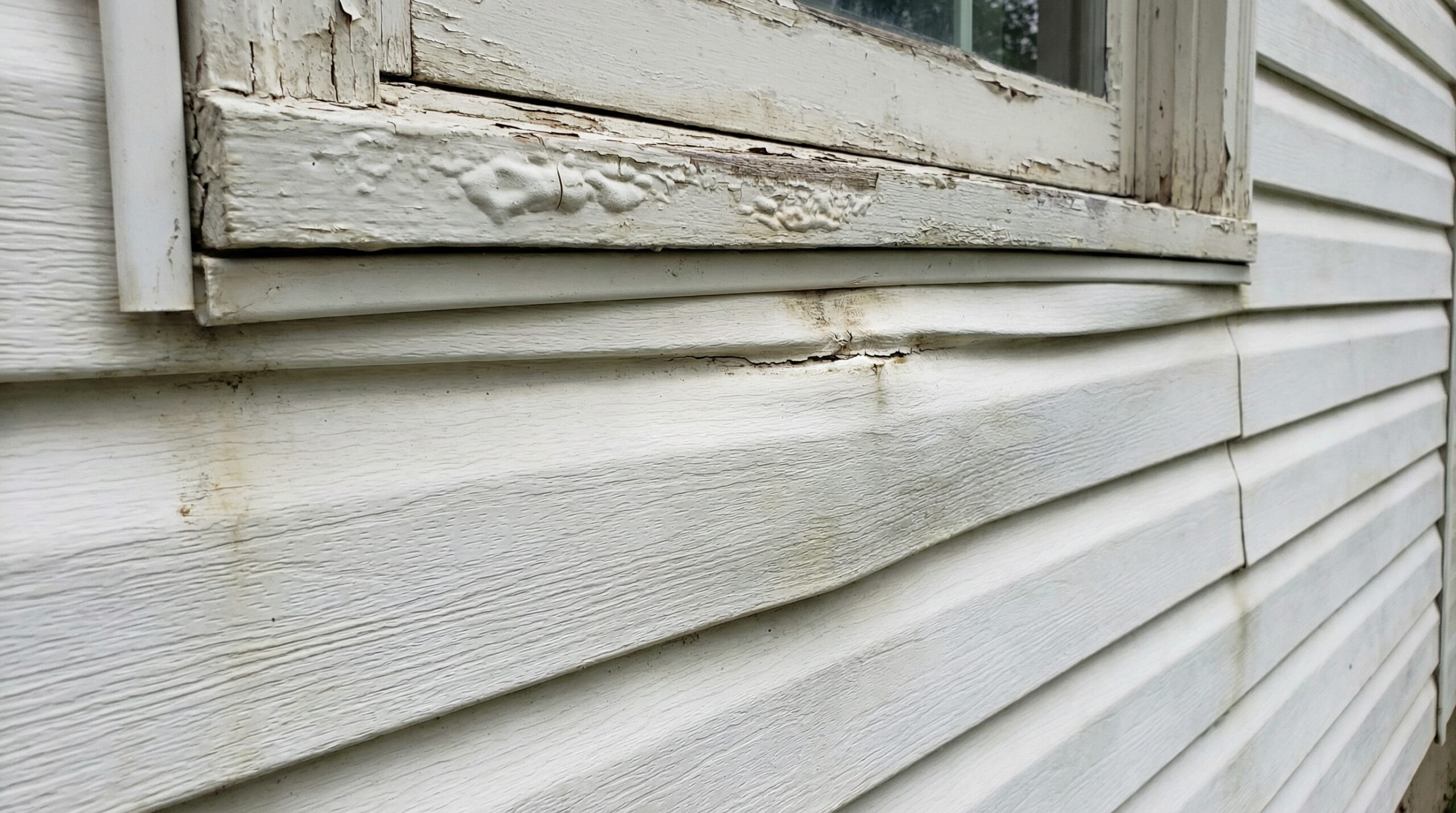
Increased insect activity, particularly carpenter ants or termites around material joints, often indicates wood has already begun softening. These pests are drawn to compromised wood, so finding them usually means the rot has progressed beyond the earliest stages.
How Northeast Ohio weather accelerates wood rot
Northeast Ohio’s climate creates multiple pathways for moisture to penetrate behind siding. Understanding these factors helps you target your prevention efforts where they matter most.
Winter ice dams form when heat escapes through your roof, melting snow that refreezes at the roof edge. This ice forces melting water under shingles and down exterior walls, creating hidden moisture pathways behind siding. Faulty gutters worsen these conditions by allowing water to flow directly down walls or splash back from surfaces below.
The region’s frequent precipitation creates ongoing moisture contact with foundation areas. This constant dampening, combined with vapor trapped inside wall cavities, establishes perfect conditions for fungal growth. Modern construction methods that reduce airflow in wall spaces make it harder for this trapped moisture to escape.
Temperature Impact: Northeast Ohio’s freeze-thaw cycles cause building materials to repeatedly expand and contract, creating tiny cracks that allow water entry. Once moisture gets trapped behind protective barriers, it becomes difficult to escape.
Summer temperatures between 70-90°F provide optimal conditions for fungal growth once moisture is present. This explains why detecting wood rot requires understanding our unique local climate conditions and their effects on building materials.
Specific areas of Northeast Ohio homes face elevated rot risks due to their exposure conditions. Foundation areas positioned 8-12 inches from ground level regularly experience increased moisture exposure through splash-back, precipitation buildup, and irrigation water. These areas frequently show the first signs of siding wood rot, especially on northern exposures.
Detection methods and inspection techniques
Effective rot detection combines visual inspection with hands-on testing methods. Start your inspection outside by looking for color variations, warping, or unusual staining patterns, especially after rain. Inside your home, check for water stains on interior walls or insulation near exterior walls, which may indicate moisture penetration through siding.
Focus your inspection on high-risk areas including foundation zones experiencing splash-back contact, around window and door frames, beneath overhangs and extensions, at connections with roof systems or decks, and zones showing visible paint failure or color changes.
For detailed assessment, moisture meters provide numerical readings of water levels within building materials. These reasonably-priced tools can detect abnormal dampness before visible rot appears. When examining suspicious areas, use a screwdriver or awl to gently probe questionable spots. If the tool penetrates easily, rot has likely begun.
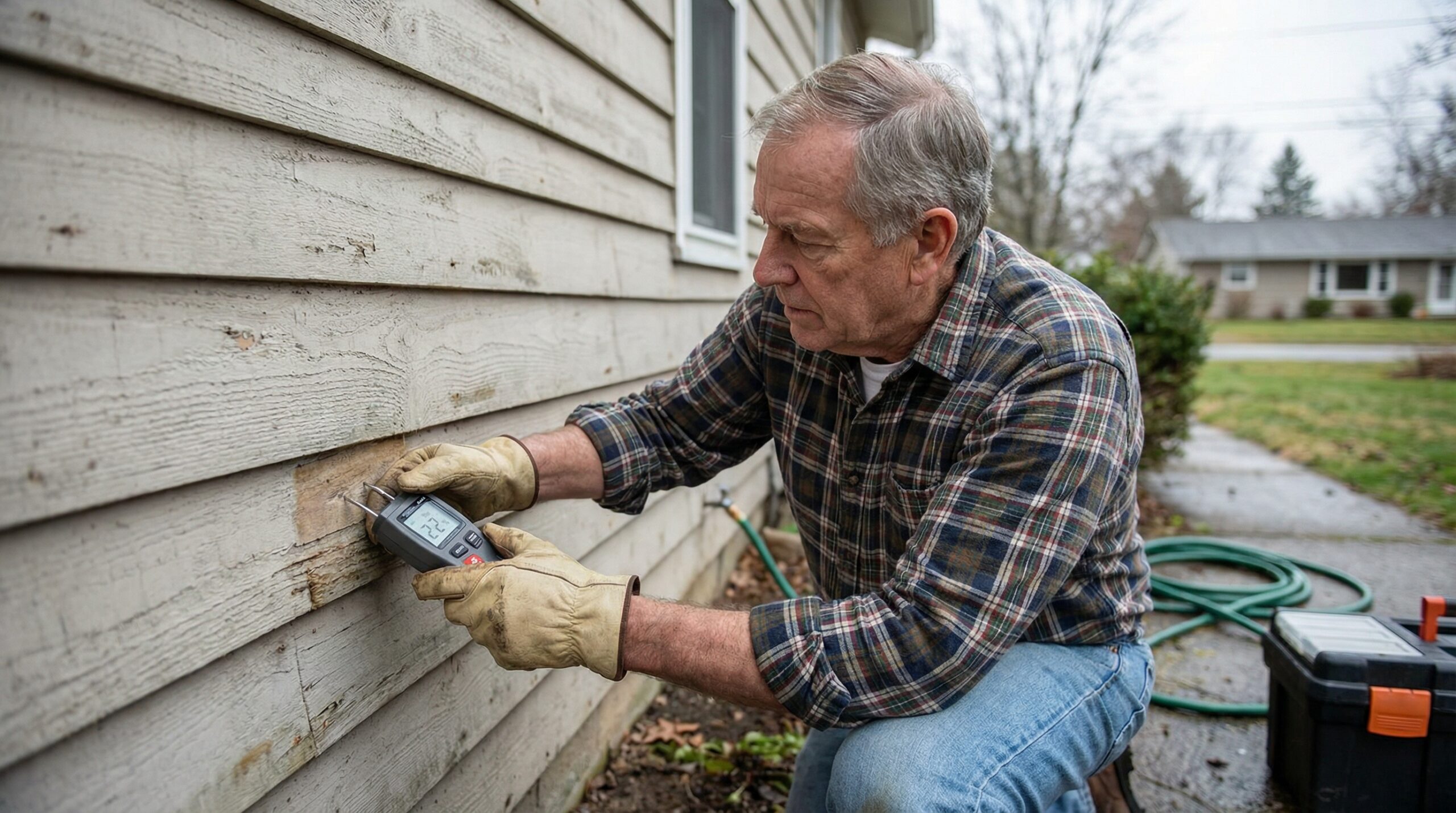
Professional inspectors combine these methods with expert knowledge, providing homeowners comprehensive assessments that can prevent expensive structural repairs later. They know exactly where Northeast Ohio homes typically develop problems and can spot issues that untrained eyes might miss.
Wood rot repair process and costs
Addressing rot behind siding requires a systematic approach starting with complete assessment of damage extent. Professional contractors must determine whether rot remains surface-level or has progressed into structural support elements. This crucial evaluation determines whether limited repairs will suffice or broader structural correction becomes necessary.
The repair process follows these essential steps. First, remove compromised siding sections to expose the damage. Next, assess underlying material condition and structural integrity. Then, replace rotted components and treat adjacent areas with preventive solutions. Install moisture barriers and proper ventilation, followed by replacement siding using matching materials. Finally, apply protective coatings and treatments.
Cost Reality: Wood rot repair costs in Northeast Ohio typically range from $800-3,500 for localized repairs to $7,000-18,000 for extensive structural damage correction, depending on accessibility, materials needed, and whether framework elements require replacement.
These costs vary based on accessibility, materials required, and whether structural elements need replacement. Reputable contractors provide detailed estimates showing complete repair requirements before beginning work, ensuring homeowners understand the full process and associated costs.
Early intervention significantly reduces repair expenses. Surface-level rot caught quickly might cost under $1,000 to fix, while structural damage requiring framework replacement can exceed $15,000. This dramatic cost difference makes regular inspection and prompt action essential for protecting your investment.
Preventing rot in new and existing siding
Successful wood rot prevention begins with proper moisture management around your home’s exterior. Modern house wrap systems, correctly installed flashing components, and ventilation gaps can dramatically reduce moisture accumulation behind siding. Choosing naturally rot-resistant materials or engineered products enhanced with protective treatments provides additional defense against Northeast Ohio’s challenging environmental conditions.
Proper installation techniques prove crucial, as much of the wood rot professionals discover stems from poor original installation. Quality contractors ensure adequate spacing between siding and roof systems, proper material overlapping, and appropriate sealing around all openings and connections. These installation details determine whether systems last multiple decades or deteriorate early.
For existing homes, maintaining proper drainage away from your foundation prevents the majority of moisture problems. Keep gutters clean and properly aligned, grade soil to slope away from your house, trim vegetation that holds moisture against siding, seal gaps around windows and doors promptly, and schedule annual professional inspections.
Your home represents your largest financial investment, making proactive maintenance essential for avoiding expensive repairs. Combining regular professional inspections with consistent gutter maintenance, prompt repair of damaged areas, and maintaining proper water diversion from your foundation creates comprehensive protection against rot in Northeast Ohio’s demanding climate.
Professional maintenance catches problems before they become major structural issues requiring extensive repair processes. The cost of annual inspections and minor preventive work pales compared to the expense of replacing rotted structural elements or dealing with widespread moisture damage throughout your home’s framework.