

Your gutters are your home’s first defense against water damage, quietly protecting your foundation, siding, and landscaping from thousands of dollars in potential repairs. When they fail, you’ll face problems ranging from basement flooding to foundation cracks that can cost more than a complete gutter replacement. The key is catching issues early before minor problems become major headaches.
Most gutter problems start small but escalate quickly, especially during heavy rains or freeze-thaw cycles. By learning to spot the warning signs, you can address issues while they’re still manageable and avoid the stress of emergency repairs during the next storm.
Quick fact: According to guttertwins.com, water overflow during rain is one of the most common early indicators that your gutters need attention, often signaling clogs or improper slope before visible damage occurs.
Visual damage you can spot from the ground
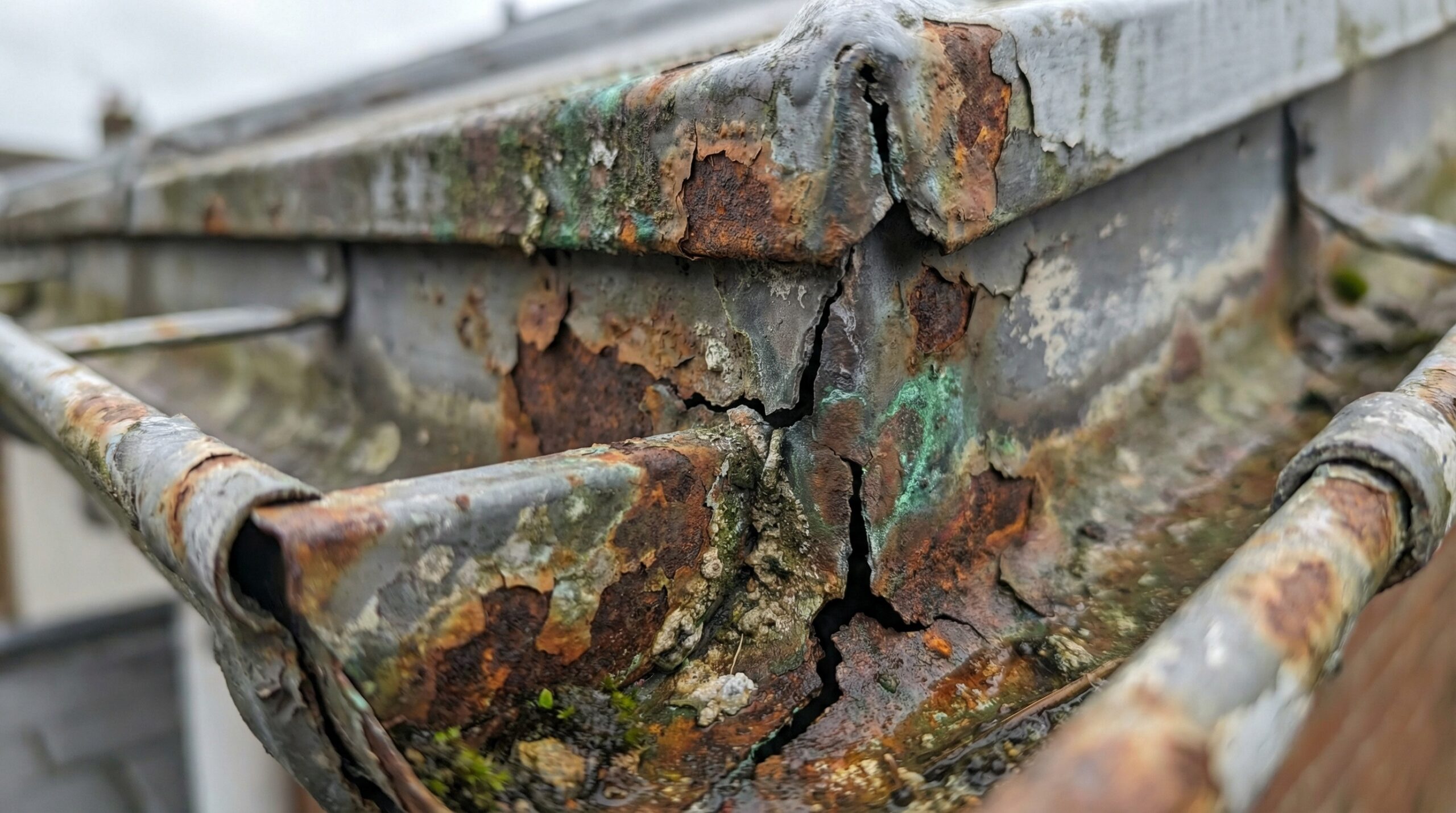
The easiest way to check your gutters is with a simple walk around your home. You don’t need to climb ladders to spot many serious problems. Look for obvious signs like rust spots, cracks, or sections that appear to be pulling away from your house.
Rust and corrosion tell different stories depending on their severity. Surface rust might just need cleaning and sealing, but deep corrosion that goes through the metal means those sections need replacement. Similarly, small cracks can often be sealed, while large splits indicate structural failure that requires professional attention.
Pay attention to your gutters’ alignment too. They should appear straight and level, not sagging or pulling away from your roofline. Sagging often means the supports have failed or water has been pooling due to improper slope.
| Visual Sign | What It Means | Action Needed |
|---|---|---|
| Surface rust | Early deterioration | Clean and seal |
| Deep corrosion | Material failure | Section replacement |
| Small cracks | Stress points | Professional sealing |
| Large splits | Structural damage | Section replacement |
| Sagging | Support failure | Bracket repair/replacement |
Water damage warning signs around your property
When gutters fail, water finds other places to go, and those places usually cause expensive damage. The most obvious sign is water pooling around your foundation after rain, which can lead to basement flooding and foundation problems.
Look at your exterior walls for paint peeling, stains, or moisture damage. These issues often appear below gutters that are overflowing or leaking. Your landscaping can also tell you about gutter problems. If you notice soil erosion, washed-away mulch, or plants dying in specific areas, water might be cascading off your roof instead of flowing through your gutters.
Watch for this:Foundation cracks and basement moisture are definitive signs that precipitation isn’t being properly directed away from your home’s structure.
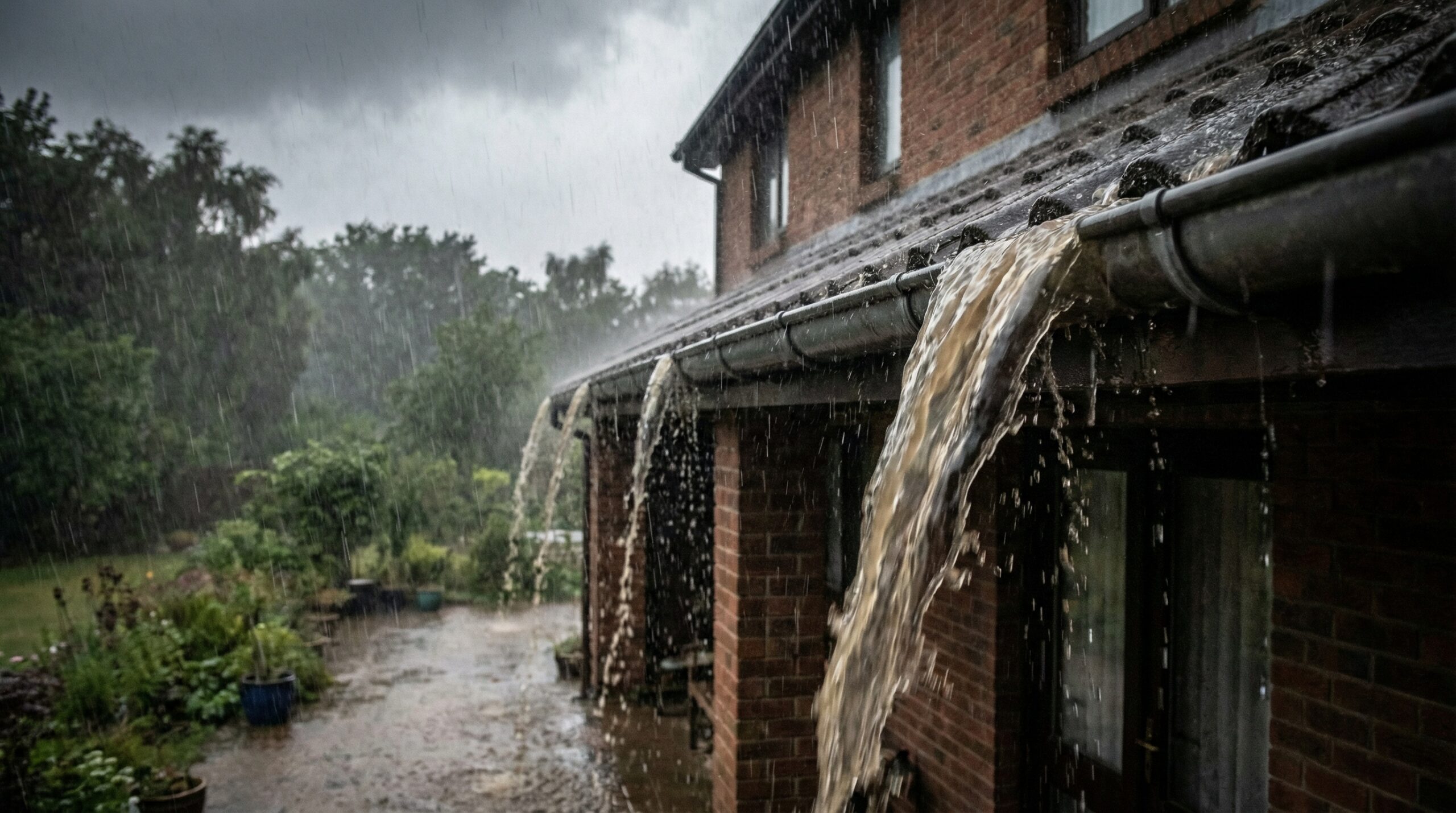
During the next rainstorm, take a few minutes to observe your gutters in action. You should see steady flow from downspouts, not water spilling over the sides or pooling in the channels. If water sits in your gutters after rain stops, you likely have blockages or slope problems that need professional attention. Proper downspout placement is crucial for directing water away from your home’s foundation effectively.
Performance problems that signal bigger issues
Even gutters that look fine might not be doing their job properly. Performance issues often develop gradually, making them easy to miss until they cause damage. The most common problem is overflow during moderate to heavy rain, which usually indicates blockages, improper slope, or insufficient capacity for your roof size.
Winter brings its own set of challenges. Ice dams forming along your roof edge often signal gutter problems combined with insulation issues. These ice formations can force water under your shingles, causing roof damage and interior leaks that are expensive to repair. If you’re preparing for colder months, consider winter-ready gutter installation tips to prevent seasonal damage.
Strange noises during rain or wind can also indicate problems. Properly functioning gutters should be relatively quiet. Banging, rattling, or unusual water sounds might mean loose connections, blockages, or structural issues that need attention.
When to call professionals instead of DIY
While basic gutter cleaning falls within most homeowners’ capabilities, certain situations require professional expertise for both safety and effectiveness. Structural problems like detached brackets, bent sections, or failing support systems create safety risks that aren’t worth taking on yourself. Understanding the differences between DIY and professional gutter repair can help you make informed decisions about when to call in experts.
Complex drainage issues also need expert attention. If you’re dealing with persistent clogs, standing water, or slope problems, professionals have the tools and experience to identify root causes rather than just treating symptoms.When repair costs approach 30% of replacement value or you’re addressing the same problems repeatedly, it’s time to consider whether replacement offers better long-term value.
Cost consideration: Professional gutter repair typically ranges from $150-$400 for minor issues like leaks and joint separations, with repairs lasting 3-5 years depending on material and local climate conditions.
Safety should always be your top priority. If your home is more than one story, if damage appears extensive, or if you’re not comfortable working on ladders, professional assessment is the smart choice. Peak and Valley Roofing specialists can provide comprehensive evaluations that consider how your gutters integrate with your entire roof and drainage system, helping you make informed decisions about repairs versus replacement based on your home’s specific needs and your budget.
The best approach is establishing a regular maintenance schedule that includes professional inspections at least twice yearly, with additional checks after major storms. This proactive strategy helps catch problems early when they’re still manageable and prevents the cycle of repeated emergency repairs that many homeowners face. For those interested in eco-friendly solutions, exploring rain barrel systems can complement your gutter system while conserving water.