

When you’re choosing gutters for your home, the copper vs aluminum debate often comes down to one key question: which material gives you the best long-term value? The answer isn’t as straightforward as you might think, and understanding the differences can save you thousands of dollars over the years.
Copper gutters typically last 50-100 years and cost $25-50 per linear foot, while aluminum gutters last 20-30 years at $6-15 per linear foot. Though copper requires a higher upfront investment, its exceptional longevity often makes it more cost-effective over time for homeowners planning to stay in their homes long-term.
Quick Fact: While copper gutters cost 3-4 times more initially, they can last up to five times longer than aluminum, potentially making them the more economical choice over decades.
Let’s dive into the specifics so you can make the right choice for your home and budget.
Lifespan comparison: How long each material actually lasts
The most significant difference between copper and aluminum gutters lies in their lifespan expectations. According to industry data from gutterfx.com, copper gutters can last 50-100 years with proper installation and minimal maintenance, while aluminum gutters typically provide 20-30 years of reliable service.
Several factors influence how long your gutters will actually last. Professional installation can add 5-10 years to either material’s lifespan, while regular maintenance extends gutter longevity by 15-20%. Your local climate also plays a crucial role – areas with frequent freeze-thaw cycles or salt exposure can reduce aluminum’s lifespan more significantly than copper’s.
The key difference lies in how each material ages. Copper develops a protective patina over time that actually strengthens the material, while aluminum may experience gradual degradation at joints and connection points, especially in harsh weather conditions.

Copper gutters: The premium choice with lasting benefits
Copper gutters represent the luxury end of gutter materials, and for good reason. As noted by angi.com, copper gutters develop a distinctive patina that changes from bright copper to an elegant blue-green over 7-20 years, adding character to your home’s exterior.
The durability advantages of copper are substantial. The material naturally resists corrosion and doesn’t rust, making it ideal for areas with challenging weather conditions. Copper’s biostatic properties also prevent moss and algae growth, reducing cleaning frequency compared to other materials.
From a maintenance perspective, copper gutters are remarkably low-maintenance once installed. Beyond routine debris removal and periodic inspections, they require virtually no specialized care. The natural patina formation actually helps repair minor scratches and protects against further deterioration.
However, copper’s premium status comes with a premium price. Installation costs typically range from $25-50 per linear foot, making it significantly more expensive than aluminum alternatives upfront.
Aluminum gutters: The practical and versatile option
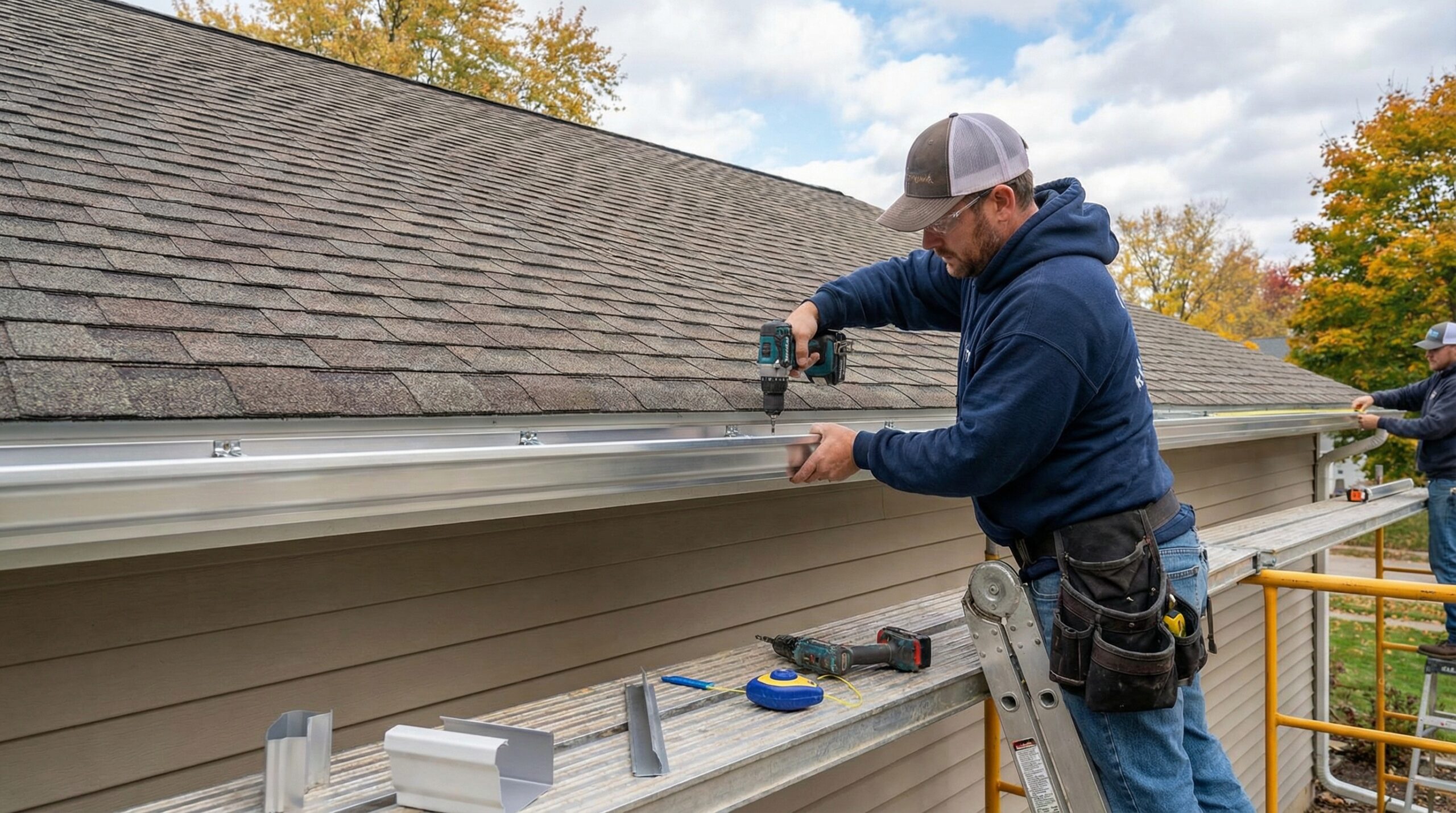
Aluminum gutters have earned their popularity through a combination of affordability, performance, and versatility. Modern aluminum gutters offer excellent value for most homeowners, with costs ranging from $6-15 per linear foot installed according to gutterfx.com.
One of aluminum’s biggest advantages is its lightweight nature, which reduces stress on your home’s fascia boards and simplifies installation. This material also offers exceptional color variety, with 25+ factory colors available, and can be painted to match virtually any exterior design.
Cost Advantage: Aluminum gutters cost 60-70% less than copper initially, making them accessible for most budgets while still providing 20-30 years of reliable performance.
Today’s aluminum gutters significantly outperform older versions thanks to improved manufacturing processes and enhanced alloys. Contemporary baked-on enamel coatings resist fading for decades, while seamless fabrication eliminates many potential leak points.
The main drawbacks of aluminum include susceptibility to denting from falling branches or ladder impacts, and potential corrosion at cut edges or scratches over time. However, thicker gauge options (0.032 to 0.040 inches) provide enhanced durability and impact resistance.
Cost analysis: Initial investment vs long-term value
Understanding the true cost of gutters requires looking beyond the initial price tag. While aluminum gutters cost significantly less upfront, the long-term financial picture becomes more complex when you factor in replacement cycles and maintenance costs.
| Material | Initial Cost/Ft | Lifespan | Cost Per Year | Replacement Cycles (50 years) |
|---|---|---|---|---|
| Aluminum | $6-15 | 20-30 years | $0.50-$0.75 | 2-3 times |
| Copper | $25-50 | 50-100 years | $0.25-$1.00 | 0-1 times |
For homeowners planning to stay in their homes long-term, copper often provides better value despite the higher upfront cost. Real estate data suggests copper installations typically recover 85-90% of their installation cost at resale, compared to 60-70% for premium aluminum alternatives.
However, if you’re planning to move within 10-15 years or have budget constraints, aluminum gutters offer excellent performance for the price. The key is matching your choice to your specific situation and timeline.
Investment Tip: Consider your home’s value when choosing materials. For homes valued under $750,000, aluminum typically provides the best return on investment, while higher-value homes benefit more from copper’s premium appeal.
Making the right choice for your home
The decision between copper and aluminum gutters ultimately depends on your specific circumstances, budget, and long-term plans. If you value longevity, minimal maintenance, and distinctive aesthetics, and you’re planning to stay in your home for decades, copper gutters justify their higher cost through superior performance and curb appeal.
For most homeowners, however, aluminum gutters provide an excellent balance of performance, affordability, and versatility. They work well with most architectural styles, offer numerous color options, and deliver reliable protection for 20-30 years at a fraction of copper’s cost.
Consider aluminum if you’re budget-conscious, planning to move within 15 years, or simply want reliable performance without the premium price. Choose copper if you’re investing in a forever home, value distinctive aesthetics, or want to minimize long-term maintenance and replacement concerns.
Both materials perform well when professionally installed and properly maintained. Understanding when to replace vs repair your gutters is crucial for maximizing your investment. Whatever you choose, investing in quality installation will maximize your gutters’ performance and lifespan, protecting your home for years to come.