

You walk outside and notice green, fuzzy patches spreading across your roof shingles. Your first thought is probably about expensive repairs and whether that moss means you need a complete roof replacement. The good news is that moss alone doesn’t automatically mean you need a new roof, but it is a warning sign that requires attention.
Moss forms when moisture combines with debris on your roof surface, and while it can damage shingles over time, early intervention often prevents the need for full replacement. The key is understanding what’s causing the moss, how much damage has already occurred, and whether your roof is approaching the end of its natural lifespan.
Quick fact: Moss holds water against your roof surface for extended periods, which can lift shingles and accelerate wear, but light moss growth on newer roofs typically only requires cleaning and prevention measures.
This article will help you determine whether your mossy roof needs replacement or if cleaning and maintenance can solve the problem. You’ll learn what causes moss to grow, how to safely remove it, and proven strategies to prevent it from returning.
What is roof moss and why does it grow on your roof?
Roof moss appears as green, carpet-like patches that feel spongy to the touch. Unlike algae, which creates dark streaks, moss has a three-dimensional structure that can grow quite thick over time. You might also notice lichen, which appears as crusty, colorful patches, but moss is the most problematic for roof health.
Moss thrives in three specific conditions that many Northeast Ohio roofs unfortunately provide. First, it needs constant moisture from rain, humidity, or poor drainage. Second, it prefers shaded areas where sunlight can’t dry the roof surface quickly. Third, it feeds on organic debris like leaves, pine needles, and dirt that accumulate on your roof.
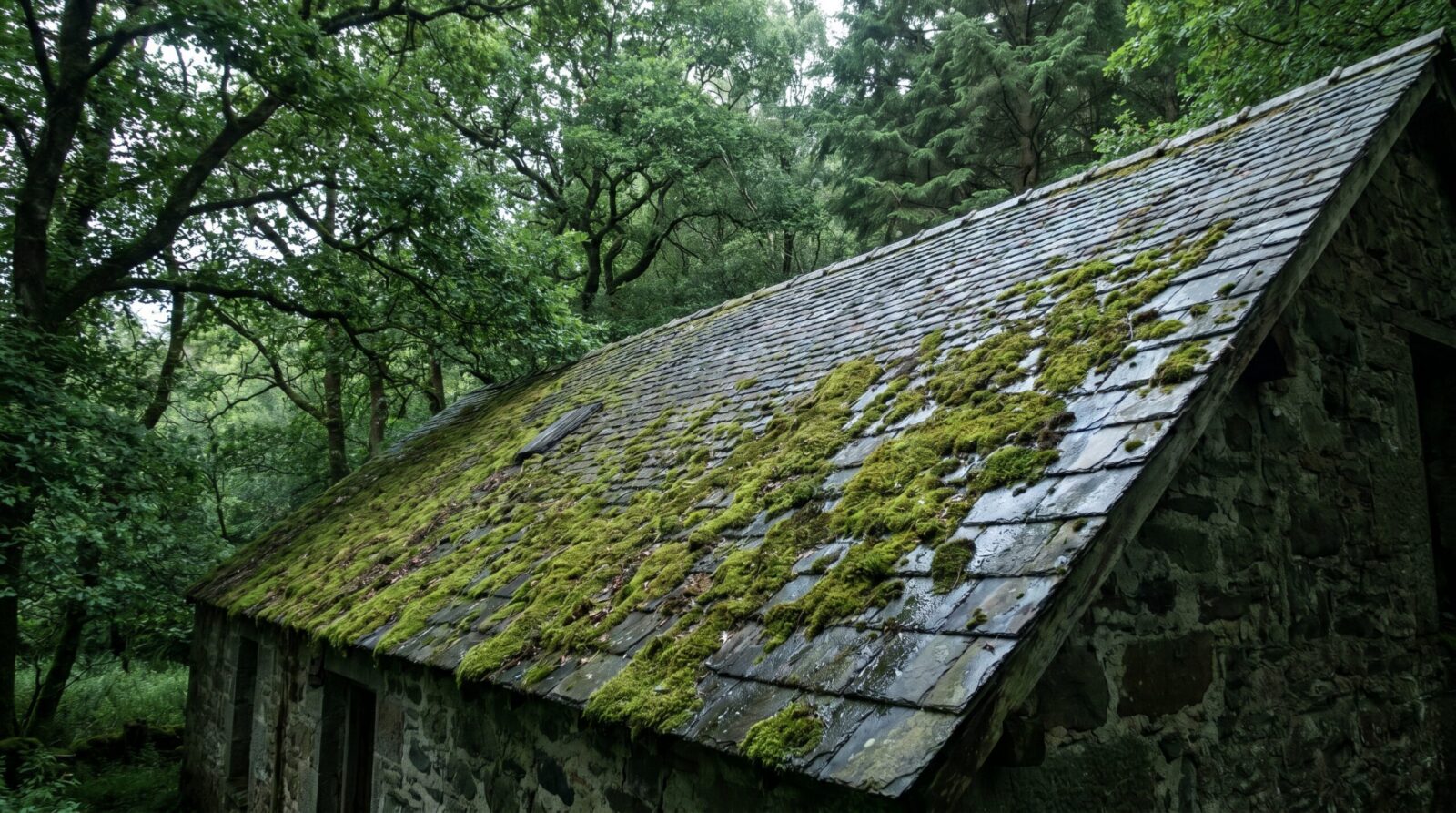
Your Cleveland-area roof becomes a perfect moss habitat when you have overhanching tree branches creating shade, clogged gutters causing water backup, or you live in Northeast Ohio’s humid climate with frequent rainfall. North-facing roof slopes are particularly vulnerable because they receive less direct sunlight and stay damp longer after rain—a common issue in our region’s weather patterns.
The rough texture of aging asphalt shingles also gives moss an easier surface to grab onto compared to newer, smoother materials. This explains why older roofs tend to develop moss problems more frequently than recently installed ones.
Is moss on your roof harmful to shingles?
Moss definitely damages your roof, but the severity depends on how thick it is and how long it’s been growing. The main problem is that moss acts like a sponge, holding moisture against your shingles for extended periods instead of allowing them to dry properly.
This trapped moisture causes several types of damage. Moss can lift the edges of asphalt shingles as it grows, creating gaps where water can penetrate underneath. The constant dampness also accelerates the breakdown of shingle materials and can wash away the protective granules that shield your roof from UV rays.
You should look for these warning signs that moss has begun causing damage: shingle edges that appear lifted or curled, areas where granules have worn away leaving bare spots, soft or spongy areas when walking on the roof, and any signs of water stains on your ceiling or in your attic.
Important note: Thick, well-established moss growth poses a much greater risk than thin, recently formed patches, especially on roofs that are already 15-20 years old.
The good news is that early-stage moss growth on structurally sound roofs typically causes minimal damage and can be addressed with proper cleaning and prevention measures.
Does moss mean your roof needs replacement?
The presence of moss doesn’t automatically mean you need a new roof, but it does indicate that you should have your roof inspected for underlying damage. The decision depends on several factors working together rather than moss alone.
For newer roofs under 15 years old with light moss coverage and no visible damage or leaks, cleaning and prevention usually solve the problem effectively. The moss likely hasn’t had enough time to cause structural damage, and addressing the underlying moisture and debris issues can prevent regrowth.
However, moss on older roofs near the end of their expected lifespan requires more serious consideration. If your roof is 20-25 years old with moderate to heavy moss growth, you should have a professional inspection to check for hidden damage underneath the moss.

Replacement becomes necessary when moss coincides with other problems like active leaks, widespread shingle damage, soft spots in the roof decking, or multiple missing or cracked shingles. In these cases, the moss is often a symptom of broader roof failure rather than the primary cause.
The most reliable way to determine if replacement is needed is through a thorough professional inspection that can assess both visible damage and the structural integrity of your roof system. Local roofing experts familiar with Northeast Ohio’s climate conditions can provide honest guidance about whether your specific situation requires replacement or if maintenance and repairs will suffice.
How to safely remove moss from your roof
You can remove moss from your roof using gentle methods that won’t damage your shingles, but safety should be your top priority. Never attempt moss removal on steep roofs, multi-story homes, or if you’re uncomfortable with heights.
For safe DIY removal, start by using a soft-bristled brush or push broom to gently sweep away loose moss, working from the top of the roof downward. A leaf blower can help clear debris from gutters and roof valleys without requiring you to walk on the roof surface.
Chemical treatments can kill remaining moss, but they require careful application. A 50:50 mixture of laundry-strength liquid chlorine bleach and water, applied with a pump sprayer and allowed to sit for 15-20 minutes before gentle rinsing, is effective according to roofing manufacturers. However, bleach can discolor shingles and harm plants, so protect landscaping with plastic sheeting and rinse thoroughly.
Alternative treatments include zinc sulfate solutions, which are gentler on plants, or commercial moss killers designed specifically for roofs. Always follow manufacturer instructions and remember that dead moss still needs to be physically removed after chemical treatment.
Never use a pressure washer on asphalt shingles. The high pressure strips away protective granules, can force water under shingles creating leaks, and may void your roof warranty. Similarly, avoid aggressive scraping or metal tools that can gouge the shingle surface.
Preventing moss from returning to your roof
Prevention is far more effective and less risky than repeatedly removing moss after it grows. The key is eliminating the conditions that moss needs to thrive: excess moisture, shade, and organic debris.
Start by trimming tree branches that hang over your roof to increase sunlight exposure and reduce leaf drop. Even small improvements in sunlight can significantly reduce moss growth by helping your roof dry faster after rain—particularly important in Northeast Ohio’s humid climate.
Keep your roof clean by regularly removing leaves, pine needles, and other debris using a leaf blower or roof rake. Clean your gutters at least twice yearly to prevent water backup that can create persistently damp conditions along roof edges.
Consider installing zinc or copper strips near your roof ridge as a long-term prevention measure. When it rains, these metals release ions that inhibit moss growth as water flows down your roof surface.
| Prevention Method | Frequency | Effectiveness |
|---|---|---|
| Trim overhanging branches | Annually | High |
| Remove roof debris | 2-3 times per year | High |
| Clean gutters | Twice yearly | Medium |
| Install zinc strips | One-time | Medium-High |
Schedule annual roof inspections in moss-prone areas, ideally in fall before the rainy season begins. Early detection and removal of small moss patches prevents them from becoming major problems that threaten your roof’s integrity.
The bottom line is that moss on your roof serves as an early warning system rather than an immediate crisis. By understanding what causes moss growth and taking proactive steps to address those conditions, you can often avoid costly roof replacement while keeping your home protected from water damage. If you’re dealing with heavy moss growth on an older roof or notice signs of structural damage, consulting with a professional roofer familiar with Cleveland-area conditions will help you make the best decision for your specific situation.