
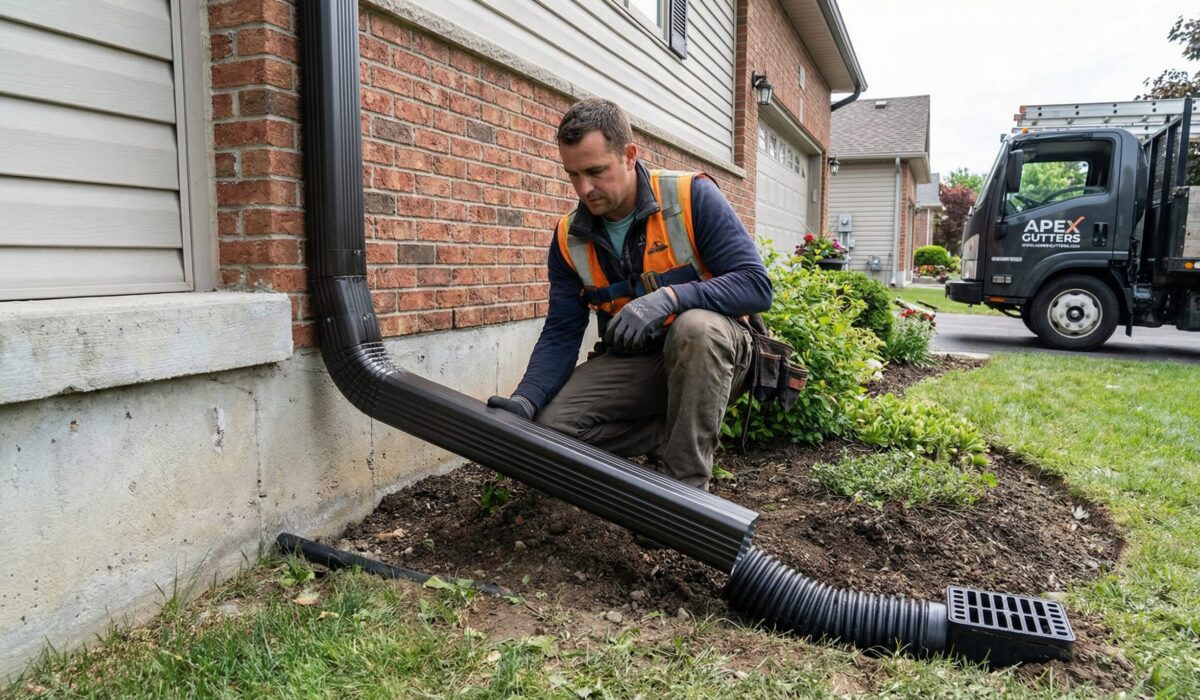
Rocky River, OH receives about 38 inches of annual rainfall, and poor downspout placement causes foundation damage in 80% of local homes. Your property’s location in Cuyahoga County’s varied terrain creates unique drainage challenges that require strategic water management solutions.
The river valley slopes and clay-rich soil common throughout Rocky River demand precise downspout positioning to prevent costly foundation issues. Properties near the river gorge or lakefront bluffs face rapid water flow and erosion risks, while flatter inland homes deal with water retention and pooling problems.
Quick fact: Cuyahoga County experiences intense summer storms and rapid spring thaws that can overwhelm standard gutters, making proper downspout capacity essential for protecting your home’s structural integrity.
This guide covers everything you need to know about downspout placement specific to Rocky River’s challenging terrain, from understanding local drainage requirements to seasonal maintenance strategies that keep your system functioning year-round.
Understanding Rocky River’s unique drainage challenges
Rocky River’s position in Cuyahoga County creates distinct water management challenges that affect every property differently. The area’s river valley landscape combined with dense suburban development requires careful consideration of natural water flow patterns.
Your property’s elevation significantly impacts drainage needs. Properties near the river valley feature shallow soils over shale bedrock that create rapid runoff conditions. These properties need reinforced drainage systems with strategic placement to prevent soil erosion and manage high-velocity water flow.
Inland regions present the opposite challenge with deep clay-loam deposits that retain moisture for extended periods. If your home sits in these areas, you’ll need extended downspout lengths and comprehensive drainage planning to handle slower soil percolation rates.
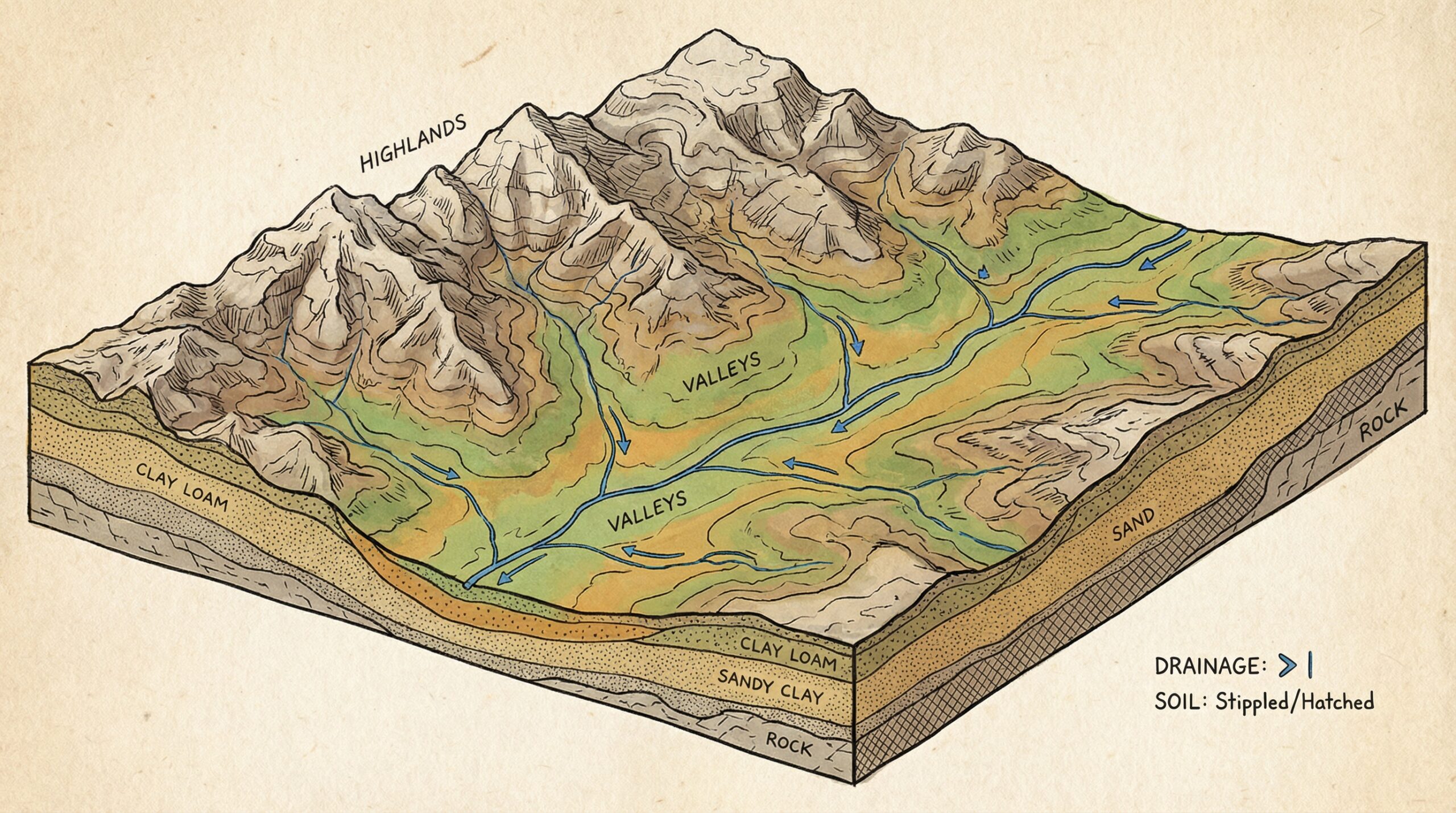
The local microclimate adds another layer of complexity. Lake-effect weather patterns create varying demands on gutter systems across different neighborhoods. This means your downspout requirements depend heavily on your specific location within Rocky River’s diverse topography.
Calculating proper downspout placement for your home
Determining the right number and placement of downspouts requires specific calculations based on your roof’s characteristics and local conditions. The standard rule calls for one downspout per 600-800 square feet of roof area, but Northeast Ohio’s intense rainfall and snowmelt patterns often require additional capacity.
Your roof’s pitch directly affects water velocity and discharge requirements. Steeper roofs on the Tudor-style homes common in Rocky River create faster water flow, requiring downspouts positioned closer together and extended further from your foundation to prevent erosion.
| Roof Size | Downspouts Needed | Extension Distance | Soil Consideration |
|---|---|---|---|
| 1,000 sq ft | 2 downspouts | 5-8 feet | Clay soil needs longer extensions |
| 1,500 sq ft | 3 downspouts | 6-10 feet | Rocky soil allows shorter distances |
| 2,000 sq ft | 3-4 downspouts | 8-12 feet | Grade affects final placement |
Local building codes require downspouts to discharge at least 5 feet from foundation walls and property lines. Cuyahoga County and municipal regulations specifically mandate that drainage systems cannot direct water onto neighboring properties or public walkways, making strategic placement even more critical.
Important: Properties on slopes exceeding 15% grade must incorporate erosion control measures into their drainage design, often requiring underground drainage pipes and reinforced downspout connections.
Common drainage problems and solutions
Foundation water damage remains the most frequent issue facing Rocky River homeowners, particularly in older homes where settling has created negative grading around the foundation. Poor downspout placement allows water to pool near basement walls, leading to seepage and structural problems similar to those experienced by homeowners in nearby Westlake.
Soil erosion affects properties on Rocky River’s characteristic river valley slopes when downspouts discharge too close to the foundation or lack proper extensions. The combination of steep terrain and intense rainfall creates conditions where improperly managed water flow can quickly compromise soil stability around your home.
Basement flooding becomes especially problematic during spring lake-effect snow thaws and heavy rainfall events. When downspouts discharge within the foundation zone, water accumulates faster than clay-rich soil can absorb it, creating hydrostatic pressure against basement walls. Understanding the role of gutters and downspouts in protecting homes is crucial for preventing these costly issues.
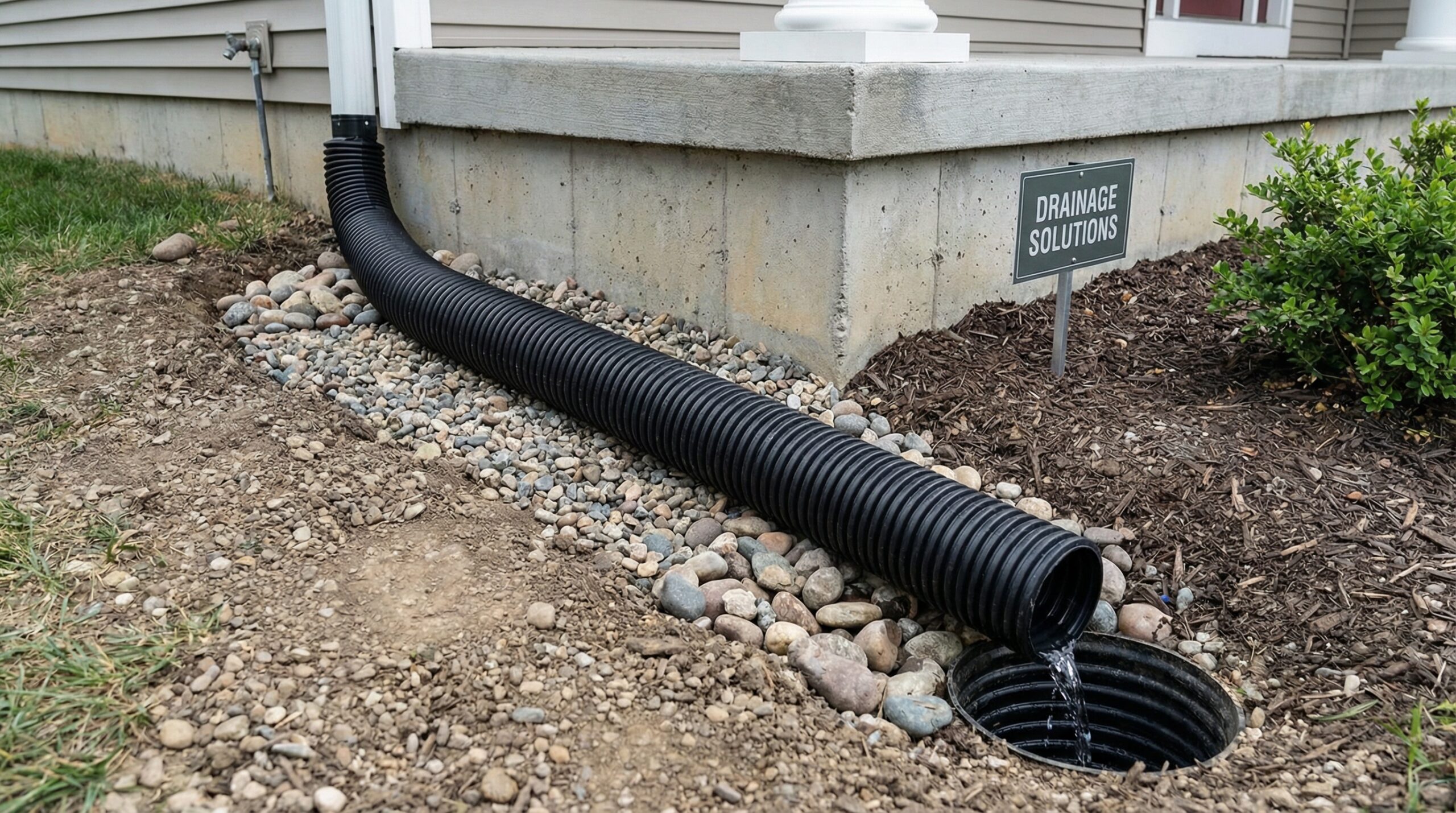
Underground drainage systems offer effective solutions for challenging properties. Installing drain tiles connected to properly placed downspouts helps manage water flow in areas where surface drainage proves inadequate. These systems work particularly well for flatter inland properties dealing with water retention issues.
Gutter guards and regular maintenance prevent the leaf accumulation problems common in Rocky River’s tree-dense neighborhoods. If you’re considering whether gutter guards are worth the investment, fall cleanup becomes critical when mature oak and maple trees drop substantial debris that can overwhelm downspout capacity during winter storms.
Seasonal maintenance for optimal performance
Winter preparation starts before the first lake-effect snowfall hits Cuyahoga County. Installing heat cables in problem areas prevents ice dam formation that can damage gutters and create dangerous icicles. Check all downspout connections and reinforce mounting hardware to handle snow load stress.
Spring maintenance focuses on clearing winter debris and checking for ice damage. Inspect downspout alignment after severe freeze-thaw cycles, as ground movement can shift connections and create drainage problems. This season’s heavy rains make properly functioning downspouts essential for preventing overflow issues.
Summer brings intense thunderstorms that test your drainage system’s capacity. After severe weather events, walk around your property to check for storm damage and clear any blockages that might reduce downspout effectiveness during the next rainfall event. Knowing when to repair versus replace your gutters can save you money and prevent future problems.
Pro tip: Schedule professional inspections twice yearly to identify potential issues before they become expensive problems, especially given Rocky River’s challenging topography and intense seasonal weather patterns.
Fall requires the most intensive maintenance due to heavy leaf accumulation from Rocky River’s mature tree canopy. Regular cleaning prevents blockages that can cause water backup and overflow during winter storms when you’re least likely to notice problems developing. For homeowners debating DIY versus professional gutter cleaning, consider the safety risks and time investment involved.
Proper downspout placement protects your Rocky River home’s foundation while managing the unique challenges created by Cuyahoga County’s varied terrain and intense rainfall patterns. Understanding your property’s specific drainage needs and maintaining your system throughout the year ensures long-term protection against water damage. Whether you’re dealing with steep river valley slopes, clay soil, or seasonal weather extremes, strategic downspout placement provides the foundation protection your home needs to weather every storm.