

Tired of climbing ladders every few months to clean out clogged gutters? You’re not alone. Most homeowners spend $200-500 annually on professional gutter cleaning, and that’s before considering the potential thousands in water damage from overflowing gutters.
Quick answer: Yes, gutter guards are typically worth it. Quality systems pay for themselves within 3-7 years through reduced maintenance costs alone, while providing protection against expensive water damage that can cost $5,000-30,000 to repair.
Key insight: Homes with mature trees see the fastest return on investment, often recovering costs within 2-3 years due to heavy debris loads.
Let’s explore whether this home improvement makes sense for your specific situation and budget.
Understanding how gutter guards work
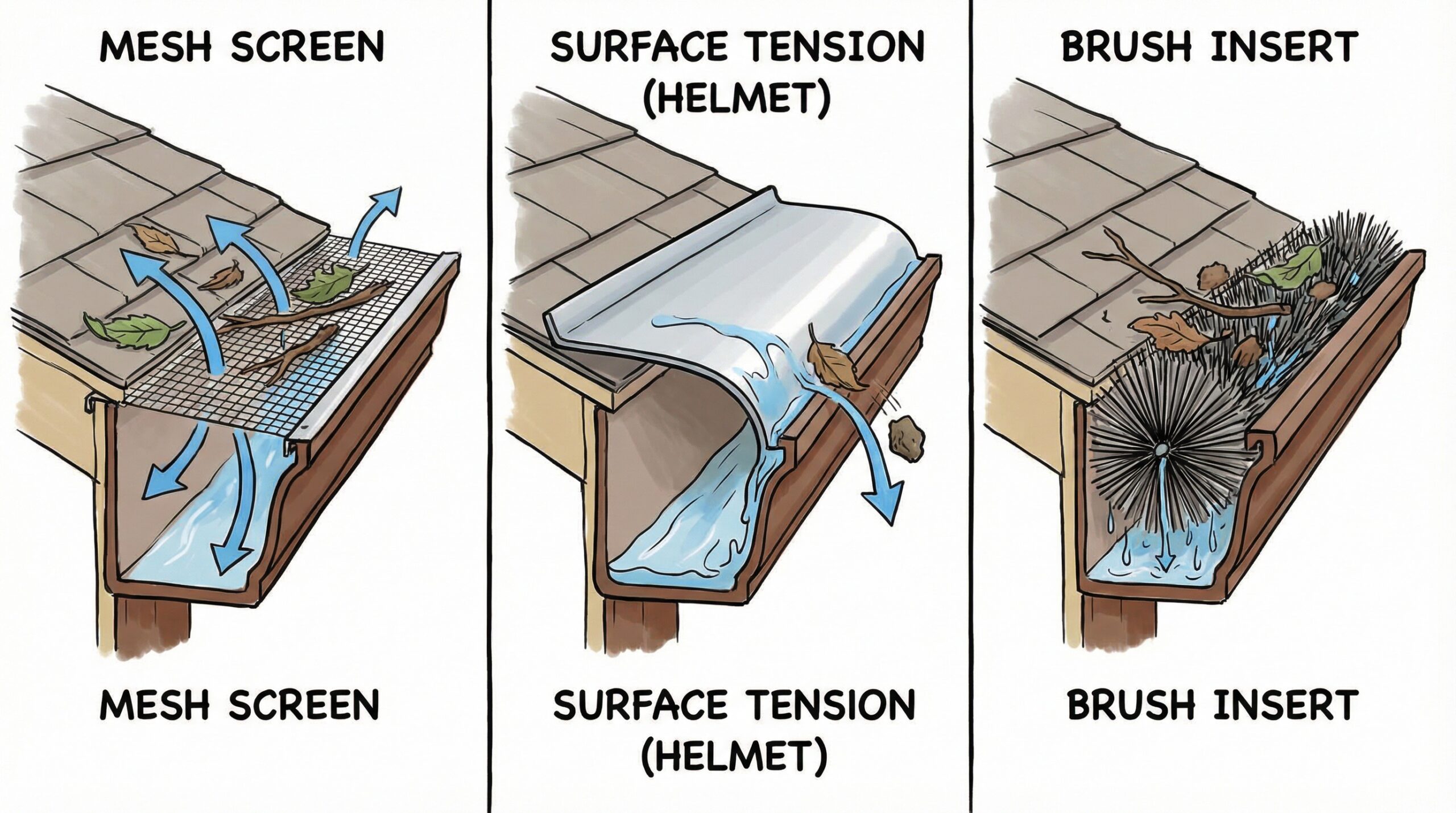
Think of gutter guards as a filter for your gutters. They create a barrier that keeps leaves, twigs, and debris out while allowing water to flow through freely. The concept is simple, but the execution varies significantly depending on the type you choose.
Most systems work by either blocking debris entirely or allowing it to slide off your roof rather than settling in the gutters. Water still flows through small openings or follows the guard’s surface into your gutters through strategic entry points.
The effectiveness depends largely on your local environment. Homes surrounded by oak trees face different challenges than those near pine trees, and each guard type handles specific debris differently.
Comparing your gutter guard options
You’ll find five main types of gutter guards, each with distinct advantages. Screen guards offer the most budget-friendly option at $4-7 per linear foot, using perforated metal to block larger debris. They work well for basic protection but may require more frequent cleaning.
Mesh guards cost $6-12 per linear foot and provide superior filtering with fine mesh that catches even small debris. These typically last 10-20 years and handle diverse debris types effectively.
| Guard Type | Cost Range | Best For | Expected Lifespan |
|---|---|---|---|
| Screen | $4-7/ft | Large debris | 5-10 years |
| Mesh | $6-12/ft | All debris types | 10-20 years |
| Reverse curve | $8-15/ft | Heavy rainfall areas | 15-25 years |
| Foam inserts | $2-5/ft | Budget solutions | 2-5 years |
Reverse curve guards represent the premium option, using water’s surface tension to direct flow while debris falls away. Bottle brush guards work well for pine needles, while foam inserts offer temporary budget relief but need frequent replacement.
Weighing the real benefits and drawbacks
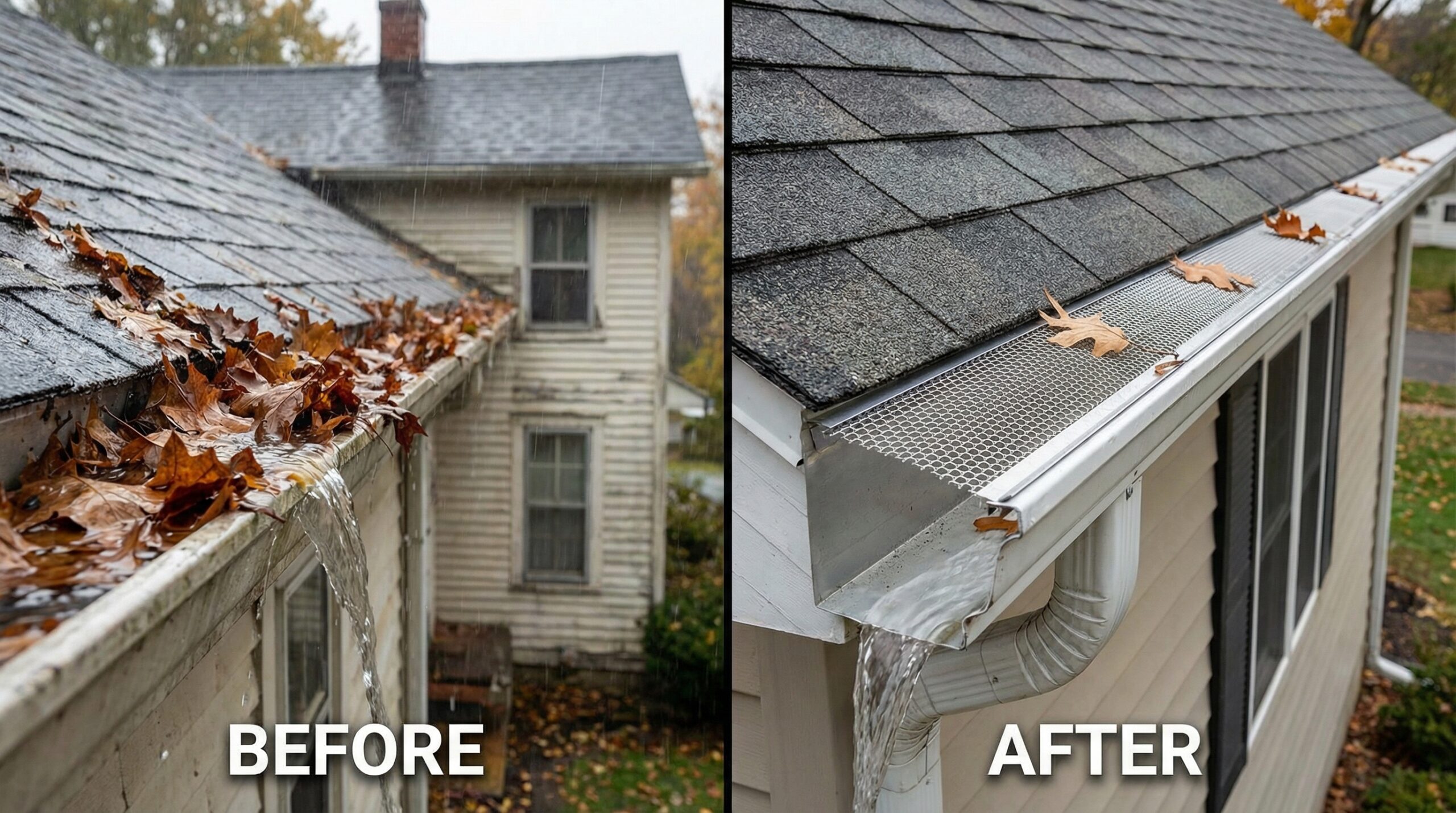
The most compelling benefit is dramatically reduced maintenance. Instead of cleaning gutters 3-4 times yearly, you’ll likely need only annual inspections. This saves both time and the safety risks associated with ladder work.
Safety note: Ladder accidents cause over 164,000 emergency room visits annually, making gutter guards a worthwhile safety investment for many homeowners.
Water damage prevention offers the biggest financial protection. Properly functioning gutters direct water away from your foundation, preventing costly basement flooding, foundation cracks, and landscape erosion. Ice dam prevention during winter months provides additional value in colder climates.
However, gutter guards aren’t maintenance-free. Quality systems still require periodic inspection and occasional cleaning. The upfront cost can be substantial, ranging from $1,500-5,000 for typical homes depending on system quality and installation complexity.
Some systems struggle with specific debris types. Fine pine needles can clog mesh guards, while seed pods may still find their way into screen systems. Winter weather presents unique challenges as heavy snow and ice can affect performance.
Making the financial decision
The math often favors gutter guards when you consider long-term costs. Professional gutter installation typically runs $8-15 per linear foot, creating a substantial upfront investment. However, most homeowners recover this cost within 3-7 years through eliminated cleaning expenses alone.
Consider a typical scenario: $3,000 installation cost versus $300 annual cleaning fees equals a 10-year payback period. Factor in prevented water damage potential and extended gutter lifespan, and the investment becomes increasingly attractive.
Financial reality: The average water damage claim costs $11,098, making gutter guards an insurance policy against expensive repairs.
Your specific situation matters most. Homes with extensive tree coverage see faster payback periods, while properties in open areas may take longer to justify the investment. Consider your physical ability to safely clean gutters, your long-term housing plans, and current gutter condition when making this decision.
Senior homeowners or those planning to age in place often find the safety and convenience benefits justify the cost regardless of strict financial calculations. The peace of mind knowing your home is protected while eliminating dangerous ladder work provides value beyond simple dollars and cents.
Peak and Valley Roofing recommends evaluating your property’s specific needs through a professional assessment. Our team can help determine if gutter guards make sense for your home’s unique challenges and provide customized solutions that deliver lasting value.
Professional installation ensures proper fit and performance while maintaining warranty coverage. While DIY installation might seem attractive, understanding when to repair versus replace your gutters and improper installation can void warranties and create water flow problems that defeat the system’s purpose.
For homeowners weighing DIY versus professional gutter cleaning options, gutter guards offer a middle ground that reduces the frequency of both. Additionally, proper downspout placement works hand-in-hand with gutter guards to create a comprehensive water management system that protects your home’s exterior and foundation for years to come.