

Ohio’s stunning fall foliage creates a beautiful landscape, but those colorful leaves can become a serious threat to your roof when they accumulate. When leaves pile up on your roof and in gutters, they trap moisture that can lead to water damage, mold growth, and structural problems that cost thousands to repair. The key is knowing how to remove them safely and when to call professionals for help.
Quick Fact: Wet leaves on your roof can retain moisture for weeks, creating perfect conditions for mold growth and shingle deterioration, especially during Ohio’s damp winter months.
This guide will walk you through safe leaf removal techniques, help you recognize when professional help is needed, and share prevention strategies to protect your home investment.
Why leaf removal matters for Ohio roofs
Leaves might look harmless, but they create serious problems when left on your roof. As they decompose, leaves produce acidic compounds that break down shingle protective coatings. This process happens faster in Ohio’s humid climate, where moisture stays trapped longer.
The real danger comes when leaves block your drainage system. Water that can’t flow freely through gutters will find other paths, often under your shingles and into your home. This leads to interior water damage, rotted roof decking, and expensive repairs.
Ohio winters make the problem worse. When snow covers accumulated leaves, they stay wet for months, accelerating damage. Ice dams can form more easily when gutters are clogged, forcing water back under your roof covering.
Wildlife also finds leaf-covered roofs attractive. Squirrels, birds, and insects use the debris as nesting material, potentially causing additional damage to your roofing system.
Safe techniques for DIY leaf removal
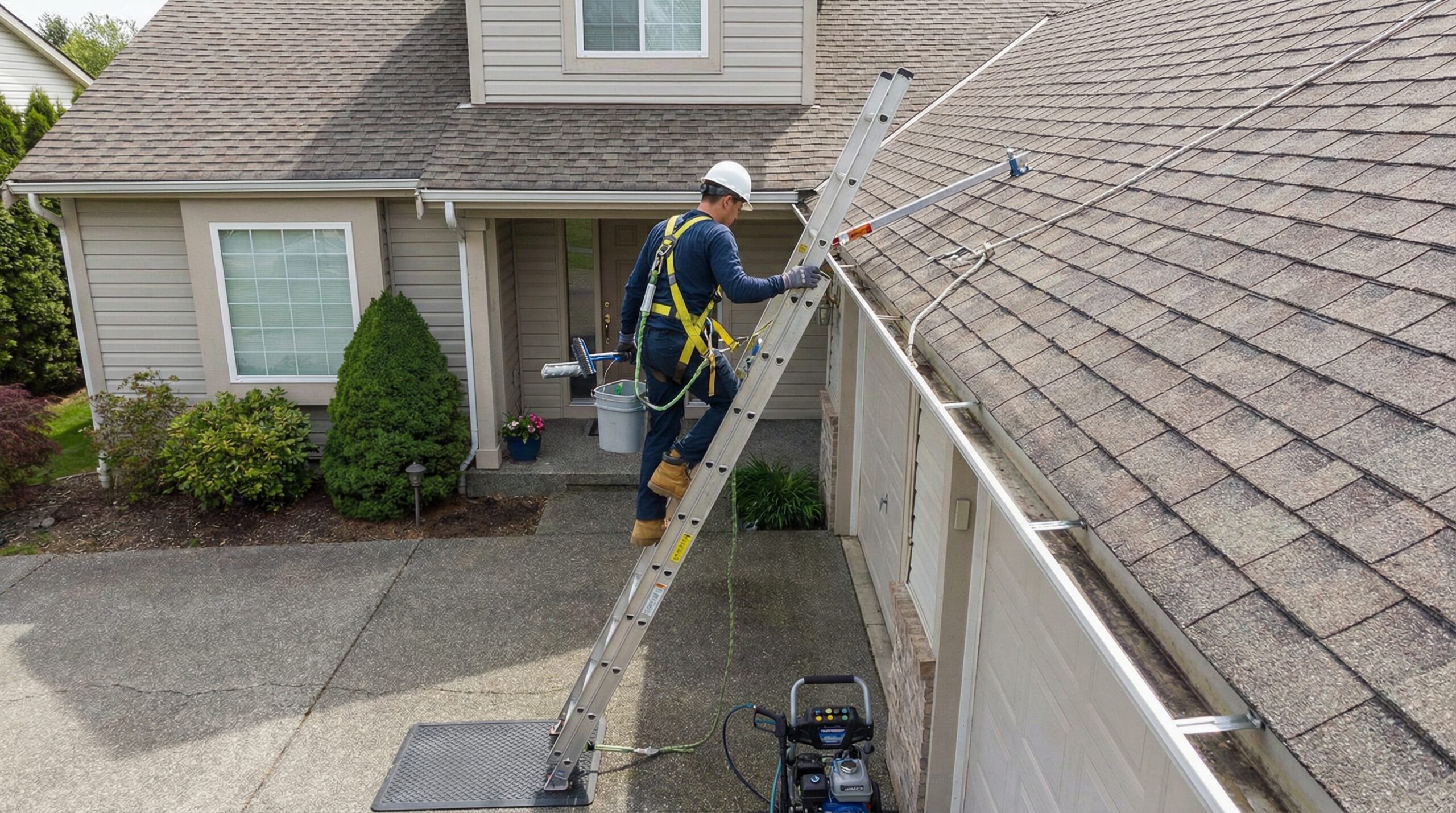
Removing leaves yourself can save money, but safety must come first. Start by checking weather conditions – never attempt roof work during wet, windy, or icy conditions. Ohio’s fall weather can change quickly, so plan for dry days with minimal wind.
Your ladder setup determines your safety throughout the project. Position it at a 75-degree angle on firm, level ground. The ladder should extend at least three feet above the roof edge. Always maintain three points of contact and never overreach – move the ladder instead.
Essential safety gear includes non-slip shoes with good tread, work gloves for grip, and safety glasses to protect from flying debris. If your roof has a steep pitch or you feel uncomfortable at any point, stop and consider professional help.
For the actual removal, start at the bottom and work your way up. This prevents debris from falling onto areas you’ve already cleaned. Use a soft-bristled brush or leaf blower to gently remove leaves without damaging shingles. Avoid power washing, as high-pressure water can force moisture under shingles and cause hidden damage. For proper cleaning techniques that protect your roof shingles, gentle methods are always preferred over aggressive approaches.
Safety Tip: Never work alone on roof projects. Have someone spot you from the ground who can assist if problems arise and call for help if needed.
When to call professional roof cleaning services
Some situations require professional expertise rather than DIY efforts. Roof pitch plays a major role in this decision – anything steeper than a 6/12 pitch (6 inches of rise for every 12 inches of horizontal run) becomes dangerous for most homeowners.
| Factor | DIY Appropriate | Professional Recommended |
|---|---|---|
| Roof Pitch | Under 6/12 slope | Over 6/12 slope |
| Debris Amount | Light leaf coating | Several inches deep |
| Home Height | Single story | Two+ stories |
| Physical Ability | Good balance/strength | Limited mobility |
Professional services bring specialized equipment and experience that make the job safer and more thorough. They can identify common types of roof damage during cleaning, such as damaged shingles or compromised flashing, before they become major issues.
Insurance considerations also favor professional services. If you’re injured during DIY roof work, your homeowner’s insurance might not cover medical expenses. Professional roofers carry liability insurance that protects both you and your property.
Prevention strategies for Ohio homeowners
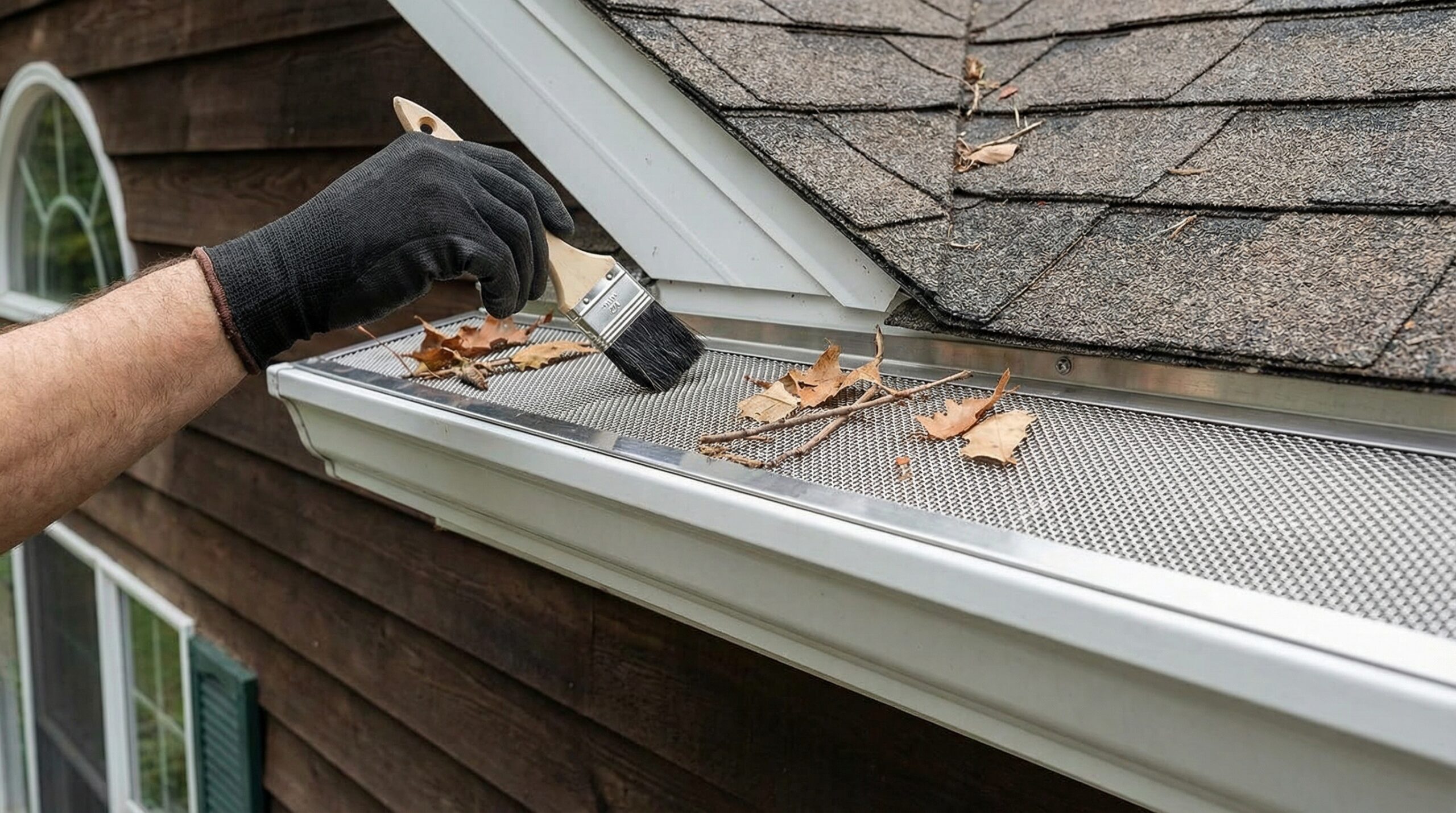
The best approach to leaf problems is preventing excessive accumulation in the first place. Tree trimming plays a crucial role here – maintain at least 10 feet of clearance between branches and your roofline. This reduces the volume of leaves that can fall directly onto your roof.
Gutter guards offer another layer of protection. While they don’t eliminate all maintenance, quality guards significantly reduce the frequency of cleaning needed. Choose guards designed for your area’s leaf types – Ohio’s mix of oak, maple, and pine requires guards that handle both large leaves and small needles.
Regular inspection schedules help catch problems early. Walk around your property monthly during fall, looking for signs of accumulation or drainage issues. After major storms, check for new debris that might have blown onto your roof.
Consider your landscaping choices for long-term prevention. When replacing trees, select species that drop fewer leaves or have smaller leaves that blow away more easily. Strategic placement of new trees can also direct falling leaves away from your roof. Understanding how tree coverage impacts your roof can help you make informed landscaping decisions.
Prevention Insight: Installing quality gutter guards can reduce cleaning frequency by up to 80%, making them a worthwhile investment for homes surrounded by mature trees.
Professional maintenance contracts take the guesswork out of seasonal care. Many roofing companies offer annual plans that include fall cleaning, spring inspections, and minor repairs. This approach ensures consistent care while building a relationship with professionals who know your roof’s specific needs. Consider post-winter roof and gutter maintenance as part of your year-round protection strategy.
Protecting your Ohio home from leaf damage requires the right combination of DIY maintenance and professional expertise. By understanding safe removal techniques, recognizing your limitations, and implementing prevention strategies, you can keep your roof in excellent condition throughout the challenging fall and winter seasons. Remember that investing in proper leaf removal now prevents much costlier repairs down the road, making it one of the smartest maintenance decisions you can make for your home.