

Winter weather in Northeast Ohio brings unique challenges for homeowners. The region’s frequent freeze-thaw cycles and heavy lake-effect snows create perfect conditions for ice dams, which can cause thousands of dollars in roof damage if left unchecked. Understanding how these ice formations develop and knowing the warning signs can save you from costly repairs down the road.
Key Insight: Ice dams form when heat escaping from your attic melts snow on the upper roof, causing water to refreeze at the cold eaves and create a barrier that traps additional meltwater.
What are ice dams and why do they form
An ice dam is essentially a ridge of ice that builds up along your roof’s edge, preventing melting snow from draining properly. When this happens, water backs up behind the ice barrier and can seep underneath your shingles, leading to interior damage.
The formation process requires three key elements that are common in our area. First, you need a layer of snow on your roof acting as insulation. Second, heat from your living space must warm the roof deck from below. Finally, outside temperatures need to be at or below freezing.
Here’s how it unfolds: warm air rises from your heated home into the attic space. This heat warms the roof deck, causing the bottom layer of snow to melt. The melted water flows down under the snow until it reaches the cold eaves that extend beyond your home’s heated interior. There, it refreezes and gradually builds up into a dam.
Many Rocky River homes were built before modern insulation standards, making them particularly vulnerable to this heat loss problem. Poor attic insulation and air leaks around fixtures, ducts, and penetrations allow warm air to escape directly into the attic space.
Recognizing ice dam damage before it gets worse
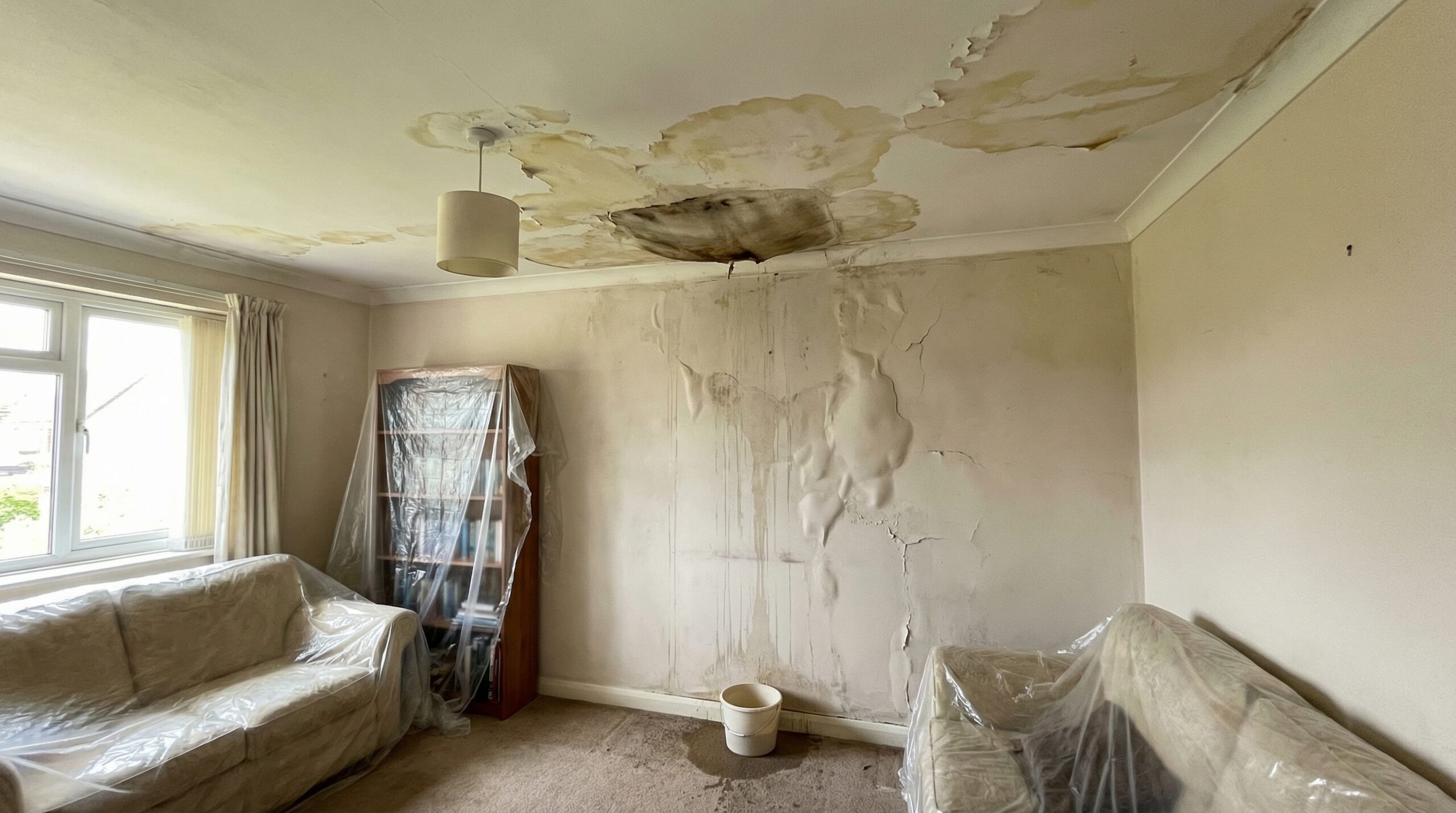
Ice dam damage often starts small and grows over time, making early detection crucial for preventing major repairs. The trapped water behind ice dams doesn’t just sit there – it actively seeks ways into your home through the smallest gaps in your roofing system.
Water damage typically begins at the roof deck and works its way down through insulation, drywall, and into living spaces. You might notice water stains on ceilings or walls, especially near exterior walls. Paint may start bubbling or peeling, and you could detect musty odors indicating mold growth. Understanding common types of roof damage can help you identify ice dam issues early.
Check your attic regularly during winter months for signs of moisture. Wet or compressed insulation near the eaves is a clear warning sign. Ice buildup that persists along roof edges even on sunny days when the upper roof is clear also indicates a problem.
Warning Sign: If you see large icicles forming repeatedly in the same spots along your gutters, this often signals the beginning stages of ice dam formation.
Don’t ignore small leaks or minor water stains. What starts as a few drops can quickly escalate into major structural damage as the ice dam grows larger and traps more water. If you’re experiencing roof leaks after snow, it’s essential to address the issue promptly.
Proven prevention strategies that actually work
Prevention focuses on controlling the heat that causes ice dams in the first place. The most effective approach involves improving your attic’s thermal boundary to keep warm air where it belongs – in your living spaces.
Start by sealing air leaks in your attic floor. Common problem areas include gaps around recessed lights, attic hatches, plumbing penetrations, and ductwork. Use appropriate sealants or weatherstripping to close these pathways for warm air.
Upgrade your attic insulation to current standards. Most Northeast Ohio homes need between R-49 and R-60 insulation levels to combat our severe winters. Proper insulation creates a thermal barrier that prevents heat from reaching the roof deck.
Ensure adequate attic ventilation by maintaining clear soffit vents and ridge vents. This allows cold outside air to flow through the attic space, keeping roof temperatures consistent. Remove any insulation blocking soffit vents and clear debris from ridge vents.
Keep your gutters clean and functioning properly. Clogged gutters can contribute to ice buildup and prevent proper drainage when melting occurs. Consider installing gutter guards to reduce maintenance needs. For comprehensive seasonal care, follow post-winter roof and gutter maintenance best practices.
| Prevention Method | Effectiveness | Cost Range |
|---|---|---|
| Air sealing | High | $200-500 |
| Insulation upgrade | Very High | $1,500-3,000 |
| Ventilation improvement | High | $500-1,200 |
| Gutter maintenance | Medium | $100-300 |
When to call professionals and safety considerations
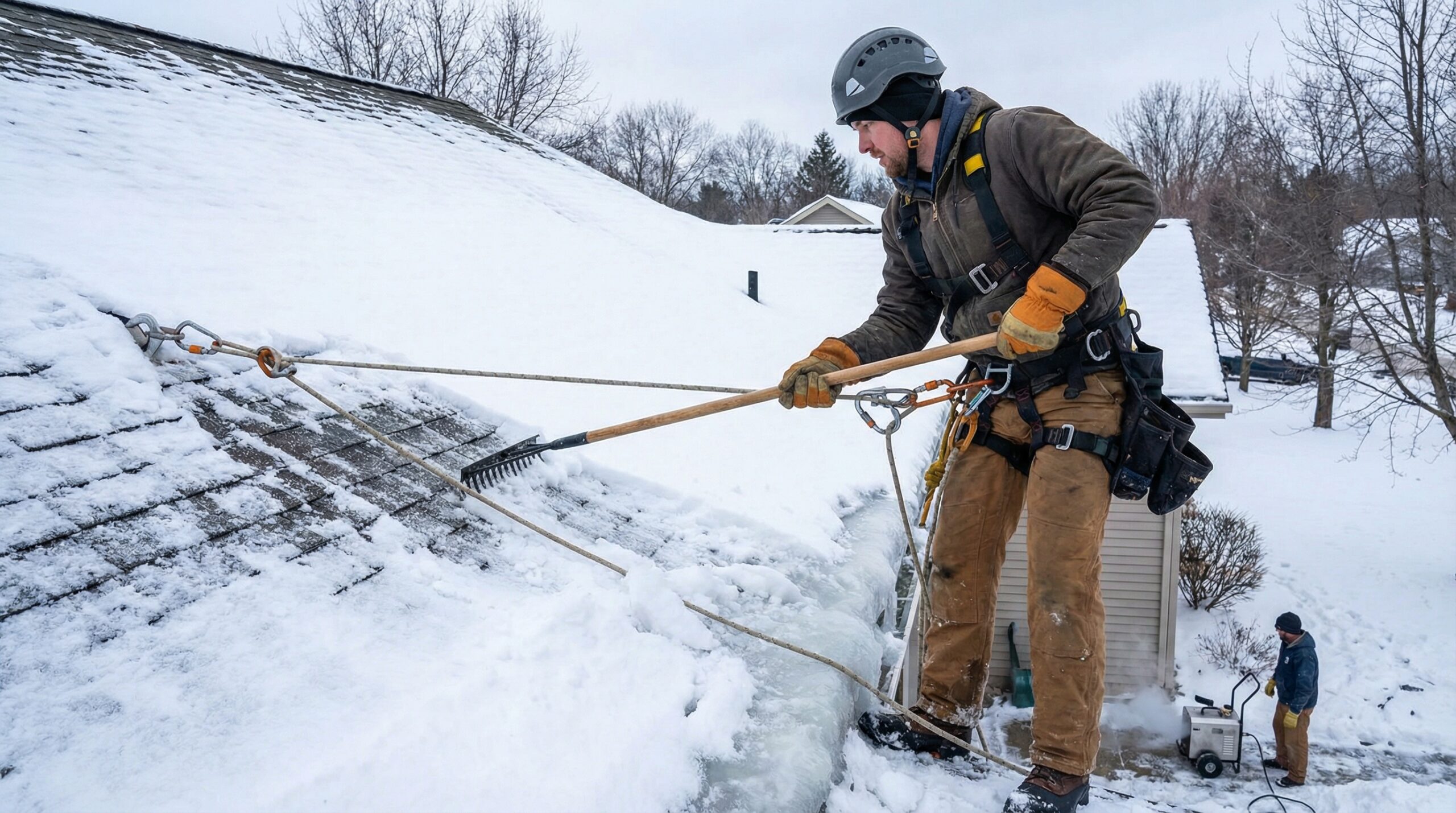
Ice dam removal requires careful consideration of safety risks and potential roof damage. Climbing onto an icy roof or using sharp tools to chip away ice can cause more harm than good, both to yourself and your roofing materials.
Professional removal services use specialized equipment like steam machines that safely melt ice without damaging shingles. They also have the experience to identify underlying issues that contributed to the ice dam formation.
If you notice active leaking or significant ice buildup, contact a roofing professional promptly. Emergency removal may be necessary to prevent further water damage. Document any damage with photos for insurance purposes before removal begins. Learn more about how much roof leak repair costs to budget appropriately.
Safety Reminder: Never attempt to remove ice dams using hammers, axes, or other sharp tools. These methods almost always damage shingles and can create new leak points.
For minor prevention during storms, you can safely remove snow from roof edges using a roof rake from the ground. Focus on the first few feet of snow near the eaves, which reduces the amount of water available for ice dam formation.
Consider scheduling a professional roof inspection if your home has experienced ice dam problems in previous winters. An experienced contractor can identify insulation gaps, ventilation issues, and other factors that contribute to ice dam formation. Understanding the risks of waiting until spring to address winter damage can motivate timely action.
Understanding ice dams and taking preventive action protects your Rocky River home from costly winter damage. Focus on controlling heat loss through proper insulation and air sealing, maintain good attic ventilation, and don’t hesitate to seek professional help when needed. These steps will help ensure your roof performs well throughout our challenging winter seasons.