

Winter in Northeast Ohio brings unique challenges that can silently damage your home’s most critical defense systems. Research shows that 78% of springtime roofing service requests stem from undetected winter damage, with typical repair costs reaching $3,800 when issues go unaddressed. The good news? Early spring inspections can reduce repair costs by 60-70% through prompt intervention.
Northeast Ohio’s lake-effect winds, severe freeze-thaw cycles, and heavy ice dam formation create specific pressures on roofing and gutter systems that demand immediate attention as winter ends. Whether you live inland or own a property right on Lake Erie, understanding what to look for after winter can save you thousands in unexpected repairs.
Key insight: Ice dam damage affects nearly 40% of Northeast Ohio homes each year, making post-winter inspection essential for preventing water intrusion and structural damage.
This guide walks you through the essential steps to assess your roof and gutters after winter, helping you identify damage early and determine when professional help becomes necessary.
Assessing winter damage on your roof
Your roof bears the brunt of Northeast Ohio’s harsh winter conditions, from Lake Erie wind exposure to recurring freeze-thaw cycles. After winter, you need to look for specific damage patterns that indicate potential problems.
Start by examining your shingles from the ground using binoculars. Look for upturned edges, missing granules collecting in gutters, and any misaligned sections. These are telltale signs of wind damage, which contributed to 65% of repair requests in the region last season according to local roofing data.
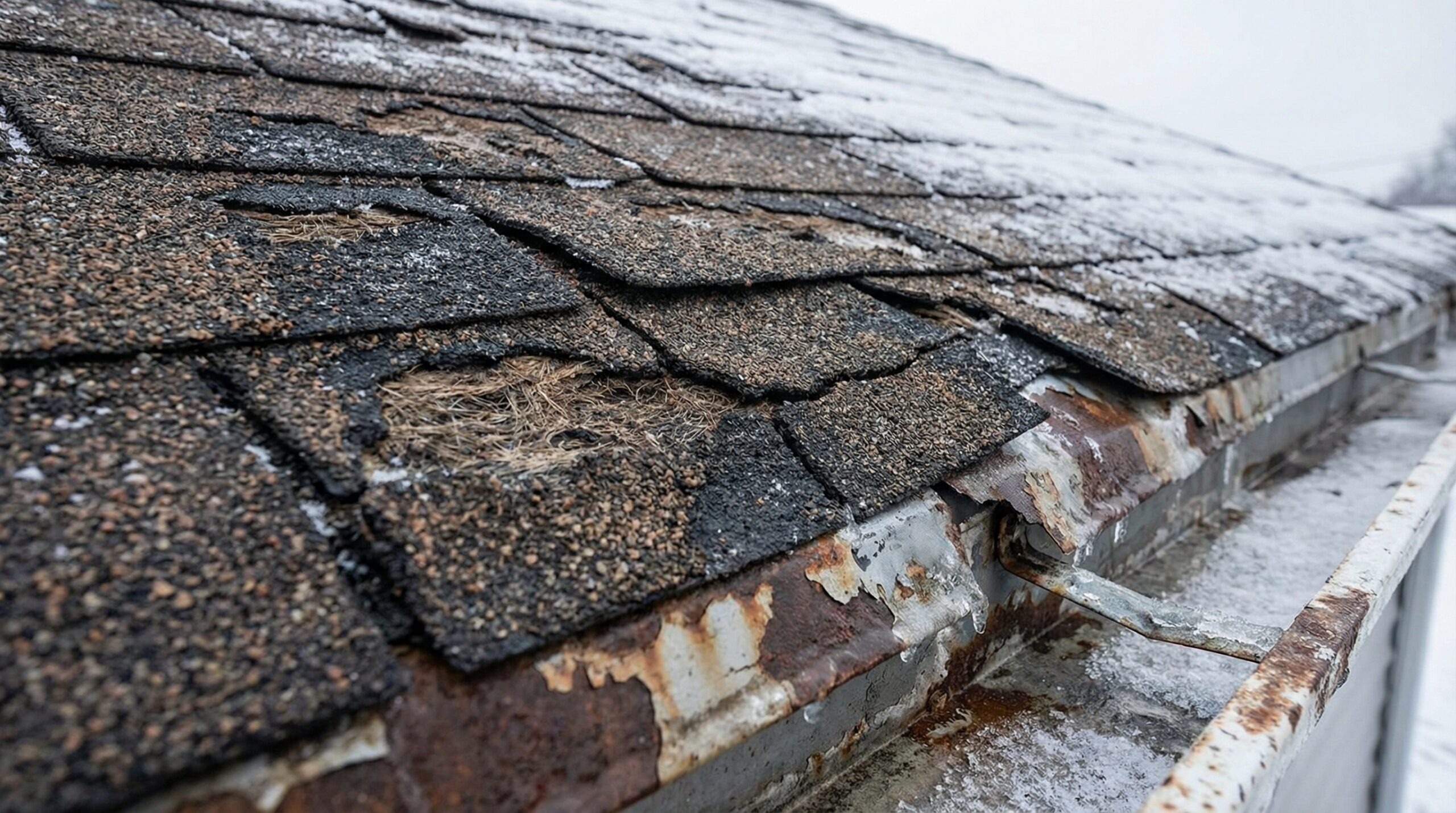
Ice dam formation leaves distinctive evidence even after the ice melts. Check for water stains on soffits, peeling paint beneath rooflines, and any warped sheathing visible in your attic. These moisture marks indicate where trapped water may have penetrated your roofing system. Understanding ice dams on roofs in Northeast Ohio can help you identify the specific patterns of damage they create.
Pay special attention to flashing around chimneys, vents, and skylights. Temperature variations cause these metal components to expand and contract, potentially compromising seals. Look for rust, loose joints, or deteriorating caulk that could allow water penetration. For homes with chimneys, proper chimney roof integration maintenance is crucial to preventing winter damage.
Evaluating your gutter system for spring readiness
Your gutters work overtime during Northeast Ohio’s spring months, which average over 10.5 inches of rainfall between March and May. Winter conditions often leave gutters compromised just when you need them most.
Begin by clearing all accumulated debris, working systematically from downspouts toward the center to avoid pushing blockages into previously cleaned areas. Winter’s freeze-thaw cycles can shift debris and create unexpected clogs that weren’t there in the fall.
Test water flow by running a garden hose through your gutters. This reveals leaks at joints where winter ice may have compromised seals. Check all mounting brackets and fasteners, as ice weight frequently loosens these critical connection points.
Verify that downspouts discharge water at least five feet from your foundation. Spring’s increased rainfall and rapid snowmelt can quickly overwhelm compromised drainage systems, leading to basement flooding or foundation damage.
Important note: Gutters damaged by winter ice often fail during the first major spring storm, making early assessment crucial for preventing water damage to your home’s foundation and interior.
Identifying siding and window vulnerabilities
Winter weather doesn’t just affect your roof – it can compromise your home’s entire exterior envelope. Siding panels expand and contract with temperature changes, potentially creating gaps that allow moisture intrusion.
Walk around your home’s perimeter looking for cracked, warped, or loose siding panels. Pay attention to corners and trim areas where movement is most pronounced. Salt exposure from winter road treatments can accelerate deterioration, especially on properties close to major roadways.
Check all exterior caulking around windows and doors. Cold temperatures make caulk brittle, and winter moisture can cause it to crack or pull away from surfaces. These seemingly small gaps can lead to significant air leaks and water infiltration during spring storms. If you have skylights, don’t overlook fall skylight maintenance practices that apply equally well to spring inspections.
Clean window tracks and test operation of all windows and doors. Winter debris and moisture can cause mechanisms to stick or fail, compromising your home’s weather seal when you need it most.
When to call professionals for inspection
While you can handle basic visual inspections yourself, certain situations require professional evaluation. Homes that experienced heavy snow loads, high winds, or visible damage need expert assessment to determine the full extent of winter’s impact.
Professional inspections become essential for older roofs approaching mid-life, vacation properties left unoccupied during winter, or any home showing signs of water stains or interior moisture. A qualified contractor can identify subtle damage that might not be visible from the ground. If you notice common types of roof damage, professional assessment becomes critical.
Consider professional help if you notice granules in gutters, dark spots on your roof, or any interior signs of moisture. These indicators often point to more extensive damage that requires immediate attention to prevent costly repairs down the road. Understanding the risks of waiting until spring to address winter roof damage emphasizes why prompt action matters.

| Inspection Type | DIY Capability | Professional Needed |
|---|---|---|
| Visual roof check | Yes | If damage found |
| Gutter cleaning | Yes | For repairs |
| Interior moisture signs | Yes | For source identification |
| Structural assessment | No | Always required |
Taking action now protects your investment and ensures your Rocky River home remains secure through spring’s unpredictable weather. Early detection of winter damage allows for timely repairs that cost significantly less than emergency fixes during the next storm season. Whether you handle basic maintenance yourself or schedule professional inspection, addressing winter’s impact before spring arrives gives you peace of mind and protects your home’s long-term value.