If you’re planning a roof project in Ohio, understanding building codes isn’t just helpful—it’s essential. The 2024 Ohio Building Code (OBC), which adopts the International Building Code with state-specific amendments, directly impacts every aspect of your roofing project from materials to installation methods.
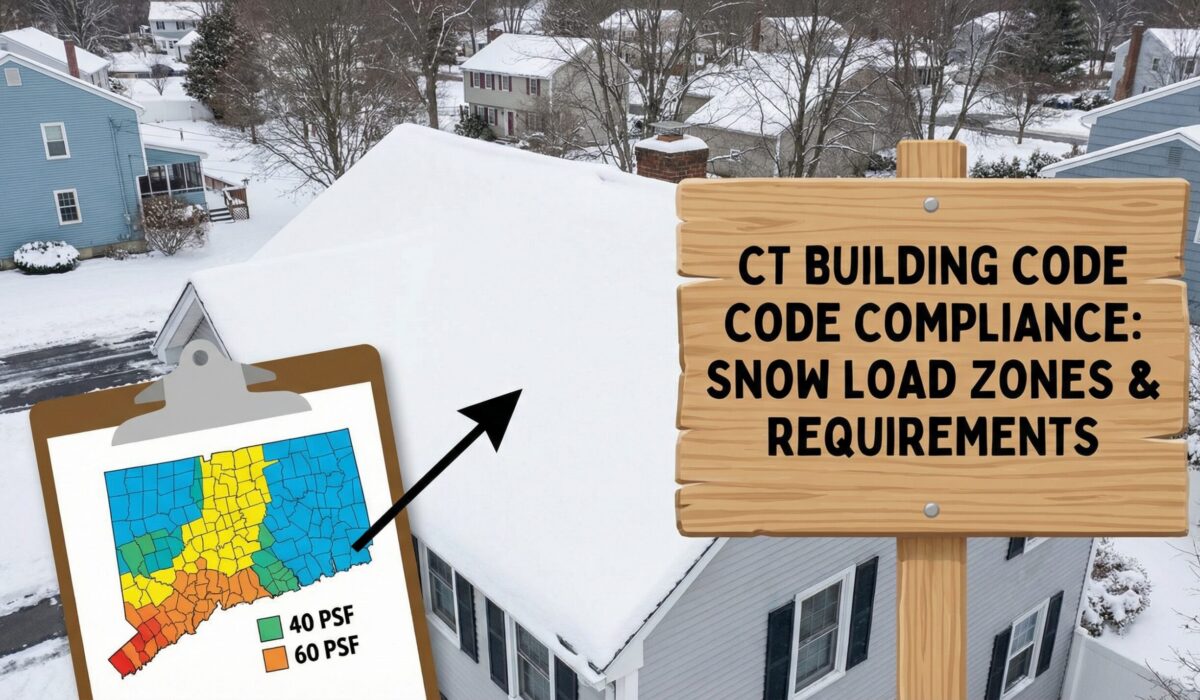
Ohio building codes for roof repairs and replacements exist to protect your home from the region’s harsh weather conditions, including heavy lake-effect snow loads, ice dams, and high winds off Lake Erie. These regulations ensure your roof can handle up to 30 pounds per square foot of snow load in most northern areas, while also requiring specific drainage and ventilation standards.
Quick fact: Ohio requires permits for most roof replacements and major repairs, with specific requirements for ice and water shield installation that differ from milder states due to our severe winter conditions.
Understanding these requirements upfront helps you avoid costly surprises, failed inspections, and potential safety issues. Whether you’re in Rocky River, Westlake, or anywhere else in Northeast Ohio, these codes apply to your project and knowing them protects your investment.
Why Ohio has specific roofing codes
Ohio’s building codes reflect the reality of Northeast Ohio weather patterns. Our region experiences some of the most challenging roofing conditions in the country, from heavy lake-effect snowfall that can exceed 60 inches annually in some areas to severe freeze-thaw cycles that create dangerous ice dams.
The Ohio Department of Commerce building codes specifically address these challenges. The code requires enhanced drainage systems to prevent water backup and mandates specific materials that can withstand freeze-thaw cycles.
These requirements aren’t arbitrary—they’re based on decades of data showing how Northeast Ohio roofs fail. Ice dams alone cause millions in damage annually across the region, which is why our local codes require more extensive ice and water shield coverage than warmer climates.
Your roof must also meet energy efficiency standards that help reduce heating costs during our long winters. This means proper insulation and ventilation requirements that work together to prevent ice dam formation while keeping your home comfortable.
When you need permits for roof work
Most roof replacements in Ohio require permits, but the specific requirements vary by municipality. In Rocky River and most Cuyahoga County towns, you’ll need permits for complete roof replacements, structural repairs, and any work involving decking replacement.
Important note: Even minor repairs may require permits if they involve structural elements, ventilation changes, or modifications to drainage systems.
The permit process typically takes 1-2 weeks and includes plan review and on-site inspections through your local building department. Your contractor should handle this process, but understanding what triggers permit requirements helps you plan your project timeline. Before hiring, review our 13 essential questions to ask your roofing contractor to ensure they’re experienced with Northeast Ohio’s permit requirements.
Repairs that usually require permits include replacing more than 25% of roof decking, adding or modifying ventilation systems, and any structural modifications. Simple shingle repairs or small leak fixes typically don’t require permits, but check with your local building department to be certain.
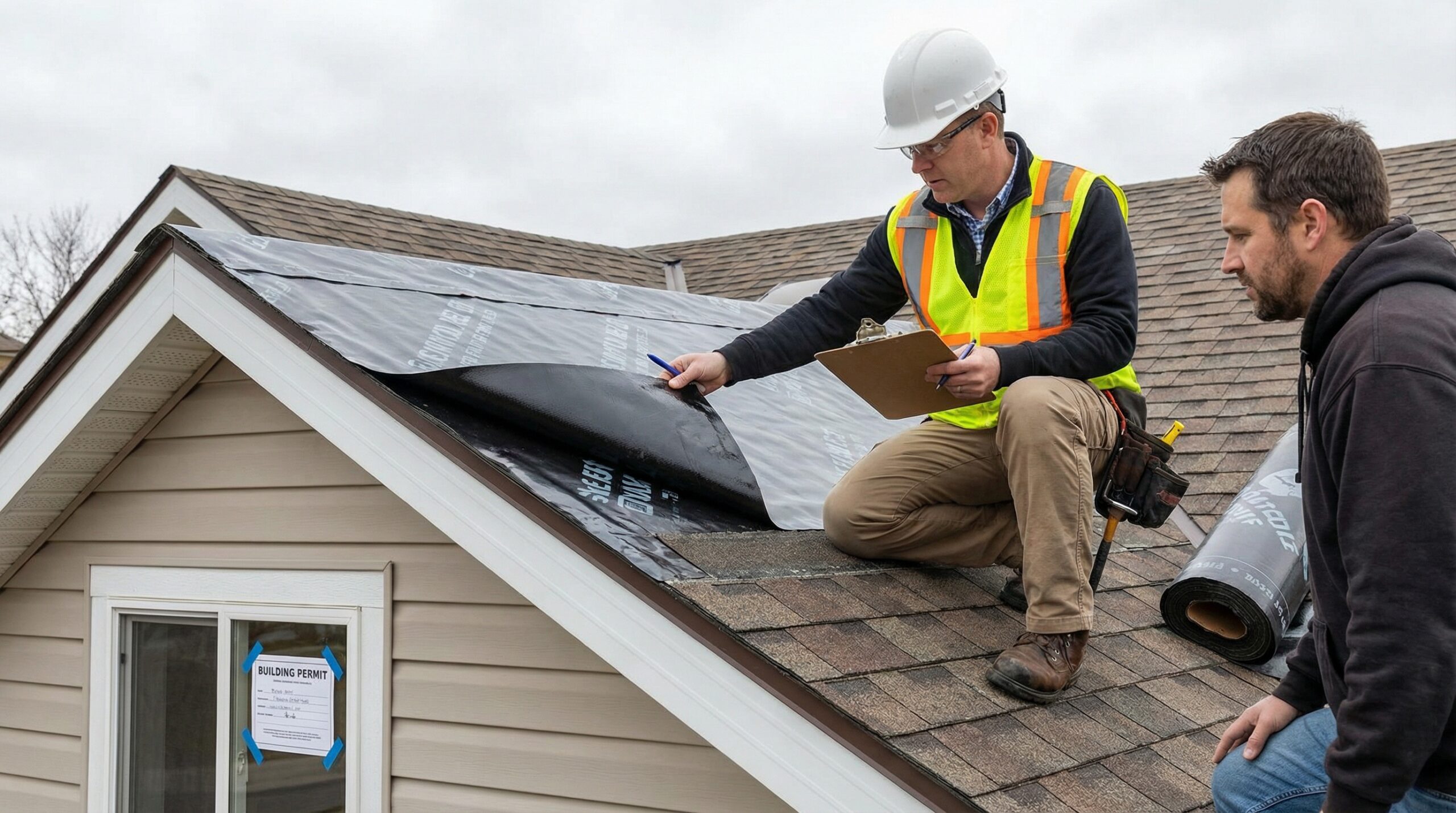
The inspection process includes checking that ice and water shield is properly installed, ventilation meets code requirements, and all materials match approved specifications. Failed inspections can delay your project and require costly rework.
Essential code requirements for Ohio roofs
Northeast Ohio’s most critical roofing code requirements focus on three main areas: ice and water protection, proper ventilation, and structural integrity. Each of these directly addresses our region’s unique weather challenges.
Ice and water shield must be installed along all roof eaves extending at least 24 inches inside the exterior wall line. This requirement goes beyond many other states because Northeast Ohio’s severe freeze-thaw cycles create particularly challenging ice dam conditions. The shield must also cover all valleys and extend 6 inches on both sides.
According to building codes, roof drainage systems must include both primary and secondary drainage to prevent water accumulation. This means your roof needs adequate gutters, downspouts, and emergency overflow protection.
Ventilation requirements specify minimum airflow rates to prevent moisture buildup and ice dam formation. Your roof needs balanced intake and exhaust ventilation, typically achieved through soffit vents and ridge vents. The code requires 1 square foot of ventilation for every 150 square feet of attic space.
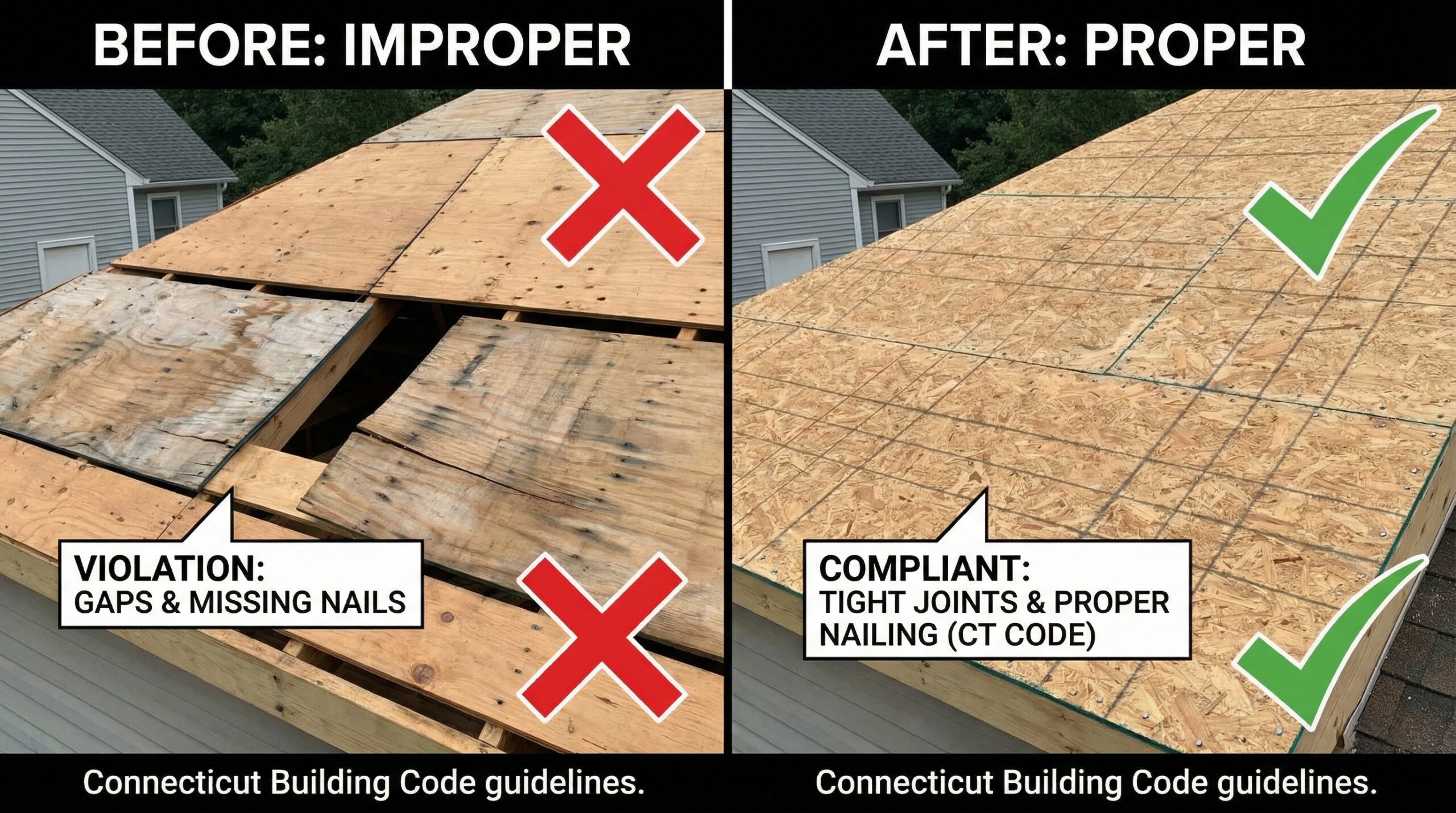
Structural decking must meet specific fastening requirements and load-bearing standards. If your existing decking doesn’t meet current codes, it must be upgraded during replacement even if it appears functional. Understanding the risks of adding a second layer to your roof is crucial, as code compliance often requires complete tear-offs rather than overlays.
| Code Requirement | Minimum Standard | Purpose |
|---|---|---|
| Ice and Water Shield | 24″ from eaves, all valleys | Ice dam prevention |
| Ventilation | 1 sq ft per 150 sq ft attic | Moisture control |
| Snow Load Capacity | 30 lbs per sq ft (northern Ohio) | Structural safety |
| Emergency Drainage | Secondary drains/scuppers | Water backup prevention |
How codes affect your project cost and timeline
Building code compliance adds both time and cost to roofing projects, but these investments protect your home and prevent future problems. Understanding these impacts helps you budget appropriately and avoid surprises.
Material costs increase when codes require premium products like ice and water shield, enhanced ventilation systems, or upgraded decking. However, these materials typically last longer and perform better than minimum alternatives. To better understand your project scope, learn about what a roofing square is and how measurements work.
Labor time extends when contractors must follow specific installation procedures, coordinate inspections, and potentially upgrade systems to meet current standards. A typical roof replacement might take an additional 1-2 days to ensure full code compliance.
Cost reality: Code-compliant projects typically cost 10-15% more upfront but prevent expensive repairs and insurance issues that can cost thousands later.
Inspection scheduling can also affect timelines, especially during busy construction seasons. Your contractor should coordinate inspections in advance and be prepared for potential re-inspections if any issues arise. Weather also plays a role—check out what temperature is too cold to install a roof to understand seasonal limitations.
The alternative—cutting corners on code compliance—creates much larger problems. Non-compliant work can result in failed inspections, required rework, insurance claim denials, and issues when selling your home. These problems far exceed the initial cost of proper compliance. Be sure to avoid roofing scams by working only with locally registered, insured contractors who prioritize code compliance.
Working with experienced local contractors who understand Northeast Ohio’s specific requirements helps minimize both cost and timeline impacts. They know exactly what municipal inspectors look for and can get the job done right the first time. Before making your decision, consider whether DIY or professional roofers are right for your project.
Understanding Ohio building codes for roof repairs and replacements helps you make informed decisions about your roofing project. These requirements exist to protect your home from our region’s challenging weather conditions, and compliance ensures your roof performs reliably for decades. When you work with knowledgeable local contractors who stay current on code requirements, you can be confident your investment is protected and your family stays safe under a properly built roof.