

Planning a roof replacement but worried about the weather? You’re right to be concerned about temperature. Most roofing manufacturers recommend avoiding asphalt shingle installation below 40°F, as cold temperatures make materials brittle and prevent proper sealing. However, understanding the specific risks and solutions can help you make informed decisions about your roofing project, even during colder months.
Quick Answer: The minimum safe temperature for installing asphalt shingles is 40°F. Below this threshold, shingles become brittle, adhesives fail to cure properly, and installation quality suffers significantly.
Whether you’re dealing with an emergency repair or planning ahead, knowing when it’s too cold to roof can save you thousands in future repairs and ensure your investment lasts for decades.
Critical temperature thresholds for different roofing materials
Different roofing materials have varying temperature requirements that directly impact installation success. Understanding these thresholds helps you plan your project timing and avoid costly mistakes.
For asphalt shingles, which make up about 80% of residential roofing, the magic number is 40°F. greatroofing.com confirms this isn’t just contractor preference but manufacturer specification. Below this temperature, the adhesive strips that create watertight seals won’t activate properly.
EPDM rubber roofing requires slightly warmer conditions, with manufacturers recommending a minimum of 45°F for proper installation. The synthetic rubber becomes less flexible in colder temperatures, making it difficult to work with and prone to cracking.
| Material Type | Minimum Temperature | Optimal Range |
|---|---|---|
| Asphalt Shingles | 40°F | 70°F – 80°F |
| EPDM Rubber | 45°F | 50°F – 75°F |
| Metal Roofing | No specific limit | Any dry conditions |
| Slate/Tile | 25°F | 40°F – 70°F |
Metal roofing offers the most flexibility for cold-weather installation. roofingforce.com notes that metal and polymer roofs can be installed in temperatures below 40°F without compromising quality or voiding warranties.
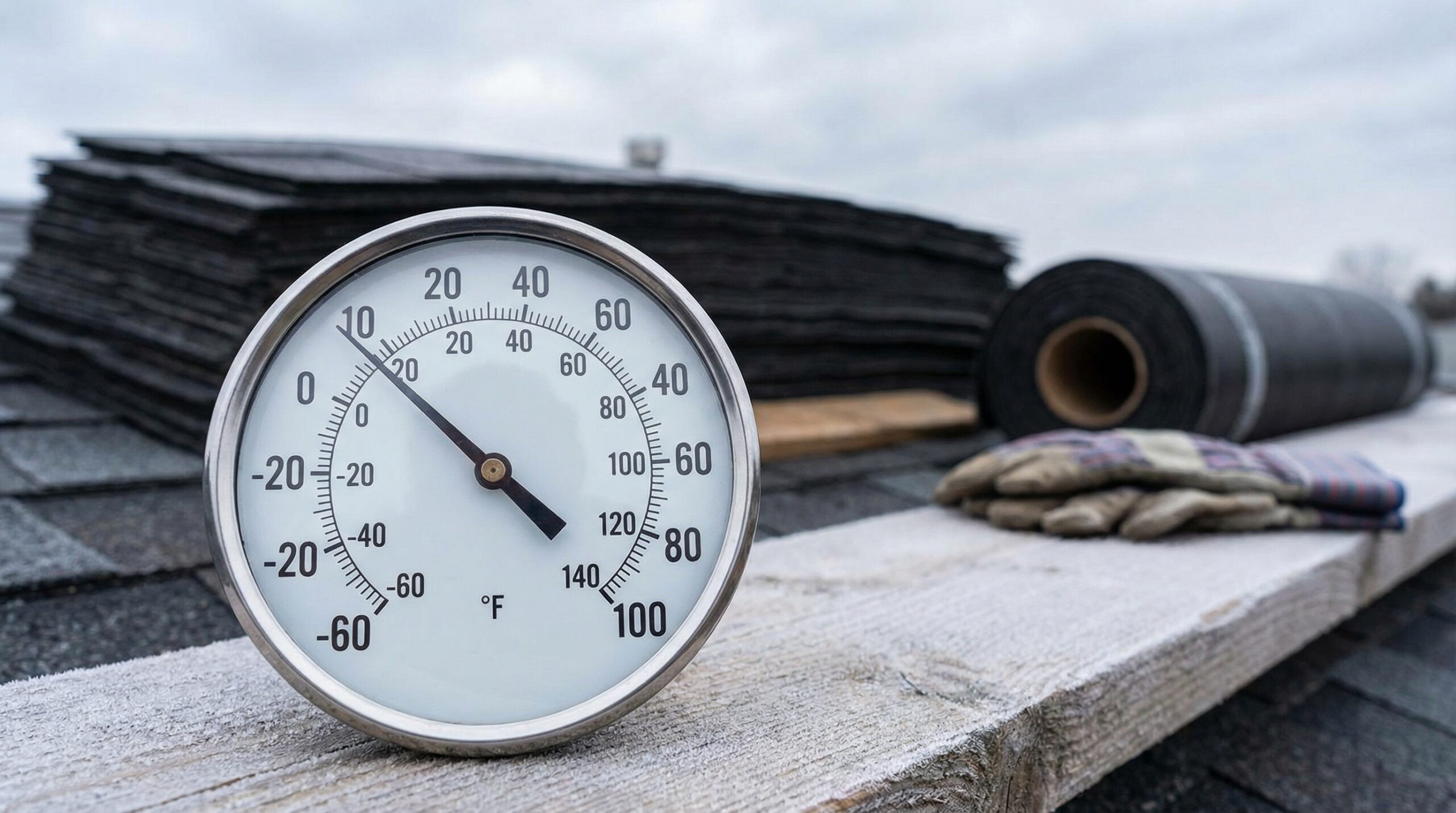
How cold weather affects roofing materials and installation
Cold temperatures create a cascade of problems that can compromise your roof’s performance for years to come. When you understand these issues, you’ll see why waiting for warmer weather often makes financial sense.
Asphalt shingles lose their flexibility as temperatures drop, becoming increasingly brittle. This brittleness makes them prone to cracking during handling, cutting, and nailing. Even minor stress that would be harmless in warm weather can create fractures that allow water infiltration. Understanding how many shingles are in a bundle can help you calculate material waste when cold weather increases breakage rates.
The adhesive strips on shingles rely on thermal activation to create proper seals. charlotteroofing.com explains that these strips need warmth to become tacky and bond effectively. In cold weather, this bonding process is delayed or may never occur properly, leaving your roof vulnerable to wind damage.
Important Note: Shingles installed in cold weather may not seal for months, leaving them susceptible to wind uplift and potential blow-offs during storms.
Worker safety becomes a significant concern as temperatures drop. Icy surfaces, reduced dexterity from cold, and the need for additional safety equipment all slow down the installation process. This extended timeline increases labor costs and extends your home’s exposure to the elements.
Cold weather also affects tools and equipment. Nail guns may not function properly in freezing temperatures, requiring manual hammering that increases installation time and the risk of material damage.
Essential cold-weather roofing strategies
When emergency repairs can’t wait for spring, proper preparation becomes crucial for successful cold-weather roofing. These strategies help minimize risks while maintaining installation quality.
Material preparation starts before the crew arrives. Storing shingles in heated areas until just before installation helps maintain their flexibility. Some contractors use hot boxes on-site to keep materials at workable temperatures throughout the project.
lyndseyroofing.com recommends scheduling work during the warmest part of the day, typically between 10 AM and 3 PM when surfaces have had time to warm up. Even a few degrees can make a significant difference in material handling. This is one of the key benefits of scheduling a roof inspection in winter to assess whether immediate work is necessary.
Hand-sealing becomes necessary when thermal activation isn’t possible. This involves applying roofing cement under shingle tabs at regular intervals. While this adds labor time and cost, it provides the immediate protection that thermal sealing would normally offer.
Safety measures must be enhanced for cold-weather work. This includes additional fall protection, ice removal from work surfaces, and marking hidden hazards like skylights that may be obscured by snow.
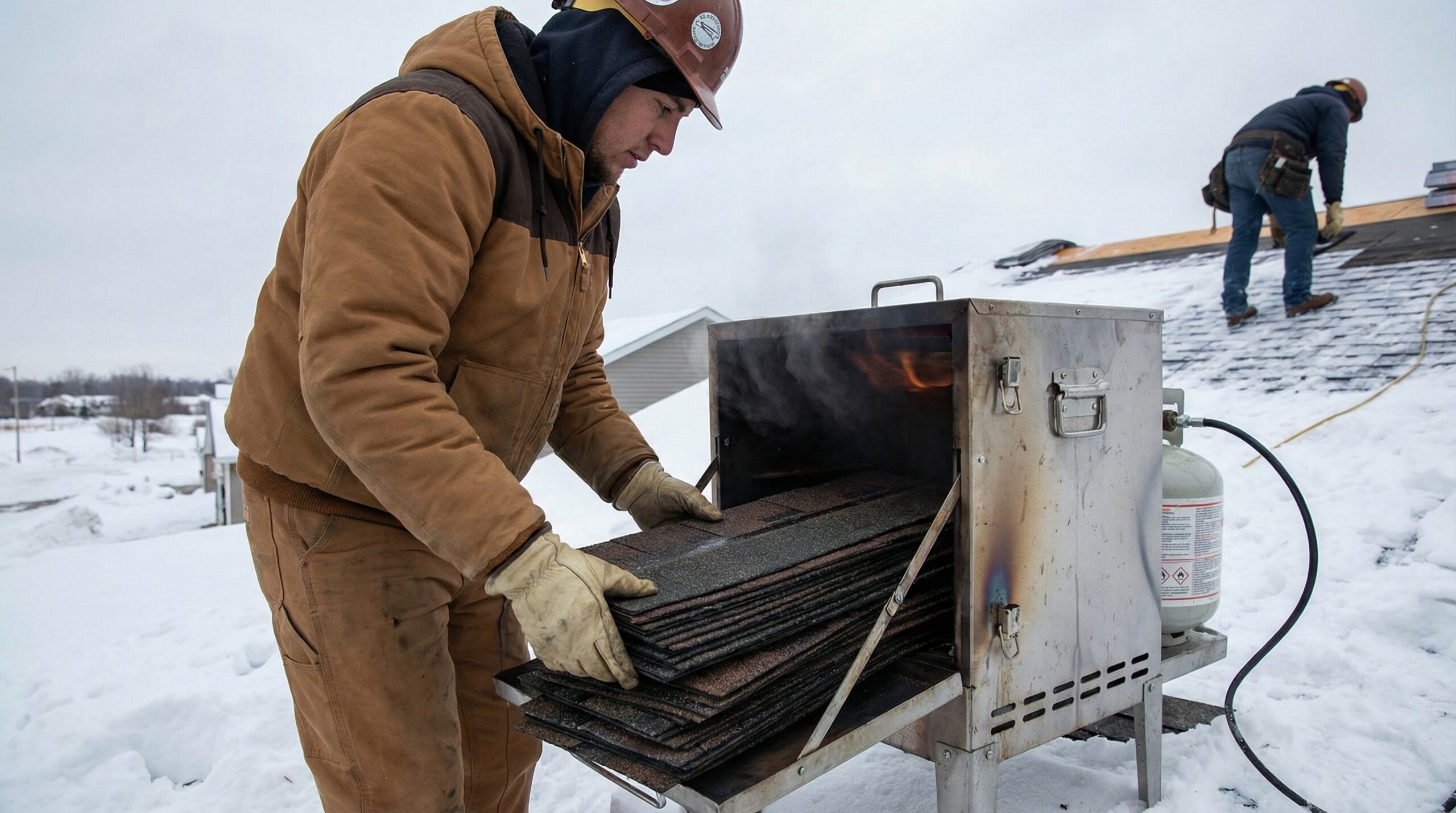
When to wait versus when to proceed with winter roofing
Deciding whether to proceed with winter roofing requires balancing urgency against long-term performance. Understanding when to wait and when immediate action is necessary protects both your home and your investment.
Emergency situations that require immediate attention include active leaks causing interior damage, missing shingles exposing the roof deck, or structural damage from fallen trees. In these cases, temporary repairs or emergency installations may be necessary despite cold temperatures. Before making this decision, consider scheduling a comprehensive roof inspection to fully assess the damage.
Cost Consideration: Winter roofing typically costs 10-20% more due to additional safety measures, slower work pace, and material preparation requirements.
For planned replacements, waiting for temperatures consistently above 40°F ensures optimal installation conditions. roofingcontractorparrottsville.com suggests that spring and fall offer the best combination of favorable temperatures and contractor availability. Understanding the lifetime of a roof and when to replace it helps you plan your project timeline appropriately.
Consider alternative materials for winter installations. Metal roofing, slate, and certain specialized shingles like TAMKO’s Titan XT SBS Modified can be installed in temperatures as low as 25°F without voiding warranties.
The decision ultimately depends on your specific situation. A minor leak might be manageable with temporary repairs until spring, while major damage may require immediate professional intervention regardless of temperature. When choosing a contractor for winter work, make sure to ask the right questions to ensure they have experience with cold-weather installations.
Understanding temperature thresholds for roof installation helps you make informed decisions about timing your project. While 40°F represents the minimum for asphalt shingles, optimal conditions occur between 70°F and 80°F. When emergency repairs can’t wait, proper preparation and realistic expectations about costs and timelines ensure the best possible outcome. Consider whether DIY or professional roofers are better suited for your specific winter roofing needs. At Peak and Valley Roofing, we help homeowners navigate these decisions with expert guidance tailored to your specific situation and local climate conditions.