

When you notice your roof starting to dip or bow, you’re probably wondering if it’s a normal settling issue or something more serious. According to saratogaroofingco.com, any sag visible from 20 feet away warrants immediate inspection, while aaroof.net states that professionals typically consider sag problematic once it reaches 0.25 inches per ten feet of roof span.
The quick answer is that minor sag under half an inch may be acceptable in older homes, but anything over 1 inch per 10 feet of span requires immediate professional evaluation. However, the real concern isn’t just the measurement but whether the sag is getting worse over time.
Key Insight: Building codes require modern roofs to support a minimum 20 PSF live load without bowing. If your roof can’t meet this standard, the deflection becomes a serious safety hazard.
What causes roof sagging and why it matters
Roof sagging happens when your roof’s structural support system begins to fail or becomes overloaded. Think of it like a bridge that’s carrying too much weight – eventually, something has to give.
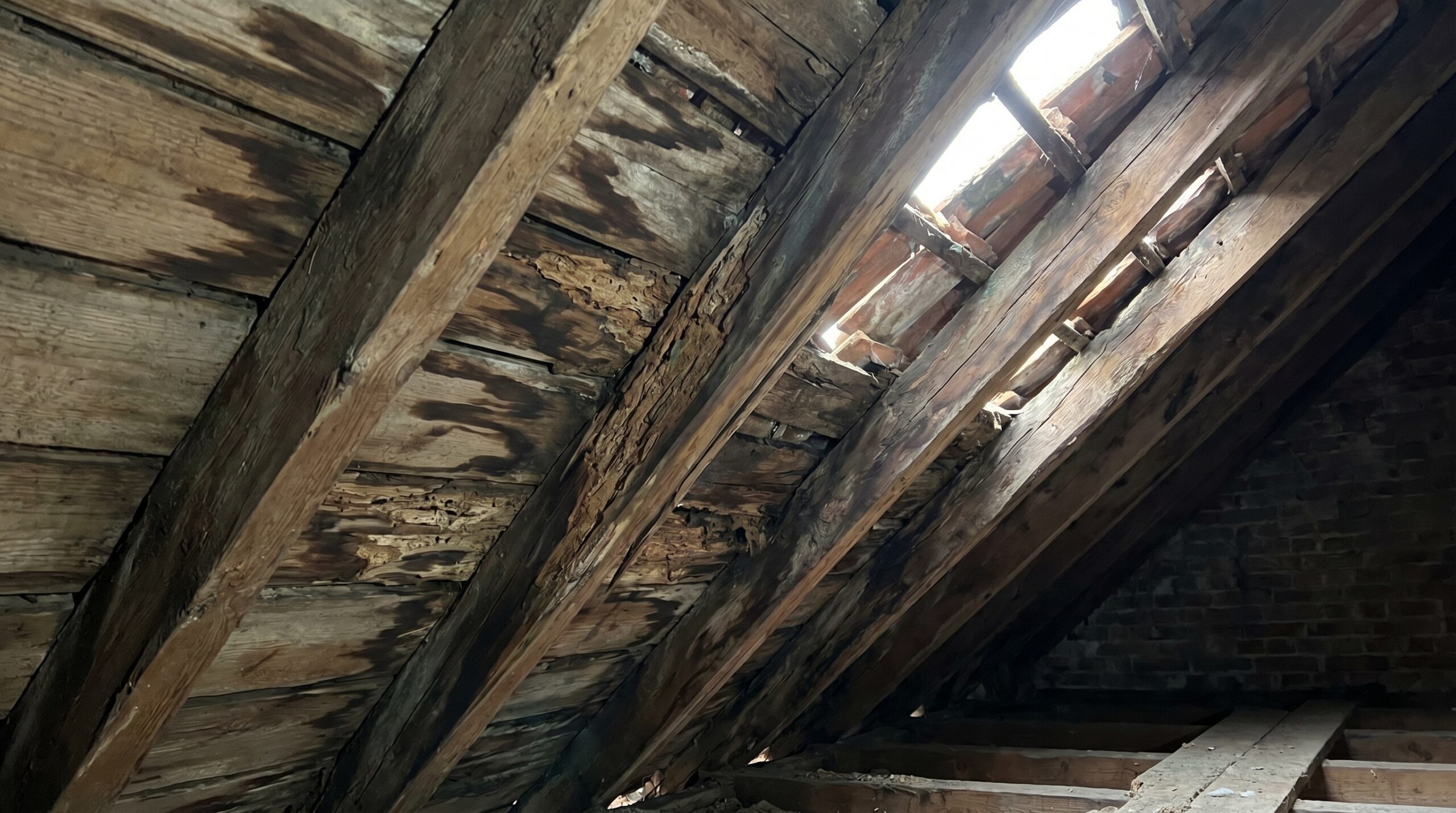
The most common culprits include water damage that weakens wooden rafters, excessive snow loads that exceed your roof’s design capacity, and aging materials that have lost their structural integrity over decades of use. In Northeast Ohio, our harsh winters with heavy snow loads and freeze-thaw cycles put additional stress on roofing systems, making regular inspections even more critical. nationalroofrepairauthority.com explains that structural sagging involves permanent deformation in framing members, which is different from surface waviness you might see with loose shingles.
Understanding the cause helps determine urgency. A roof sagging from recent heavy snow might be temporarily overloaded but structurally sound, while one sagging from years of water damage could be on the verge of collapse.
How to measure if your roof sag is dangerous
You can get a rough idea of your roof’s condition by standing back about 50 feet and looking along the roofline. According to inspectapedia.com, structural engineers use the L/360 rule, where maximum allowable deflection equals the span length divided by 360.
For a basic check, you can use a long straight board or pull a string line across the suspected sag area. Measure the distance from your straight line to the lowest point of the dip. If this measurement exceeds the span length divided by 360, you’re looking at a structural problem that needs professional attention.
Here’s a simple reference table for common roof spans:
| Roof Span | Maximum Safe Deflection (L/360) | Immediate Concern Level |
|---|---|---|
| 10 feet | 0.33 inches | Over 1 inch |
| 15 feet | 0.5 inches | Over 1.5 inches |
| 20 feet | 0.67 inches | Over 2 inches |
| 25 feet | 0.83 inches | Over 2.5 inches |
Remember, these are rough guidelines. Any visible change in your roofline over time is more concerning than the absolute measurement.
Safety Warning: Never walk on a visibly sagging roof. The structural integrity is already compromised, and additional weight could trigger a collapse.
When roof sag becomes a structural emergency
saratogaroofingco.com warns that any visible sag greater than 1 inch per 10 feet of span requires immediate inspection to prevent collapse. But there are other warning signs that indicate your roof sag has moved from cosmetic to dangerous.
If doors and windows inside your home start sticking or won’t close properly, your roof sag is causing active structural movement throughout your house. This means the problem has progressed beyond the roof itself and is affecting your home’s entire frame.
Water stains appearing on ceilings, especially if they’re getting larger or darker, suggest ongoing moisture damage that’s weakening your roof structure from the inside. jackcwilsonroofing.com notes that water damage can compromise your entire home structure, not just the roof itself.
Creaking or popping sounds from your roof or attic, especially during temperature changes or wind, indicate that structural members are under stress and potentially failing. Cleveland area homeowners should be particularly alert to these sounds during our dramatic seasonal temperature swings.

Your next steps for dealing with roof sag
If your measurements and observations suggest your roof sag falls within acceptable limits, you should still monitor the situation closely. Take photos from the same vantage point every few months to track any changes. Even minor sag can worsen quickly under the right conditions.
For moderate sag that exceeds safe limits but isn’t immediately dangerous, contact a roofing professional for a thorough inspection. They can determine whether reinforcement, partial replacement, or other repairs might solve the problem before it becomes critical.
When sag is severe or accompanied by other warning signs, treat it as an emergency. nationalroofrepairauthority.com emphasizes that structural sagging requires engineering assessment and often permit-required repairs involving licensed contractors.
The key is acting before your roof reaches the point of no return. A sagging roof that collapses doesn’t just damage your property – it can seriously injure or kill anyone inside your home.
Understanding how much roof sag is acceptable helps you make informed decisions about your home’s safety and your family’s wellbeing. When in doubt, always err on the side of caution and consult with professionals who can properly assess your specific situation.
About Peak and Valley Roofing
Peak and Valley Roofing specializes in structural roof assessments and sagging roof repairs throughout Rocky River, Cleveland, and Northeast Ohio. As a family-owned company, we understand the difference between normal settling and dangerous structural failure, providing honest evaluations and effective solutions without pressure. Our team has extensive experience with insurance restoration work, helping homeowners navigate claims for storm-damaged roofs that may be causing structural issues. If you’ve noticed roof sagging or other structural concerns, contact us for a comprehensive inspection and expert recommendations tailored to your specific situation.