

If you’re considering slate roofing for your home, you’re facing a choice between authentic natural stone and modern engineered alternatives. Real slate offers unmatched authenticity and century-long durability but comes with significant weight and cost challenges. Synthetic slate provides the same visual appeal with improved impact resistance and easier installation at roughly half the price.
Quick Answer: Synthetic slate costs $8-12 per square foot installed versus $15-25+ for real slate, weighs 70% less, and offers Class 4 impact ratings while maintaining authentic slate appearance.
Both options deliver the timeless beauty that makes slate roofing so desirable, but they serve different needs and budgets. Understanding their key differences helps you choose the right material for your specific situation.
What makes real slate roofing unique
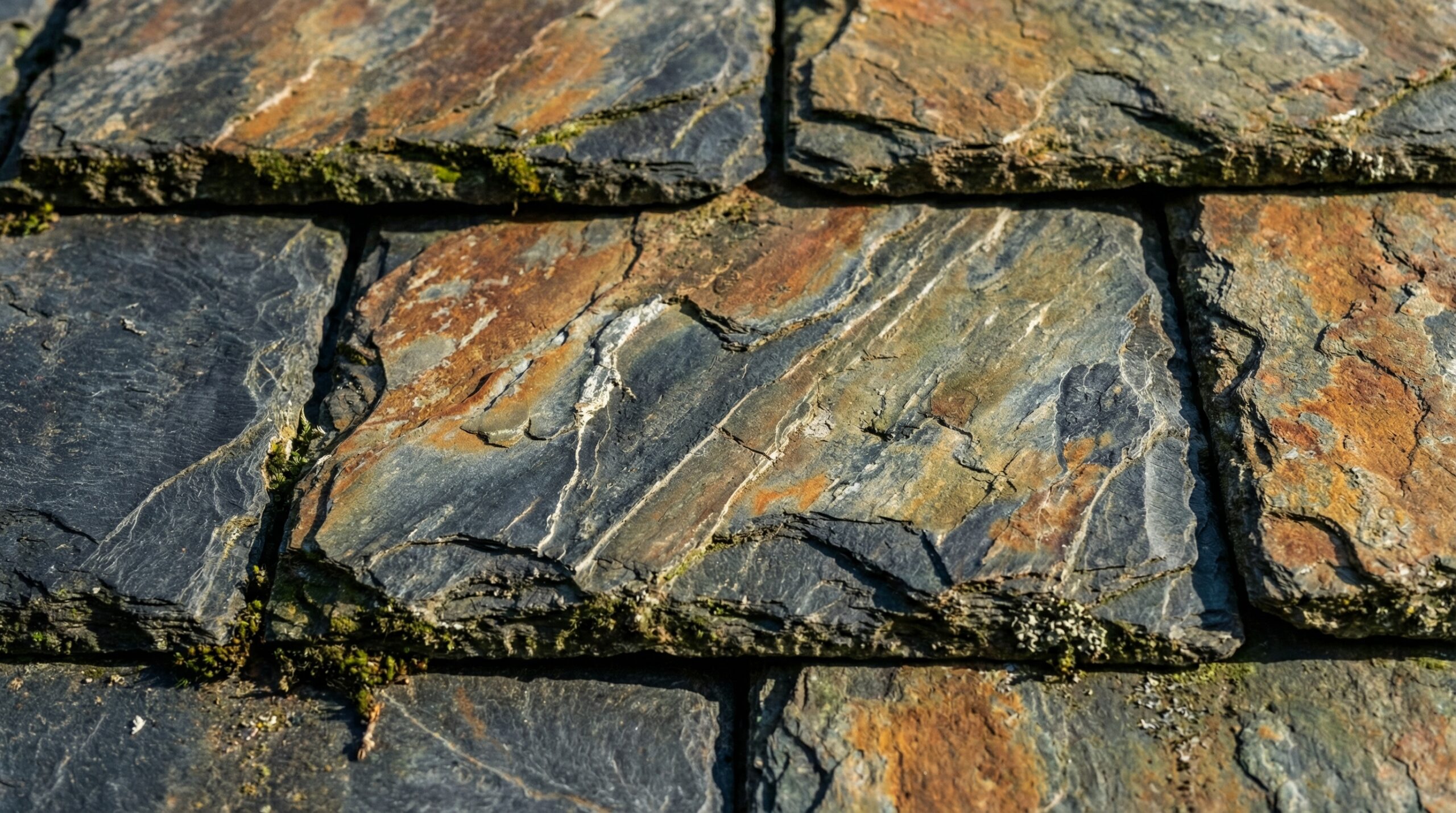
Real slate comes from quarried natural stone that’s split and shaped into individual tiles. This creates the authentic variations in color, texture, and thickness that give slate its distinctive character.
The material offers exceptional longevity, with properly installed slate roofs lasting 75-150 years. Natural slate is also fire-resistant and develops an attractive patina over time as it weathers.
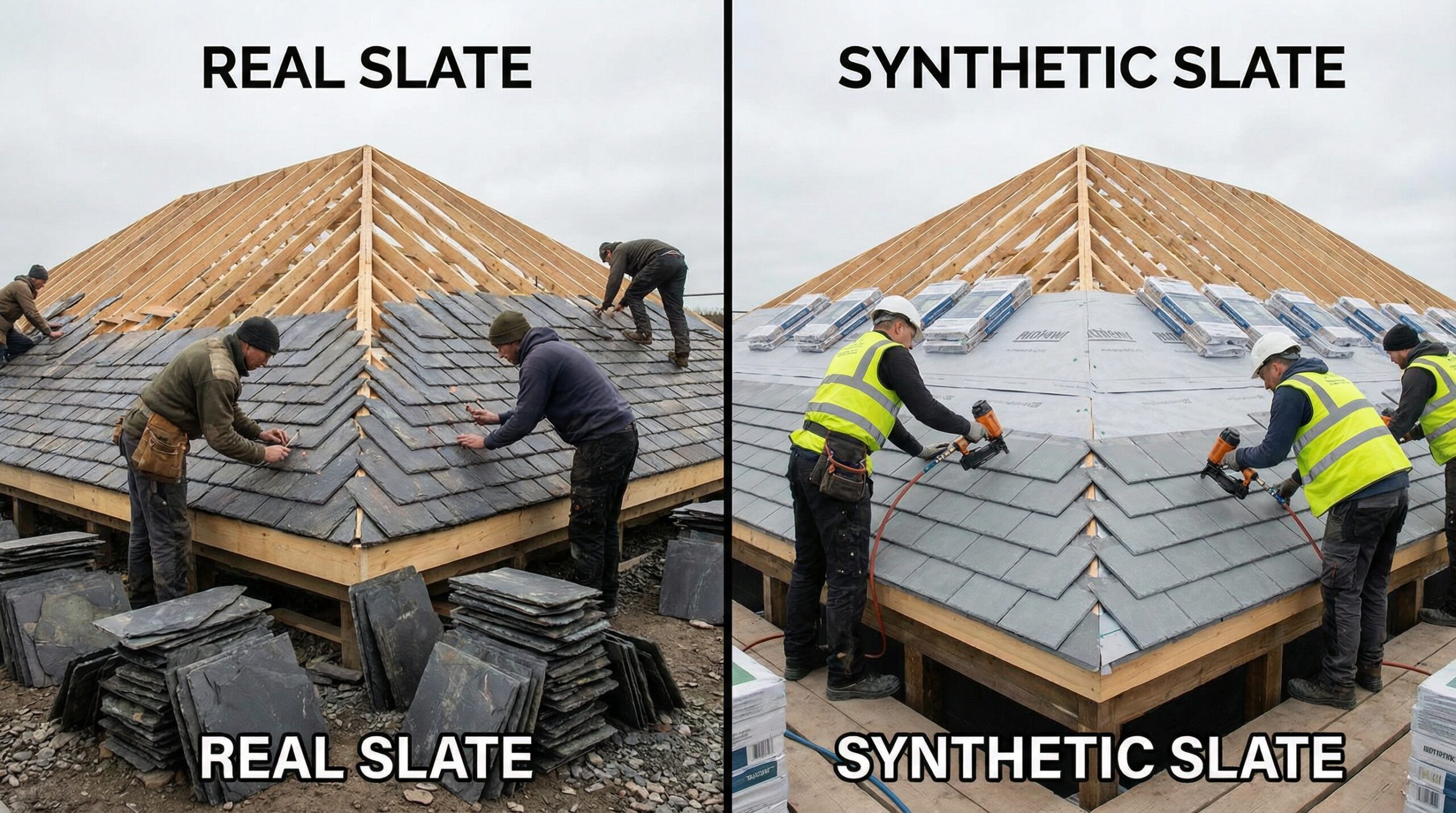
However, real slate presents significant challenges. Each roofing square (100 square feet) weighs 800-1,500 pounds, requiring structural assessment of your roof decking and often reinforcement on older homes. The material is brittle and can crack under impact from falling branches or foot traffic.
Finding qualified slate installers has become increasingly difficult, and repairs require specialized skills that command premium pricing. Storm damage often means waiting weeks for repairs while specialty crews become available.
How synthetic slate delivers authentic looks with modern performance
Synthetic slate uses engineered materials like virgin resins, recycled plastics, and polymers to replicate natural slate’s appearance. Advanced manufacturing creates realistic texture, shadow lines, and dimensional surfaces that closely match quarried stone.
From street level, high-quality synthetic slate is virtually indistinguishable from real slate. The tiles feature varied widths, chisel-like textures, and natural-looking color blends that maintain the aesthetic appeal homeowners want.
Performance-wise, synthetic slate often exceeds natural slate capabilities. Most premium products carry Class 4 impact ratings, meaning they resist damage from hail and debris that would crack real slate. Wind resistance typically reaches 110+ mph when properly installed.
Key Advantage: Synthetic slate weighs only 275-311 pounds per roofing square compared to 800-1,500 pounds for real slate, eliminating most structural concerns.
Installation uses standard roofing techniques rather than specialized slate methods, making qualified contractors easier to find and reducing labor costs. Proper installation requires quality roof underlayment and starter shingles to ensure long-term performance.
Cost comparison and long-term value
Real slate represents the highest upfront investment in roofing materials. Material costs range from $15-25+ per square foot installed, with additional expenses for structural assessment and potential reinforcement.
The specialized labor requirement adds significant cost and timeline challenges. Slate installation typically takes 2-3 times longer than standard roofing, and finding experienced crews can delay projects by weeks or months.
Synthetic slate costs $8-12 per square foot installed, roughly 40-50% less than real slate. The material uses standard installation methods, reducing labor costs and timeline requirements. When comparing roofing materials for durability, synthetic slate offers excellent value.
Long-term maintenance costs favor synthetic slate as well. Real slate requires specialty repairs that can cost $200-500 per damaged tile, while synthetic slate repairs use standard techniques and materials. Understanding what should be included in a detailed roofing estimate helps you compare costs accurately.
Choosing the right option for your home
Your decision between real and synthetic slate depends on several key factors that affect both performance and cost.
Choose real slate if you prioritize absolute authenticity, plan to stay in your home for decades, and have the budget for premium materials and specialized maintenance. Historic homes in designated districts may require real slate to maintain architectural integrity, particularly when working with copper roofing and flashing on heritage properties.
Synthetic slate works better when you want slate’s appearance without the weight, cost, or maintenance challenges. It’s ideal for homes that need structural efficiency, faster installation, or better storm resistance. For homeowners interested in impact-resistant roofing materials, synthetic slate provides superior protection.
Consider your local climate as well. Areas with frequent severe weather favor synthetic slate’s impact resistance, while stable climates allow real slate’s longevity advantages to shine.
Both materials can increase your home’s value, but synthetic slate offers better return on investment for most homeowners. The combination of lower initial cost, reduced maintenance, and authentic appearance makes it an increasingly popular choice for those seeking slate’s timeless appeal.
Working with experienced contractors who understand both materials ensures proper installation and helps you make the choice that best fits your home’s needs and your long-term goals. Understanding the expected lifespan of different roofing materials can help inform your decision between real and synthetic slate options.