

Your roof is showing serious wear, but a complete replacement could cost $15,000 or more. Is there a faster, cheaper alternative? Yes—roof overlays might save you thousands upfront, but they come with important trade-offs you need to understand before deciding.
A roof overlay typically costs 30-40% less than a complete tear-off, ranging from $3,000 to $8,000 compared to $8,000 to $15,000 for full replacement. However, overlays generally last only 15-20 years versus 25-30 years for tear-offs, and they can reduce your home’s resale value.
Quick Fact: Overlays can save you $50-$100 per square foot initially but typically last only half as long as a proper tear-off.
This guide breaks down the real costs, benefits, and decision factors so you can choose the option that makes the most financial sense for your situation.
What is a roof overlay and how does it work
A roof overlay involves installing new shingles directly over your existing roof without removing the old materials. Think of it like putting a new shirt over an old one—you get fresh protection on top, but everything underneath stays the same.
During an overlay, contractors secure new shingles over your current roof surface, creating a dual-layer system. This eliminates the need for extensive material removal, disposal fees, and the labor-intensive demolition phase that comes with tear-offs.
However, overlays only work under specific conditions. Your roof must have just one existing layer of shingles, the structure must be sound enough to handle additional weight, and local building codes must permit it. Most jurisdictions limit homes to a maximum of two shingle layers.
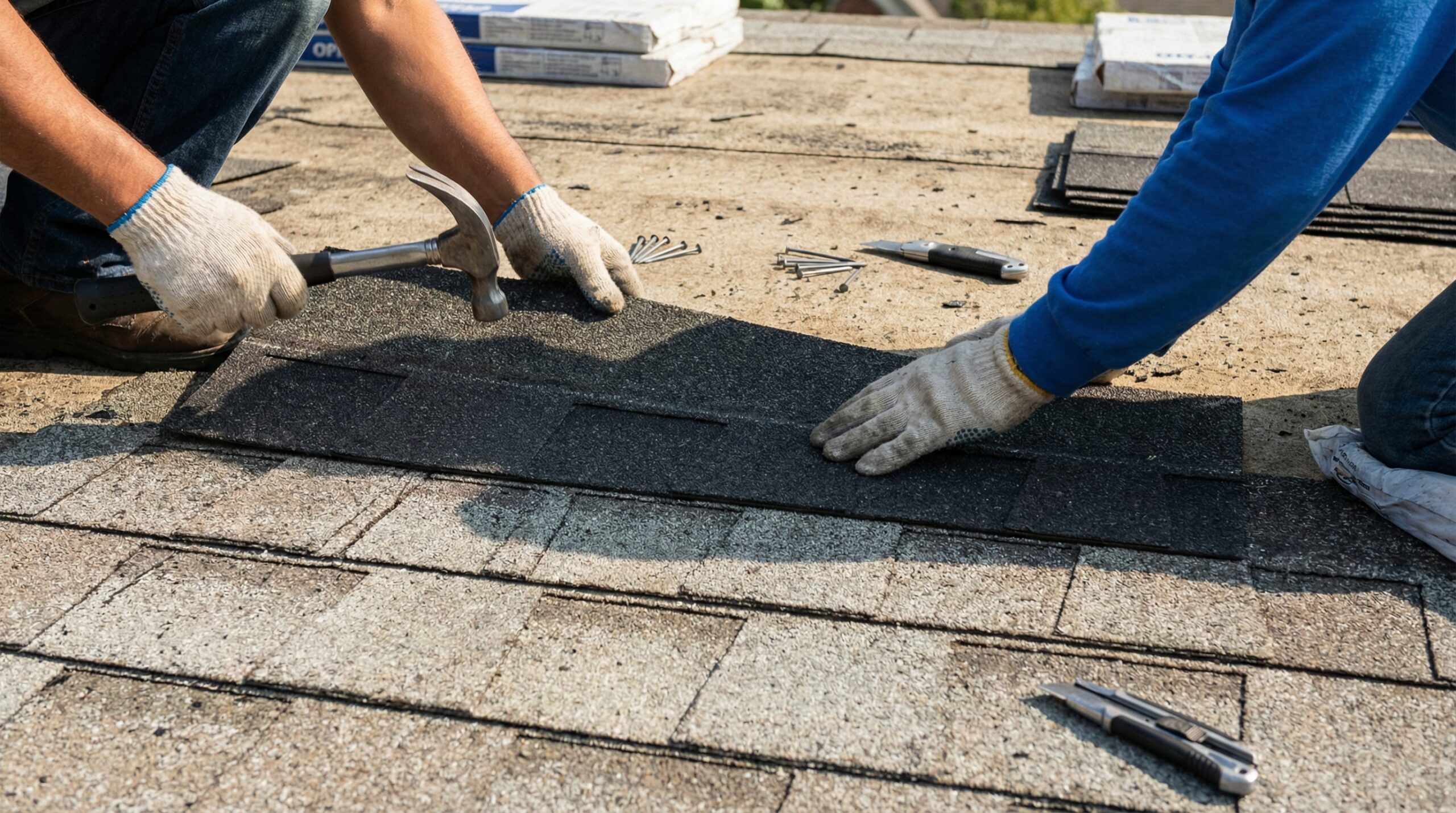
The process typically takes 1-2 days compared to 5-7 days for a complete tear-off, making it appealing for homeowners who need quick protection or can’t afford extended construction disruption.
Cost breakdown and comparison
The financial difference between overlays and tear-offs extends beyond the initial price tag. Here’s what you can expect to pay in 2026:
| Factor | Roof Overlay | Roof Tear-Off |
|---|---|---|
| Average Cost | $3,000-$8,000 | $8,000-$15,000 |
| Labor Savings | 40-50% less | Standard rates |
| Disposal Fees | None | $500-$2,000 |
| Timeline | 1-2 days | 5-7 days |
The overlay savings come primarily from eliminated labor costs for removal and reduced disposal fees. mcclellandsroofing.com notes that material expenses remain similar between both methods, but labor costs decrease substantially since workers skip the demolition phase.
However, the long-term financial picture changes when you consider lifespan differences. An overlay lasting 15 years costs roughly $200-$530 per year, while a tear-off lasting 25-30 years costs $270-$600 per year—making the annual cost difference less dramatic than the upfront savings suggest.
Important Consideration: Peak and Vallley Roofing warns that overlays can reduce your home’s resale value, as potential buyers know they’ll face higher removal costs when the roof needs replacement again.
Understanding how long roof replacement takes can help you plan your project timeline and budget accordingly.
Advantages and disadvantages you need to know
Roof overlays offer compelling short-term benefits but come with significant long-term trade-offs that affect both performance and value.
The main advantages include immediate cost savings, faster installation, and minimal disruption. You’ll avoid the mess and debris associated with tear-offs, and the project can often be completed over a weekend. For businesses, this means no lost revenue from extended closures.
However, the disadvantages can be substantial. Overlays add significant weight to your roof structure, potentially stressing older framing systems. The extra layer traps heat, causing new shingles to deteriorate faster and reducing their expected lifespan by up to 20%, according to newenglandmetalroof.com.
Maintenance becomes more complex with two shingle layers. If you develop a leak, water can move through both layers, making it harder to locate the source. Additionally, many manufacturers void or limit warranties when shingles are installed over existing layers.
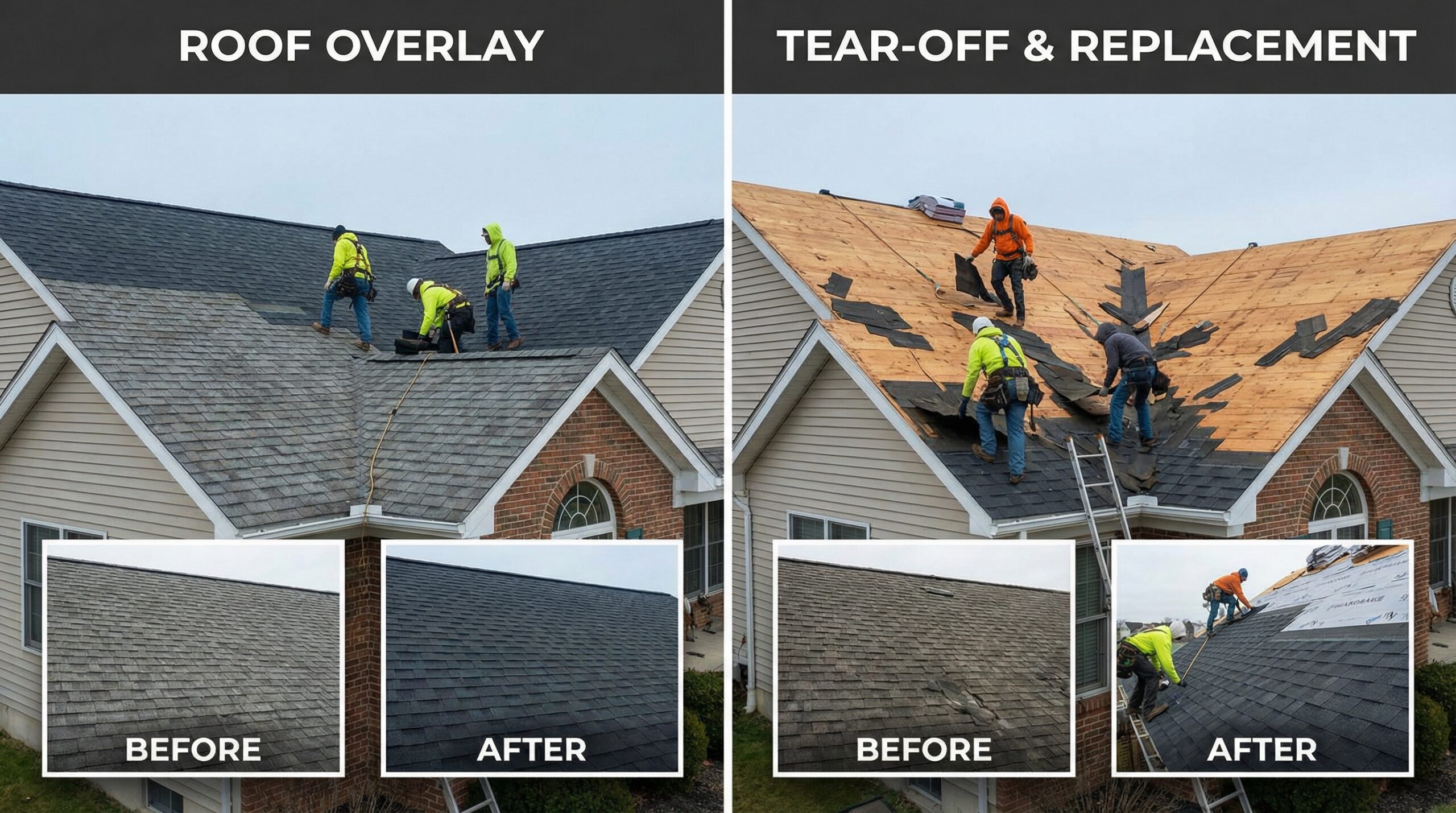
The hidden damage factor is perhaps most concerning. Since overlays don’t expose the roof deck, problems with underlayment, flashing, or structural components remain undetected and can worsen over time. Learning how to spot poor roof installation can help you identify issues before they become major problems.
When to choose overlay versus tear-off
The decision between overlay and tear-off depends on your roof’s current condition, your financial situation, and your long-term plans for the property.
Choose an overlay if your roof has only one layer of shingles, the structure is sound, and you’re facing budget constraints but need immediate protection. roofingcenter.com suggests overlays work best when current shingles are relatively flat without severe curling or buckling.
Overlays also make sense for business owners who would lose more money from extended closures than they’d save with a tear-off, or if you’re planning to sell within 5-10 years and need a quick cosmetic improvement.
Avoid overlays if your roof already has two layers, shows signs of structural damage, or has non-asphalt materials like slate or wood tiles. Significant curling, sagging, or visible deck problems require a complete tear-off to address underlying issues properly. If you’re considering specialty materials, check out our cedar shake roof replacement guide for specific considerations.
Decision Tip: If you’re planning to stay in your home for more than 15 years, the long-term value of a tear-off usually outweighs the initial savings of an overlay.
Always get a professional inspection before deciding. A licensed contractor can identify structural issues, check local building codes, and help you understand whether your roof can safely support additional weight. This inspection is crucial because overlay problems often don’t become apparent until years later when repairs become more expensive and complex. Knowing the signs it’s time for a roof replacement can help you make an informed decision.
The right choice depends on balancing immediate costs against long-term value, but understanding these factors helps you make a decision you won’t regret down the road. If you’re concerned about financing, explore how to get insurance to pay for roof replacement costs to maximize your coverage options.