

Solar energy is transforming how Northeast Ohio homeowners power their homes, with the state’s solar capacity growing significantly in recent years. According to the Ohio Consumers’ Council, the Buckeye State has tremendous solar potential, with over 170 sunny days per year on average. If you’re considering solar panels for your Rocky River or Westlake home, choosing the right installer makes all the difference in your system’s performance and longevity.
Quick Fact: Ohio solar installations typically require a 13.93 kW system to fully cover the average local electric bill. With modern panels achieving over 20% efficiency, Cleveland-area homeowners can significantly reduce their monthly utility costs while protecting themselves from rising energy rates.
When you’re ready to go solar, you face an important decision about who should handle your installation. While dedicated solar companies are one option, working with a qualified roofer like Peak and Valley Roofing—who specializes in solar projects—offers unique advantages that can save you time, money, and potential headaches down the road.
The crucial connection between your Ohio roof and solar panels
Your roof serves as the foundation for your entire solar energy system, making the relationship between roofing and solar installation absolutely critical in the Midwest. Solar panels need a structurally sound, properly sealed roof to perform optimally for their 25-year lifespan through heavy lake-effect snow and high winds.
Most residential roofs in Northeast Ohio are suitable for solar with modern system design. However, factors like roof orientation, pitch, shading from mature trees in neighborhoods like Lakewood, and structural integrity all play major roles in determining system performance.
South-facing roofs with a 25-45 degree pitch typically produce the most energy in Ohio, though east and west-facing roofs can also perform very well. Even with Cleveland’s famously gray winters, experienced installers can optimize performance through thoughtful panel placement and advanced equipment selection.
Pro Tip: Modern solar systems use microinverter technology that allows each panel to operate independently, minimizing the impact of partial shading from neighborhood trees and supporting more consistent energy production across your system.
The key is ensuring your roof can support the additional weight of the panels plus Ohio’s heavy winter snow loads. This is where a roofer’s expertise becomes invaluable, as they understand both the structural requirements and weatherproofing needs that solar installations demand. Before committing, it’s essential to schedule a comprehensive roof inspection to assess your home’s readiness.
Why Ohio roofers excel at solar installations
Choosing a roofer for your solar project brings together two complementary skill sets under one contractor. Roofers understand Ohio roof structures, load-bearing capacity, and the “freeze-thaw” cycles in ways that pure solar installers often don’t match.
When you work with a roofing contractor experienced in solar installations, you get someone who can assess your roof’s condition, make necessary repairs to the decking, and then properly integrate solar panels without compromising your roof’s integrity. This integrated approach prevents the common issues that arise when panels are installed on roofs that weren’t properly prepared for a 25-year commitment.
Additionally, roofers who specialize in solar work understand the specific mounting requirements and flashing details that keep your roof watertight for decades. They know how to work with different materials and can recommend the best mounting solutions for your specific situation. When selecting a contractor, make sure to ask the right questions about their Ohio credentials to ensure you’re working with a qualified professional.
The installation process with roofing expertise
Working with a roofer for your solar installation typically follows a more comprehensive approach. The process begins with a thorough roof inspection to identify any needed repairs and determine the optimal panel layout to maximize sunlight in the 44116 area.
Your roofer will evaluate factors like roof age and material condition before designing your system. If repairs or reinforcements are needed, they can be completed as part of the same project. Understanding when to replace your roof is crucial before investing in solar, as you don’t want to pay to remove panels later for a roof replacement that could have been done concurrently.
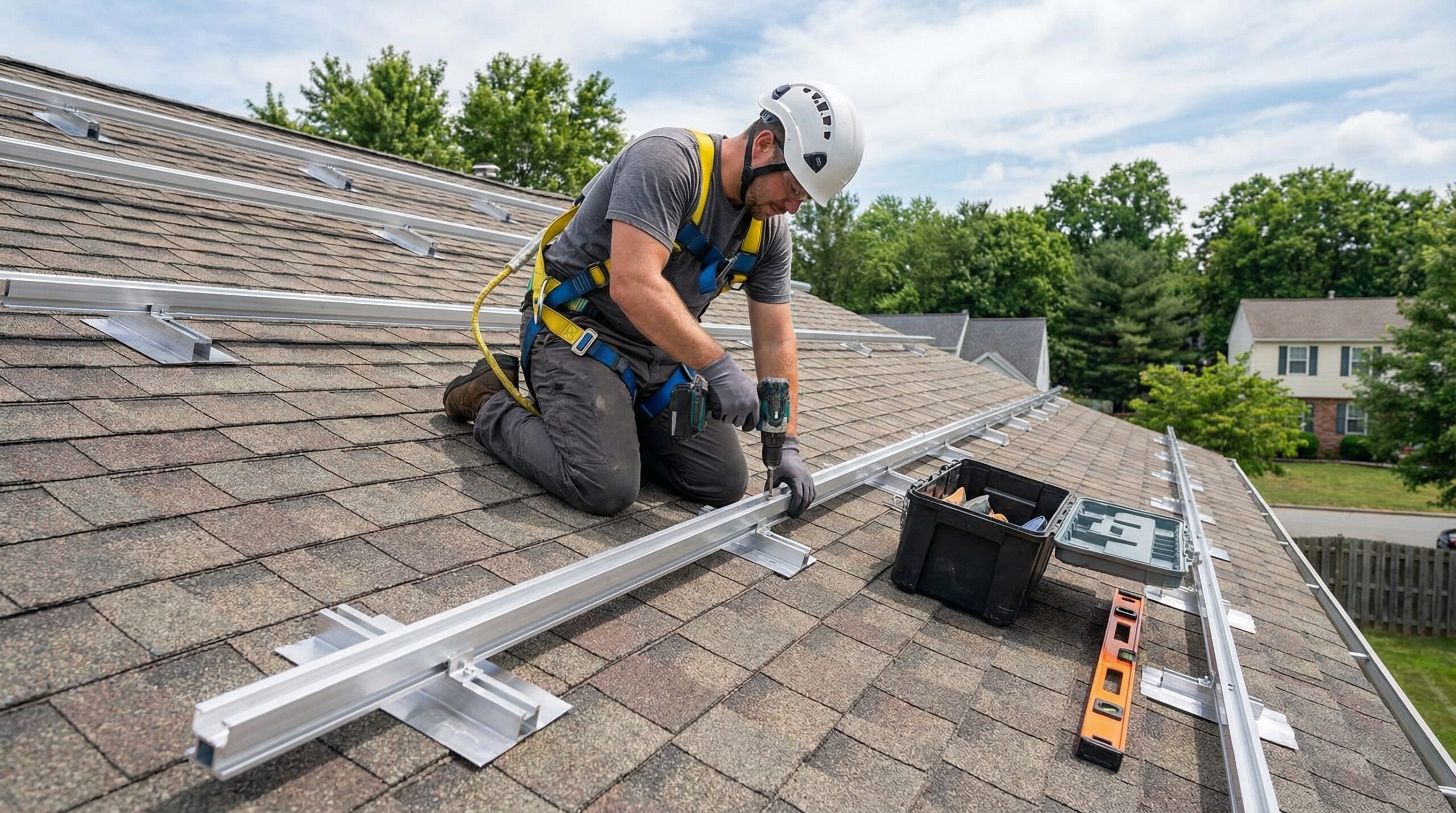
The actual installation involves several key steps. First, any necessary roof work is completed to create the ideal foundation. Then, mounting rails are securely attached to rafters using proper flashing and sealants to prevent water infiltration during Ohio’s spring rainstorms. Finally, panels are installed and connected to your home’s electrical system.
Money-Saving Insight: Bundling roof replacement with solar installation often results in cost savings through shared labor and permitting costs, while ensuring optimal integration between both systems. In Ohio, this can also simplify the local building permit process.
One critical consideration is the impact of weather on timing. While solar panels can be installed year-round, understanding what temperature is too cold for roof installation helps you plan your project timeline for optimal results during our Midwestern winters.
Ohio solar incentives and financial benefits
Ohio offers several incentives that make solar installation more affordable for homeowners in 2026. These programs, combined with federal tax credits, can significantly reduce your upfront investment while providing long-term savings on electricity bills.
The **ECO-Link Program** through the Ohio Treasurer’s office offers homeowners a 3% interest rate reduction on loans up to $50,000 for solar projects. Additionally, Ohio provides a **100% Sales Tax Exemption** on all solar equipment, saving the average homeowner over $1,000 instantly at the time of purchase.
Net metering in Ohio allows you to sell excess electricity back to the grid (utilities like FirstEnergy or Duke Energy Ohio), effectively running your electric meter backward when your panels produce more power than you use. This credit system helps maximize the financial benefits of your solar investment throughout the year.
| Ohio Solar Incentives 2026 | Description | Benefit |
|---|---|---|
| Federal Tax Credit | 30% of system cost | Direct tax reduction |
| Sales Tax Exemption | 100% exemption on equipment | Upfront savings (~$1,000+) |
| ECO-Link Loan | 3% interest rate reduction | Lower monthly financing |
| Property Tax Exemption | Solar adds no property tax | Statewide Protection |
Beyond financial incentives, solar panels typically increase property values in popular suburbs like Shaker Heights and Westlake. Homes with solar often sell faster, making solar installation a smart long-term investment. However, it’s crucial to work with a reputable contractor—choosing an accredited Ohio roofer provides additional peace of mind for your investment.
When you’re ready to explore solar for your Northeast Ohio home, choosing a qualified roofer with solar expertise provides the best foundation. Their combined knowledge of local roofing codes and solar technology ensures your investment performs well for decades while protecting your home’s structural integrity.