

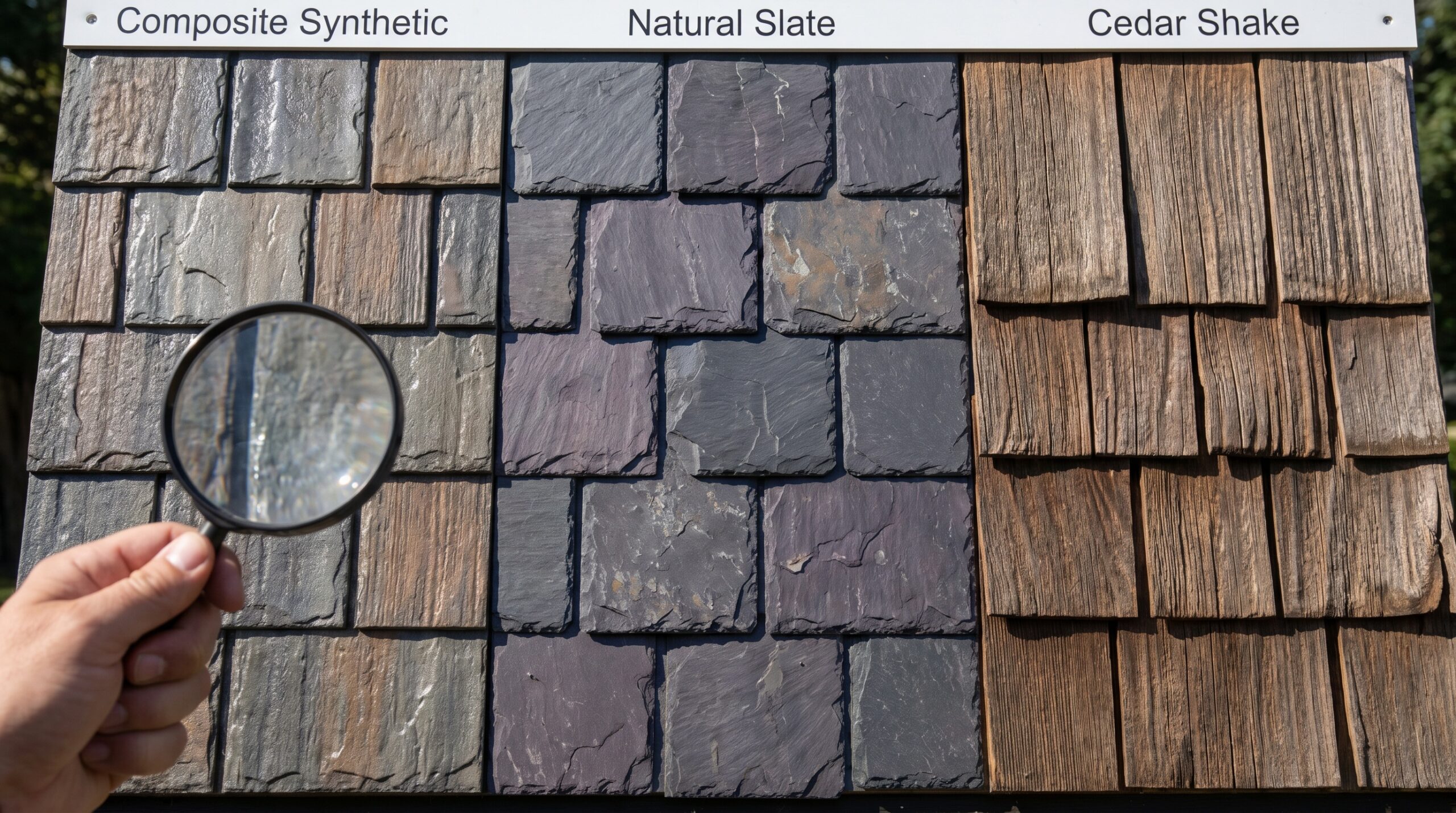
Composite roof shingles are made from engineered polymers, recycled plastics, rubber compounds, and reinforcing fibers designed to mimic natural roofing materials like slate and cedar shake. Unlike traditional asphalt shingles that use fiberglass mats coated in asphalt and granules, composite shingles are solid synthetic materials molded to replicate the texture and appearance of premium natural products.
Key Insight: Most composite shingles contain 50-90% recycled content while delivering Class 4 impact resistance and lasting 40-50 years.
If you’re considering composite shingles for your Cleveland area home, understanding their composition helps you make an informed decision about this increasingly popular roofing option that balances durability, appearance, and environmental responsibility—especially important for Northeast Ohio’s challenging weather conditions.
Materials that make up composite shingles
Composite shingles combine several synthetic materials to create a durable roofing product. The primary components include polymer resin bases that provide structural integrity and weather resistance, along with UV stabilizers that prevent color fading from sun exposure.
Most manufacturers incorporate recycled plastics and rubber compounds, typically making up 50-90% of the material content. Fire retardants are added to achieve Class A fire ratings without requiring secondary barriers. The manufacturing process also includes multi-tone color blending to replicate the natural variation found in real stone, wood, or clay materials.

Leading manufacturers like DaVinci use virgin polymer resins with UV stabilizers, while others like Brava focus on recycled materials molded under high pressure. The exact formula varies by brand, but the result is consistently a lightweight material that weighs 50-75% less than natural alternatives while maintaining superior impact resistance—a crucial benefit for Cleveland homeowners dealing with hail storms and severe weather.
Composite shingles vs composition shingles
The terminology often creates confusion, but composite and composition shingles are completely different products. Composition shingles are simply another name for standard asphalt shingles, made from fiberglass mats coated with asphalt and ceramic granules.
Composite shingles, on the other hand, are premium synthetic products specifically engineered to replicate slate, cedar shake, or tile roofing. While both are technically “composite” materials, the roofing industry uses “composite shingles” exclusively for these high-end synthetic alternatives.
| Feature | Composite Shingles | Composition (Asphalt) Shingles |
|---|---|---|
| Materials | Engineered polymers, recycled plastics | Fiberglass mat, asphalt, granules |
| Lifespan | 40-50 years | 15-25 years |
| Cost | $4-9 per sq ft installed | $1-3 per sq ft installed |
| Impact Rating | Class 4 (highest) | Class 1-3 |
The price difference reflects the advanced engineering and superior performance characteristics of composite materials compared to standard asphalt products—particularly valuable for Northeast Ohio homes that face freeze-thaw cycles and storm damage.
Why homeowners choose composite shingles
Composite shingles offer several advantages that make them attractive to Cleveland area homeowners seeking premium roofing without the drawbacks of natural materials. The appearance factor ranks highest among decision drivers, as these products look remarkably similar to expensive slate or cedar shake from ground level.
Durability and weather resistance stand out as major benefits for Northeast Ohio homes. With Class 4 impact ratings, composite shingles withstand hail up to 2 inches in diameter and wind speeds of 110-130 mph. This performance translates to fewer insurance claims and lower maintenance costs over time—especially important when dealing with insurance restoration after storm damage.
Performance Note: Composite shingles resist moisture absorption, preventing the warping, cracking, and rot common with natural cedar shake roofing in Cleveland’s humid summers and harsh winters.
The lightweight nature of composite materials eliminates structural concerns associated with heavy slate roofs. You won’t need additional framing or structural reinforcement, which can add thousands to natural slate installation costs. Environmental benefits also appeal to eco-conscious homeowners, as most composite shingles are fully recyclable at end-of-life.
Cost considerations for composite roofing
Composite shingles cost significantly more upfront than asphalt shingles but less than natural slate or tile. Expect to pay $700-1,500 per square (100 square feet) installed, with total roof costs ranging from $15,000-35,000 for a typical 2,000 square foot home in the Cleveland area.
The wide price range depends on several factors including manufacturer, specific product line, roof complexity, and regional labor costs. Premium brands like DaVinci command higher prices due to their virgin polymer formulations and extensive warranty coverage.
Value Perspective: While initial costs are higher, composite shingles often provide better long-term value through extended lifespan, reduced maintenance, and potential insurance discounts for impact-resistant materials—particularly valuable for Northeast Ohio homeowners dealing with frequent storm damage.
Most quality composite shingles carry 30-50 year limited warranties, with some manufacturers offering lifetime coverage. This extended protection, combined with their resistance to common roofing problems like algae growth and freeze-thaw damage, helps offset the higher upfront investment through reduced replacement and repair costs.
Composite shingles represent a smart middle ground for Cleveland area homeowners who want the appearance of premium natural materials without the weight, fragility, or extreme costs. Their engineered composition delivers consistent performance that often outlasts traditional alternatives while providing the curb appeal that makes your home stand out in Rocky River, Cleveland, and throughout Northeast Ohio.