

Your roof isn’t just protection from the weather—it’s a decades-long investment that directly impacts your home’s value and your peace of mind. When facing roof replacement costs that can reach $25,000 or more in the Cleveland area, choosing the right material becomes crucial for both your budget and long-term satisfaction.
The longest lasting roof shingles are natural slate (75-200 years), clay and concrete tiles (50-100 years), and metal roofing (40-80 years). For homeowners seeking durable asphalt options, luxury shingles can last 30-50 years, while architectural shingles typically provide 25-30 years of service compared to basic 3-tab shingles at just 15-25 years.
Quick Fact: The difference between choosing 30-year architectural shingles versus basic 3-tab shingles can mean avoiding an entire roof replacement cycle, potentially saving you $15,000-20,000 over your home’s lifetime.
Understanding which materials offer the best longevity for your specific situation, Northeast Ohio’s climate, and budget will help you make a confident decision that protects your investment for decades to come.
Roofing materials ranked by longevity
When comparing roofing materials by lifespan, the clear winners are natural materials and metals that can withstand decades of weather exposure. Here’s how the most common options stack up:
Natural slate leads the pack with an impressive 75-200 year lifespan. This quarried stone material offers unmatched durability and fire resistance, making it ideal for historic homes and premium properties. However, slate requires expert installation and significant structural support due to its weight.
Clay and concrete tiles follow closely with 50-100 years of service life. These materials excel in hot, dry climates and provide excellent fire resistance. While heavy like slate, they’re more affordable and offer that classic Mediterranean or Spanish-style aesthetic many homeowners desire.
Metal roofing rounds out the top tier at 40-80 years, depending on the type. Standing seam metal and metal shingles provide excellent wind resistance, energy efficiency, and are fully recyclable. They’re lightweight enough for most existing structures and perform well in all climate zones, including Northeast Ohio’s variable weather conditions.

| Material | Lifespan | Cost per Sq Ft | Best For |
|---|---|---|---|
| Natural Slate | 75-200 years | $15-$30 | Forever homes, historic properties |
| Clay/Concrete Tile | 50-100 years | $8-$18 | Hot climates, Mediterranean style |
| Metal Roofing | 40-80 years | $7-$14 | All climates, energy efficiency |
| Synthetic Shingles | 40-60 years | $9-$15 | Lightweight slate/wood look |
| Luxury Asphalt | 30-50 years | $6-$9 | Premium appearance, moderate cost |
How long do asphalt shingles really last
Asphalt shingles dominate the residential roofing market, but their actual lifespans often differ significantly from manufacturer warranties. Understanding these differences helps you make realistic expectations and budget accordingly.
Basic 3-tab shingles typically last 15-20 years in real-world conditions, despite some carrying 25-year warranties. These single-layer shingles are the most affordable option but offer minimal wind resistance and basic protection. They work best for budget-conscious homeowners or rental properties where longevity isn’t the primary concern.
Architectural or dimensional shingles provide 25-30 years of service with their multi-layered construction. Popular options like GAF Timberline HDZ and Owens Corning Duration offer better wind resistance up to 130 mph and more attractive, textured appearances. These represent the sweet spot for most homeowners balancing cost and durability.
Luxury or designer shingles can achieve 30-50 years when properly installed and maintained. Brands like CertainTeed Landmark and IKO Dynasty feature thicker construction, better granule adhesion, and enhanced impact resistance. While more expensive upfront, they often provide better long-term value for homeowners planning to stay in their homes long-term.
Reality Check: A 30-year shingle warranty doesn’t guarantee 30 years of service. Factors like installation quality, climate conditions, and maintenance significantly impact actual lifespan—often reducing it by 20-30% in harsh conditions.
What factors affect your roof’s actual lifespan
Even the highest-quality materials won’t reach their potential lifespan without proper installation and favorable conditions. Several key factors determine whether your roof lasts decades or fails prematurely.
Climate and weather exposure play the largest role in roof longevity. In Northeast Ohio, freeze-thaw cycles can be particularly damaging to roofing materials, causing expansion and contraction that leads to cracking and granule loss. UV radiation gradually breaks down asphalt shingles, while high-wind areas stress fasteners and can lift shingles. Hail storms, which occasionally impact the Cleveland area, can cause immediate damage that shortens overall lifespan.
Installation quality cannot be overstated in its importance. Proper deck preparation, appropriate underlayment, correct nail placement, and adequate ventilation all contribute to maximum lifespan. Even premium materials will fail early if installed incorrectly, which is why choosing experienced local contractors who understand Northeast Ohio’s specific weather challenges matters as much as material selection.
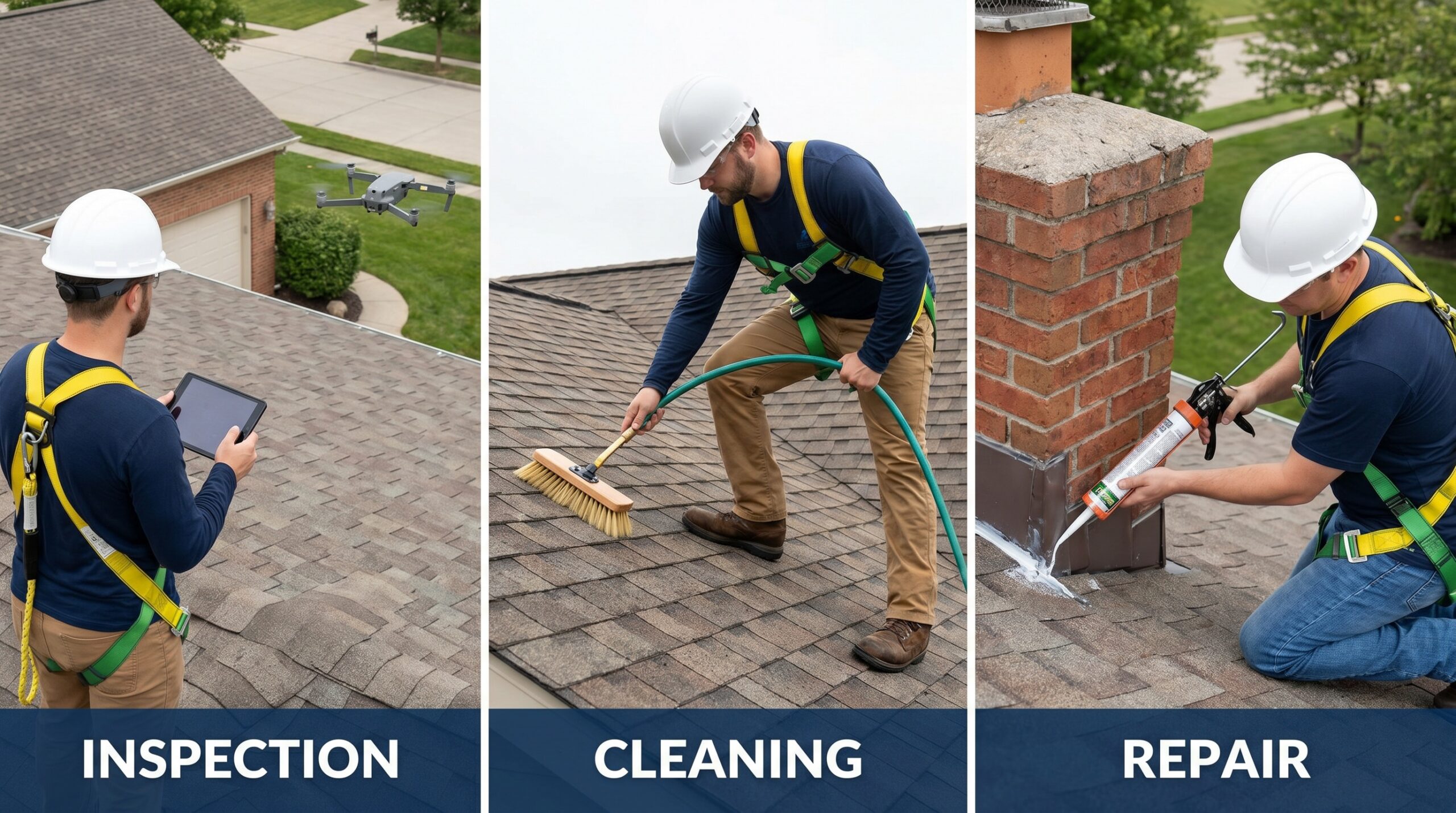
Maintenance and care significantly extend roof life across all material types. Regular inspections, prompt repairs of damaged shingles, gutter cleaning, and debris removal prevent small issues from becoming major problems. Homeowners who invest in annual maintenance often see their roofs exceed expected lifespans, especially important given our region’s seasonal weather variations.
Attic ventilation and insulation create the right environment for long roof life. Proper airflow prevents heat and moisture buildup that can warp decking, promote mold growth, and cause premature aging of roofing materials. This factor is especially critical during Northeast Ohio’s humid summers and cold winters.
Choosing the right long-lasting roof for your situation
Selecting the longest lasting roof shingles requires balancing longevity with your specific circumstances, budget, and long-term plans. The “best” choice varies significantly based on individual factors.
For forever homes and luxury properties, natural slate or high-end clay tiles make financial sense despite their high upfront costs. When amortized over 75-100+ years, these materials often provide the lowest cost per year of service. However, they require structural evaluation to ensure your home can support the additional weight.
For most homeowners seeking excellent value, architectural asphalt shingles or metal roofing offer the best balance of longevity, cost, and performance. These options provide 25-50+ years of service at moderate prices and work well in Northeast Ohio’s climate without requiring structural modifications.
For budget-conscious situations where you plan to move within 10-15 years, upgrading from 3-tab to architectural shingles often makes more sense than investing in premium materials. The improved wind resistance and appearance provide better return on investment for shorter ownership periods.
Climate Consideration: In storm-prone areas like Northeast Ohio, metal roofing and architectural shingles with high wind ratings often outperform heavier materials that can become projectiles during severe weather, making them safer long-term choices.
Regional factors also influence the best choice. Northeast Ohio’s freeze-thaw cycles favor synthetic and composite materials that can handle thermal expansion and contraction. Our variable weather patterns—from summer storms to winter ice dams—make materials with good impact resistance and proper installation critical for long-term performance.
The longest lasting roof shingles ultimately depend on matching material properties to your specific needs, Northeast Ohio’s climate, and budget. While slate and tile offer unmatched longevity, modern alternatives like quality metal roofing and luxury asphalt shingles provide excellent durability at more accessible price points. The key is choosing materials appropriate for your situation and ensuring professional installation with proper maintenance—factors that matter as much as the shingles themselves in determining your roof’s actual lifespan.