

Converting your attic into livable space requires specific roof modifications to meet Ohio building codes and handle the region’s climate challenges. Your roof structure needs reinforcement to support additional weight, upgraded ventilation systems to manage humidity, and enhanced insulation to achieve required R-values for habitable spaces.
Key Insight: Ohio follows the International Residential Code, requiring habitable attic spaces to maintain at least 7-foot ceiling height over 50% of the floor area and proper structural load capacity for furniture and occupants.
Before starting any attic conversion project, you need a comprehensive roof assessment from a qualified contractor. They’ll evaluate your existing framing, identify necessary reinforcements, and ensure your project complies with local building requirements. This upfront planning prevents costly surprises during construction and ensures your new living space meets all safety standards.
Structural reinforcement requirements
Most Northeast Ohio homes built before 1980 require significant structural upgrades for attic conversions. The existing rafters and floor joists weren’t designed to support the weight of drywall, flooring, furniture, and daily occupancy that comes with finished living space.
Your contractor will assess several critical elements during the structural evaluation. The roof framing typically needs reinforcement if your home has 2×6 rafters spaced 24 inches apart, which was common in post-war construction. Modern building codes often require 2×8 or larger rafters for converted spaces, depending on span and load requirements.
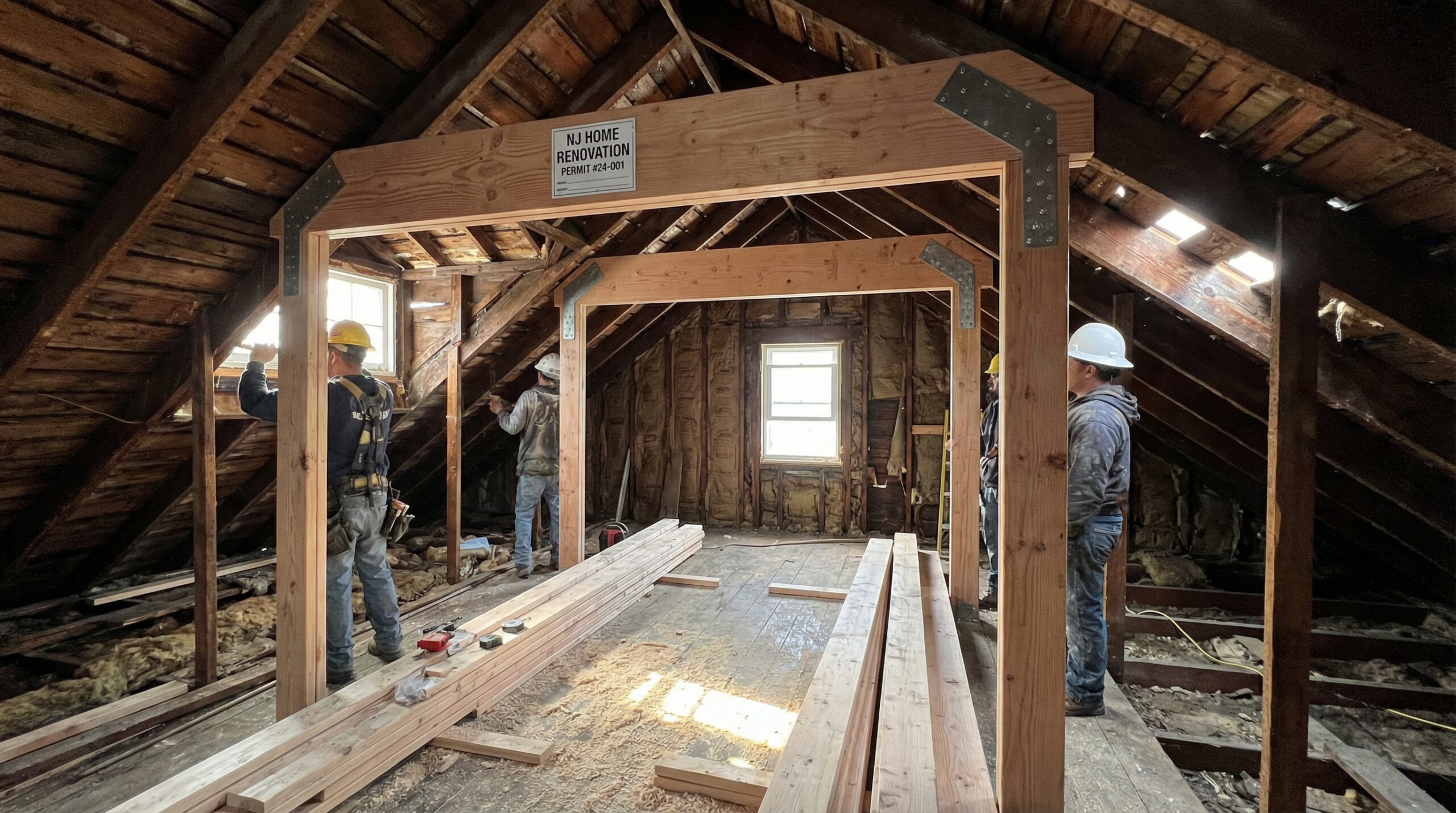
Floor joists present another common challenge in older homes. The existing joists may only support storage loads of 20 pounds per square foot, but habitable spaces require 40 pounds per square foot capacity. Your contractor might recommend adding sister joists or installing new support beams to meet current standards.
The roof pitch also affects conversion feasibility. Ohio building codes specify minimum ceiling heights, and steep rooflines in colonial-style homes sometimes require dormers to create adequate headroom. These additions need careful structural planning to maintain roof integrity.
Ventilation system upgrades
Rocky River’s humid summers and cold, lake-effect winters create unique ventilation challenges for converted attic spaces. Proper airflow prevents moisture buildup that can lead to mold growth and structural damage while maintaining comfortable temperatures year-round.
Ridge vents provide the most effective exhaust ventilation for attic conversions. These continuous vents along the roof peak allow hot air to escape naturally while handling heavy snow loads common in Northeast Ohio. Modern ridge vents include wind baffles that maximize airflow even during calm weather conditions.
Soffit vents work with ridge vents to create complete air circulation. These intake vents under the roof eaves draw fresh air into the attic space, creating the airflow pattern needed for effective ventilation. In converted spaces, maintaining this air path becomes more complex due to insulation and finished surfaces.
Climate Consideration: Ohio’s building codes require a minimum ventilation ratio of 1:150 for attic spaces, meaning one square foot of ventilation for every 150 square feet of attic floor area.
Gable vents can supplement ridge and soffit ventilation, especially in larger attic conversions. Powered gable fans help move air during peak summer heat, though they should be thermostat-controlled to prevent energy waste. Some contractors recommend whole-house fans for attic conversions, which can significantly reduce cooling costs during moderate weather.
Insulation and energy efficiency
Converting an attic in Ohio’s climate zone 5A requires specific insulation strategies to maintain comfort and energy efficiency. The state’s energy code mandates minimum R-38 insulation in attic floors, but converted spaces often benefit from higher R-values to maximize comfort and reduce utility costs.
Roof deck insulation becomes critical when the attic becomes conditioned space. Closed-cell spray foam provides excellent thermal performance and air sealing in one application, though it costs more than traditional fiberglass. Many contractors recommend R-49 roof deck insulation for optimal performance in Northeast Ohio’s variable climate.

Wall insulation in knee wall areas requires careful attention to prevent thermal bridging. These short walls where the roof meets the attic floor can create significant heat loss if not properly insulated. Continuous insulation techniques help eliminate cold spots and improve overall energy performance.
Air sealing complements insulation by preventing conditioned air from escaping through gaps and cracks. Professional contractors use specialized materials to seal around electrical penetrations, plumbing vents, and other openings that can compromise thermal performance. This attention to detail makes a significant difference in heating and cooling costs.
| Insulation Component | Minimum R-Value | Recommended R-Value | Energy Savings |
|---|---|---|---|
| Roof Deck | R-38 | R-49 | 15-20% |
| Knee Walls | R-20 | R-30 | 10-15% |
| Floor Areas | R-30 | R-38 | 8-12% |
Professional installation and permits
Attic conversions require multiple permits and inspections to ensure code compliance and safety. Ohio municipalities have specific requirements for structural modifications, electrical work, and egress windows that vary by location. Working with experienced local contractors familiar with these requirements streamlines the approval process.
The typical conversion timeline spans 4-6 weeks, depending on the scope of structural modifications needed. Initial structural work takes 1-2 weeks, followed by systems installation for electrical, plumbing, and HVAC. Insulation and finishing work complete the project, with inspections scheduled at key milestones throughout the process. Understanding how long roof replacement takes can help you plan for similar timelines when roof modifications are part of your attic conversion.
Your contractor should coordinate with local building departments early in the planning phase. Some municipalities require engineered drawings for structural modifications, while others accept contractor-prepared plans. Understanding these requirements upfront prevents delays and ensures your project meets all local standards. If you’re working with an older roof, you should also be aware of signs that indicate it’s time for a roof replacement before beginning your conversion project.
Professional Tip: Established contractors often have working relationships with local inspectors and can anticipate potential issues before they become problems, saving time and money during the conversion process.
Peak and Valley Roofing brings extensive experience with Ohio attic conversions, understanding both the technical requirements and local code variations that affect project success. Our team handles the complete process from initial assessment through final inspection, ensuring your conversion meets all requirements while maximizing your home’s potential. Similar to our work on multi-family property roof replacements in Northeast Ohio, we understand the unique challenges of complex roofing projects in the region.
Ready to transform your attic into valuable living space? Contact Peak and Valley Roofing today for a comprehensive roof assessment and conversion planning consultation. Our experienced team will evaluate your home’s specific needs and guide you through every step of the process. Just as a new roof can increase your home’s value, a properly executed attic conversion with quality roofing work represents a smart investment in your property. We also understand that proper installation is critical to avoid costly problems down the road.