
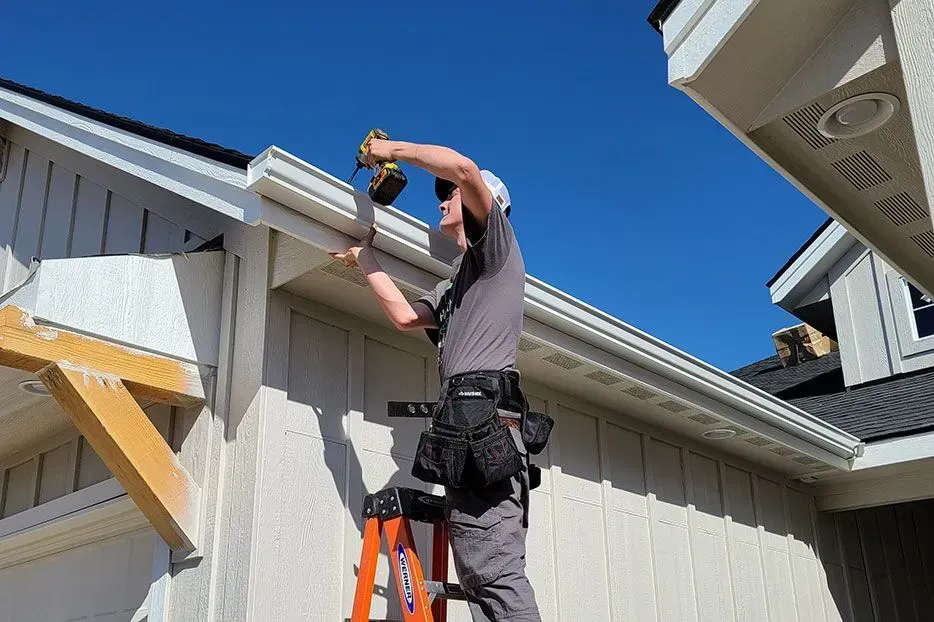
Why Proper Gutter Placement Matters
Your home’s gutters are more than just metal channels; they’re your first line of defense against water damage. When installed correctly, gutters catch rainwater and direct it through downspouts, protecting your foundation, siding, and landscaping.
But here’s the catch: if gutters are installed too close or too far from your roof edge, water can overshoot or run behind them. The result? Peeling paint, rotting fascia boards, basement leaks, and costly repairs. That’s why it’s critical to know how far gutters should stick out from your roof edge.
Homeowners in areas like Rocky River often discover that long-term drainage problems can eventually contribute to the need for storm damage restoration after severe weather.
The Golden Rule: 1 to 1.5 Inches
At Peak and Valley Roofing, we follow industry best practices:
- Gutters should extend 1–1.5 inches past the roof’s drip edge.
This ensures rainwater flows directly into the gutter instead of overshooting or seeping behind it. - Three-fourths of the gutter’s width should be positioned under the roof edge.
This placement maximizes water catchment while maintaining proper clearance.
If your gutters don’t follow this rule, you may notice:
- Rain overshooting the gutters during heavy storms
- Water dripping behind the gutters
- Rotting fascia boards or peeling siding
- Foundation cracks caused by pooling water
Homeowners in areas like North Olmsted also commonly update aging vinyl siding while correcting exterior drainage issues.
Other Key Gutter Installation Standards
Beyond the overhang, proper gutter placement depends on spacing, slope, and the distance of the downspouts.
1. Gutter Distance From Roof Edge
- Keep gutters tightly attached to the fascia and positioned behind the drip edge.
- A 2–3 inch gap between shingles and the gutter front is standard, adjusted according to the roof pitch.
2. Gutter Slope (Pitch)
- Gutters need a slight slope toward downspouts:
- ½ inch for every 10 feet of gutter run.
- Without slope, water stagnates, causing sagging or ice buildup.
3. Gutter Hanger Spacing
- Hangers should be placed every 3 feet.
- In areas with heavy snow/ice, space them closer (2 feet).
- Proper spacing prevents sagging and separation from the fascia.
4. Downspout Placement
- Rule of thumb: one downspout every 20–30 feet of gutter.
- Downspouts should extend at least 4–6 feet from your home’s foundation to prevent basement leaks.
Common DIY Gutter Mistakes
Installing gutters yourself can lead to costly problems if not done precisely. Some common errors include:
- Wrong gutter size or material – undersized gutters can’t handle heavy rainfall.
- Too many seams – seams are weak points prone to leaks. Seamless gutters are far superior.
- Improper hanger spacing – wide spacing causes sagging and water pooling.
- Not tucking behind the drip edge – leads to water seeping behind the gutter and rotting fascia boards.
Professional Gutter Installation Saves You Money
While DIY installation may seem cost-effective, improper gutter placement can result in thousands of dollars in water damage repairs. At Peak and Valley Roofing, we:
- Install custom seamless gutters designed to fit your home perfectly.
- Follow the 1–1.5 inch overhang rule to stop rain overshooting.
- Use heavy-duty hangers spaced correctly for Ohio’s weather.
- Ensure downspouts extend far enough to protect your foundation.
Final Thoughts: Get Gutter Placement Right the First Time
To protect your roof, siding, and foundation, make sure your gutters are:
- Extending 1–1.5 inches past your roof edge
- Sloped at ½ inch per 10 feet
- Supported by hangers spaced every 2–3 feet
- Connected to downspouts that carry water well away from your foundation
Don’t take chances with your home’s protection. Peak and Valley Roofing provides expert gutter installation across Northeast Ohio to keep your home safe and dry.
📞 Call us today for a free gutter inspection or installation quote -> 216-777-9876