

Choosing the right roofing contractor can make the difference between a roof that lasts decades and one that causes headaches within years. With roofing projects averaging between $5,960 and $12,740,you want to ensure you’re working with someone who will do the job right the first time.
The key to finding a reliable contractor lies in asking the right questions before you sign any contract. These questions help you verify their credentials, understand their process, and protect your investment. Most reputable contractors expect these questions and will answer them transparently.
Quick tip: Never hire a contractor who comes to your door unsolicited, especially after storms. Established contractors typically have more work than they can handle and don’t need to go door-to-door for business.
Verify credentials and business legitimacy
Start with the basics that protect you legally and financially. Ask to see their contractor license, which differs from a general business license. Most states require specific roofing contractor licenses, and you can verify these online through your state’s licensing board.
Request their full legal company name and physical business address. Unlike many digital businesses, roofing companies need physical locations for equipment storage and operations. This gives you somewhere to visit if issues arise and confirms you’re dealing with an established business rather than a fly-by-night operation.
Find out how long they’ve been operating in your area. While newer companies might offer competitive pricing to build their reputation, established contractors typically have more experience handling unexpected challenges. According to fortifiedhome.org, you want contractors with substantial local experience who understand regional weather patterns and building codes.
When evaluating contractors, it’s also crucial to understand how building codes impact roof repairs and replacements in your specific area, as compliance is a key indicator of a professional operation.
Understand insurance and warranty protection
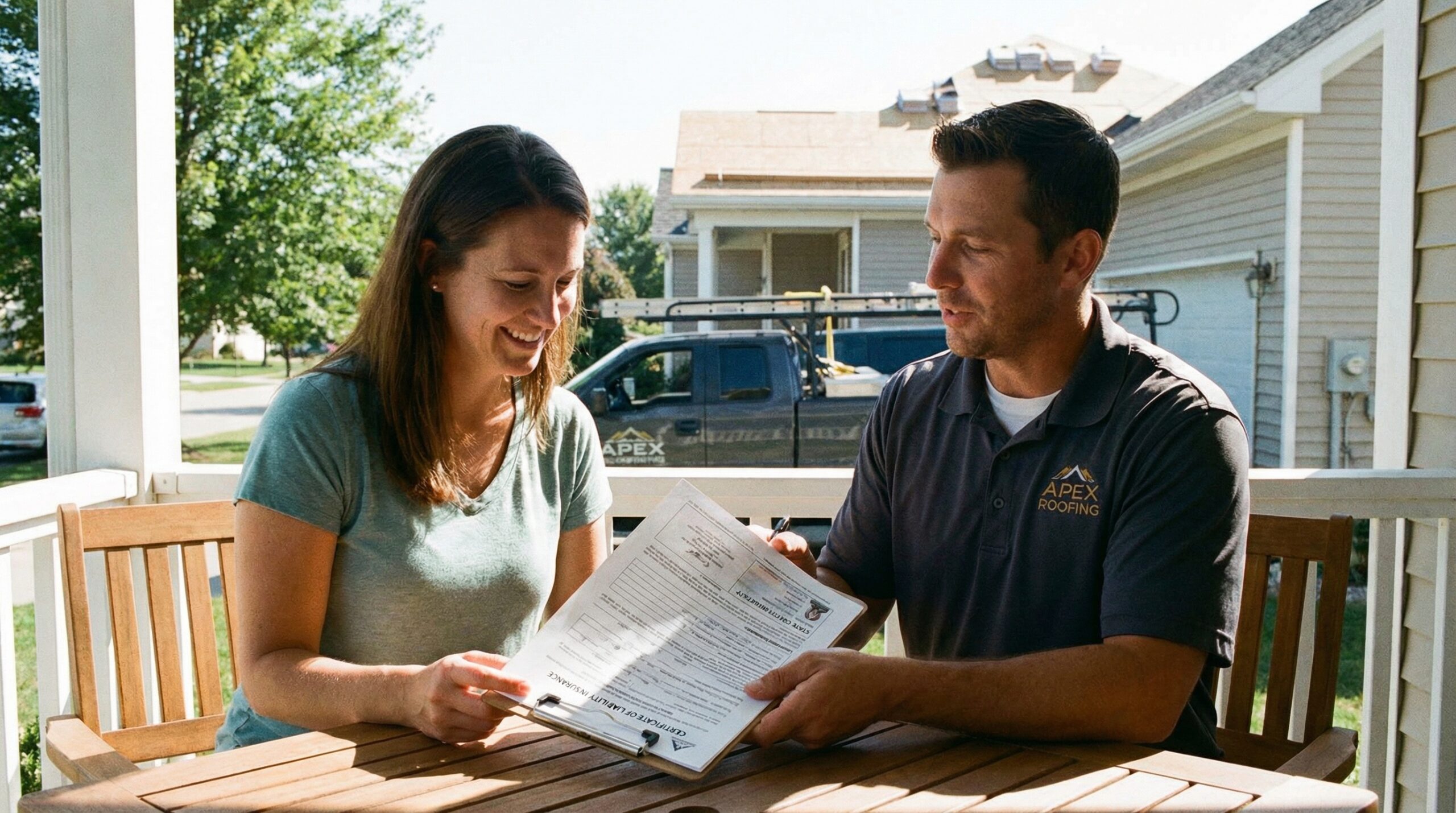
Insurance protects both you and the contractor if accidents happen during your project. Ask to see current certificates for both general liability and workers’ compensation insurance. If a worker gets injured on your property and the contractor lacks workers’ comp, you could be held liable for medical expenses.
Don’t accept verbal assurances about insurance coverage. Request to see the actual certificates and verify they’re current. Most insurance companies can confirm coverage if you have questions about the documentation.
Discuss the warranty terms for both materials and workmanship. Material warranties typically come from manufacturers and can last 25 to 50 years depending on the product. Workmanship warranties from the contractor usually cover one to three years and protect you if installation issues arise. Many homeowners don’t realize that their 50-year warranty might be worthless without proper understanding of the terms and conditions.
Important note: Get all warranty details in writing, including what’s covered, the duration, and how to file claims. Verbal warranty promises aren’t legally binding.
Clarify project details and expectations
Ask for detailed written estimates that break down materials, labor, and any additional costs. This should specify the exact types of shingles or roofing materials being used, as prices vary significantly between options. According to localroofingpros.org, quality contractors provide comprehensive estimates that leave no room for surprise charges.
Understanding what a roofing square is can help you better comprehend estimates and ensure you’re being charged fairly for materials and labor.
Understand their timeline and what could cause delays. Weather, material shortages, or coordination with other trades can affect scheduling. Ask how they handle these situations and whether delays affect pricing. Temperature is a critical factor in roofing installations, so be sure to ask what temperature is too cold to install a roof if you’re planning work during cooler months.
Discuss their cleanup process and property protection measures. Roofing creates significant debris, and you want to know how they’ll protect your landscaping, vehicles, and other property during the work. Quality contractors use protective materials like tarps and magnetic sweepers to collect nails.
Find out if they use subcontractors and, if so, verify that these workers are also properly licensed and insured. You should have contact information for any subcontractors working on your property.
Evaluate reputation and communication
Check their online reviews across multiple platforms including Google, Better Business Bureau, and specialized contractor review sites. Look for patterns in feedback rather than focusing on individual complaints. According to modernize.com, contractors with 100+ reviews typically demonstrate more stability than those with only a handful of ratings.
Understanding how reviews help you choose the best roofing contractor can guide your research process and help you identify red flags before they become problems.
Request references from recent projects similar to yours and actually contact them. Ask these references about communication, timeliness, cleanup, and overall satisfaction with the work quality.
Pay attention to how the contractor communicates during your initial interactions. Do they answer questions thoroughly? Are they transparent about potential challenges? Do they pressure you to sign immediately, or do they give you time to consider the proposal?
Ask about their manufacturer certifications. Companies certified by major manufacturers like GAF, CertainTeed, or Owens Corning have received specialized training and may offer enhanced warranty options. If you’re considering a BBB accredited roofer, you’ll have additional peace of mind knowing they meet higher standards of business practices.
The right contractor will welcome your questions and provide clear, detailed answers. If someone seems evasive or pressures you to decide quickly, consider that a red flag. Taking time to ask these questions upfront can save you significant money and frustration later. Being aware of common roofing scams can also help you protect your home investment.
Remember that the lowest bid isn’t always the best value. Focus on finding a contractor who demonstrates professionalism, transparency, and the credentials to protect your investment for years to come.