When you think about your roof, you probably picture shingles or tiles. But underneath those visible materials lies something equally important that most homeowners never see. Roof decking, also called roof sheathing, forms the structural foundation of your entire roofing system. This flat surface sits directly on top of your roof trusses or rafters and serves as the base where all other roofing materials attach.
Without quality roof decking, even the best shingles cannot protect your home effectively. The decking distributes weight from snow and rain, provides structural support, and acts as a barrier against the elements. Understanding what roof decking is and how it works can help you make better decisions about your roof’s health and longevity.
Quick Fact: Quality roof decking can last through two or even three roof replacements when properly installed and maintained, making it one of the most cost-effective investments in your roofing system.
What makes roof decking so important
Your roof decking does much more than provide a surface for shingles. This hidden layer performs several critical functions that keep your home safe and comfortable. Think of it as the skeleton that holds everything together while your shingles act as the protective skin.
The decking creates structural stability by connecting your roof trusses and distributing loads evenly across the framework. When snow accumulates or strong winds hit your roof, the decking spreads these forces to prevent weak spots or sagging. It also provides a smooth, level surface that allows roofing materials to install properly and perform as designed.
Beyond structure, roof decking serves as your home’s secondary defense against moisture. While underlayment and shingles form the primary barrier, quality decking helps prevent water infiltration if the outer layers fail. This protection becomes especially important during severe storms or as your roof ages.
Types of roof decking materials
Choosing the right decking material affects your roof’s performance, durability, and cost. Each option offers specific advantages depending on your climate, budget, and building requirements. Understanding these differences helps you make an informed decision when replacing or installing new decking.
Plywood decking
Plywood remains a popular choice for residential roofing projects due to its proven durability and moisture resistance. Made from thin wood layers bonded together in alternating directions, plywood creates a strong, stable surface that handles weather exposure well. The cross-grain construction helps prevent warping and provides excellent holding power for roofing fasteners.
Most residential applications use CDX plywood in thicknesses ranging from half-inch to five-eighths inch. The “C” and “D” refer to the grade of the face and back veneers, while “X” indicates exterior-grade adhesive that withstands moisture exposure. This combination delivers reliable performance at a reasonable cost.
Oriented Strand Board (OSB)
OSB has become the most common decking material in modern construction due to its cost-effectiveness and consistent quality. Manufacturers create OSB by compressing wood strands with adhesives under high pressure and heat. This process produces panels with uniform strength and fewer weak spots than traditional lumber.
The main advantage of OSB is its affordability compared to plywood, typically costing 15-20% less while providing similar structural performance. However, OSB does absorb moisture more readily than plywood and can swell if exposed to water for extended periods. Proper installation with adequate ventilation helps minimize these concerns.
Important Note: While OSB costs less initially, plywood may offer better long-term value in humid climates due to its superior moisture resistance.
Plank decking
Before plywood and OSB became available, builders used individual wooden planks for roof decking. These solid wood boards, typically measuring 1×6 or 1×8 inches, create an exceptionally strong surface when properly installed. You might still find plank decking in older homes or specialty applications where exposed ceiling beams are desired.
Plank decking offers superior strength and can last for decades with proper maintenance. The individual boards also allow for better ventilation compared to solid panels. However, installation requires more labor and skill, making it more expensive than modern alternatives.
Metal decking
Commercial and industrial buildings often use metal roof decking made from steel or aluminum. These systems provide excellent fire resistance, durability, and span capabilities for large roof areas. Metal decking typically features corrugated profiles that add structural strength while reducing material weight.
For residential applications, metal decking is less common but may be specified for homes in high-fire-risk areas or where maximum durability is required. The higher initial cost and specialized installation requirements make metal roofing a premium option for most homeowners.
| Material | Typical Cost | Moisture Resistance | Lifespan | Best For |
|---|---|---|---|---|
| Plywood | Moderate | Excellent | 30+ years | Humid climates |
| OSB | Low | Good | 25+ years | Budget projects |
| Plank | High | Good | 40+ years | Historic homes |
| Metal | Very High | Excellent | 50+ years | Commercial use |
Warning signs your roof decking needs replacement
Roof decking problems often develop gradually and may not become obvious until significant damage occurs. Since the decking sits hidden beneath your roofing materials, you need to watch for indirect signs that indicate potential issues. Catching these problems early can save you thousands in repair costs and prevent damage to your home’s interior.
Sagging or uneven rooflines
When you look at your roof from the ground, it should appear straight and level. Any visible sagging, dips, or uneven areas suggest that the decking underneath has weakened or failed. This problem typically develops when moisture causes the wood to rot or when the original installation used inadequate materials.
Sagging often starts small but worsens over time as the damaged area spreads. Even minor sagging indicates that the decking cannot properly support the weight of roofing materials and should be inspected by a professional immediately.
Water stains in your attic
Dark stains, discoloration, or visible mold on your attic ceiling point to moisture problems that may have compromised your roof decking. While these stains might result from roof leaks, they can also indicate that the decking itself has absorbed water and begun to deteriorate.
Check your attic regularly, especially after heavy rains or snow. Fresh water stains suggest active leaks that require immediate attention to prevent further decking damage.
Soft spots when walking on the roof
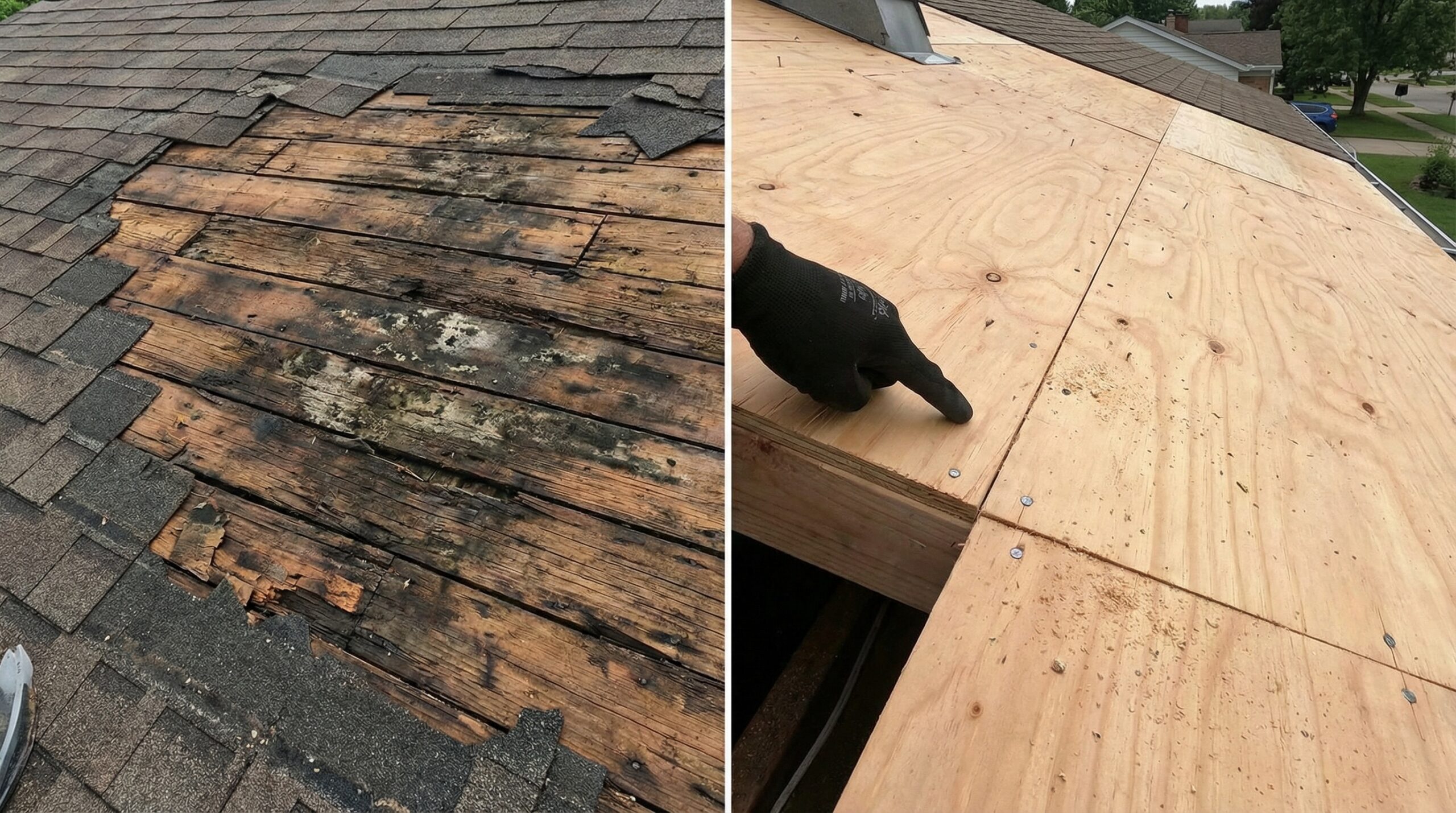
If you or a contractor notices soft, spongy areas when walking on your roof, the decking underneath has likely rotted or delaminated. These soft spots indicate that the wood has lost its structural integrity and cannot safely support weight.
Never ignore soft spots, as they represent a serious safety hazard. The affected decking could give way under load, potentially causing injury or allowing water to pour into your home.
Safety Warning: Only qualified roofing professionals should walk on roofs to check for soft spots. Damaged decking can collapse without warning.
Getting your roof decking inspected
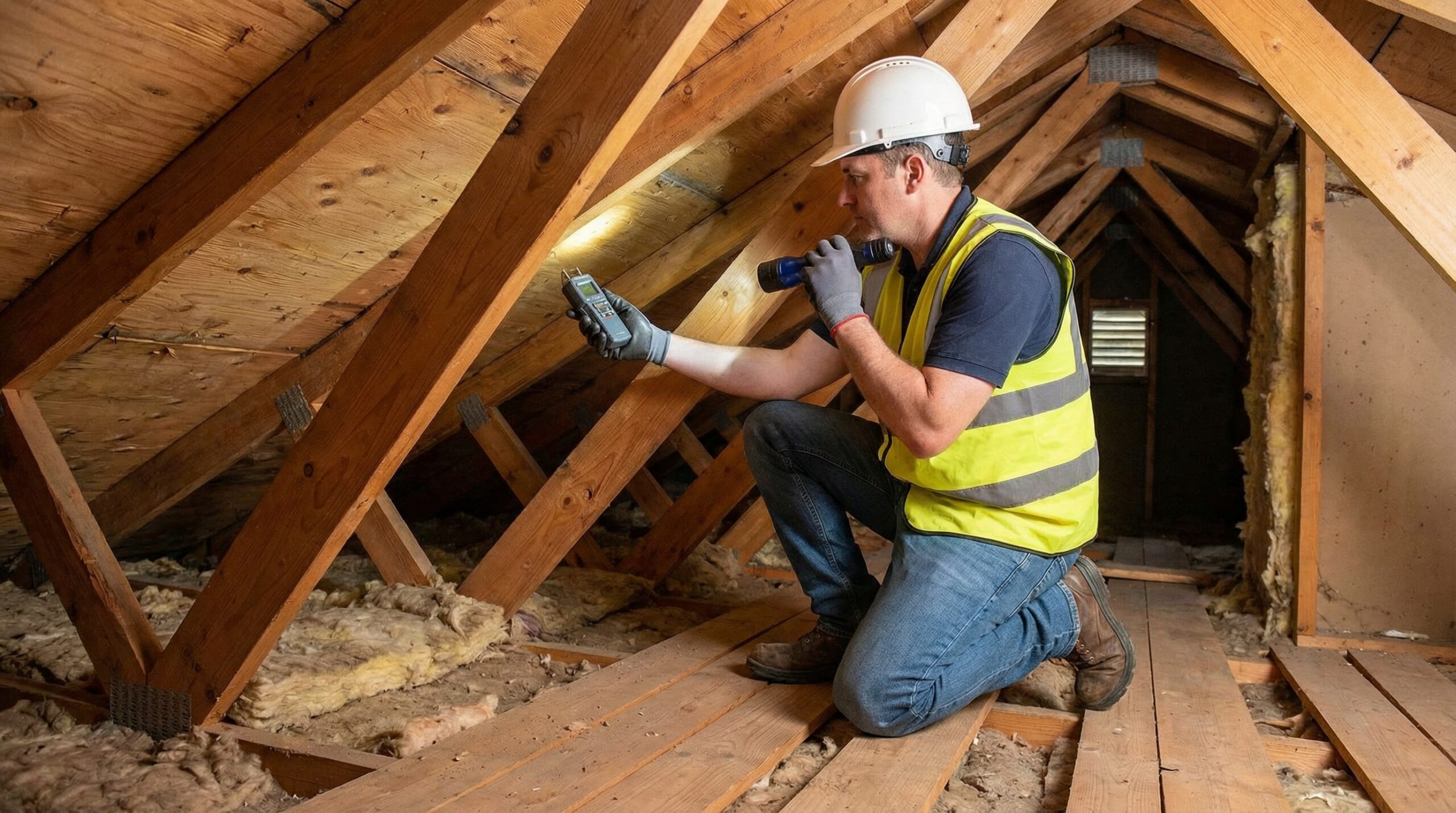
Professional roof inspection provides the only reliable way to assess your decking’s condition since most problems develop out of sight. During a comprehensive inspection, experienced roofers can identify early warning signs and recommend appropriate action before minor issues become major expenses.
Most roofing contractors offer free inspections that include checking visible decking areas from inside your attic and examining the roof surface for signs of underlying problems. They use specialized tools and knowledge to spot issues that homeowners typically miss.
If inspection reveals damaged decking, replacement becomes necessary during your next roof installation. Quality contractors will remove old roofing materials, replace damaged sections with appropriate new decking, and install your new roof system on a solid foundation. Understanding what should be on a detailed roofing estimate helps ensure you’re getting comprehensive decking replacement when needed.
The investment in proper decking pays dividends through improved roof performance, longer material life, and better protection for your home. When you work with experienced professionals, you can trust that your new decking will provide decades of reliable service.
Your roof decking forms the foundation that everything else depends on. By understanding its importance, recognizing warning signs, and maintaining it properly, you protect one of your home’s most valuable assets. When questions arise about your roof’s condition, consulting with qualified roofing professionals ensures you get accurate information and appropriate solutions.