
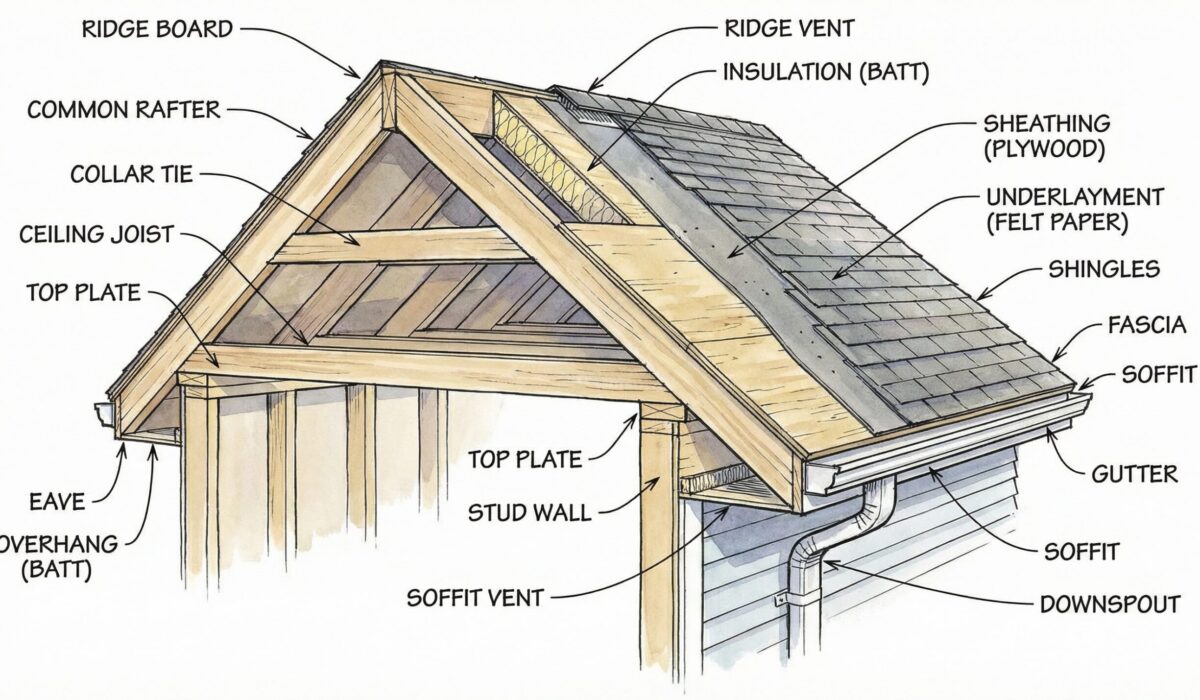
Your roof protects your home from rain, snow, wind, and heat every single day. But did you know that this protective barrier consists of over 20 different components working together as one system? Understanding these parts helps you communicate better with roofing contractors, spot potential problems early, and make informed decisions about repairs or replacements.
Quick Answer: A roof system includes structural elements (rafters, decking), protective layers (underlayment, shingles), water management components (gutters, flashing), and ventilation features that work together to protect your home from the elements.
Think of your roof like your body’s circulatory system. Each component has a specific job, but they all depend on each other to keep your home dry and comfortable. When you know what these parts do, you become a more informed homeowner who can spot issues before they become expensive problems.
Structural foundation components
The structural elements form the backbone of your roofing system. These components provide the shape, slope, and stability that everything else builds upon.
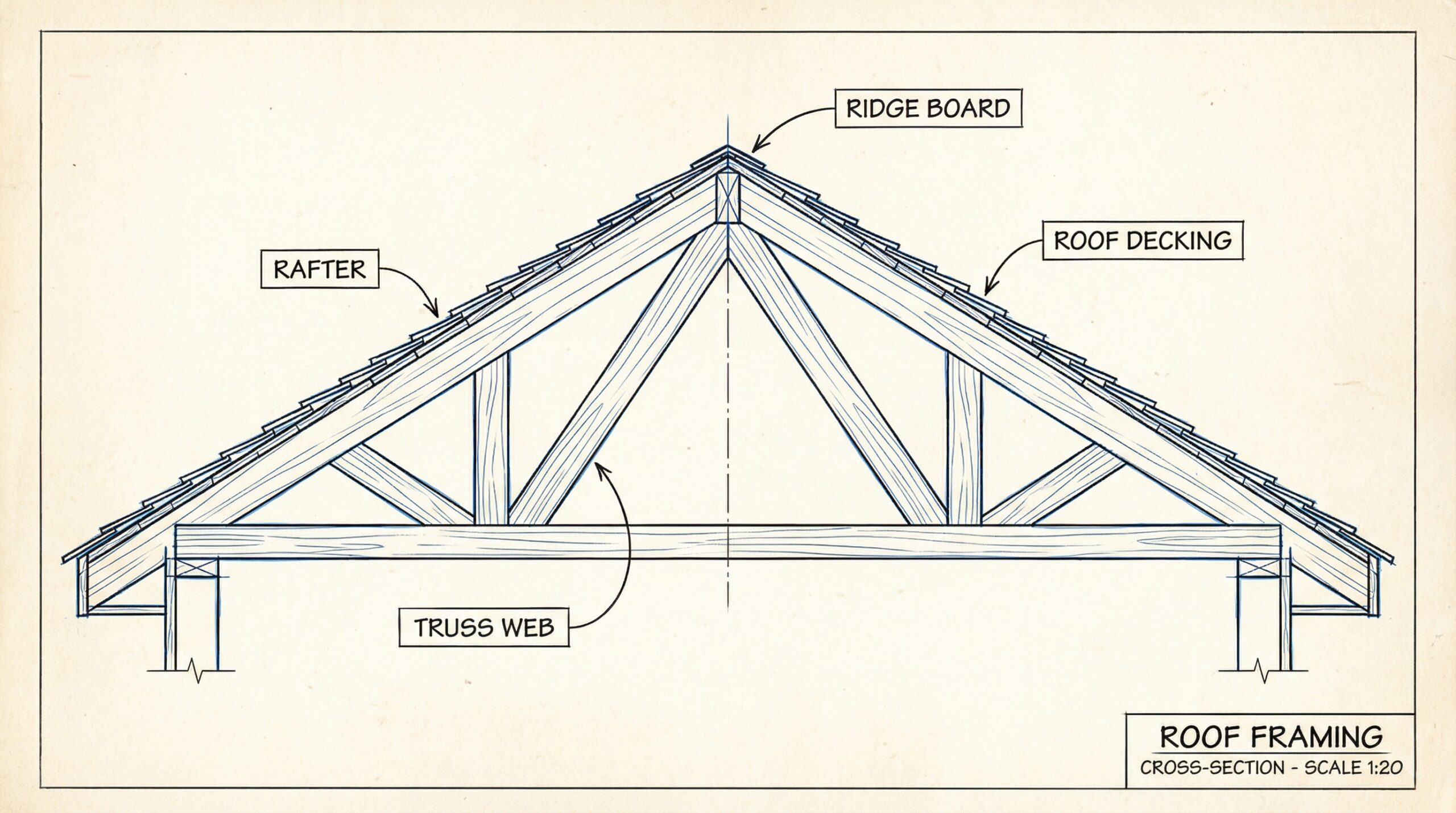
Rafters and trusses are the sloped wooden beams that create your roof’s shape and angle. They transfer the weight of your entire roof down to your home’s walls and foundation. Modern homes typically use engineered trusses, while older homes often have individual rafters cut and installed on-site.
Roof decking (also called sheathing) consists of plywood or oriented strand board (OSB) sheets attached directly to your rafters. This creates the solid foundation that supports all other roofing materials. Quality roof decking prevents sagging and provides stability for your entire roofing system, offering a stable nail base for shingles and underlayment.
Ridge boards run horizontally along the peak where two roof slopes meet. They help maintain the roof’s shape and provide additional structural support. In some designs, ridge beams carry structural loads, while ridge boards simply maintain spacing between rafters.
Protective waterproofing layers
These invisible heroes work behind the scenes to keep water out of your home, even when your shingles fail.
Underlayment acts as your roof’s insurance policy. This waterproof membrane sits directly on top of your decking, creating a barrier that catches any water that sneaks past your shingles. Modern synthetic underlayment performs better than traditional felt paper, especially in extreme weather conditions.
Ice and water shield provides extra protection in vulnerable areas like valleys, eaves, and around chimneys. This self-sealing membrane bonds directly to your decking and seals around nail penetrations. According to elevatedroofing.com, this component prevents leaks caused by ice dams and wind-driven rain.
Roof covering materials form the visible layer that faces the weather. Whether you have asphalt shingles, metal panels, or tile, these materials shed water and protect the layers underneath. Your choice affects both appearance and performance, with different roofing materials offering varying lifespans and weather resistance.
Pro Tip: Quality underlayment can prevent thousands of dollars in water damage if your shingles get damaged during a storm. Never skip this layer during roof installation or replacement.
Edge details and water management
The edges of your roof handle the most water and face the greatest weather exposure, making these components critical for long-term performance.
Drip edge consists of metal strips installed along roof edges to direct water into gutters and away from your fascia boards. This simple component prevents water from running back under your roofing materials and causing rot in your roof’s wooden components.
Fascia boards run horizontally along your roof’s edge, attached to the ends of your rafters. They support your gutters and provide a finished appearance. Properly maintained fascia boards protect your roof structure from moisture damage and pest intrusion.
Flashing includes metal pieces that seal gaps where different roof planes meet or where features like chimneys and vents penetrate your roof. As noted by roofgnome.com, most roof leaks stem from flashing failures rather than shingle problems. Understanding proper roof flashing installation and types can help you prevent costly water damage.
Gutters and downspouts collect water from your roof and channel it away from your foundation. Properly sized and maintained gutters prevent water from pooling around your home’s base, which can cause foundation problems and basement flooding.
Ventilation and special features
Proper airflow keeps your roof system healthy and your energy bills manageable.
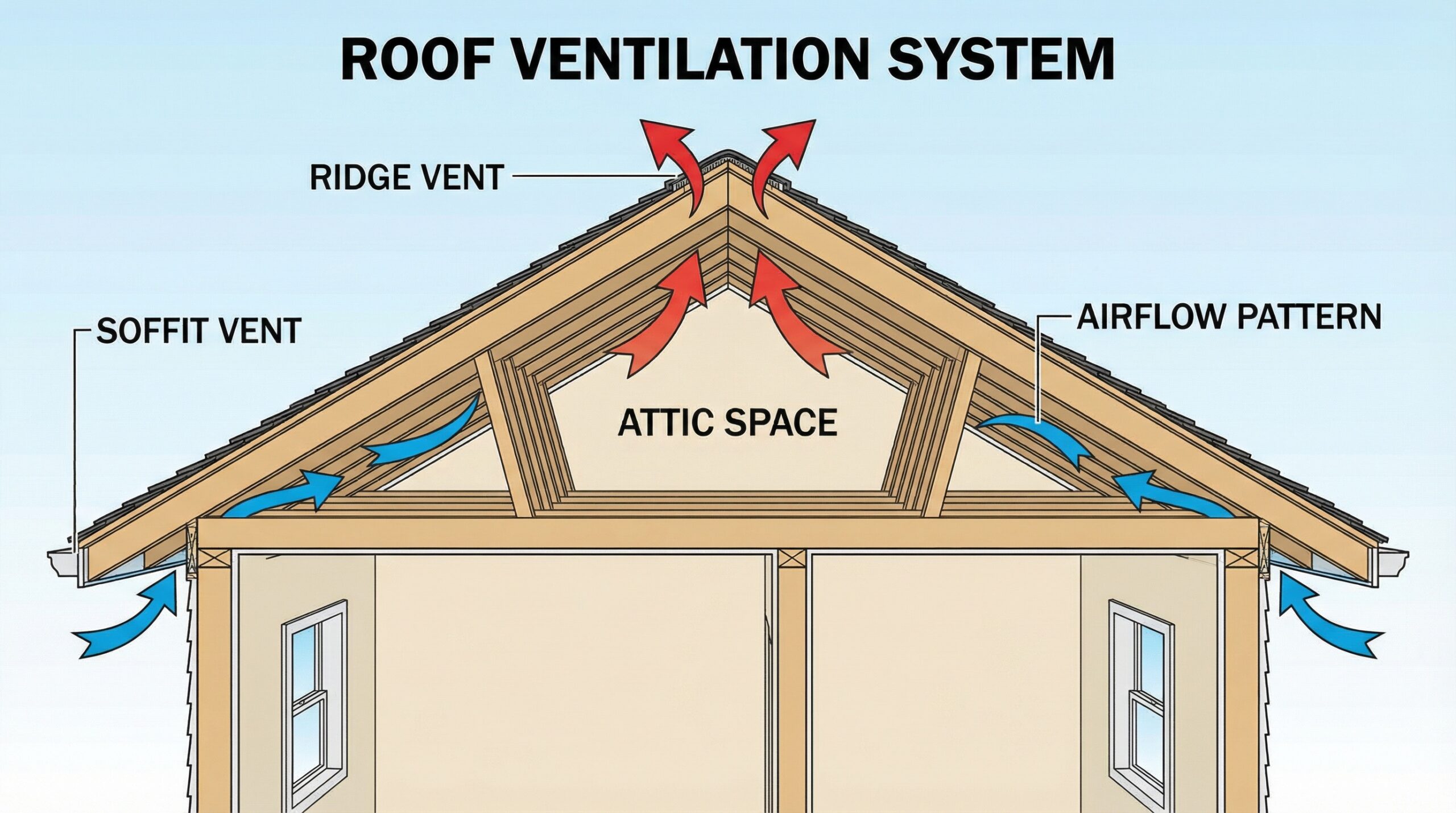
Ridge vents run along your roof’s peak, allowing hot air to escape from your attic. Combined with soffit vents under your eaves, they create natural airflow that prevents moisture buildup and reduces cooling costs. According to hulseyroofingstl.com, poor ventilation can make your air conditioning work overtime and shorten your shingle lifespan.
Soffits cover the underside of your roof’s overhang and often include vents that allow fresh air into your attic. They also hide electrical wiring and provide a finished appearance to your home’s exterior.
Dormers are windowed projections that extend from sloped roofs, adding natural light and usable space to attic areas. While attractive, dormers create additional roof planes that require careful flashing and maintenance.
Important Note: Balanced ventilation with both intake (soffit) and exhaust (ridge) vents prevents ice dams in winter and reduces attic temperatures in summer, extending your roof’s lifespan significantly.
Understanding your roof’s anatomy helps you become a more informed homeowner. When contractors discuss repairs or replacements, you’ll know exactly what they’re talking about. More importantly, you’ll be able to spot potential problems during your seasonal home inspections and address them before they become major expenses. Regular maintenance of these components keeps your roof protecting your home for decades to come.