

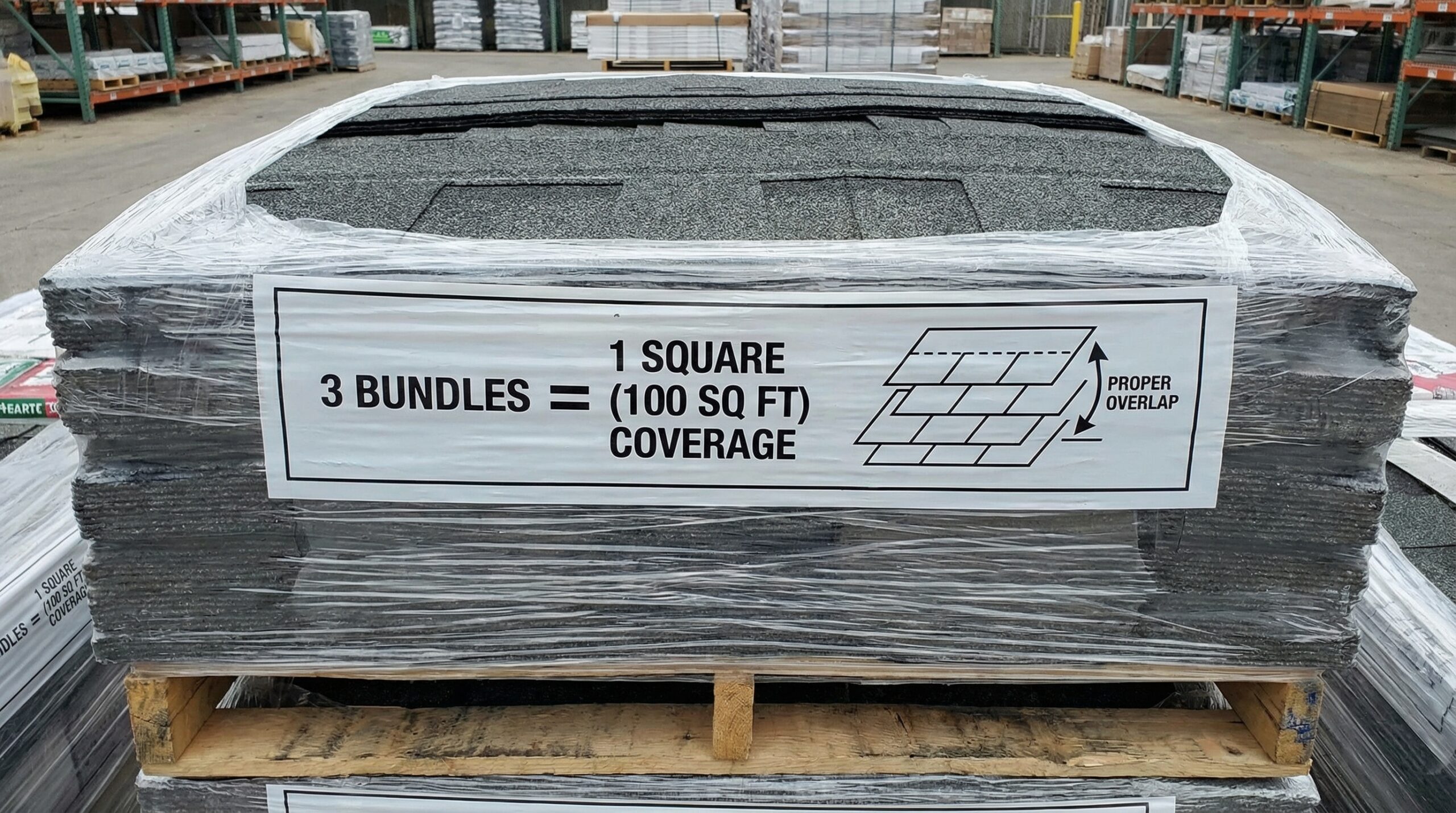
If you’re planning a roofing project, you’ve probably heard contractors mention “roofing squares” and wondered what they mean. A roofing square is a standardized unit of measurement that equals exactly 100 square feet of roof surface area. When a contractor says your roof needs 20 squares of shingles, they’re talking about covering 2,000 square feet of roof space.
Understanding roofing squares helps you make sense of material estimates, project costs, and why there might be leftover materials after your roof installation. This measurement system has been the industry standard since the early 1900s, making communication between contractors, suppliers, and homeowners much simpler.
Quick fact: One roofing square covers 100 square feet, but due to roof pitch and overlap requirements, you’ll typically need 10-20% more material than your roof’s actual square footage.
What exactly is a roofing square
A roofing square represents the amount of roofing material needed to cover 100 square feet of roof surface, including the necessary overlap between shingles or tiles. This measurement applies to all roofing materials, whether you’re working with asphalt shingles, metal roofing, slate, or tile.
The beauty of this system lies in its simplicity. Instead of dealing with large numbers like “2,847 square feet,” contractors can simply say “28.5 squares.” This makes calculations faster and reduces errors when ordering materials or providing estimates.
The roofing square measurement includes what’s called “headlap” – the overlap between rows of shingles that ensures proper water protection. For asphalt shingles, this overlap is typically 4-6 inches, which means you’re getting slightly more than 100 square feet of actual material in each square to account for this overlap. Understanding how many shingles are in a bundle can further help you grasp material quantities for your project.
Who uses roofing squares and why
Roofing squares are primarily used by professional roofers, but you’ll also encounter this measurement when working with general contractors, home builders, and material suppliers. As a homeowner, understanding squares helps you communicate effectively with contractors and verify that estimates make sense.
The system benefits everyone involved in roofing projects. Contractors can quickly estimate material needs during initial consultations, suppliers can stock and price materials consistently, and homeowners can compare quotes more easily when everyone speaks the same language. When choosing the best roofing contractor, knowing these industry terms helps you ask informed questions.
For DIY homeowners, knowing about roofing squares helps when purchasing materials at home improvement stores. Most roofing products are packaged and priced per square, so understanding this measurement ensures you buy the right amount without significant waste or shortages. Before deciding on a DIY approach, consider reading about DIY vs. professional roofers to make an informed decision.
Pro tip: Always order 10-15% extra material beyond your calculated squares to account for waste, cuts around vents and chimneys, and future repairs.
How much does a roofing square cost
The cost of a roofing square varies significantly based on material type, quality, and your geographic location. Here’s what you can expect to pay for different roofing materials per square:
| Material Type | Cost Range per Square | Durability |
|---|---|---|
| Asphalt Shingles | $100 – $200 | 15-30 years |
| Metal Roofing | $300 – $700 | 40-70 years |
| Slate/Tile | $600 – $1,000 | 50-100 years |
Several factors influence the final cost per square. The complexity of your roof design affects labor costs – simple gable roofs cost less per square than roofs with multiple dormers, valleys, or steep pitches. Your location also matters, as material and labor costs vary significantly between regions.
The pitch or slope of your roof impacts both material and labor costs. Steeper roofs require more safety equipment and take longer to install, increasing the per-square cost. Additionally, premium materials like architectural shingles or specialty metal roofing command higher prices than basic three-tab shingles. To understand how long your roof investment will last, consider the durability factors of different materials.
How to calculate roofing squares for your project
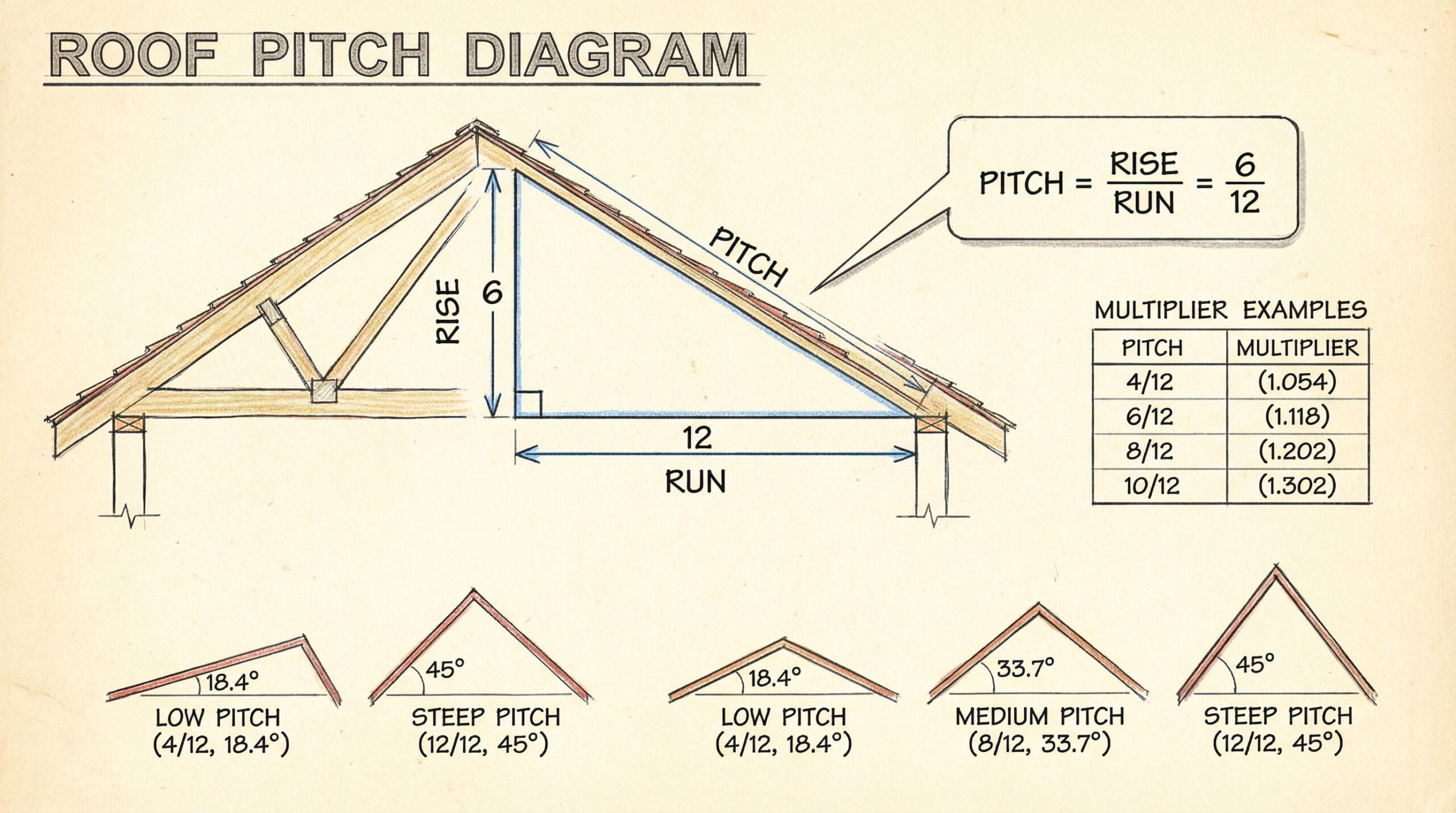
Calculating the number of squares your roof needs involves more than just dividing your home’s square footage by 100. Your roof’s surface area is typically 20-40% larger than your home’s footprint due to roof pitch and overhangs.
Start by measuring the length and width of each roof section in feet, then multiply these dimensions to get the square footage of each section. Add all sections together for your total roof square footage, then divide by 100 to get the number of squares.
However, you must account for roof pitch using a multiplier. A 4/12 pitch roof (rising 4 inches for every 12 inches horizontally) requires a 1.16 multiplier, while a steeper 8/12 pitch needs a 1.20 multiplier. For example, if your flat roof measurement is 2,000 square feet with a 6/12 pitch, you’d multiply 2,000 × 1.12 = 2,240 square feet, or 22.4 squares.
Complex roofs with dormers, valleys, or irregular shapes require additional material to account for waste and cuts. Professional contractors typically add 10-15% to the calculated squares for these factors, ensuring adequate material without significant overage.
Important note: While you can estimate squares yourself, having a professional contractor measure your roof ensures accuracy and accounts for factors you might miss, potentially saving money on material costs.
Understanding roofing squares empowers you to have informed conversations with contractors and make better decisions about your roofing project. Whether you’re getting quotes or planning a DIY project, this knowledge helps ensure you get the right amount of materials at a fair price. Before hiring, review these essential questions to ask your roofing contractor to ensure you’re working with the right professional. For complex roofs or if you’re unsure about your calculations, consulting with a professional roofing contractor at Peak and Valley Roofing can provide the accuracy and peace of mind you need for a successful project.