

Your historic Northeast Ohio home tells a story through every architectural detail, and your roof is often the most defining feature. Historic roof restoration requires specialized expertise to maintain authentic period character while meeting today’s performance standards. Professional restoration can preserve your home’s architectural integrity for decades while adding modern protection against Ohio’s challenging weather conditions.
Quick Fact: Historic roofs in Northeast Ohio typically feature slate, clay tile, or wood shakes, with proper restoration extending their lifespan by 50-100 years while maintaining period authenticity.
The key to successful historic roof restoration lies in understanding original materials and construction techniques while thoughtfully incorporating modern improvements. This balance ensures your home maintains its historical significance while providing the durability and energy efficiency modern homeowners expect.
Understanding historic roofing materials and their challenges
Historic homes in Northeast Ohio showcase distinctive roofing materials that reflect different architectural periods. Slate Roof Professionals notes that slate was the premium choice for prestigious residences from colonial times through the early 1900s, prized for its fire resistance and century-long durability. Clay tiles became popular in Mediterranean-inspired and Spanish Colonial architecture, while wood shakes adorned craftsman homes and vernacular structures.
These traditional materials present unique challenges compared to modern roofing options. According to historic roofing experts, historic roofs require specialized knowledge because traditional installation methods differed significantly from contemporary approaches. The craftsmanship involved in hand-fashioning slate tiles or precisely laying wood shakes demands expertise that many modern contractors lack.

Weather exposure over decades—especially from our heavy lake-effect snows—can weaken structural integrity, making professional assessment crucial before beginning any restoration work. Understanding common types of roof damage helps homeowners identify issues early and plan appropriate restoration strategies.
Balancing preservation with modern performance standards
The challenge in historic roof restoration lies in maintaining architectural authenticity while incorporating contemporary building standards. Local Preservation School explains that historic buildings provide an important link to our past, with craftsmanship that cannot be replicated today, making their preservation a source of civic pride.
Modern building codes and energy efficiency requirements can actually complement historical preservation when properly implemented. Advanced moisture barriers and efficient ventilation systems can be installed beneath visible roofing elements without compromising historical character. These hidden improvements dramatically enhance your roof’s resilience while maintaining its period-appropriate appearance.
Expert Tip: Synthetic materials now available can beautifully replicate traditional looks while offering improved weather resistance, with composite slate and engineered wood alternatives providing authentic appearance with superior longevity.
Contemporary waterproofing systems and climate control solutions work discreetly beneath traditional materials to provide enhanced protection. This approach allows homeowners to enjoy the aesthetic beauty of historic materials while benefiting from modern engineering advances. For older homes in the region, following historic roof repair tips for Rocky River properties can ensure your restoration meets both preservation and performance standards.
Professional restoration process and timeline
Historic roof restoration follows a systematic approach that ensures exceptional results while respecting architectural heritage. The process begins with detailed evaluation of your roof’s condition and thorough study of its architectural history, which informs every aspect of the restoration plan.
A comprehensive restoration typically includes initial assessment and historical documentation review, followed by customized strategy development. The actual work involves strategic removal of compromised materials, structural reinforcement where necessary, and implementation of contemporary protective systems beneath period-appropriate materials.
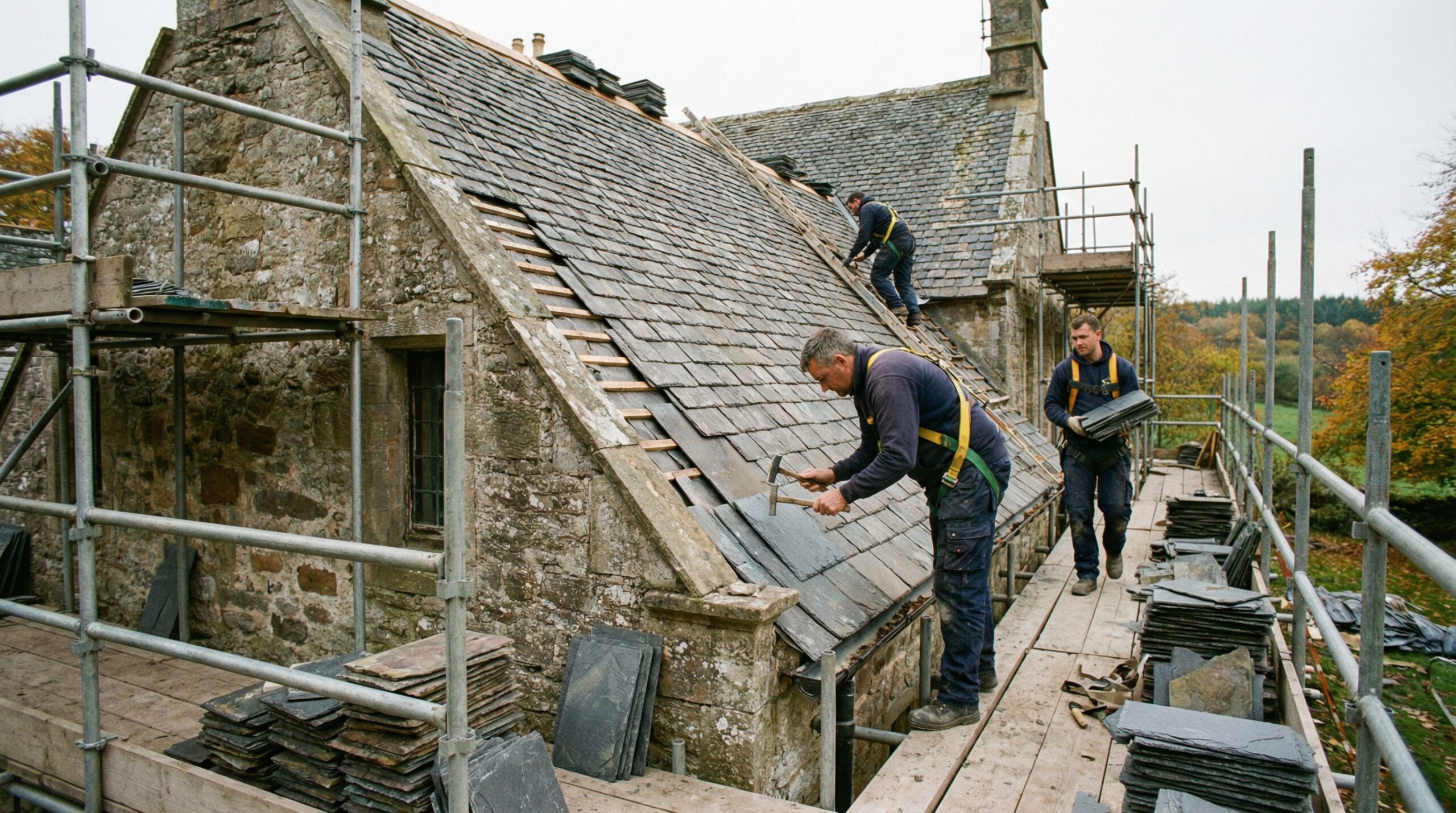
Quality restoration work incorporates discrete performance upgrades while maintaining visual authenticity. The timeline varies based on roof size and complexity, but most projects require 2-4 weeks for completion, including weather delays common in Northeast Ohio. After severe weather events, knowing how to identify storm damage becomes essential for protecting your historic investment.
Throughout the project, maintaining open communication with homeowners, preservation specialists, and architectural experts ensures the restoration exceeds expectations at every stage while adhering to local historic district requirements.
Cost considerations and long-term investment value
Historic roof restoration represents a significant but worthwhile investment in your property’s future. According to industry data, properly restored roofs enhance property market appeal while preserving historical significance, with many buyers specifically seeking authentic architectural details.
| Service Type | Starting Cost per Sq Ft | Expected Lifespan |
|---|---|---|
| Slate Restoration | $25 | 75-100 years |
| Clay Tile Restoration | $20 | 50-100 years |
| Wood Shake Restoration | $18 | 25-40 years |
| Historic Metal Restoration | $22 | 50+ years |
Investment Insight: Quality historic roof restoration can provide decades of protection with minimal maintenance, often qualifying for preservation grants and tax incentives that offset initial costs.
The long-term value extends beyond immediate protection. A professionally restored historic roof can last 50-100 years depending on materials, making it a multi-generational investment. Many preservation projects qualify for tax credits and grants, particularly in designated historic districts throughout Northeast Ohio.
When evaluating costs, consider the enhanced property value, reduced maintenance needs, and potential tax benefits. Professional contractors can guide you through available financing options and help identify applicable preservation incentives for qualified projects. Homeowners often wonder whether repairing an old roof is worthwhile, and for historic properties, the answer typically involves both preservation value and long-term financial benefits.
Historic roof restoration requires expertise that honors your home’s past while securing its future. The investment in professional restoration services ensures your period home maintains its architectural legacy while providing modern protection and performance. Working with experienced contractors who understand both traditional techniques and contemporary building standards guarantees results that preserve your home’s unique character for generations to come. Regular post-winter roof maintenance helps protect your restored roof and extend its impressive lifespan even further.