

Most building codes allow a maximum of two layers of asphalt shingles on residential roofs, but that doesn’t mean adding a second layer is always wise or safe. While the legal limit might permit it, your roof’s structure, age, and condition often make a full tear-off replacement the better choice—especially in Northeast Ohio where harsh winters and severe weather can stress roofing systems.
If you’re considering adding new shingles over your existing ones to save money, you need to understand both the legal requirements and the practical risks. The decision involves more than just what’s allowed by code—it’s about what’s structurally sound and financially smart for your specific situation in the Cleveland area.
Quick Answer: Building codes typically allow up to two layers of asphalt shingles, but many roofs in Northeast Ohio shouldn’t have a second layer due to weight, structural, and safety concerns related to snow loads and severe weather.
What building codes say about shingle layers
The International Residential Code (IRC), which most states follow, permits one new layer of asphalt shingles over one existing layer—totaling two layers maximum. jaspector.com confirms that if two layers already exist, a full tear-off to bare sheathing is required before new shingles can be installed.
However, local jurisdictions can impose stricter rules. Some areas like Oklahoma require full tear-off after just one layer, while Chicago prohibits third layers under specific building code sections. lgmroofing.com notes that these variations exist for fire safety and structural reasons.
Building inspectors enforce these limits during permit processes. Many jurisdictions require disclosure of existing layer counts on permit applications, and inspectors verify compliance before approving new roofing work.
When a second layer creates safety risks in Northeast Ohio
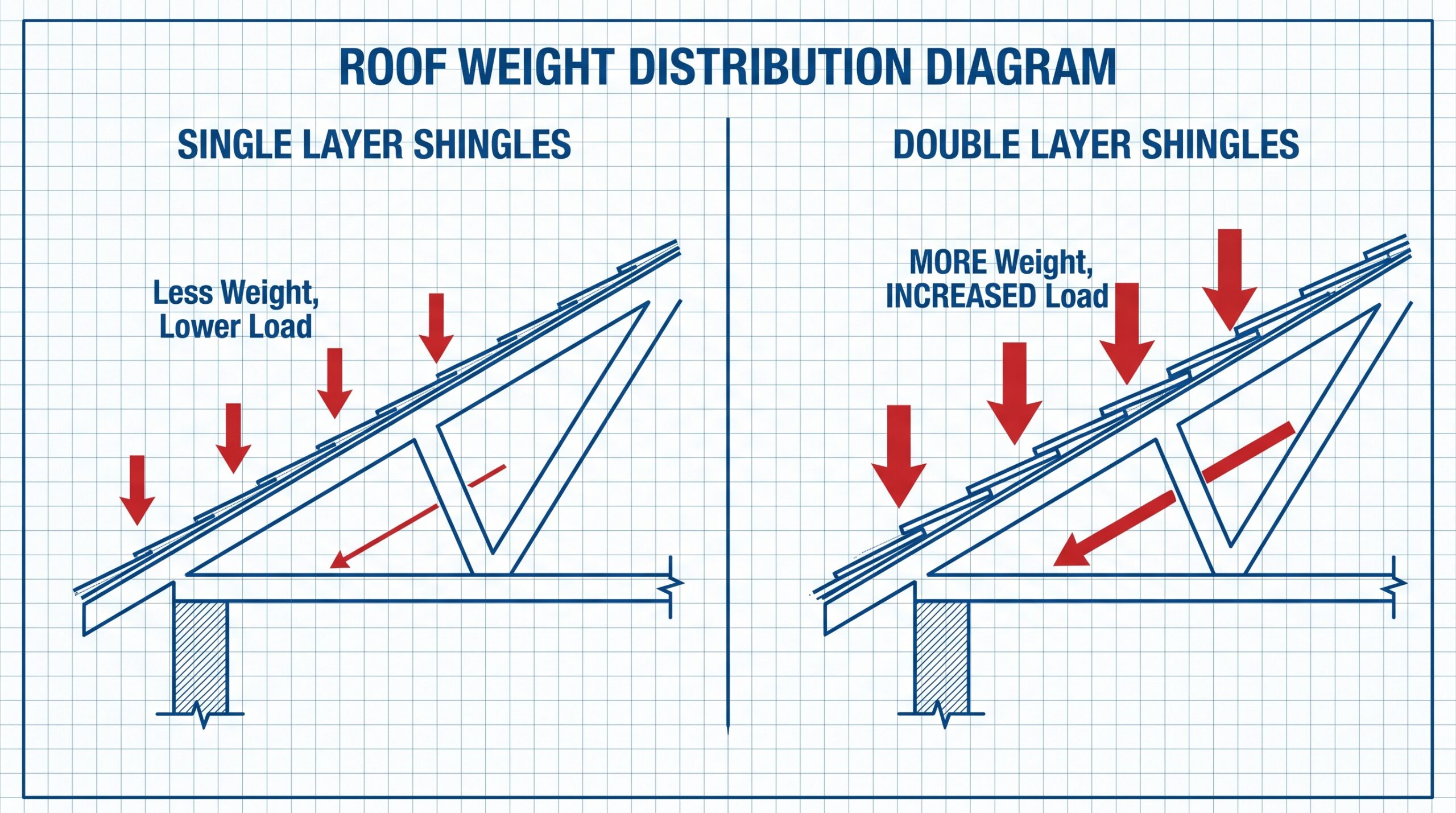
Just because codes allow two layers doesn’t mean your roof can safely handle the extra weight—especially in Northeast Ohio where heavy snow loads are common. A single layer of architectural shingles weighs 250 to 350 pounds per 100 square feet, and adding a second layer doubles that load.
Older homes in Rocky River, Cleveland, and surrounding areas built before modern codes may lack the structural capacity that newer homes have. nestexteriors.com explains that homes built before the 1960s should have their structural capacity verified before adding weight.
Climate factors matter significantly in Northeast Ohio. Heavy snow loads can add 20+ pounds per square foot on top of the doubled shingle weight, and ice dams common in our region create additional stress. The combination can exceed what roof framing was designed to handle, particularly in older Cleveland-area homes.
Safety Note: Roof decking hidden under old shingles can’t be inspected for rot or damage, creating unknown structural risks that may not appear until it’s too late—a particular concern in Northeast Ohio’s moisture-prone climate.
Comparing overlay versus full replacement costs and outcomes
| Factor | Second Layer (Overlay) | Full Tear-Off |
|---|---|---|
| Upfront cost | Lower | Higher |
| Roof inspection ability | None | Complete |
| Expected lifespan | 75% of normal | Full lifespan |
| Warranty options | Limited | Enhanced system warranties |
While overlays cost less initially, nestexteriors.com indicates they typically last only 75% as long as tear-off installations. The cost difference between overlay and tear-off is approximately $3,000 to $5,000 for typical homes, but the lifespan reduction and warranty limitations often make full replacement more cost-effective long-term.
Overlay installations also create future complications. When water gets under the new layer, it travels down the old roof and finds unpredictable leak paths, making repairs much more difficult and expensive to diagnose correctly—especially problematic during Northeast Ohio’s freeze-thaw cycles.
Critical conditions that require full replacement
Several situations automatically disqualify a roof from overlay installation, regardless of what codes technically allow. Active leaks, severely deteriorated shingles, or evidence of moisture infiltration require tear-off to address underlying problems—common issues in Northeast Ohio homes due to ice dams and severe weather.
Roof complexity also matters, as steep versus shallow pitch affects longevity. billraganroofing.com notes that roofs with many penetrations, extensive flashing, or walls that butt against shingles aren’t good candidates for nail-over installation.
The existing shingle condition must be nearly perfect—flat, well-adhered, with minimal granule loss and proper shingle exposure. Curled, buckled, or raised shingles prevent new layers from lying flat and bonding properly, leading to premature failure and wind damage—all signs of a bad roofing job.
Bottom Line: Even with only one existing layer, most roofs in Northeast Ohio aren’t suitable candidates for overlay due to structural, safety, or performance concerns that outweigh short-term savings.
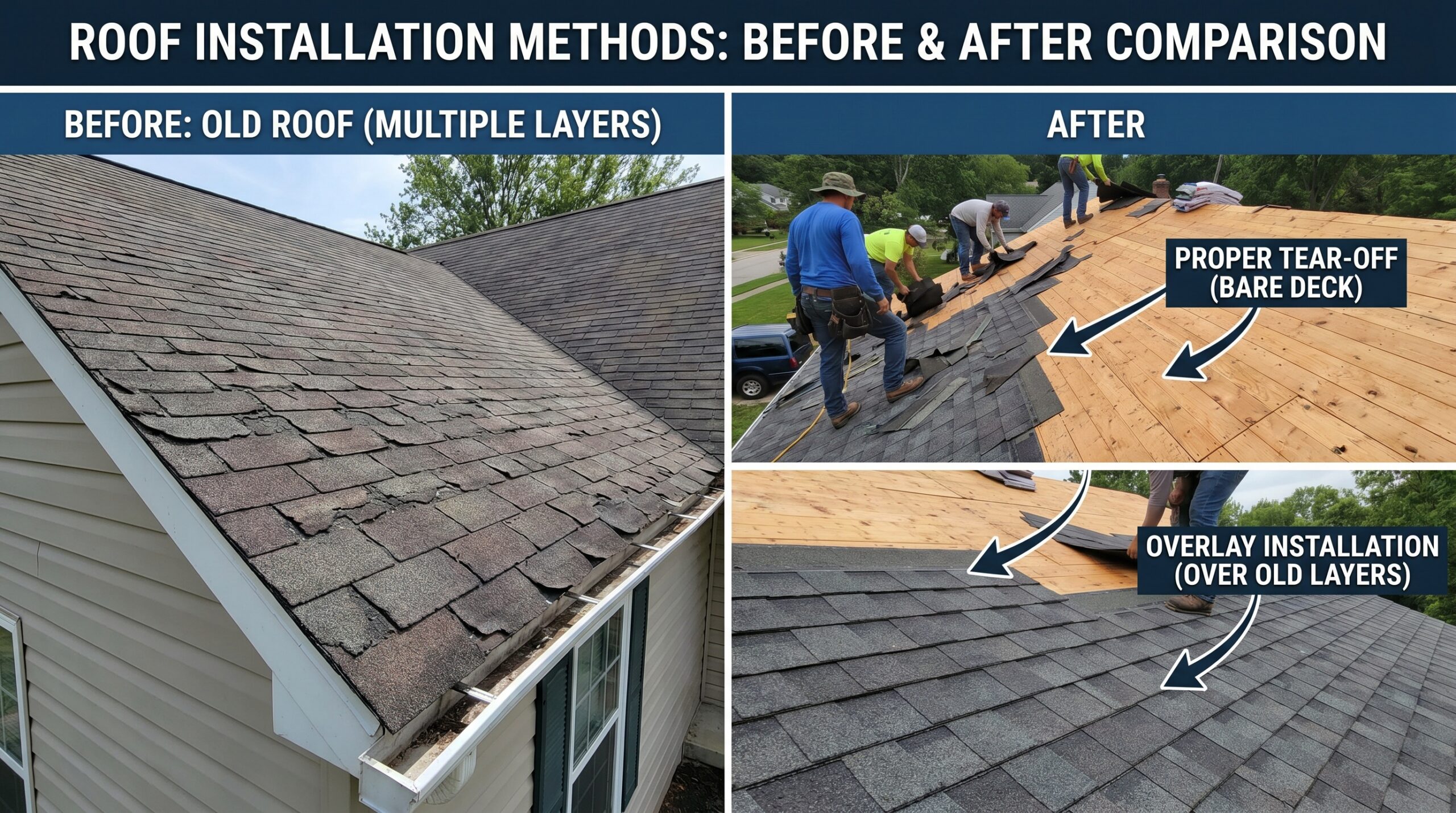
Most roofing professionals in Northeast Ohio recommend full replacement over overlay installation for good reason. While adding a second layer might seem like an attractive budget option, the hidden risks and long-term costs of two layers of shingles usually make it a poor investment—especially in our challenging climate.
The inability to inspect and replace damaged decking, compromised warranties, difficult leak repairs, and shortened lifespan typically outweigh the upfront savings. For most Cleveland-area homeowners, investing in a complete tear-off provides better long-term value, safety, and peace of mind against Northeast Ohio’s harsh weather conditions.
If budget constraints make full replacement challenging, discuss financing options with reputable, licensed, bonded, and insured contractors rather than compromising on a solution that may create bigger problems down the road. As a family-owned roofing company serving Rocky River and the greater Cleveland area, we always recommend honest, no-pressure consultations to help homeowners make the best decision for their specific situation and budget.